
Alphabet sequencing Worksheets for Ages 3-8
10 filtered results
Difficulty Level
Grade
Age
-
From - To
Subject
Activity
Standards
Discover our engaging Alphabet Sequencing Worksheets designed for children aged 3-8! These printable activities help young learners master the letters of the alphabet in a fun and interactive way. Our worksheets feature bright, colorful illustrations that capture children's attention while promoting vital skills such as letter recognition, sequencing, and fine motor development. Ideal for classrooms or at-home learning, these resources can enhance your child’s literacy foundation. With easy-to-follow instructions and varying levels of difficulty, our worksheets cater to all learning styles and abilities. Start your child’s educational journey with our alphabet sequencing fun today!
Favorites
With answer key
Interactive
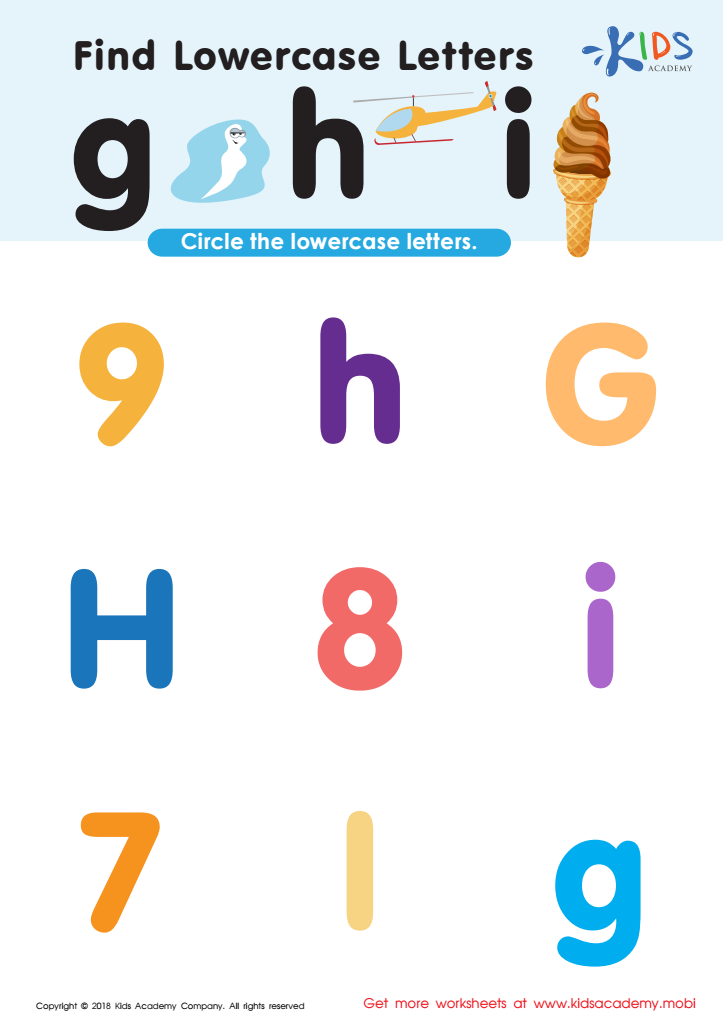
Find Lowercase Letters g h i Worksheet
Turn learning into a fun journey with your child! Use this free worksheet to find and circle the lowercase letters hidden amongst uppercase letters and numbers. Your child will understand what you're teaching them as they enjoy the search.
Find Lowercase Letters g h i Worksheet
Worksheet
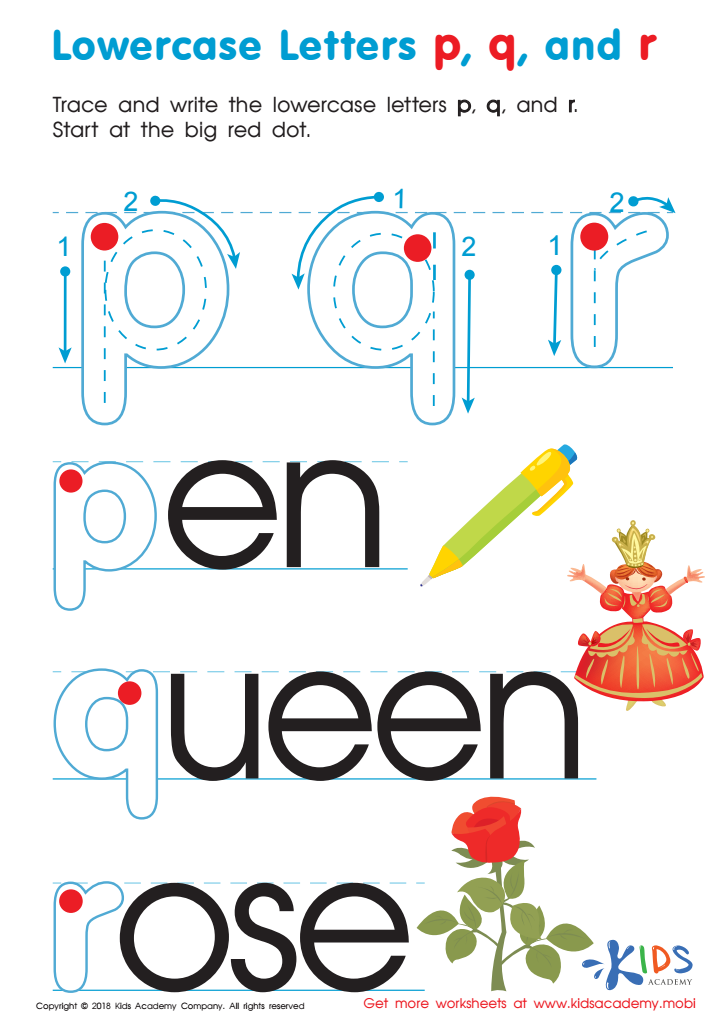
Lowercase Letters p q r Worksheet
Trace and write lowercase letters p, q and r with this fun worksheet. Each letter has a large red dot to mark the start, and dotted lines to follow with a pencil. Colorful images and text make it an enjoyable way to learn.
Lowercase Letters p q r Worksheet
Worksheet
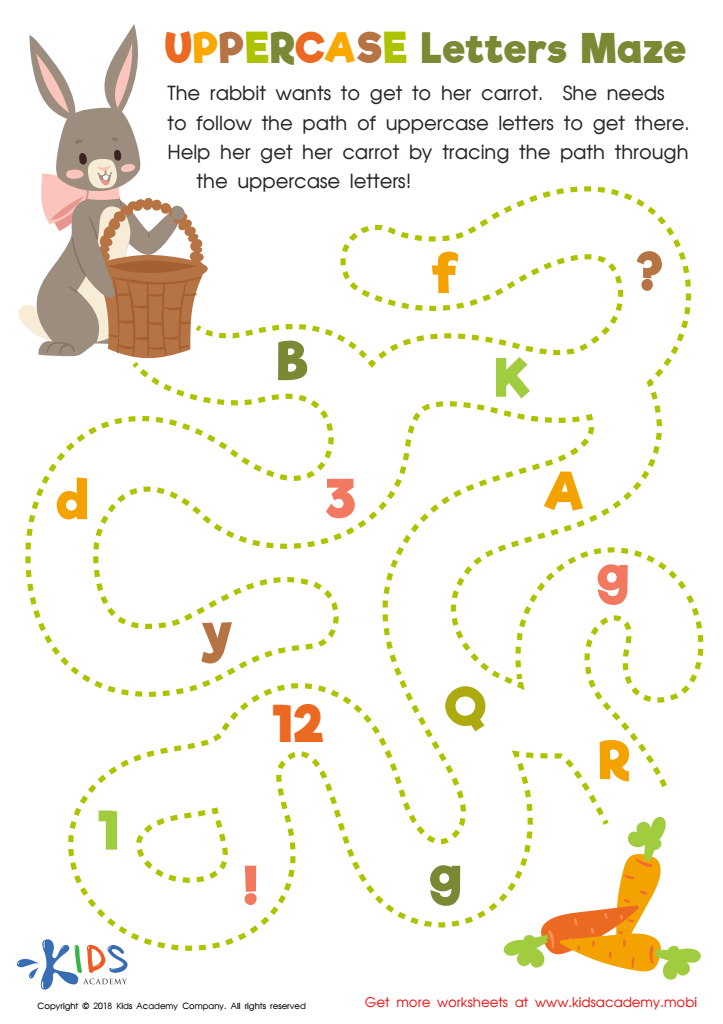
Uppercase Letters Maze Worksheet
Kids can have fun helping a rabbit find her carrot by picking the path with uppercase letters. This worksheet teaches letter differentiation while building confidence. Kids will have a great time while getting an essential skill!
Uppercase Letters Maze Worksheet
Worksheet
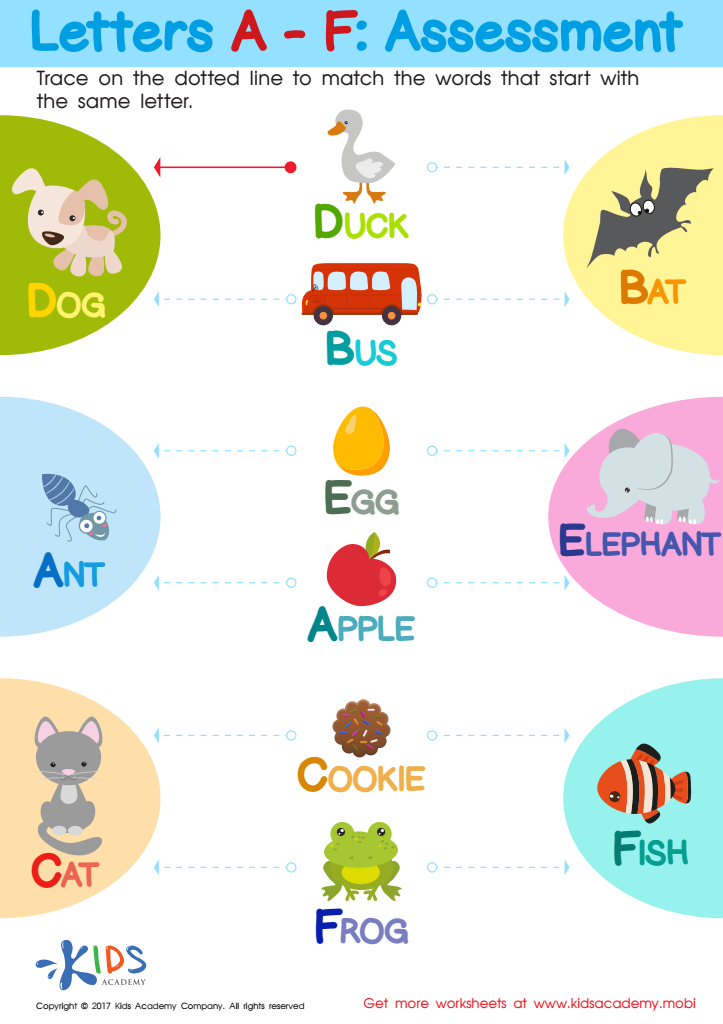
Letters A - F Worksheet
Help your child develop their reading skills with this fun phonics worksheet aimed at preschoolers. They can match letters A-F using colorful words and pictures. Assist your child by sounding out the letters and words - it's a great way to learn!
Letters A - F Worksheet
Worksheet
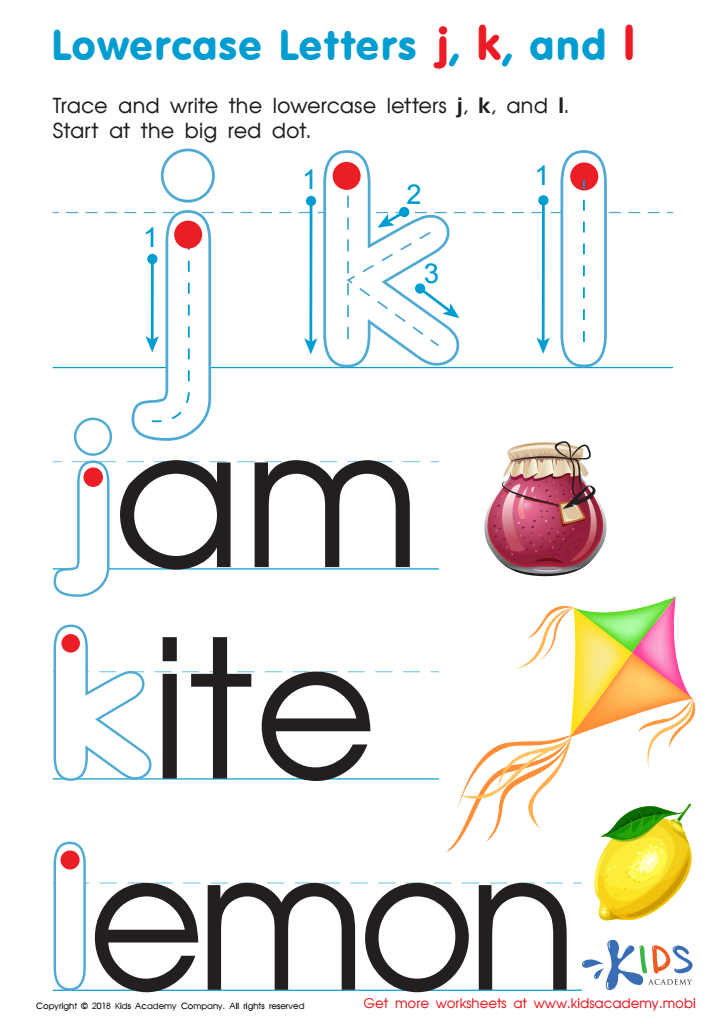
Lowercase Letters j k l Worksheet
Teach your child the difference between uppercase and lowercase letters. Have them trace and write the lowercase letters j, k, and l, starting at the red dot. Guide your child's hand to form the letters correctly.
Lowercase Letters j k l Worksheet
Worksheet
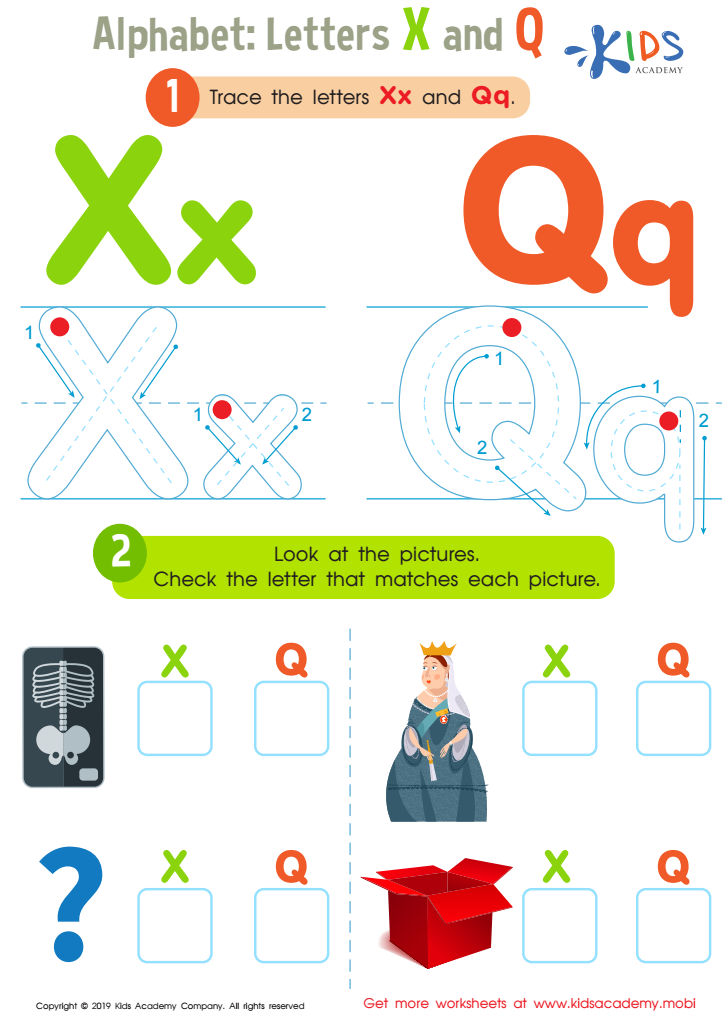
Letters X and Q Tracing Worksheet
Do you want your students to improve writing and letter recognition? This worksheet is a great place to start! Kids can trace the letters «X» and «Q» and identify pictures that match each letter. With a little encouragement, they'll do a great job!
Letters X and Q Tracing Worksheet
Worksheet
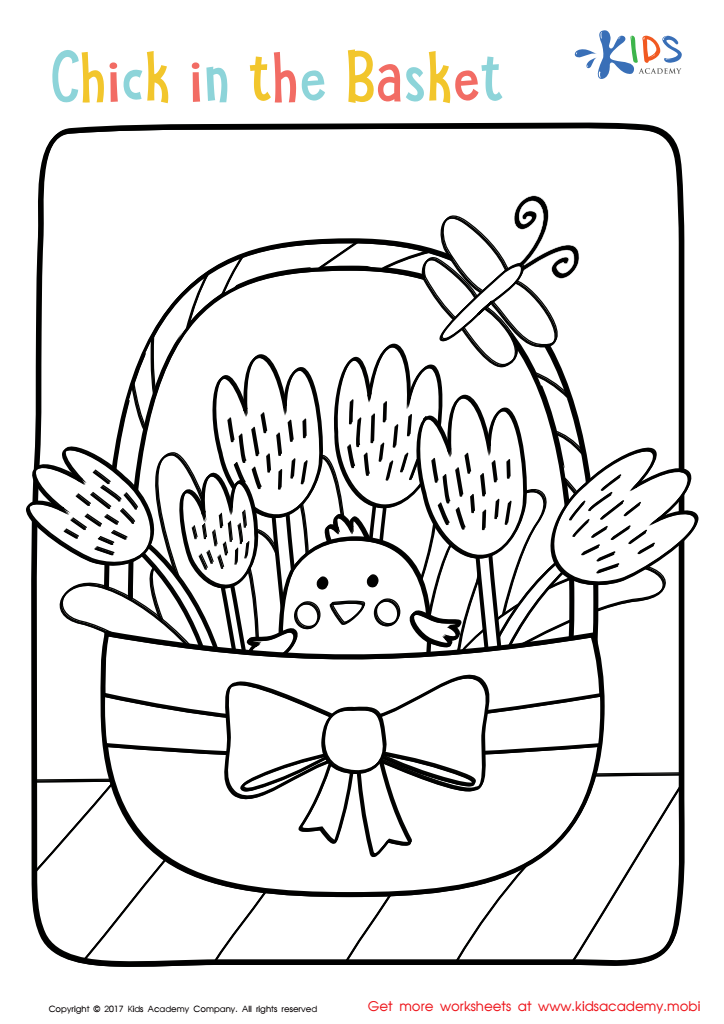
Easter: Chick in the Basket Worksheet
Kids love Easter morning when they wake up to a basket full of goodies! Let them get creative and learn something new with this Easter chick coloring page! It's perfect to use while they wait for the Easter bunny, and talk about the symbolism of chicks and baskets. They'll have fun learning and creating a wonderful image to decorate!
Download (PDF)
 Assign to My Students
Assign to My Students
Easter: Chick in the Basket Worksheet
Worksheet
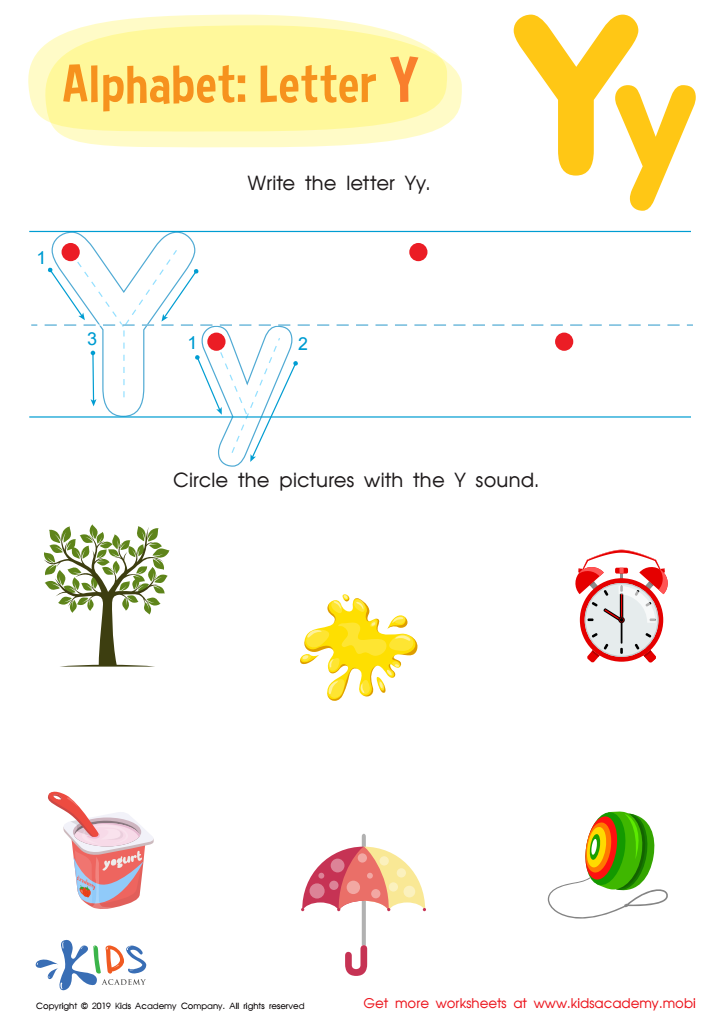
Letter Y Tracing Worksheet
Does your child need help with learning the final letters of the alphabet? This PDF worksheet is perfect then! Kids can practice tracing the letter «Y» and circle pictures that start with the same sound. Options include «yellow» and «yogurt». It's a great way of honing their letter-learning skills.
Letter Y Tracing Worksheet
Worksheet
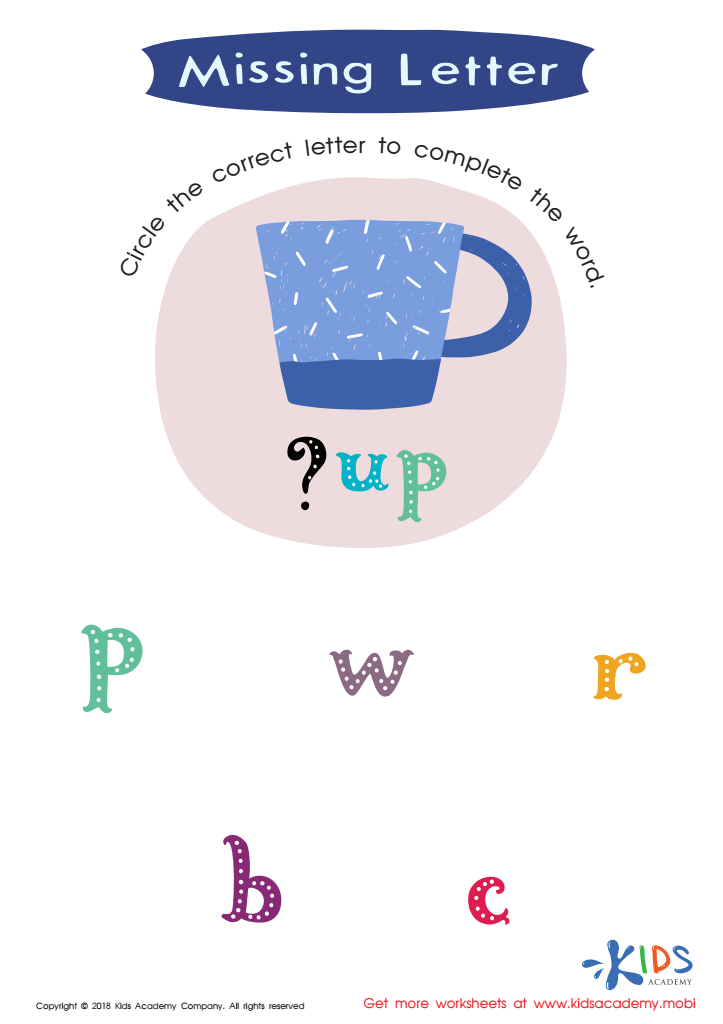
Missing Letter Worksheet
Congrats! If your kids can spell some small words, pat yourself on the back. Struggling with the alphabet? Help them learn with this simple worksheet. They'll have to find the missing letter to complete the word. Print this worksheet and help your little one find and circle the right letter.
Missing Letter Worksheet
Worksheet
Join Kids Academy for Free
Who is primarily going to use this learning content?



.jpg)




Alphabet sequencing is an essential component of early literacy development for children aged 3-8, and both parents and teachers should prioritize its understanding. At this formative stage, children are building foundational skills that will assist them in reading, writing, and comprehending language. Learning the sequence of the alphabet helps children recognize letter patterns, which is crucial for phonemic awareness—the ability to hear, identify, and manipulate sounds in words.
Parents and teachers who focus on alphabet sequencing can facilitate effective teaching practices. It enables children to understand how letters connect to create words, fostering phonics skills that lead to reading fluency. When children grasp the sequence (A to Z), they can better process the structure of language, develop spelling abilities, and enhance vocabulary.
Furthermore, mastery of the alphabet sequence promotes confidence, as children learn to identify letters and arrange them correctly. Engaging children through songs, games, and interactive activities makes the learning process enjoyable, reinforcing their connection to language.
In summary, prioritizing alphabet sequencing in early education is crucial for cognitive development, reading readiness, and positively impacts children’s future academic success. Active involvement from parents and teachers nurtures these essential skills, laying a solid foundation for lifelong learning.








