
Chess piece identification Worksheets for Ages 3-8
3 filtered results
Difficulty Level
Grade
Age
-
From - To
Subject
Activity
Standards
Introduce your children to the exciting world of chess with our "Chess Piece Identification Worksheets for Ages 3-8." These engaging and educational worksheets are designed to help young learners recognize and name the different chess pieces, including the king, queen, rook, bishop, knight, and pawn. Each worksheet features fun, age-appropriate activities that promote critical thinking, attention to detail, and early cognitive skills. Perfect for beginners, our printables make learning about chess enjoyable and easy, paving the way for budding grandmasters. Download now from Kids Academy and make chess an enchanting adventure for your little ones!
Favorites
With answer key
Interactive
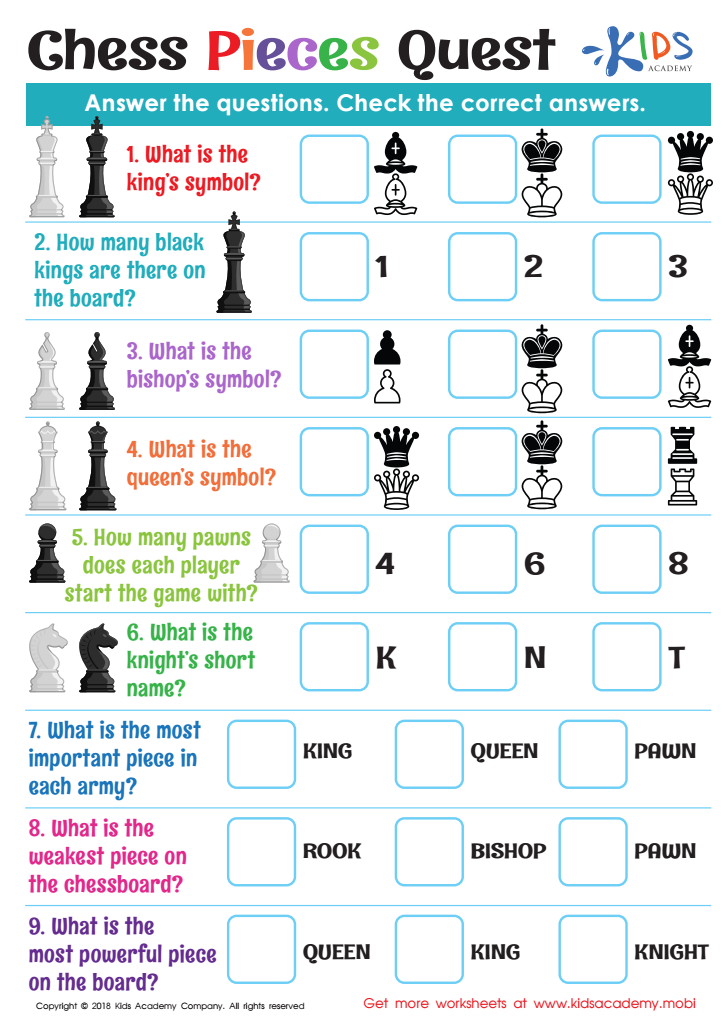
Chess Pieces Quest Worksheet
Help your child prepare for the chess quest by refreshing their knowledge of the symbols and characteristics of each chess piece. Then, have them try the 9 questions on this worksheet. These questions will assess their understanding of the symbols and how many pieces each player starts with.
 Assign to My Students
Chess Pieces Quest Worksheet
Worksheet
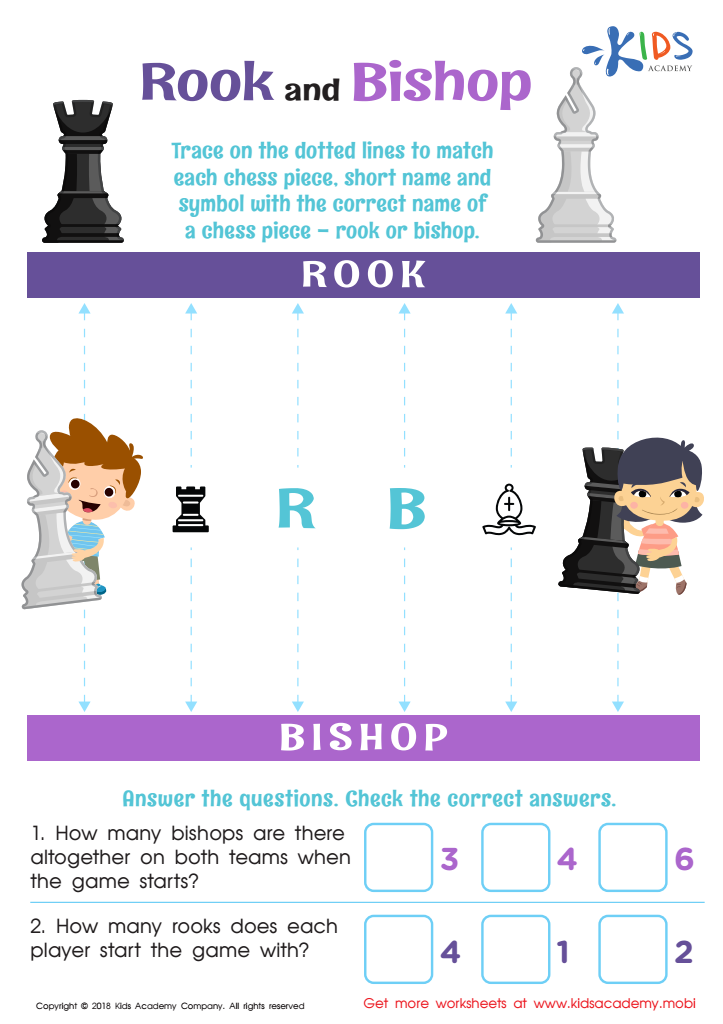
Rook and Bishop Worksheet
This tracing sheet helps your child learn chess pieces by matching each piece, short name and symbol to the correct name. After tracing, have them answer the questions and check their answers. It's a great way for them to become familiarized with chess.
Rook and Bishop Worksheet
Worksheet
Join Kids Academy for Free
Who is primarily going to use this learning content?



.jpg)




Understanding chess piece identification at an early age offers numerous cognitive and developmental benefits for children aged 3-8. For parents and teachers, introducing chess can be a unique and powerful tool to nurture various essential skills in young minds. Firstly, recognizing chess pieces sharpens concentration and visual memory. Each piece has distinct movements and roles, helping children develop pattern recognition abilities and enhancing their attention to detail.
Moreover, learning chess bolsters problem-solving skills. Understanding the capabilities and constraints of each piece encourages logical reasoning and strategic thinking. These foundational skills are transferrable to academic subjects, particularly mathematics and reading, where logical sequencing and critical analysis are crucial.
Furthermore, chess plays a role in social-emotional development. Taking turns and observing the opponent’s moves promote patience, respect, and empathy, core values in social interactions. Engaging in chess can also boost self-esteem, providing a sense of accomplishment as children master the identification and use of each piece.
Lastly, chess introduces children to a world where persistence is key. Initial challenges in recognizing and employing different pieces teach resilience, as children learn to cope with the iterative process of trial and error. Overall, the cognitive and emotional growth from chess can lay a solid foundation for academic and personal success.








