
Cognitive skills development Worksheets for Ages 3-8
6 filtered results
Difficulty Level
Grade
Age
-
From - To
Subject
Activity
Standards
Unlock your child's potential with our Cognitive Skills Development Worksheets for ages 3-8! Designed to enhance critical thinking, problem-solving, and memory, these engaging worksheets provide interactive opportunities for young learners. Our resources are crafted to suit various learning styles and are perfect for both home and classroom settings. From puzzles to pattern recognition, each activity fosters cognitive growth in a fun, approachable way. Whether your child is mastering shapes, sequencing, or logic games, our worksheets offer a comprehensive way to build essential skills and promote lifelong learning. Start your child's cognitive journey today and watch them flourish!
Favorites
With answer key
Interactive
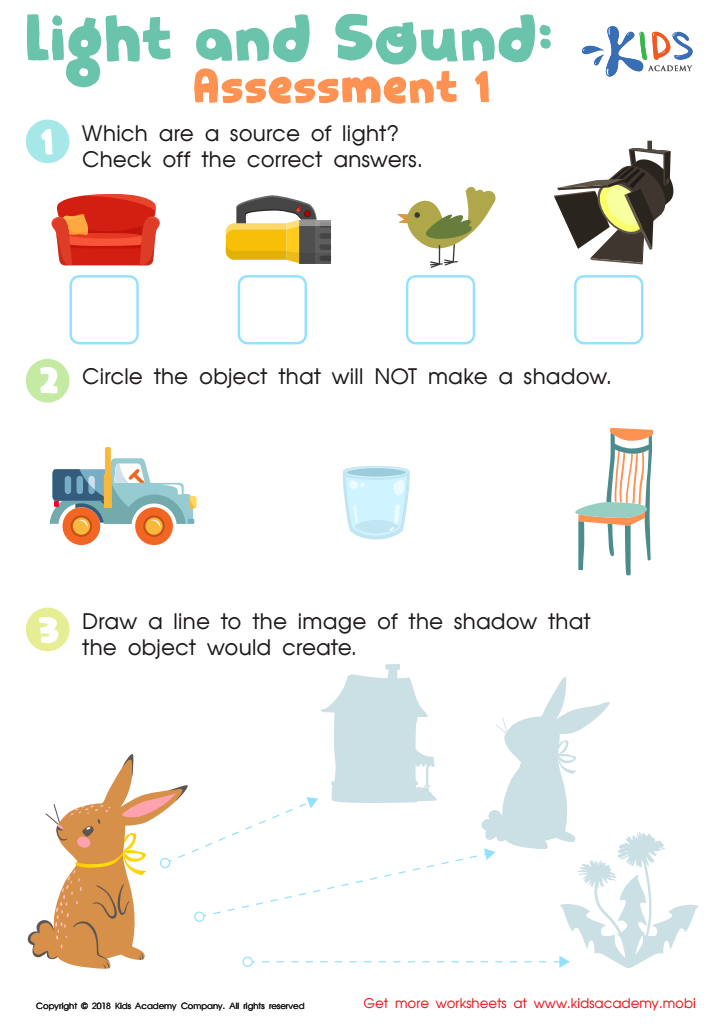
Light and Sound: Assessment 1 Worksheet
Can your kids name a light source? Challenge them to name the sun and moon, then point out objects they use when the sun sets. Look through the worksheet with them and ask them to identify the light sources. Help them check off the correct answers.
 Assign to My Students
Light and Sound: Assessment 1 Worksheet
Worksheet
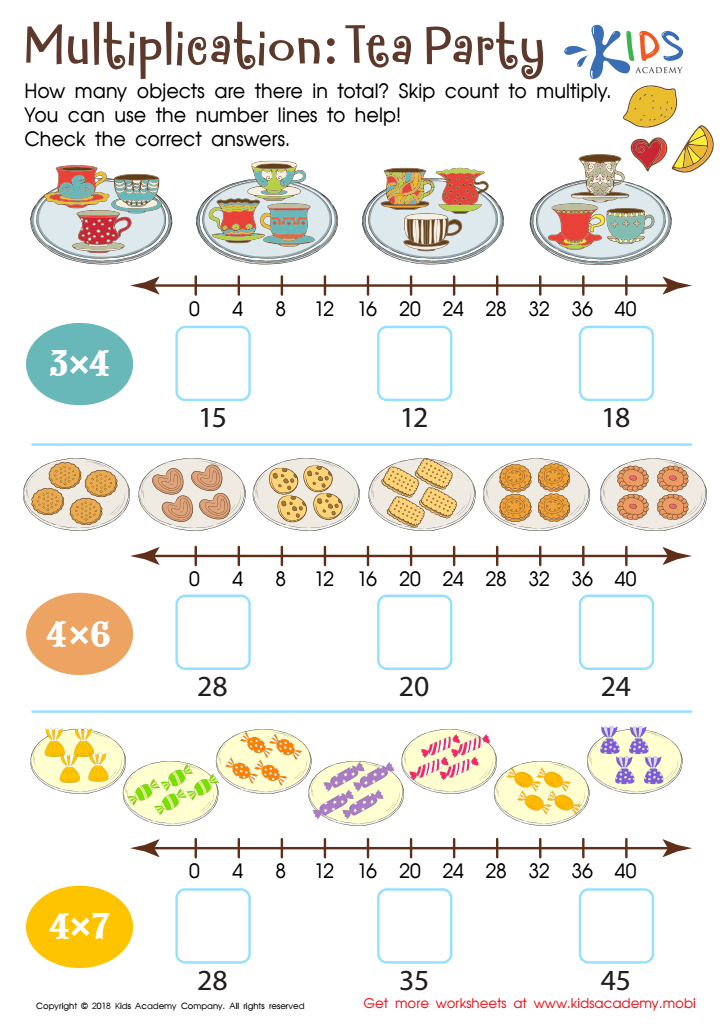
3rd Grade Math Worksheet Multiplication
Our 3rd-grade multiplication math worksheets are great fun! Kids practice using a number line and skip counting, and will feel like throwing a tea party after completing these! Perfect for honing in on multiplication skills.
3rd Grade Math Worksheet Multiplication
Worksheet
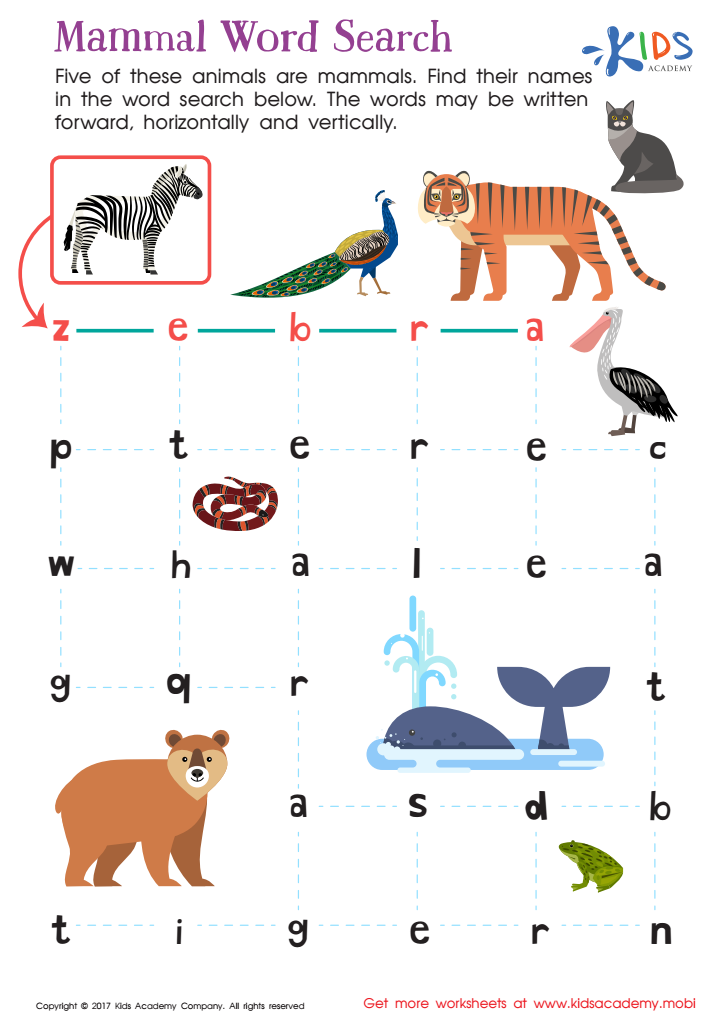
Printable Mammal Word Search
Second graders can enjoy new discoveries and adventures every day with a free printable mammal word search. They'll be tasked to find 5 mammals from a given list, making learning fun and efficient!
Printable Mammal Word Search
Worksheet
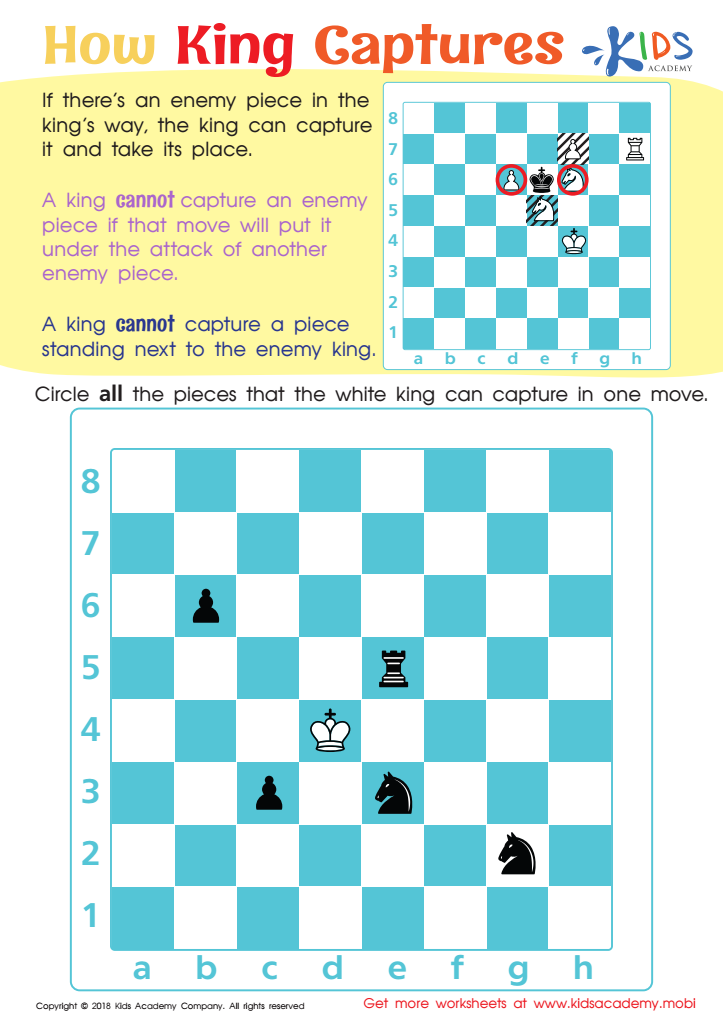
How King Captures Worksheet
The king can capture an enemy piece by taking its place. But it cannot move if the action will put it at risk of attack, or if it's next to the enemy king. On this worksheet, circle the places the white king can capture in one move. (80 words)
How King Captures Worksheet
Worksheet
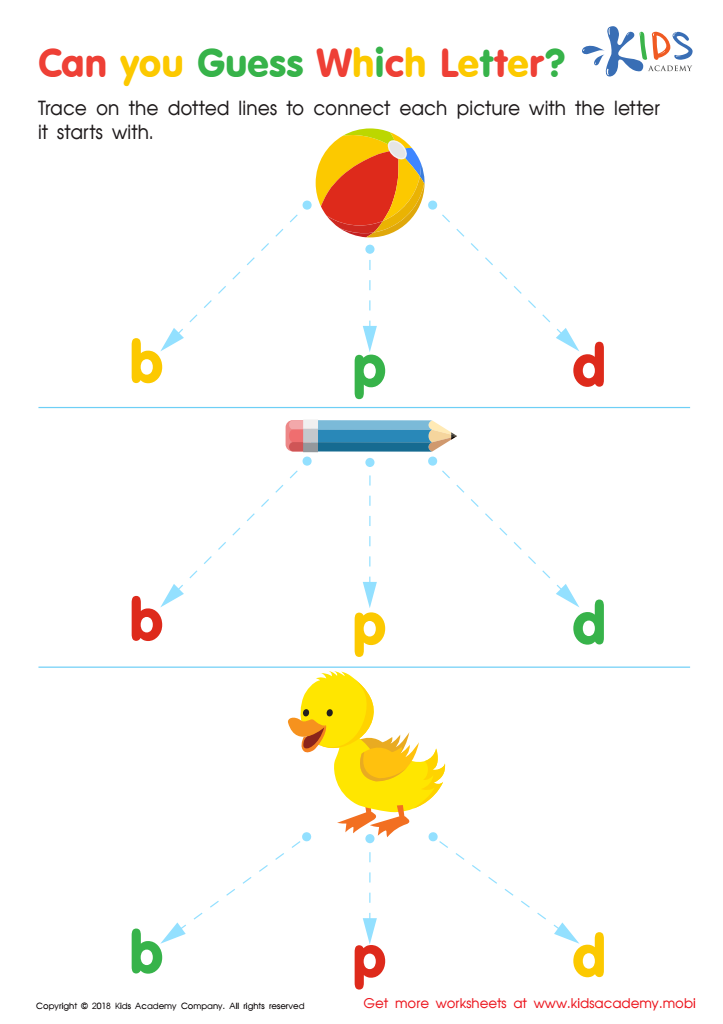
Can you Guess Which Letter? Worksheet
Connect the pictures with their corresponding letters with this fun worksheet! Ask your child what each picture is, then what letter it begins with. Download the PDF for colorful images and engaging texts to hold their attention, making learning an enjoyable activity.
Can you Guess Which Letter? Worksheet
Worksheet
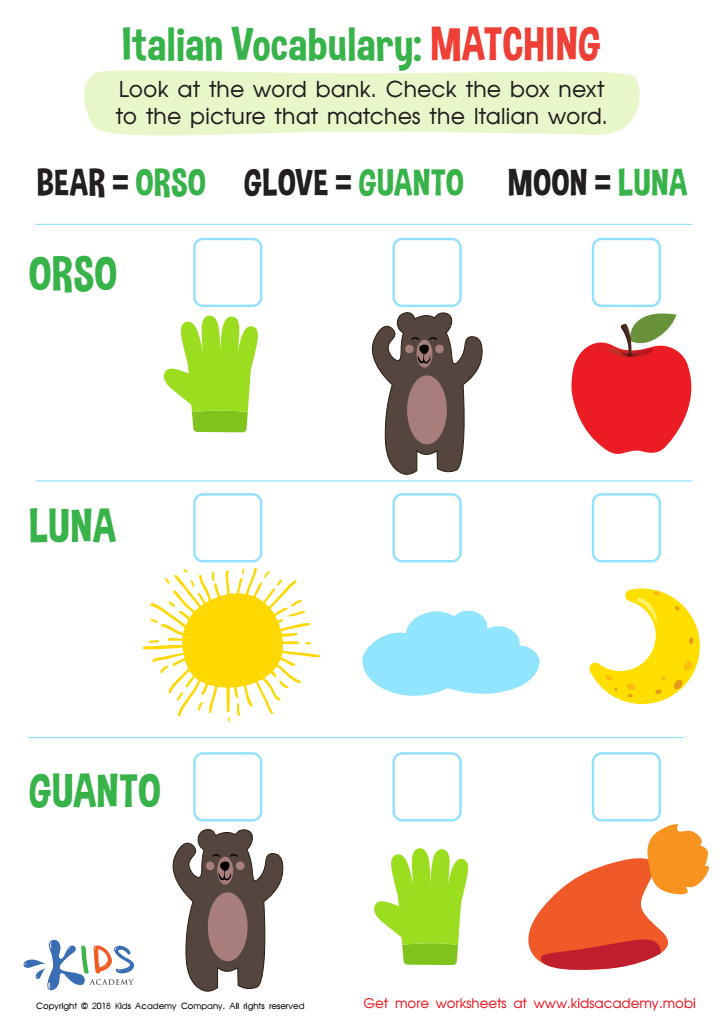
Italian Vocabulary Matching Worksheet
Start your kids young on their global journey with this free Italian worksheet. They'll easily match the pictures to the words and learn familiar, everyday phrases in a fun and colorful way. Give them this perfect foundation for exploring the languages of the world!
Italian Vocabulary Matching Worksheet
Worksheet
Join Kids Academy for Free
Who is primarily going to use this learning content?



.jpg)




Cognitive skills development in children aged 3 to 8 is crucial as it lays the foundation for future learning and overall success. During this period, children's brains are rapidly developing, growing in their ability to think, understand, and solve problems. Parents and teachers should care about fostering these skills for several reasons.
Firstly, cognitive skills are directly linked to academic achievement. Children who develop strong skills in memory, attention, and reasoning are more likely to excel in reading, mathematics, and other subjects as they progress through school. Secondly, cognitive development supports critical thinking and creativity, fostering well-rounded individuals capable of innovative thought and adaptability—essential skills in an ever-changing world.
Furthermore, these skills are intertwined with social-emotional development. Children with strong cognitive abilities can better navigate social situations, understand perspectives, and build relationships. This is vital for emotional intelligence and future interpersonal relationships.
Finally, investing in cognitive skill development promotes lifelong learning and curiosity. By encouraging exploration, problem-solving, and inquiry, parents and teachers can instill a love for learning that lasts a lifetime. Recognizing this developmental stage's importance enables adults to better support children's growth, setting them on a path to success and fulfillment.








