Contextual comprehension Worksheets for Ages 3-8
3 filtered results
-
From - To
Enhance your child's reading skills with our engaging contextual comprehension worksheets, designed specifically for ages 3-8! These worksheets offer age-appropriate activities that foster critical thinking and reading comprehension through interactive storytelling and relatable scenarios. Each worksheet encourages young learners to make connections between the text and their own experiences, enhancing their understanding and vocabulary. Perfect for educators and parents, our resources aim to create a fun and supportive learning environment, ensuring children grasp essential literacy skills at an early age. Explore our collection today to empower your child’s reading journey and watch them thrive!
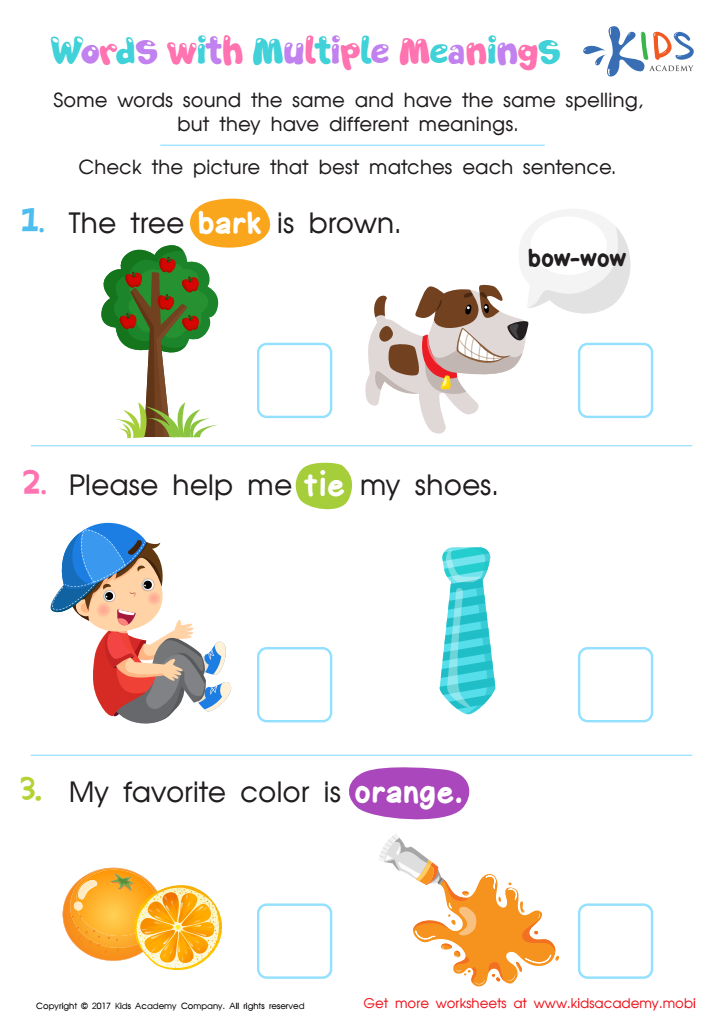
Words with Multiple Meanings Worksheet
 Assign to My Students
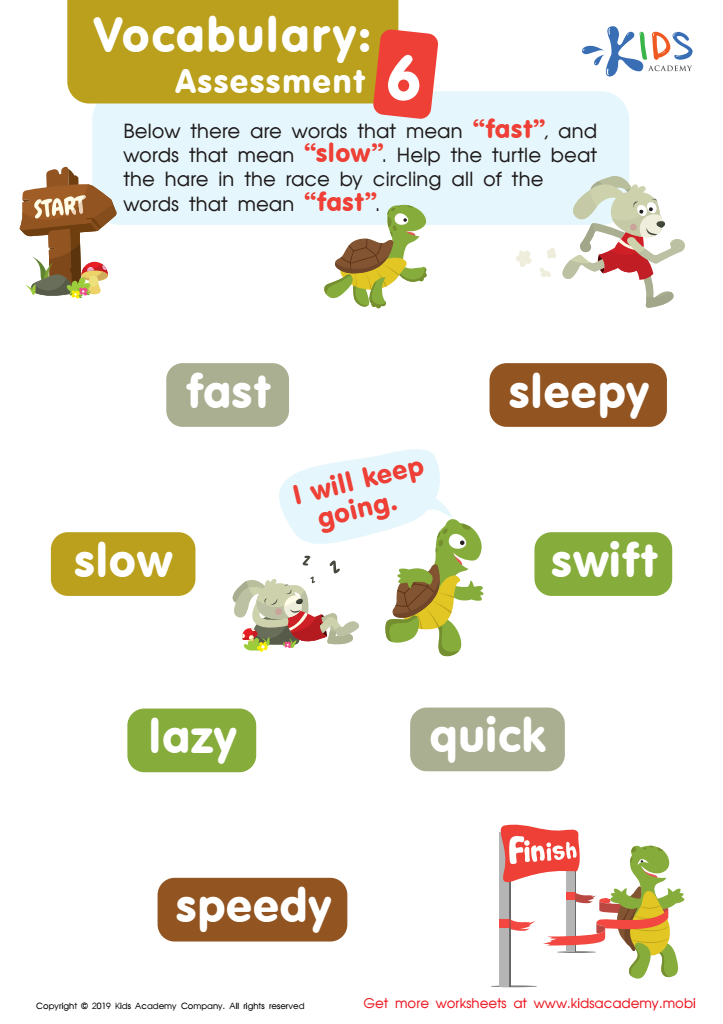
Vocabulary: Assessment 6 Worksheet
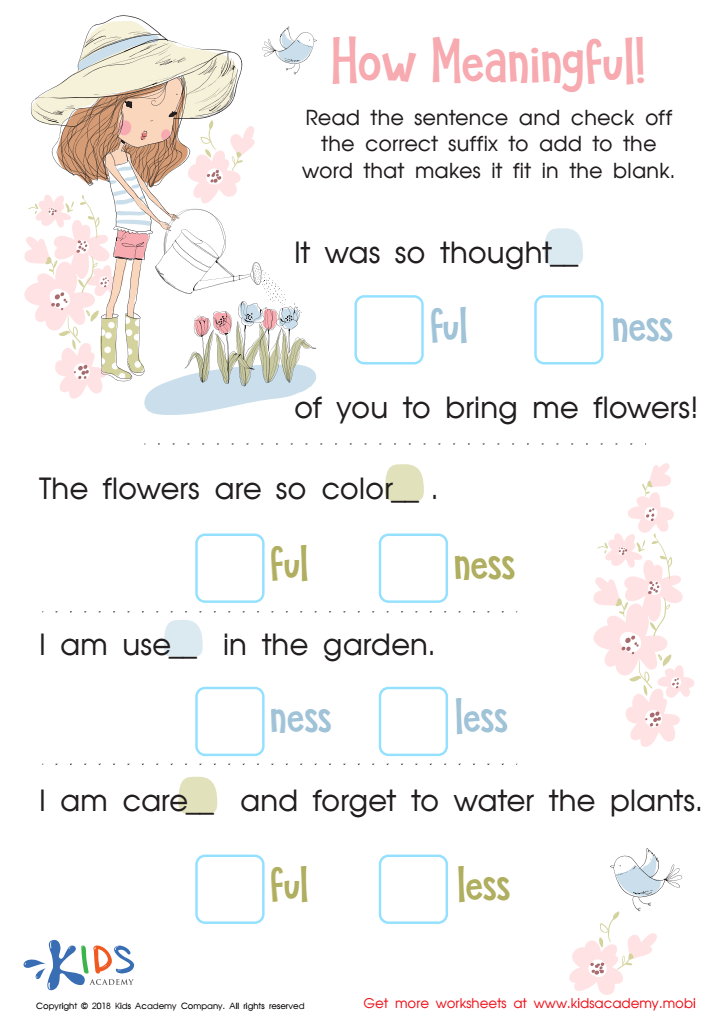
How Meaningful! Worksheet






.jpg)

Contextual comprehension refers to the ability of children aged 3 to 8 to understand spoken or written language in relation to the surrounding context. This aspect of literacy is crucial for several reasons.
Firstly, developing contextual comprehension in early childhood enhances critical thinking skills. When children learn to connect language with context, they become adept at making inferences and drawing conclusions, fostering a deeper understanding of the material they encounter.
Secondly, it encourages vocabulary development. Children exposed to language in various contexts are more likely to grasp the meaning of new words, as they learn to associate terms with experiences and situations, boosting their language skills.
Additionally, contextual comprehension supports effective communication. When children understand context clues, they become better at expressing their ideas and feelings, enhancing their interactions with peers and adults.
Furthermore, early comprehension skills are predictive of future academic success. By nurturing children’s ability to understand language in context, parents and teachers lay a strong foundation for reading and writing skills.
In sum, fostering contextual comprehension among young learners promotes cognitive development, enhances communication, and prepares them for educational success. This active involvement in their literacy journey is critical for parents and educators alike, ensuring a brighter future for children.








