Counting shapes Worksheets for Ages 3-8
3 filtered results
-
From - To
Discover the perfect resource to enhance your child’s early mathematical skills with our "Counting Shapes Worksheets for Ages 3-8". Through engaging and colorful activities, kids learn to recognize and count various shapes, fostering both their cognitive development and foundational math abilities. These printable worksheets are designed to capture young learners' imaginations and turn learning into a fun, interactive experience. Suitable for children aged 3-8, our worksheets aid in building essential skills such as pattern recognition, sequencing, and fine motor coordination—all crucial for their academic journey. Start exploring today and watch your child’s confidence and understanding soar!
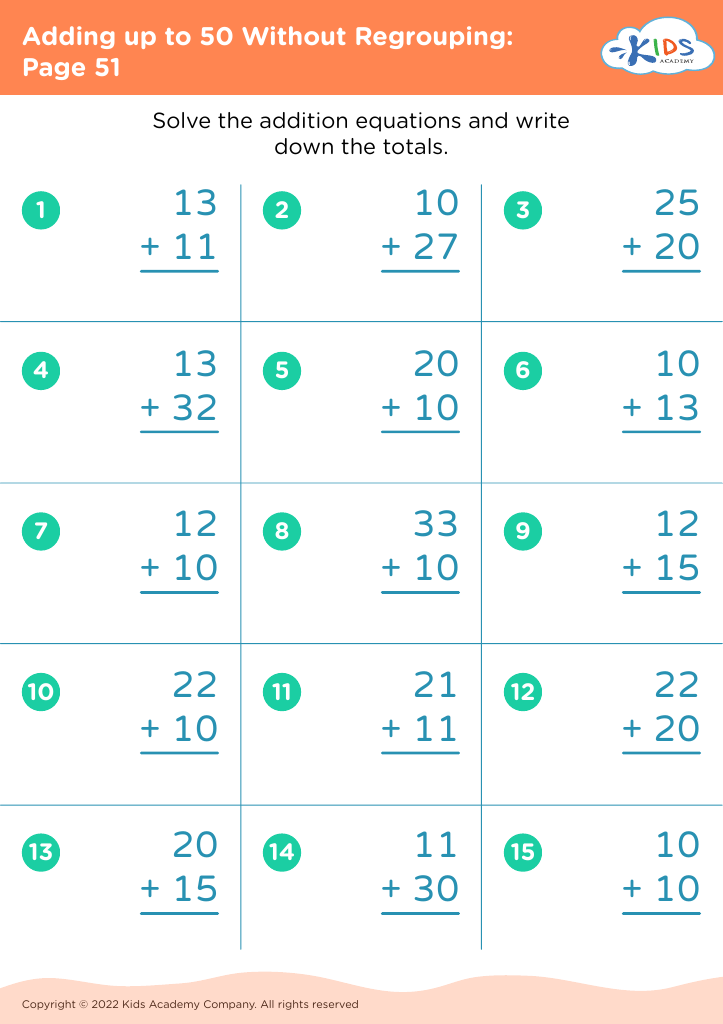
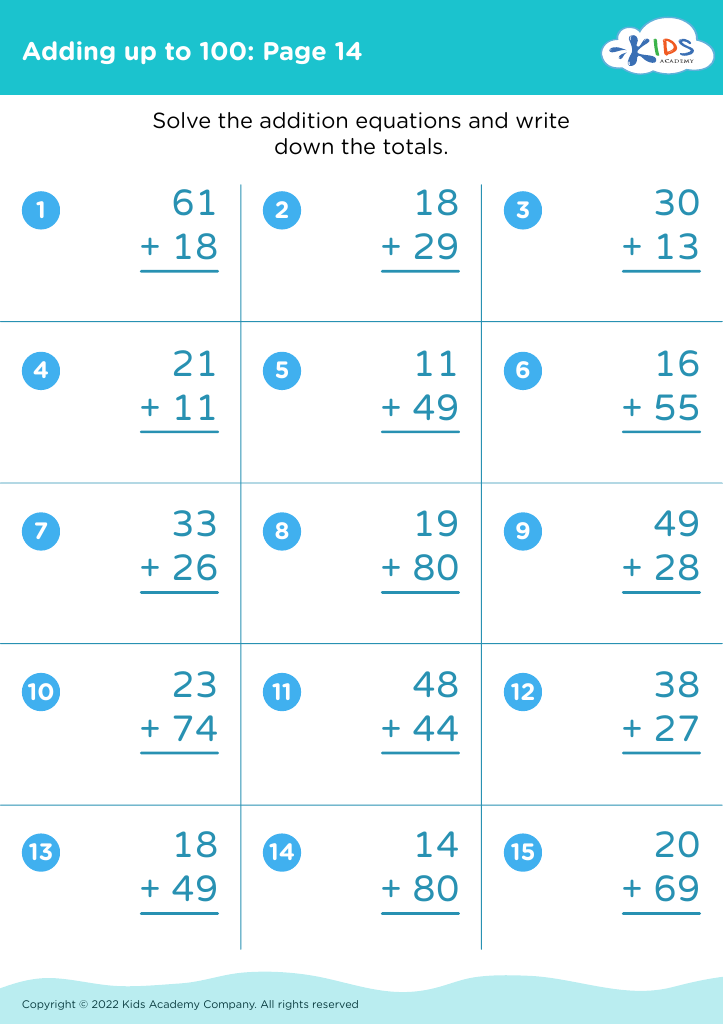
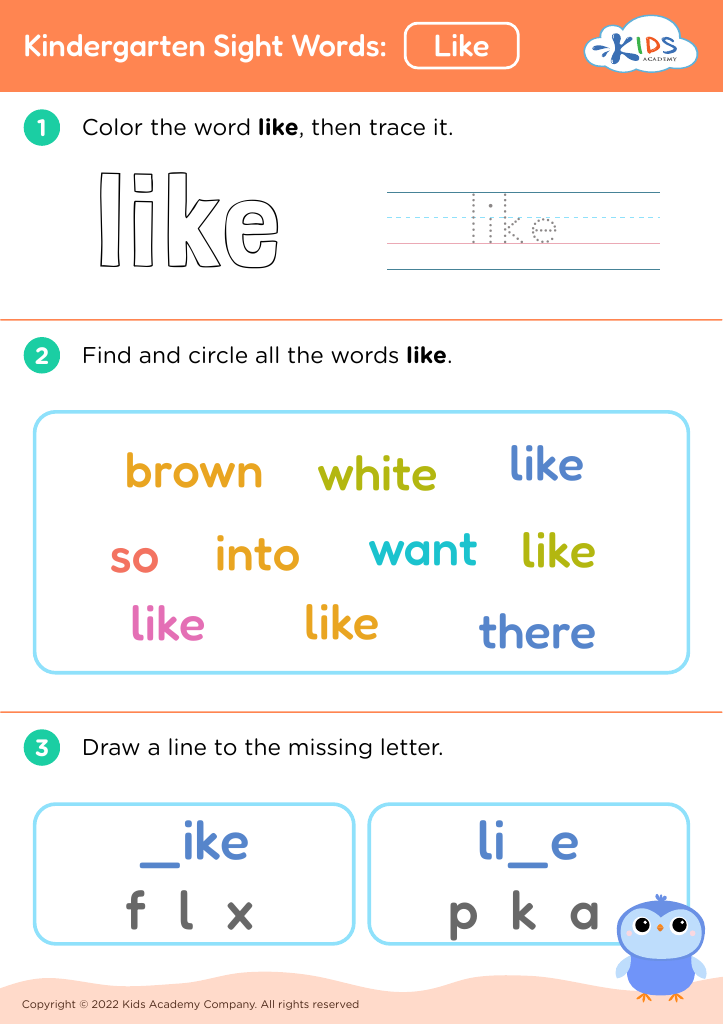





Counting shapes for children aged 3-8 is an essential foundational skill that contributes significantly to their cognitive and mathematical development. At this age, children are rapidly developing their ability to recognize patterns, which is crucial for various aspects of learning. Engaging in activities that involve counting shapes helps enhance their spatial awareness and geometric understanding. These skills are fundamental as they form the building blocks for more complex mathematical concepts such as geometry, measurement, and algebra.
Understanding shapes and their properties allows children to categorize and organize information, which is a critical thinking skill. For instance, recognizing that a triangle has three sides while a square has four helps children understand classification and comparison, which are vital for problem-solving.
Furthermore, counting shapes improves fine motor skills through activities like drawing, cutting, and sorting shapes, promoting better hand-eye coordination. It also encourages vocabulary development; children learn terms such as "triangle," "square," "circle," and "rectangle," enhancing their language skills.
For parents and teachers, incorporating counting shapes into daily routines and play enriches children’s learning experiences. It prepares them for future academic success and fosters a positive, engaging relationship with mathematics from an early age, setting a strong foundation for lifelong learning.








