Enhance logical thinking Worksheets for Ages 3-8
5 filtered results
-
From - To
Unlock your child's potential with our "Enhance Logical Thinking Worksheets" designed specifically for ages 3 to 8. These engaging and interactive worksheets encourage critical thinking and problem-solving skills through fun activities. Tailored to suit young learners, the worksheets cover patterns, shapes, and sequencing, ensuring a solid foundation for future learning. Our age-appropriate content promotes cognitive development in a playful manner, making learning enjoyable. Download these printable resources to give your child the tools they need for analytical thinking and reasoning. Foster a love for learning while enhancing essential skills that benefit them well beyond early education!
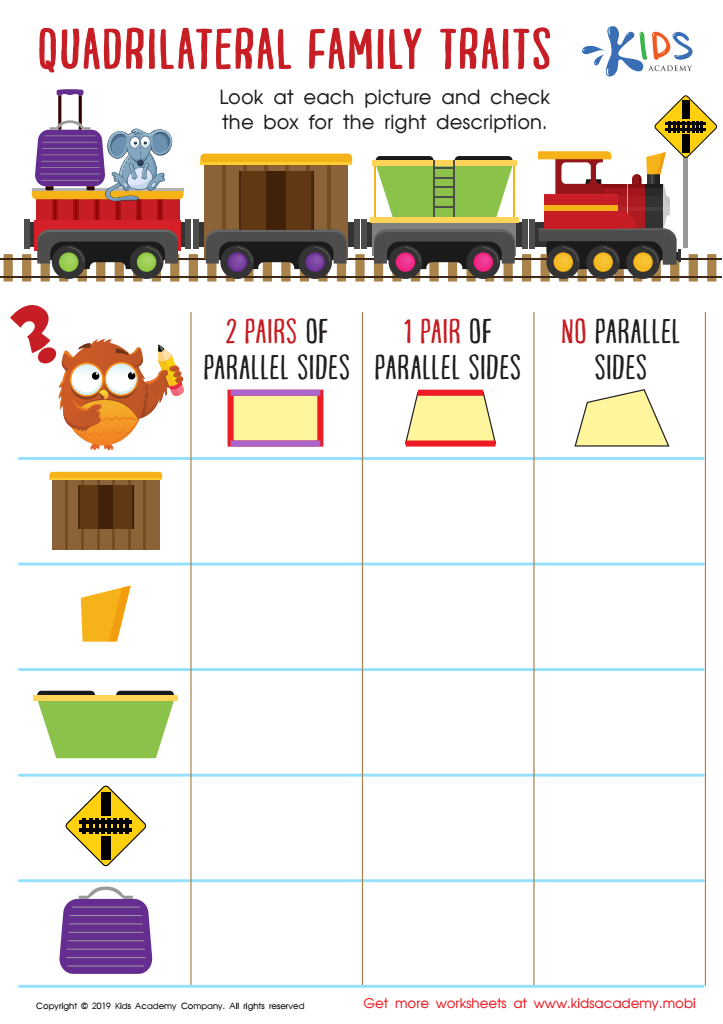
Quadrilateral Family Traits Worksheet
 Assign to My Students
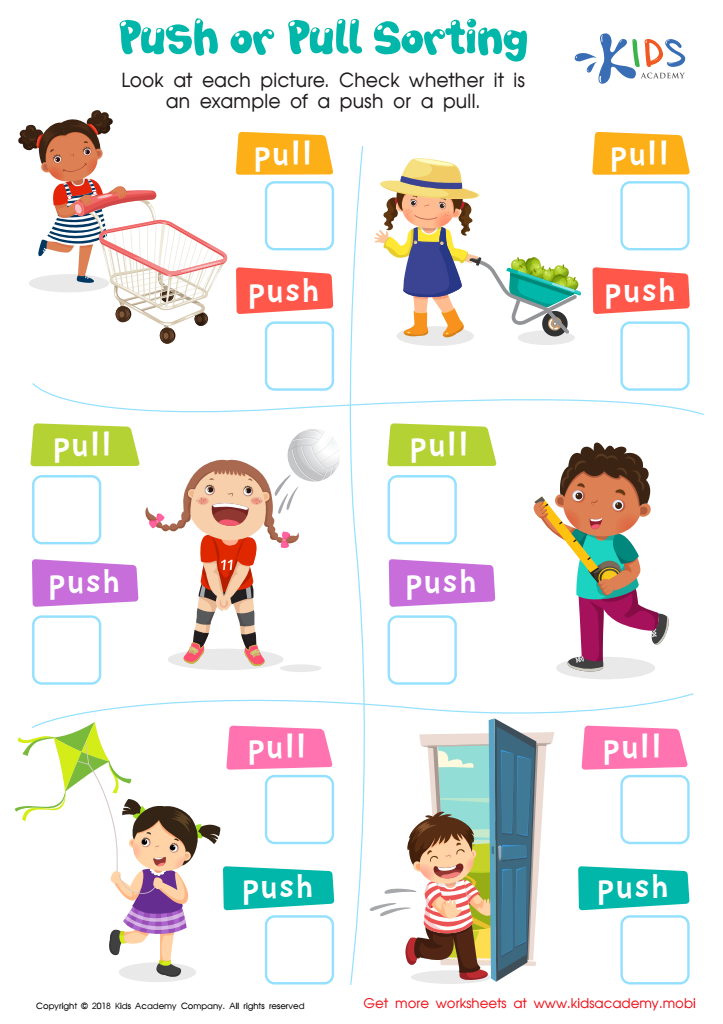
Push or Pull Sorting Worksheet







Enhancing logical thinking in children aged 3 to 8 is fundamental for their cognitive development and future success. During this critical period, children's brains are highly adaptable and ready to absorb new concepts, making it the perfect time to nurture reasoning skills. Logical thinking fosters problem-solving abilities, empowering kids to analyze situations, predict outcomes, and make informed decisions. By engaging in activities that promote reasoning—such as puzzles, pattern recognition, and simple mathematical games—parents and teachers can stimulate young minds, laying the groundwork for academic achievement and daily decision-making.
Moreover, logical thinking contributes to emotional intelligence by helping children understand cause-and-effect relationships, which is vital for conflict resolution and interpersonal communication. As children learn to justify their thoughts and challenge their assumptions, they become more confident and effective communicators. In these formative years, instilling strong logical skills equips children for increased academic demands and real-world complexities as they grow. Ultimately, fostering logical thinking is not just about academics; it cultivates resilience, adaptability, and creativity, preparing children to thrive in an increasingly complex world. By prioritizing this aspect of learning, parents and teachers significantly influence future cognitive and social-emotional development.








