Knowledge application Worksheets for Ages 3-8
7 filtered results
-
From - To
Our "Knowledge Application Worksheets for Ages 3-8" by Kids Academy enhances children's understanding through engaging activities that foster critical thinking, problem-solving, and creativity. These printable worksheets cover diverse topics such as math, reading, science, and general knowledge, making learning both fun and effective. Our thoughtfully designed exercises help young learners apply their acquired knowledge in practical and meaningful ways, fueling their curiosity and nurturing lifelong learning skills. Perfect for classrooms and homeschool environments, these worksheets are tailored to support the developmental milestones of children in their early years, ensuring a strong foundation for future academic success.
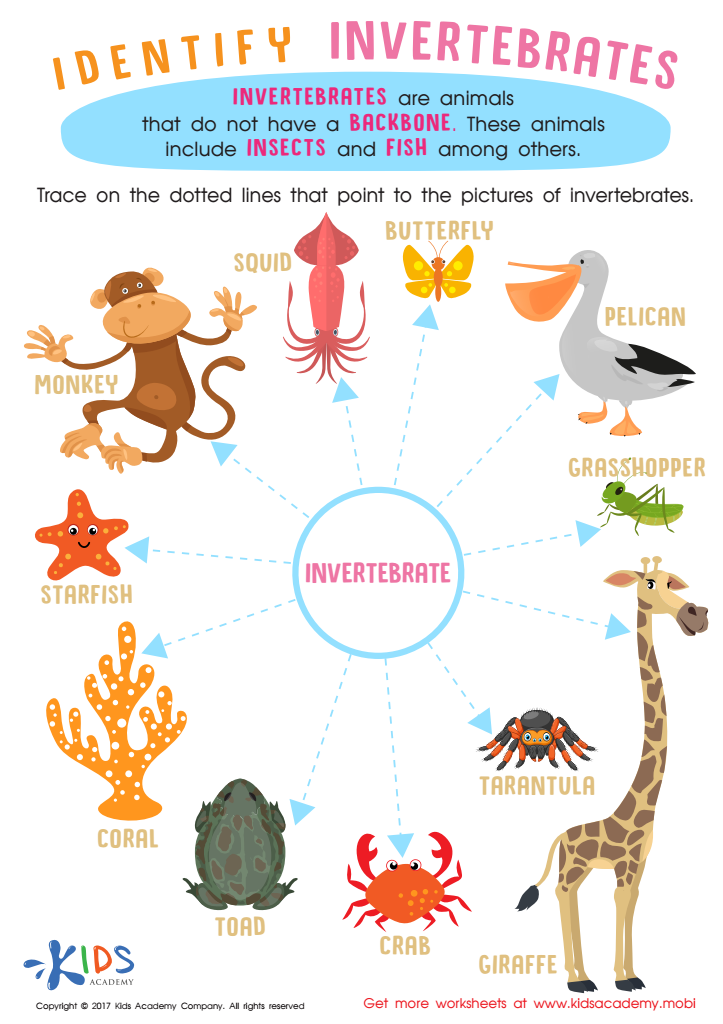
Invertebrates Worksheet for Grade 3
 Assign to My Students
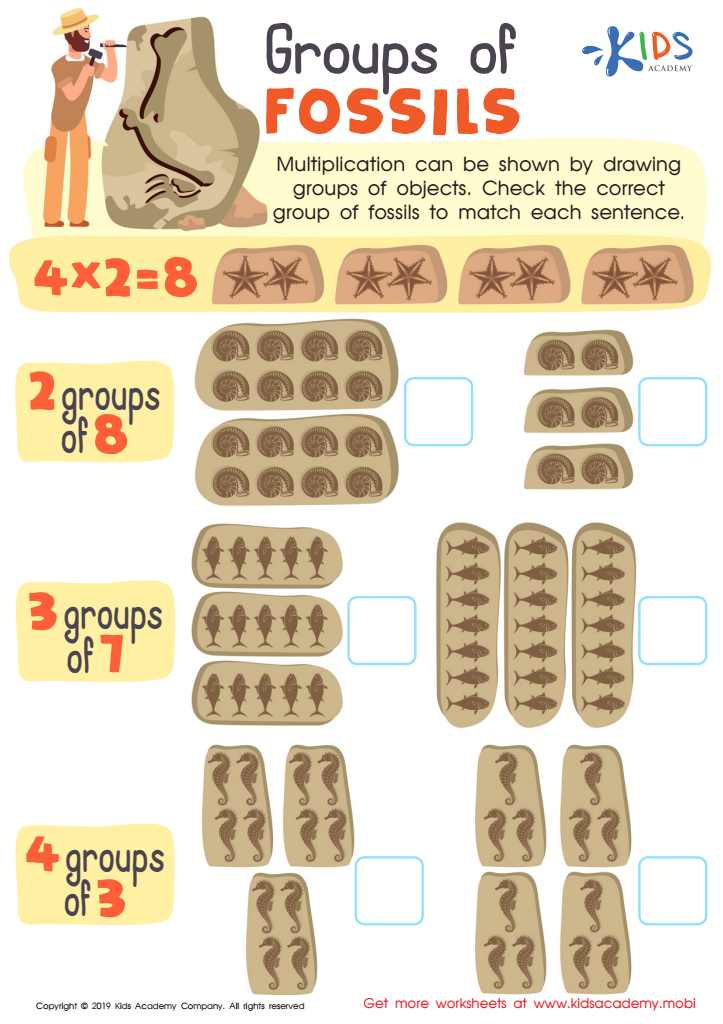
Groups of Fossils Worksheet
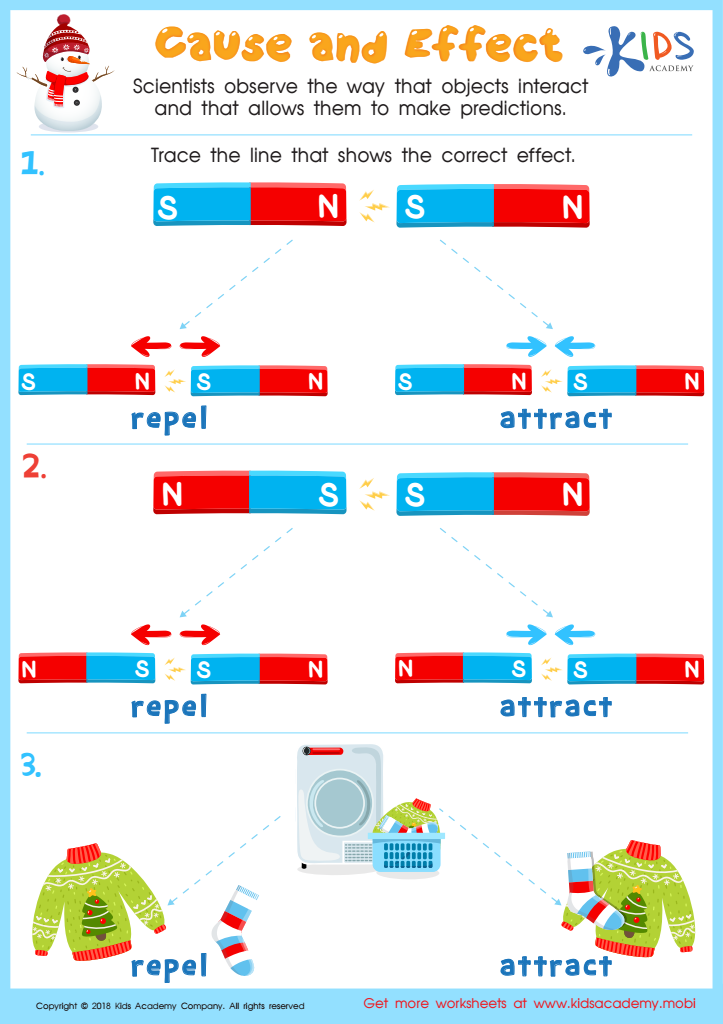
Repel and Attract Magnet Worksheet
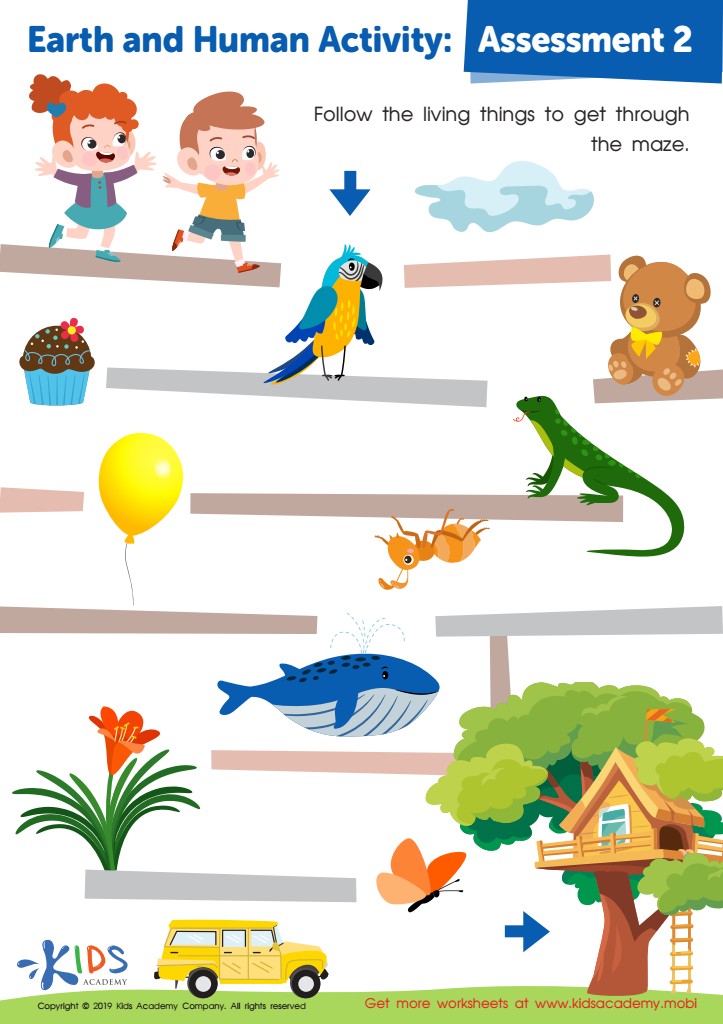
Earth and Human Activity: Assessment 2 Worksheet
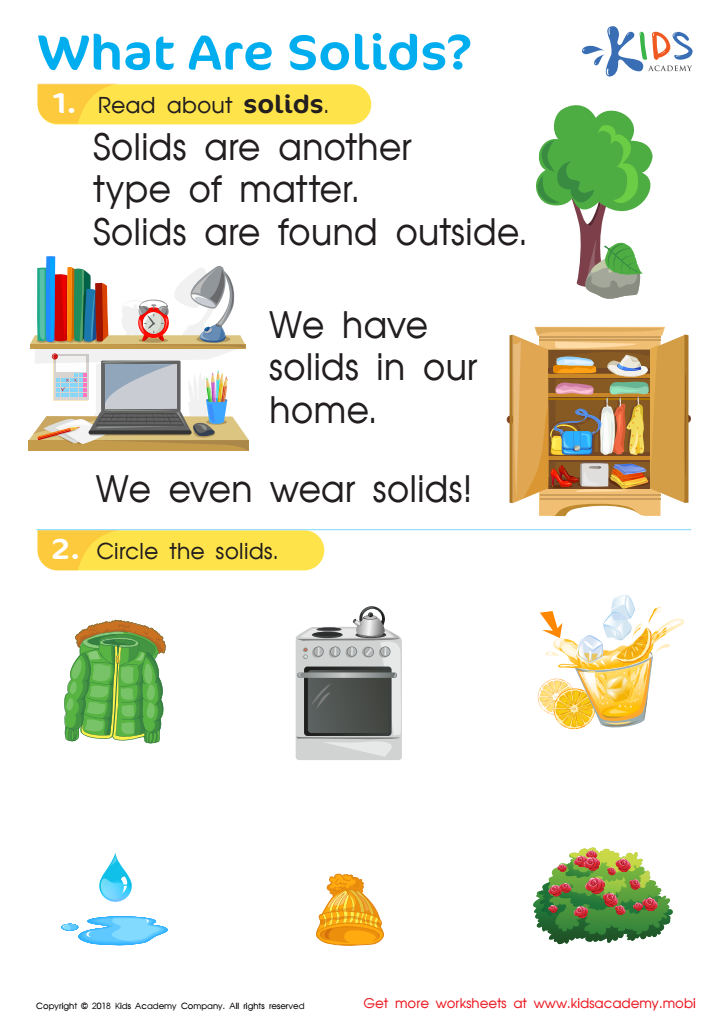
What Are Solids? Worksheet
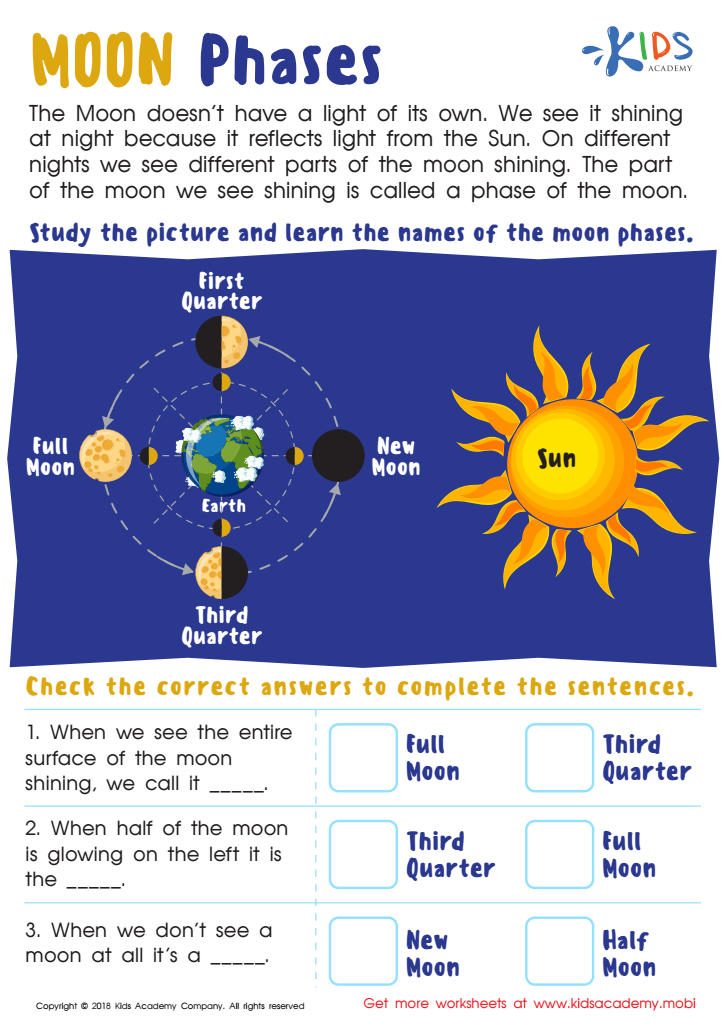
Moon Phases Worksheet
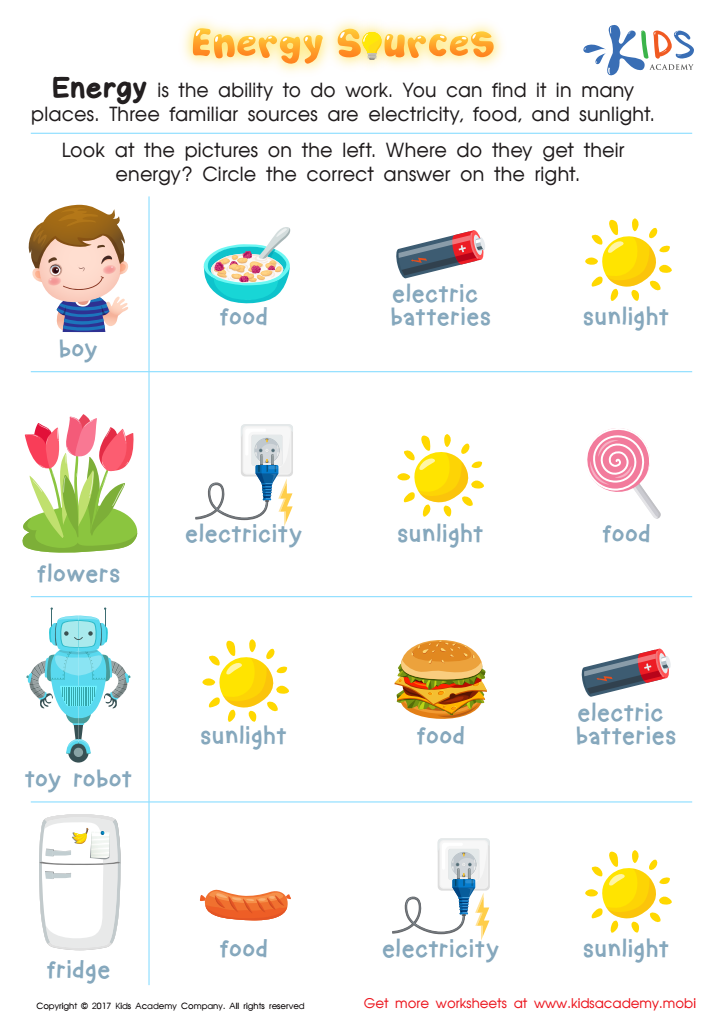
Energy Sources Printable








Parents and teachers should pay special attention to the application of knowledge for children aged 3-8 because this foundational period is critical for cognitive, social, and emotional development. During these early years, children are remarkably receptive and able to absorb new information rapidly. They learn not just by listening or watching but by doing—engaging actively with their environment.
The application of knowledge helps solidify concepts learned. For example, a child learning through a hands-on activity, such as measuring ingredients while baking, isn't just memorizing numbers—they’re grasping math concepts, enhancing fine motor skills, and even engaging in problem-solving. This deeper understanding aids in the transition from concrete to abstract thinking.
Moreover, applying knowledge helps children develop critical thinking and creativity. When they are encouraged to use what they’ve learned to solve problems or create something new, they become more adaptable and resilient. Alongside cognitive benefits, knowledge application boosts confidence and independence, because children see that their ideas have value and impact.
Lastly, the collaboration between students, peers, or teachers during applied learning activities inherently improves communication and social skills. In summary, promoting the application of knowledge in early childhood sets the stage for well-rounded, engaged learners, prepared for future academic challenges and life skills.








