
Learning subtraction Worksheets for Ages 3-8
4 filtered results
Difficulty Level
Grade
Age
-
From - To
Subject
Activity
Standards
Discover our engaging "Learning Subtraction Worksheets for Ages 3-8" designed to make mastering subtraction fun and effective for young learners. Created by educational experts, our printable worksheets feature age-appropriate problems, colorful illustrations, and interactive exercises to build a strong math foundation. Perfect for home or classroom use, these worksheets help kids develop essential subtraction skills through practice and play. Watch your child blossom in confidence as they tackle simple to more complex subtraction challenges, all while enjoying the process. Start your child's subtraction journey today with our comprehensive and captivating learning resources!
Favorites
With answer key
Interactive
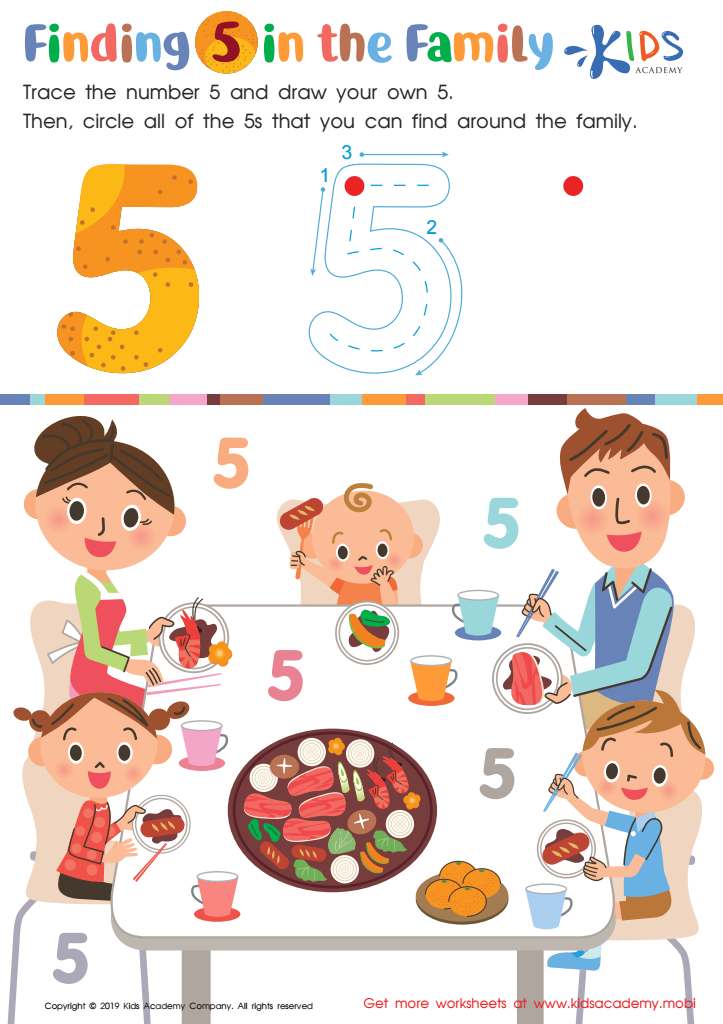
Finding 5 in the Family Worksheet
This worksheet helps kids identify and write the number 5. Ask what the family is doing and who the family members are. Help them trace and draw the 5, then have them circle all 5s in the picture.
 Assign to My Students
Finding 5 in the Family Worksheet
Worksheet
Join Kids Academy for Free
Who is primarily going to use this learning content?








Learning subtraction is fundamental for young children, ages 3-8, as it lays the groundwork for their future mathematical understanding and problem-solving skills. Subtraction is one of the basic arithmetic operations that, along with addition, plays a crucial role in developing number sense.
Grasping subtraction helps children understand the concept of taking away or finding the difference between quantities, which is essential for everyday activities, such as sharing items or understanding changes and measurements. Early proficiency in subtraction also builds a strong foundation for more complex operations like multiplication and division.
Moreover, learning subtraction enhances cognitive skills. It supports memory development, logical reasoning, and critical thinking. Young children often solve subtraction problems using physical objects or mental strategies, which reinforces their ability to visualize problems and come up with solutions.
For teachers and parents, monitoring and encouraging subtraction skills ensures children don't fall behind in math. Addressing difficulties early on can prevent math anxiety and build confidence. Incorporating playful and engaging methods to teach subtraction keeps learning enjoyable and effective.
In summary, fostering a solid understanding of subtraction for children aged 3-8 prepares them for academic success, practical life skills, and boosts cognitive development, making it a crucial aspect of early childhood education.








