Math fluency development Worksheets for Ages 3-8
3 filtered results
-
From - To
Enhance your child's math skills with our Math Fluency Development Worksheets for Ages 3-8. Designed to build a strong numerical foundation, these printable resources cover essential math concepts including addition, subtraction, number recognition, and counting. Each worksheet is tailored to support children’s learning at their own pace, helping them develop the confidence and fluency needed for future math success. Featuring engaging activities and colorful designs, our worksheets make learning fun and interactive for young minds. Give your child the tools they need to excel in math with Kids Academy’s expertly crafted worksheets. Visit our page to get started today!
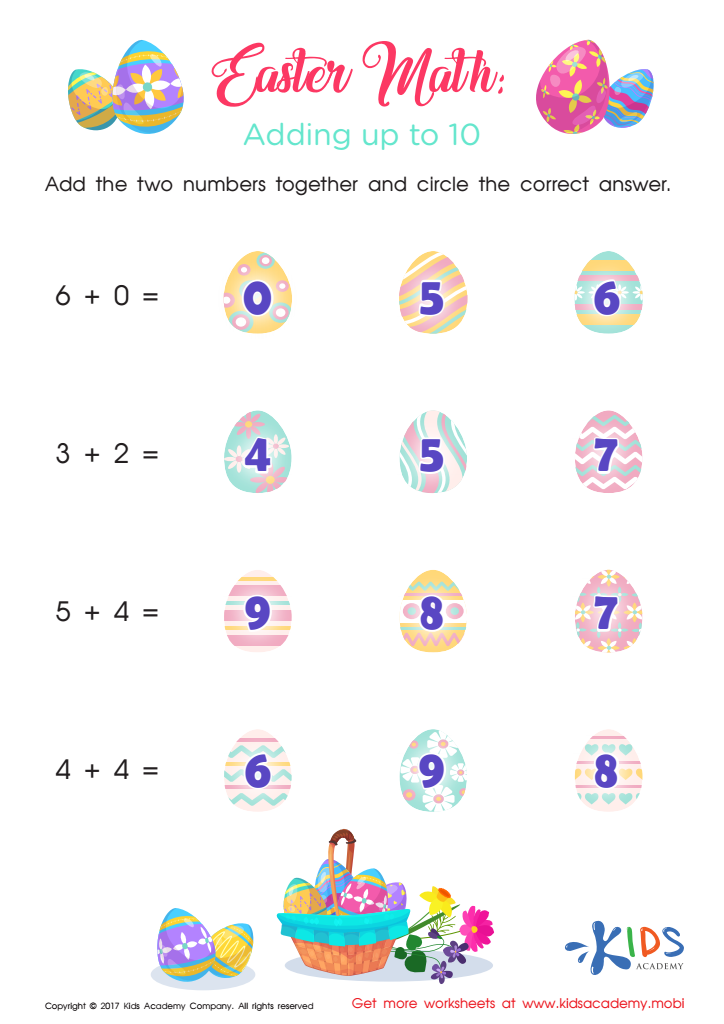
Addition Up To 10 Worksheet
 Assign to My Students
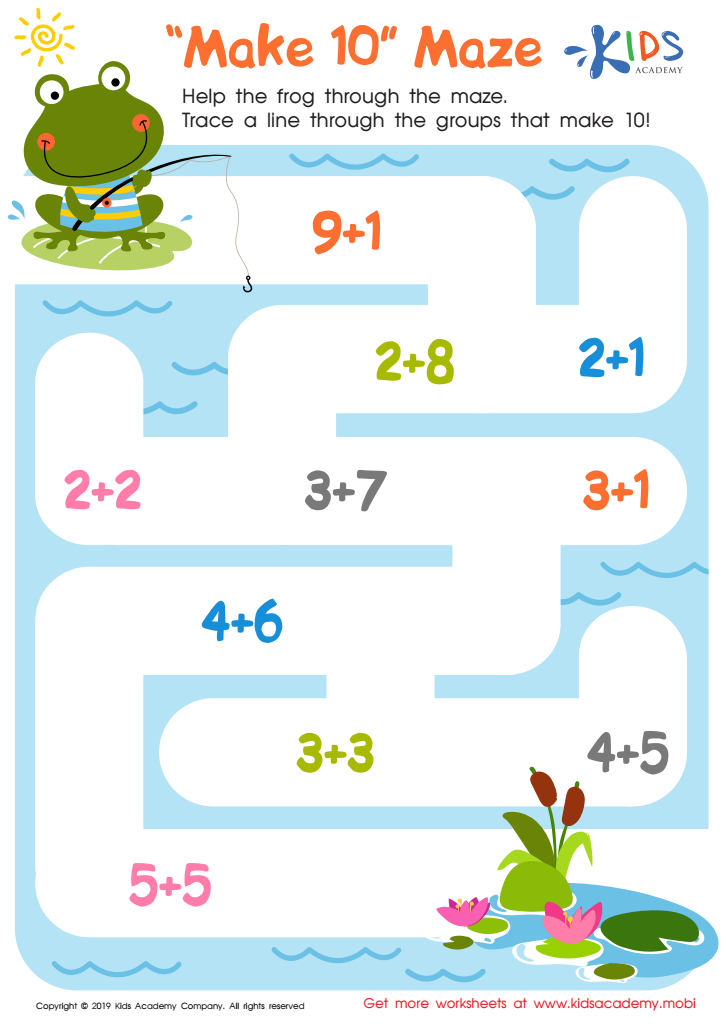
Make 10 Maze Worksheet
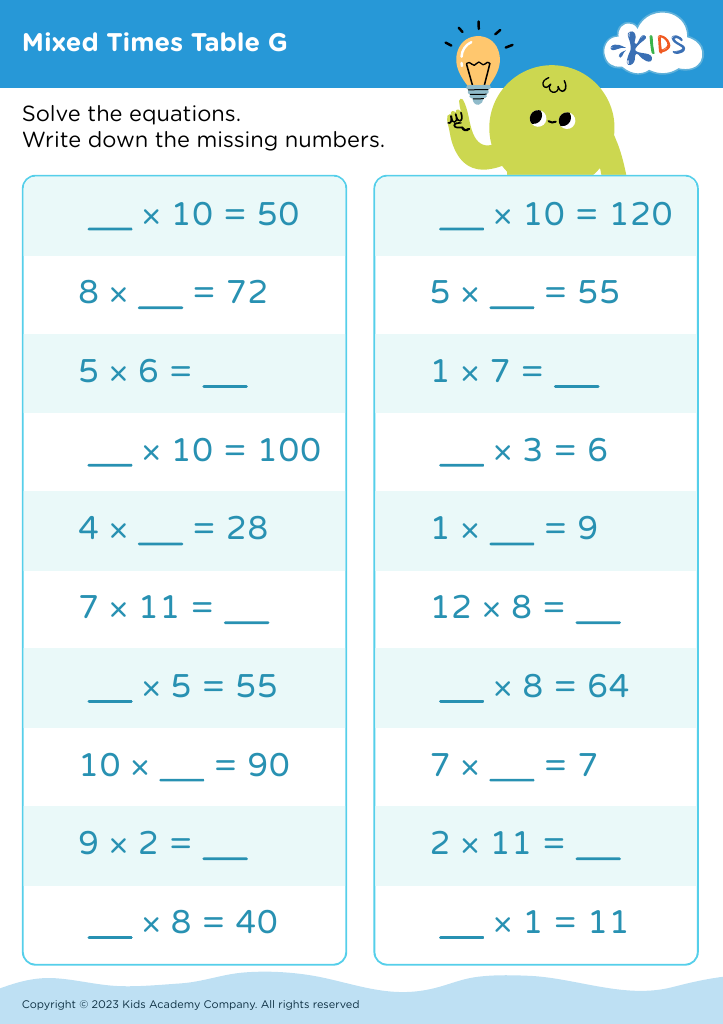






.jpg)

Math fluency development in children aged 3-8 is crucial for several important reasons. First and foremost, mastering basic math concepts and operations at an early age lays the foundation for future academic success. Children who develop math fluency can tackle more complex mathematical problems with confidence as they progress in their education. Furthermore, early math skills are closely linked with critical thinking and problem-solving abilities, which are essential competencies in both academic and real-life contexts.
Math fluency also nurtures a sense of achievement and confidence in young learners. When children can quickly and accurately perform basic math tasks, they experience pride in their abilities, which boosts their overall self-esteem. This, in turn, fosters a positive attitude towards learning and school in general.
For parents and teachers, focusing on math fluency provides a proactive approach to identifying and supporting students who may struggle with math-related anxiety or learning difficulties. Early intervention can help alleviate future challenges and ensure that all children have the opportunity to excel.
Lastly, mathematical skills are essential in everyday life, from basic tasks like telling time and handling money to more complex decision-making scenarios. Encouraging math fluency from a young age equips children with the tools they need for both academic success and practical life skills.








