Math skills improvement Worksheets for Ages 3-8
8 filtered results
-
From - To
Discover our engaging "Math Skills Improvement Worksheets" for children ages 3-8! Our thoughtfully designed worksheets focus on fundamental math concepts such as counting, addition, subtraction, and shape recognition. With a variety of fun exercises that include puzzles, games, and colorful illustrations, these resources make learning math enjoyable and focus on developing essential skills in a playful way. Our worksheets cater to different learning styles and can be easily integrated into homeschooling or classroom activities. Empower your child with confidence in their math abilities as they explore a world of numbers! Download now to enhance your child’s math journey today.
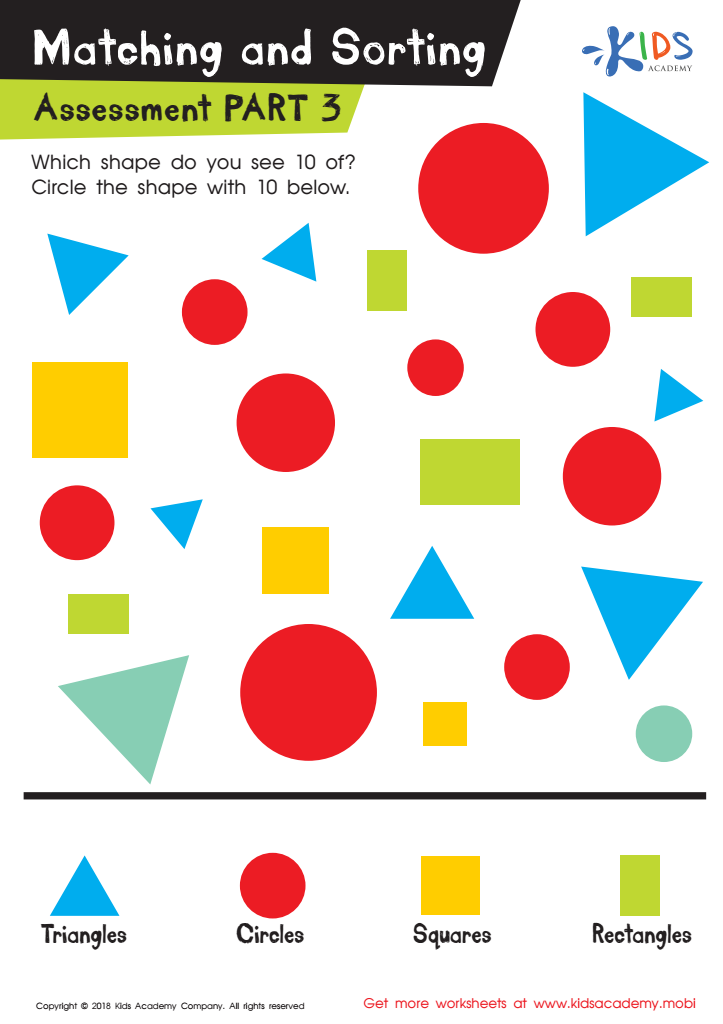
Matching and Sorting for Kindergarten: Assessment 3 Worksheet
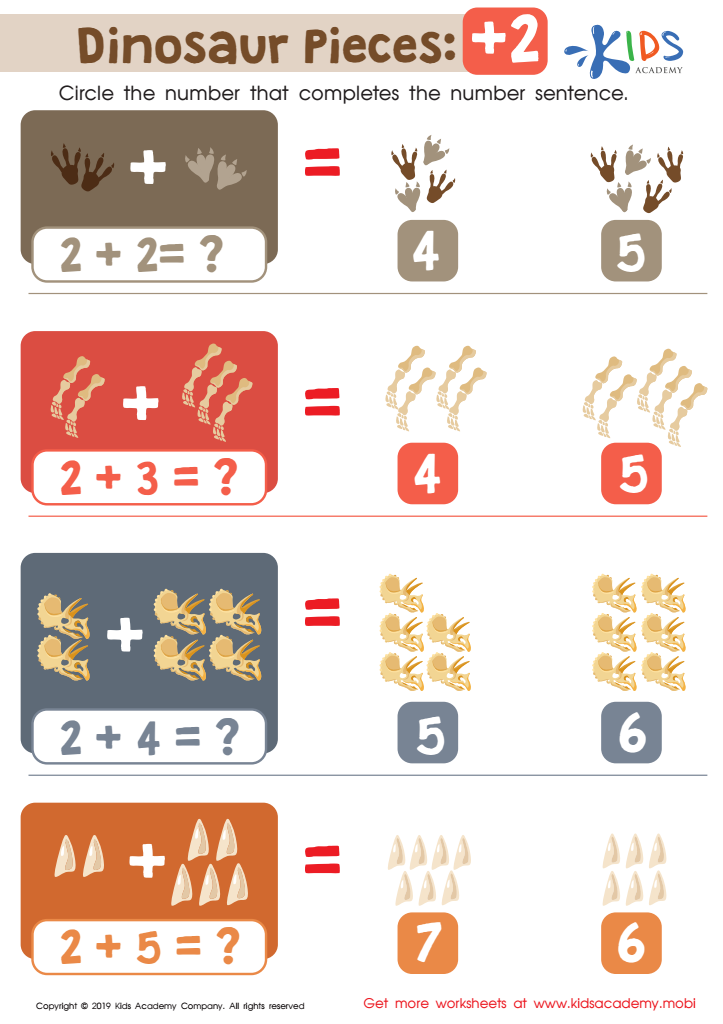
Dinosaur Pieces: +2 Worksheet
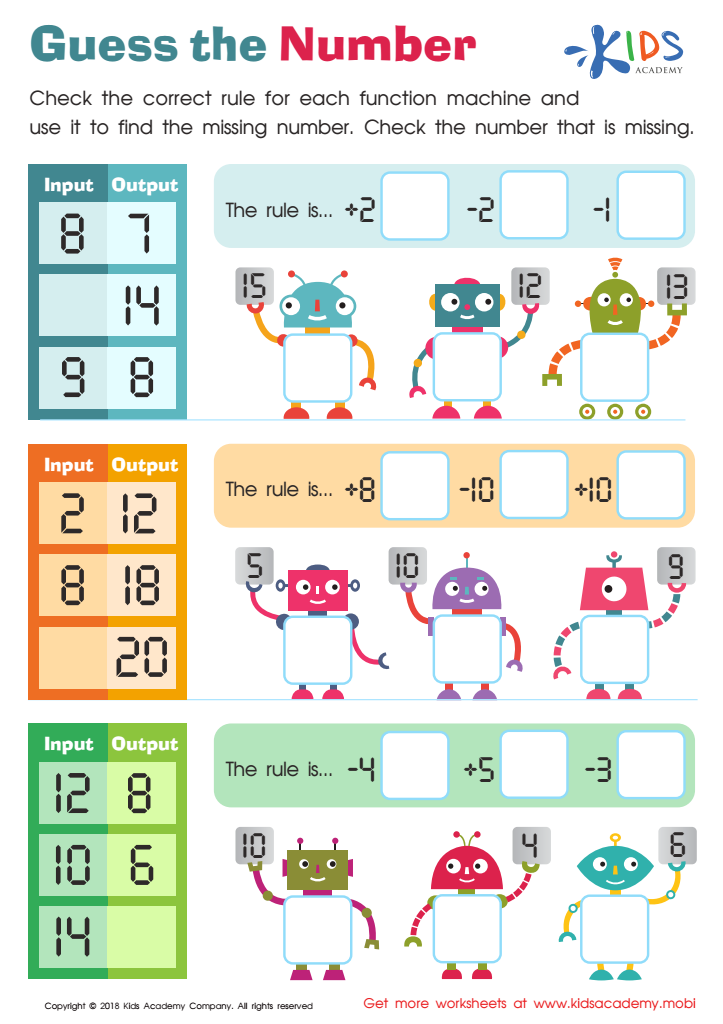
Guess the Number Worksheet
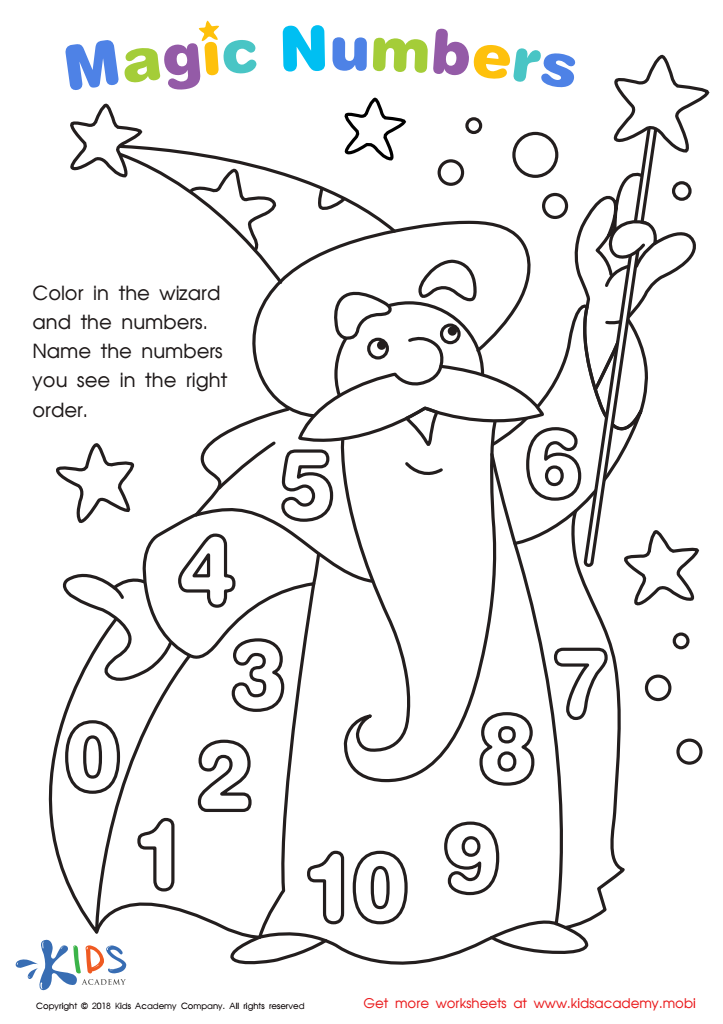
Magic Numbers Worksheet
 Assign to My Students
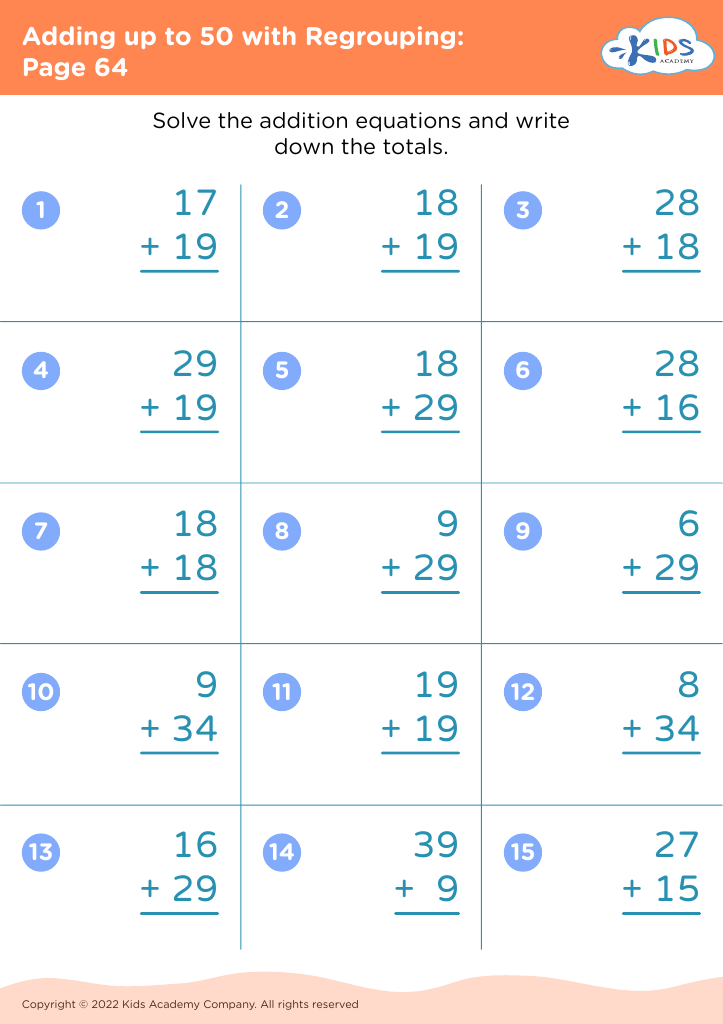
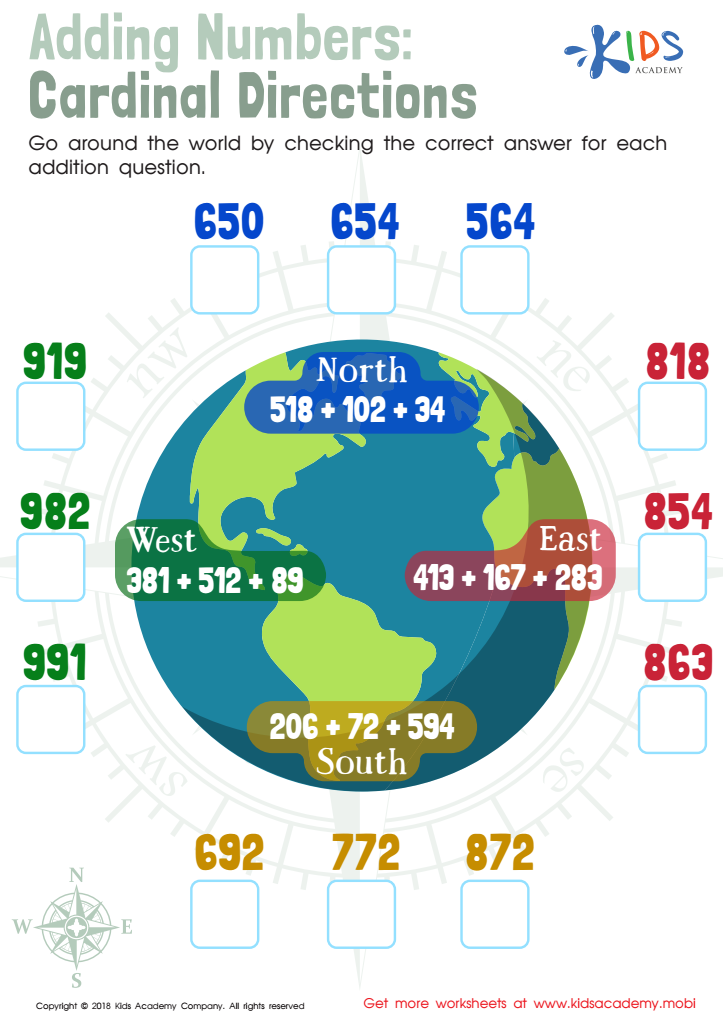
Adding Numbers: Cardinal Directions Worksheet








Math skills development in early childhood, specifically for ages 3 to 8, is crucial for several reasons. During these formative years, children’s cognitive abilities are rapidly evolving, and the foundation of mathematical skills is laid. By improving math skills early, children develop critical thinking and problem-solving abilities that are essential for academic success in later years.
Engaging in math activities helps enhance concentration, promotes logical reasoning, and fosters a sense of achievement as children overcome challenges. Parents and teachers play a key role in providing positive math experiences, which can combat math anxiety and negative perceptions towards the subject that often develop later on.
Moreover, strong math skills are linked to better performance in subjects such as science and engineering. In an increasingly STEM-focused world, equipping children with these abilities is vital for their future opportunities. Additionally, math also intersects with daily life skills, from counting money to understanding time, which are essential for independent living.
Ultimately, laying a solid mathematical foundation encourages a love for learning, motivating children to explore and engage with the world around them. Therefore, parents and teachers must prioritize math skill improvement as a fundamental element of early childhood education.








