Nature appreciation Worksheets for Ages 3-8
6 filtered results
-
From - To
Explore the wonders of the natural world with our Nature Appreciation Worksheets designed for children ages 3-8. These engaging and interactive resources encourage young learners to observe, appreciate, and connect with nature. With activities that promote hands-on exploration, creativity, and critical thinking, children will enjoy identifying plants, animals, and landscapes. Each worksheet supports foundational skills in science, language, and art while fostering a sense of environmental stewardship. Perfect for home or classroom use, these worksheets provide a fun way for kids to discover the beauty of the outdoors, enhancing their learning experience and igniting a lifelong love of nature.
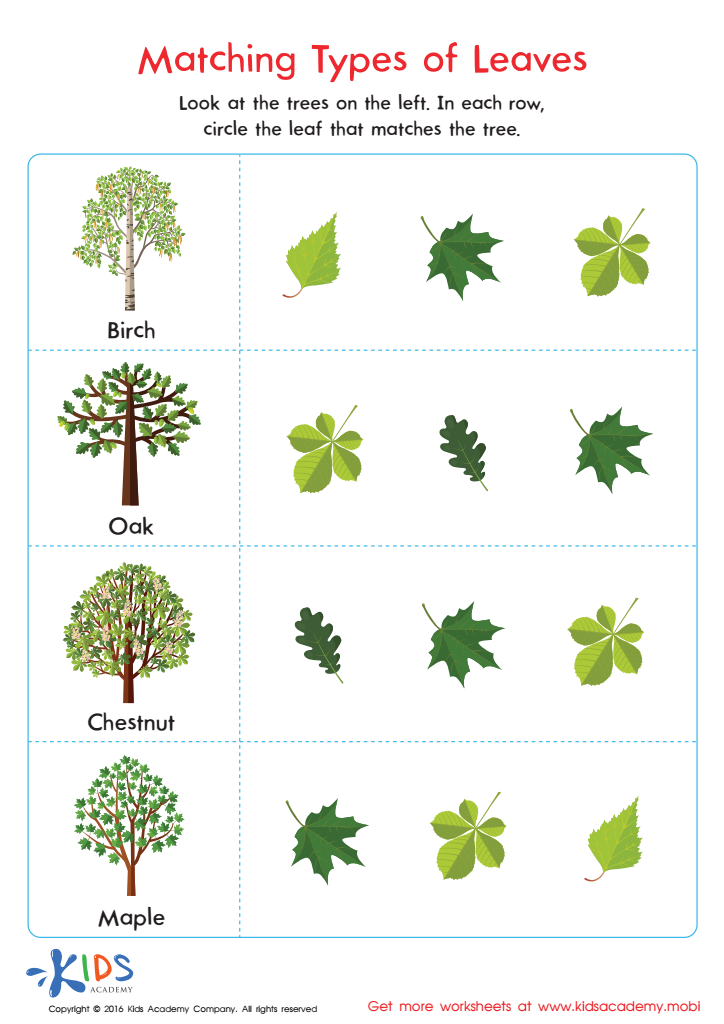
Matching Types of Leaves Printable
 Assign to My Students








Parents and teachers should prioritize nature appreciation for children aged 3-8 because it fosters holistic development and instills a sense of responsibility towards the environment. At this tender age, children are naturally curious and highly receptive to the world around them. Engaging them with nature encourages exploration and nurtures their innate curiosity, promoting cognitive, social, and emotional growth.
Nature experiences boost creativity and critical thinking, allowing children to observe, ask questions, and engage in hands-on learning. They develop gross and fine motor skills through activities like hiking, planting, and collecting natural materials. Moreover, spending time outdoors significantly enhances physical health by encouraging active play and reducing screen time, combating childhood obesity.
Furthermore, appreciation of nature cultivates empathy and respect for living organisms, teaching children to value biodiversity and understand their role in the ecosystem. It can also be a source of joy and calmness, providing a natural setting for stress relief and mindfulness.
Ultimately, nurturing a love for nature in early childhood not only enriches learning experiences but also lays the foundation for environmentally conscious future citizens who acknowledge the importance of sustainability and stewardship of our planet. Encouraging children to engage with nature now will yield lifelong benefits for both them and the Earth.








