Noun identification Worksheets for Ages 3-8
10 filtered results
-
From - To
Discover engaging Noun Identification Worksheets designed specifically for children aged 3-8. Our vibrant and interactive worksheets help young learners master the basics of nouns by identifying, categorizing, and using them in sentences. Perfect for preschool and early elementary students, these resources enhance vocabulary and grammar skills with colorful graphics and fun activities. Each worksheet is crafted to build a strong foundation in English language arts, making learning both effective and enjoyable. Visit Kids Academy for a wide selection of worksheets that support and stimulate your child's growing reading and writing skills. Unlock their potential today!
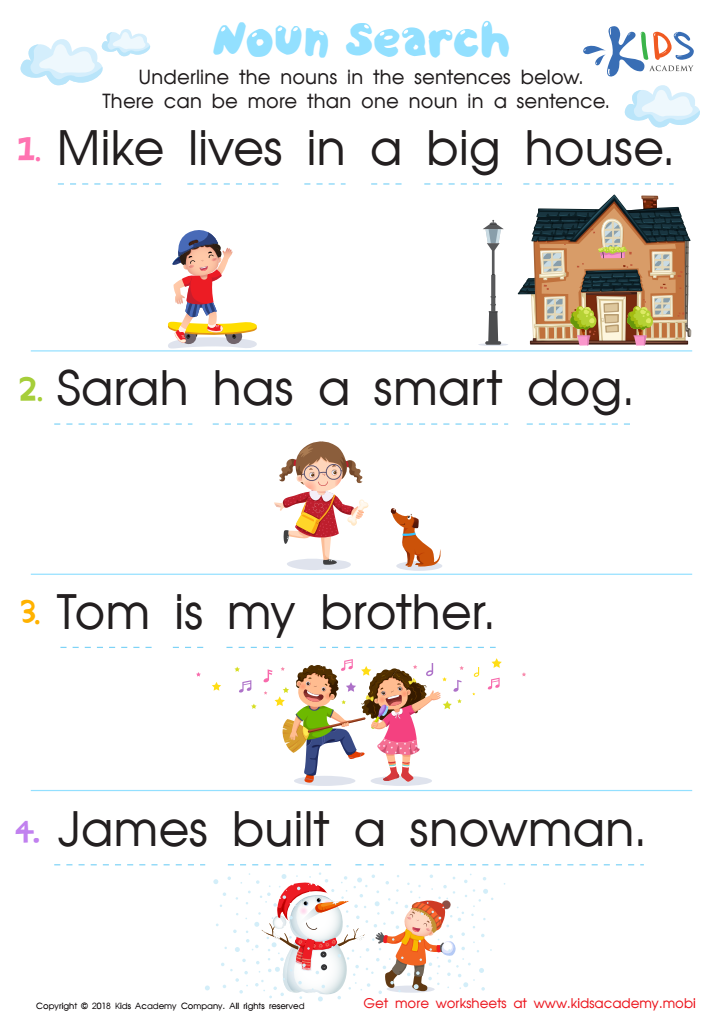
Noun Search Worksheet
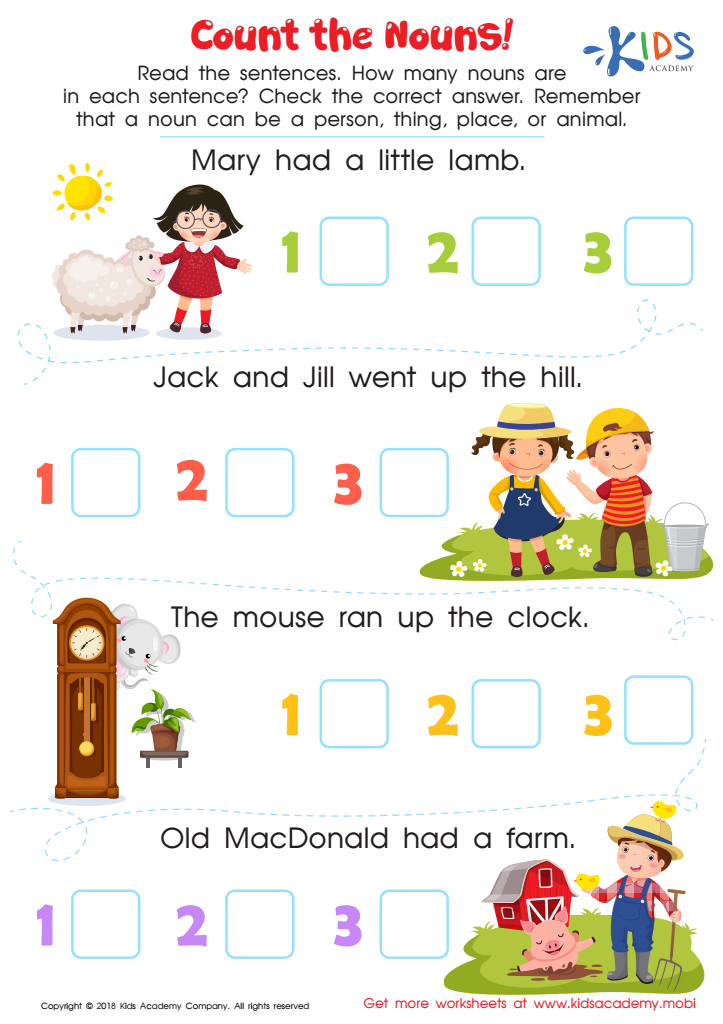
Count the Nouns Worksheet
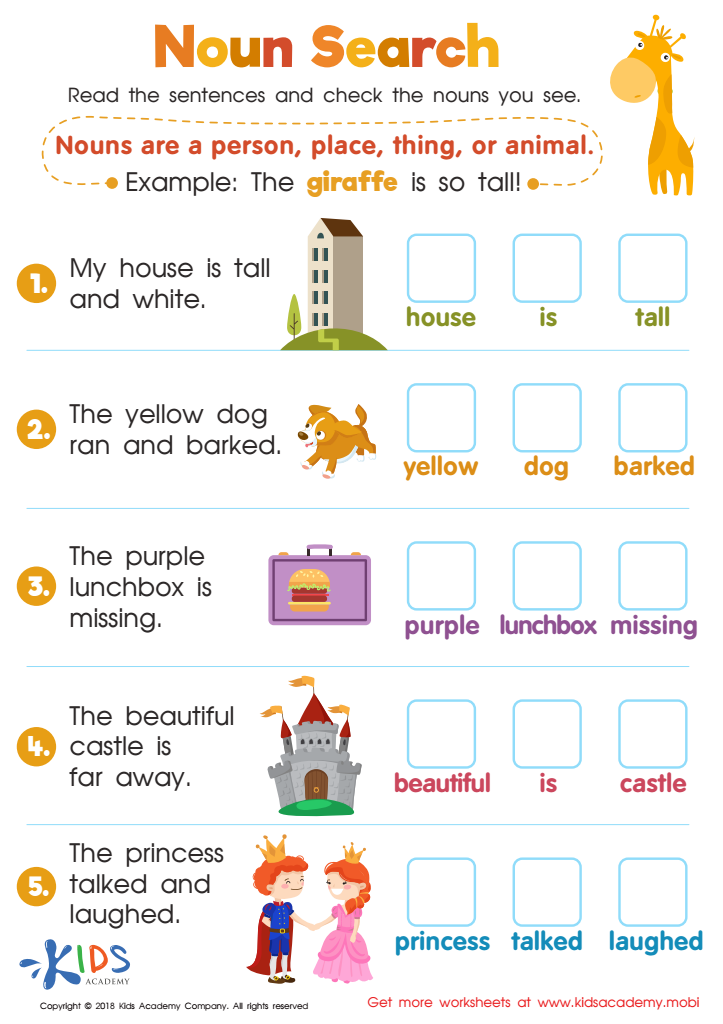
Noun Search Worksheet
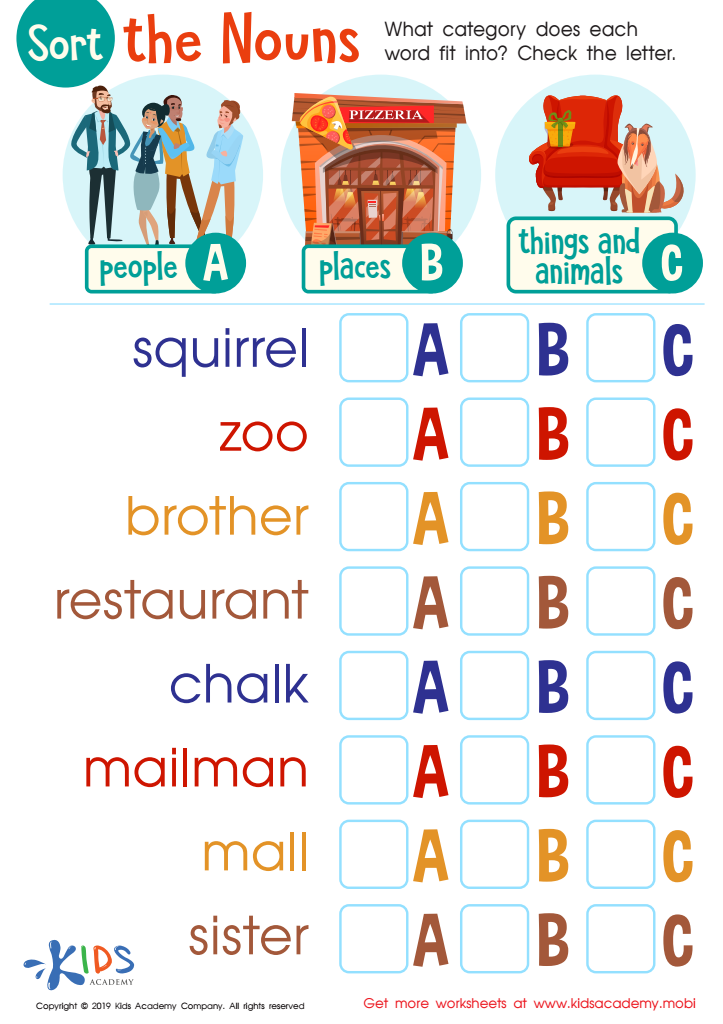
Sort the Nouns Worksheet
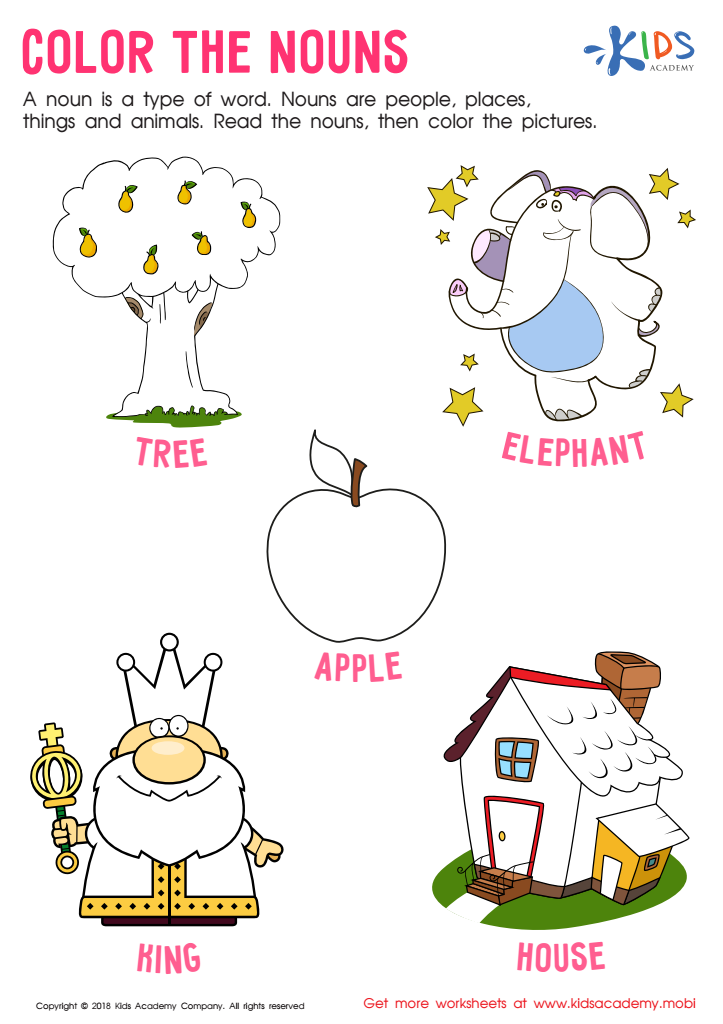
Color the Nouns Worksheet
 Assign to My Students
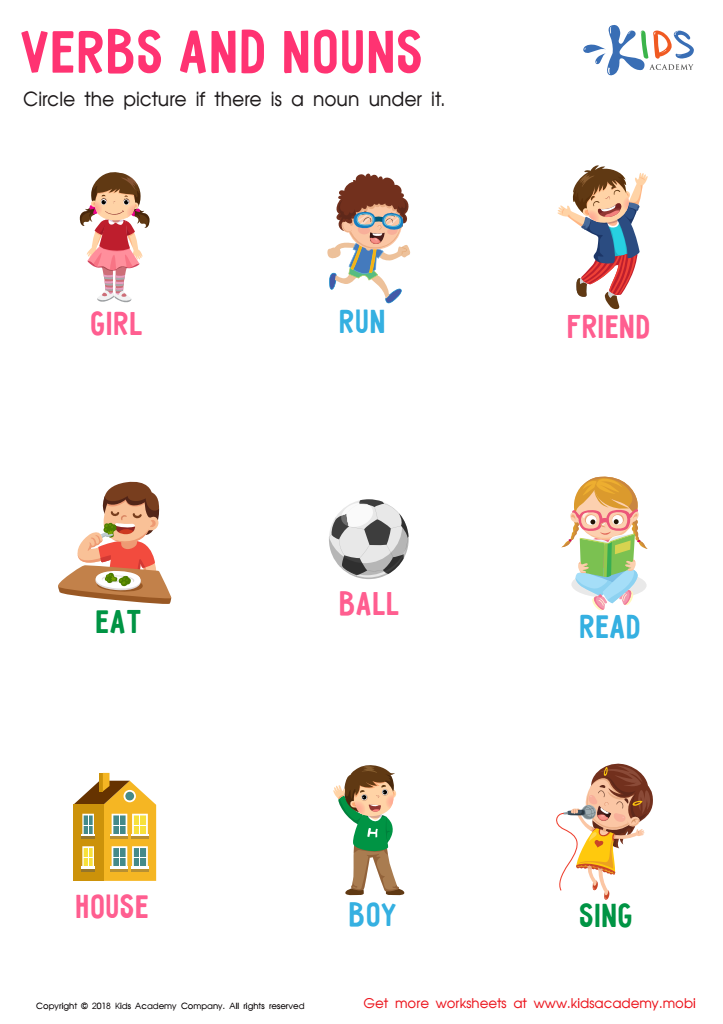
Verbs and Nouns Worksheet
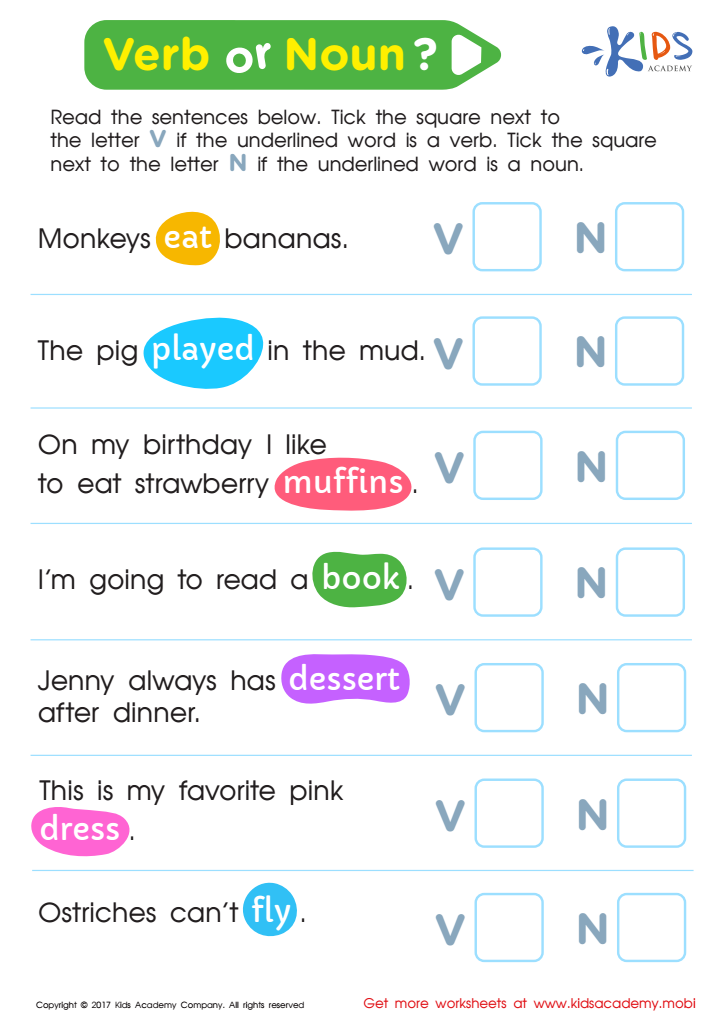
Verb or Noun Worksheet
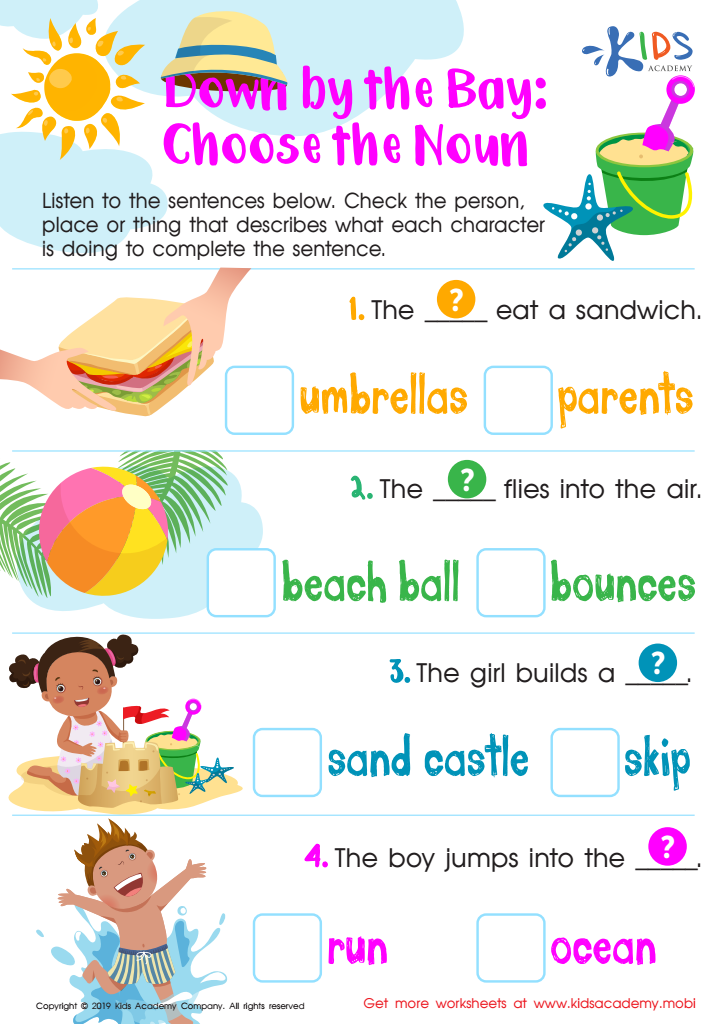
Down by the Bay: Choose the Noun Worksheet
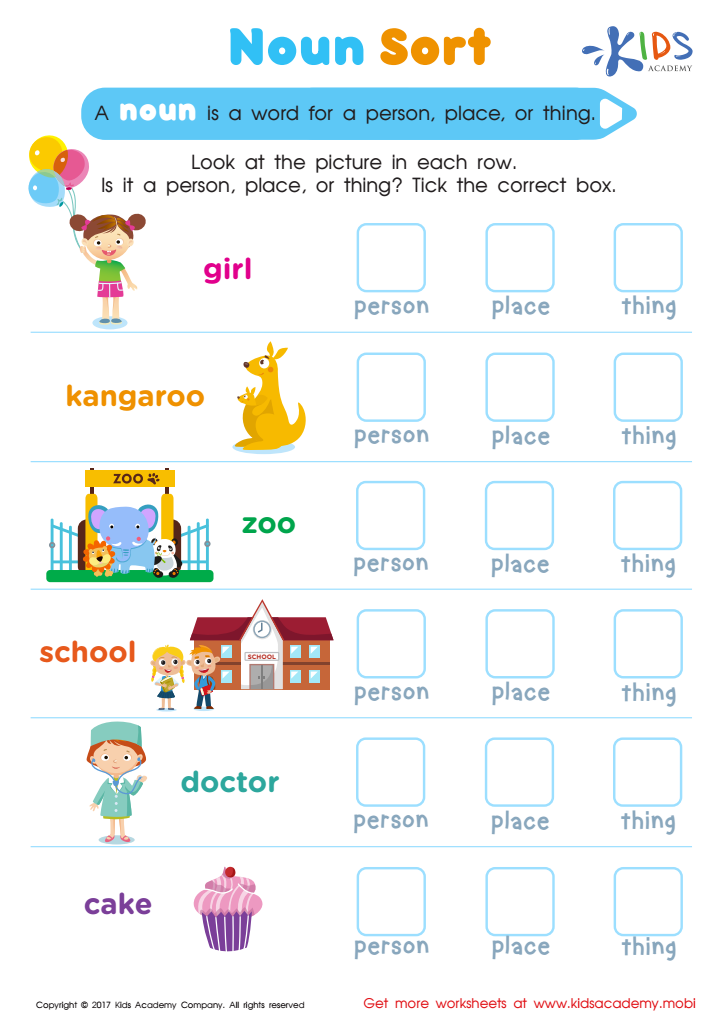
Noun Sort Printable
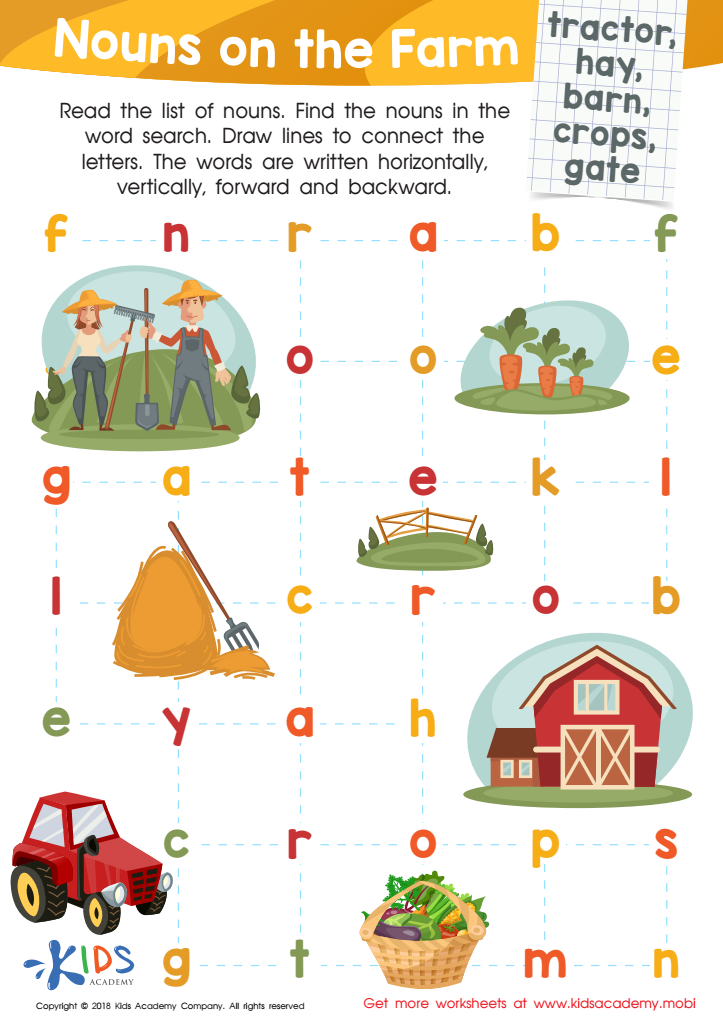
Nouns on the Farm Worksheet







Understanding nouns forms a foundational component of language acquisition for young children between the ages of 3-8. Nouns are essential building blocks in language, representing people, places, things, and ideas. Introducing children to nouns at an early age helps them to develop crucial communication skills. When children grasp the concept of nouns, they can describe their world more effectively, making it easier to express their thoughts and needs. This understanding not only aids in verbal communication but also enhances reading comprehension and writing abilities.
Teachers and parents should make a concerted effort to help children identify and use nouns. Early recognition and use of nouns lead to improved cognitive development. Labeling objects in a child’s environment can enrich vocabulary, provide understanding of categorization, and foster curiosity. Knowing and using appropriate nouns supports language interaction, which is vital in social and academic settings.
Moreover, integrating noun identification with fun activities and games makes learning engaging and memorable. For instance, playing “I Spy” or reading stories focusing on various nouns can solidify this knowledge. Early mastery of nouns and other language components sets the stage for later success in more complex linguistic and educational tasks, underscoring the need for shared caretaker and teacher involvement in this critical learning phase.








