Understanding mass Worksheets for Ages 3-8
3 filtered results
-
From - To
Welcome to our "Understanding Mass Worksheets" for ages 3-8! Our engaging and interactive resources are designed to help young learners explore the concept of mass through fun activities and visual aids. By comparing weights, measuring objects, and completing hands-on exercises, children will develop essential early math skills while enhancing their understanding of heavier and lighter objects. These worksheets are perfect for parents and teachers alike, fostering a supportive learning environment. With colorful illustrations and age-appropriate challenges, your little ones will embark on an exciting journey into the world of mass, building a solid foundation for future learning. Download and start exploring today!
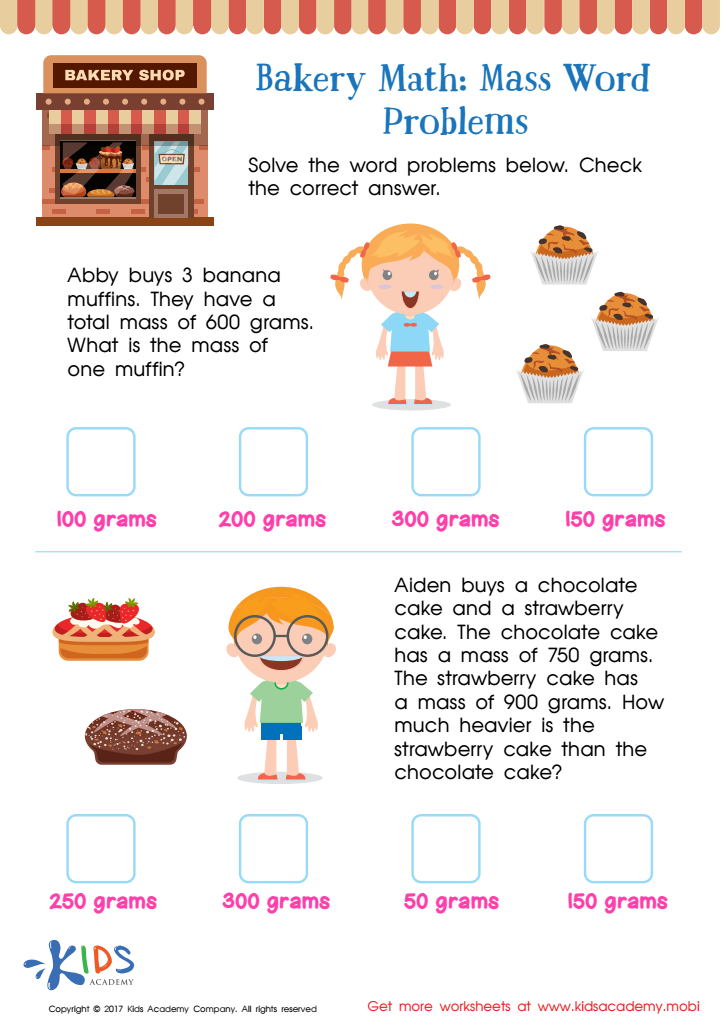
Mass Word Problems Worksheet
 Assign to My Students
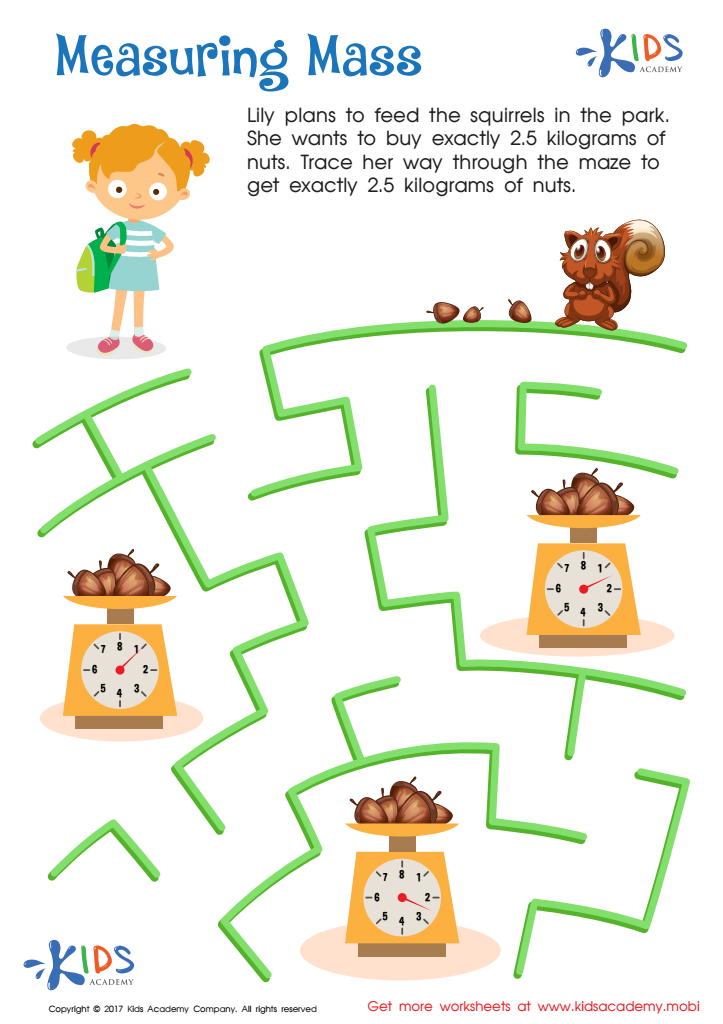
Measuring Mass Worksheet
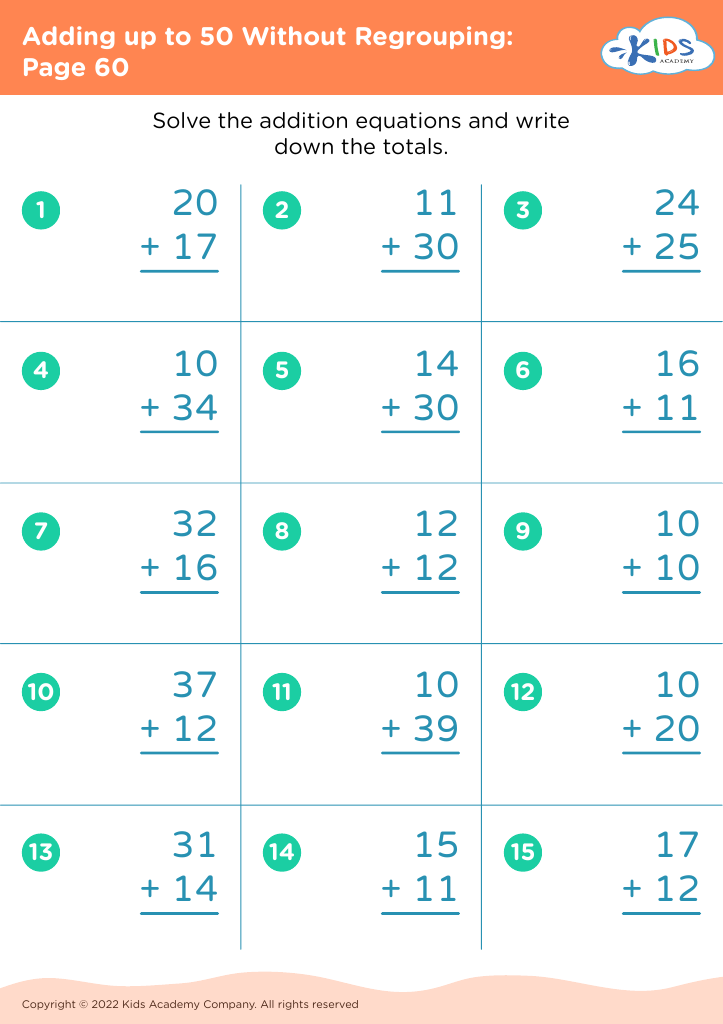







.jpg)
Understanding mass is essential for children aged 3-8 as it lays the foundation for critical thinking and scientific reasoning. At this stage, children are naturally curious, exploring their environment, and eager to learn about the world around them. Introducing concepts of mass helps them make sense of the physical properties of objects, fostering an understanding of heavier and lighter items, and encouraging them to make comparisons.
Engaging with mass promotes hands-on learning through activities such as weighing objects using scales, which enhances fine motor skills and fosters collaboration when done in groups. This tactile approach aids cognitive development, as children are more likely to remember concepts they experience directly.
Moreover, grasping these basics in measurement adds to mathematical literacy from an early age. It supports problem-solving skills and encourages kids to ask questions, enhancing their critical thinking abilities which are vital for future learning in STEM (science, technology, engineering, and mathematics) fields.
For parents and teachers, nurturing these foundational skills not only prepares children academically but also nurtures their innate curiosity about the world, promoting lifelong learning habits. Investing time in activities related to mass instills confidence and fosters a love for exploration and discovery.








