Understanding more/less concept Worksheets for Ages 3-8
3 filtered results
-
From - To
Help young learners grasp the essential concepts of "more" and "less" with our engaging worksheets designed for ages 3-8. These interactive materials are crafted to cultivate foundational math skills while making learning fun and accessible. Through colorful illustrations and age-appropriate activities, children will develop their understanding of quantities, comparison, and number sense in a hands-on way. Our worksheets offer a variety of exercises, from counting objects to visual comparisons, ensuring students can comprehend and apply the concepts confidently in everyday situations. Perfect for classroom use or at-home learning, these resources are an invaluable tool for early childhood education.
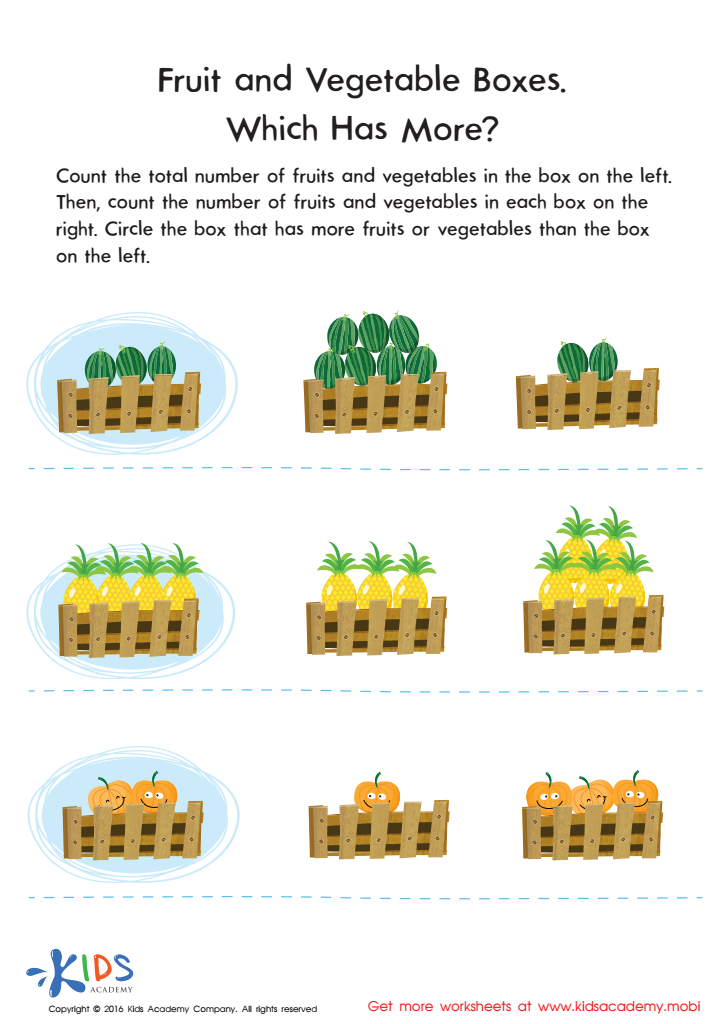
Which Has More? Size Worksheet
 Assign to My Students
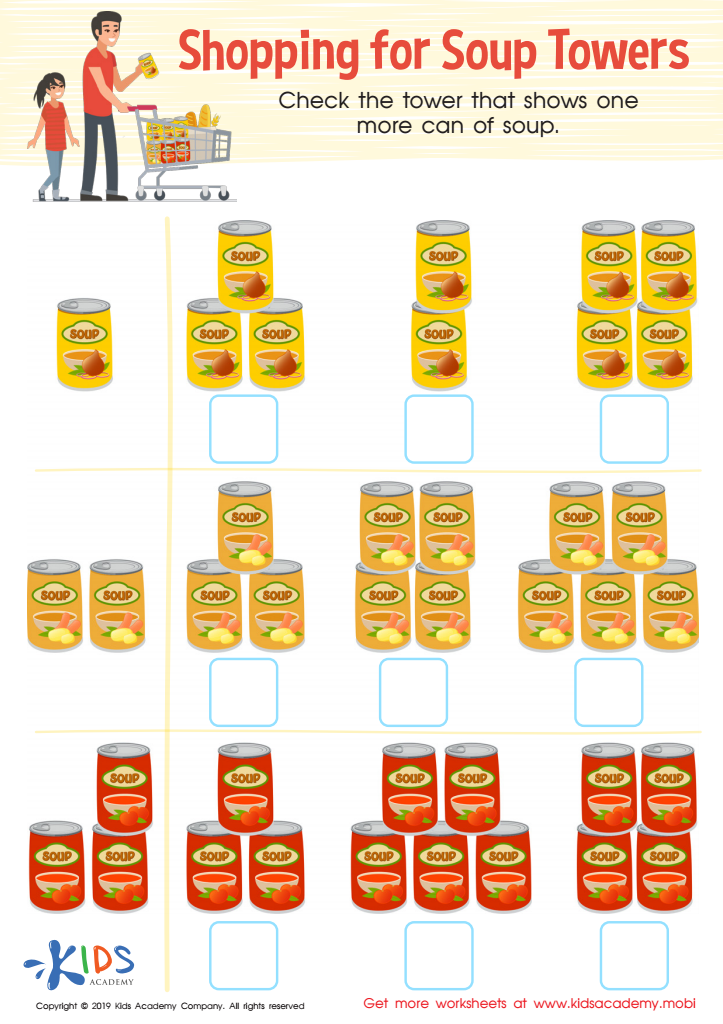
Soup Towers Worksheet
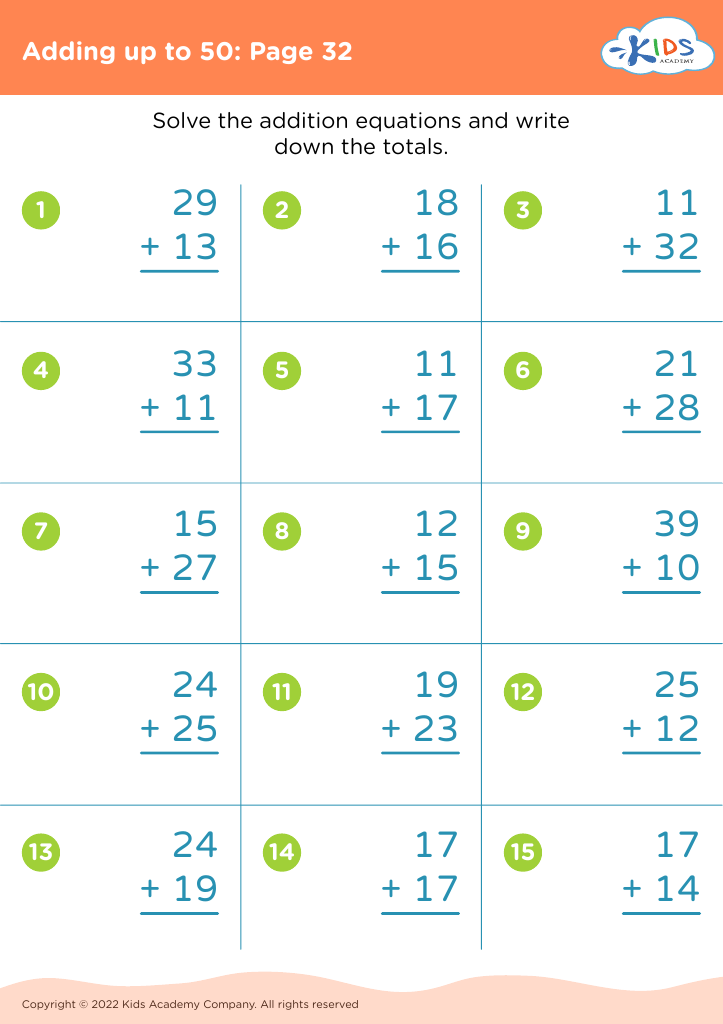







.jpg)
Understanding the concepts of more and less is fundamental for children aged 3 to 8 as it lays the groundwork for their mathematical development and critical thinking skills. At this age, children are naturally curious and eager to explore their environments. Grasping these concepts helps them make sense of quantity, comparison, and organization within their daily experiences.
Parents and teachers should care about teaching more and less because it offers opportunities for practical learning. For instance, when sharing snacks, children can learn to compare amounts, fostering social skills like sharing and fairness. Engaging with these concepts through playful activities—like counting toys, measuring ingredients, or comparing sizes—reinforces their understanding and makes learning fun.
Moreover, mastering more and less enhances cognitive skills like problem-solving and reasoning, aiding children in tackling more complex mathematical concepts like addition and subtraction in the future.
Finally, these foundational concepts build confidence in children, empowering them to explore higher-level math confidently as they progress through school. Educators and parents can cultivate lifelong learners by providing rich experiences that support understanding of more and less—laying a strong foundation for a child's academic journey ahead.








