
Underwater animal identification Worksheets for Ages 3-8
3 filtered results
Difficulty Level
Grade
Age
-
From - To
Subject
Activity
Standards
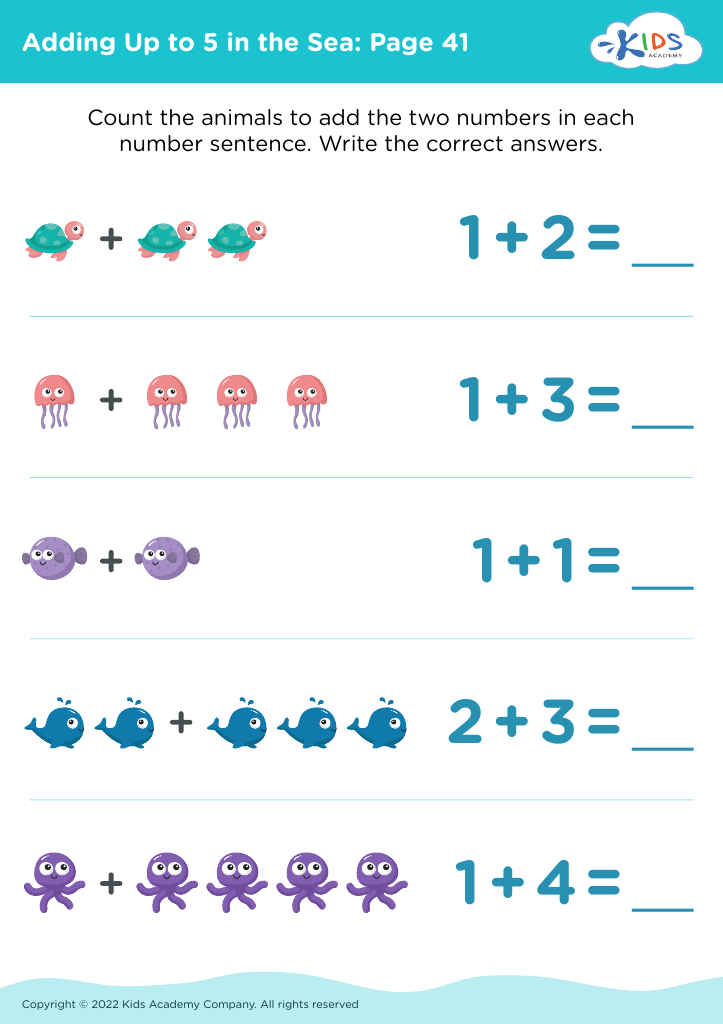
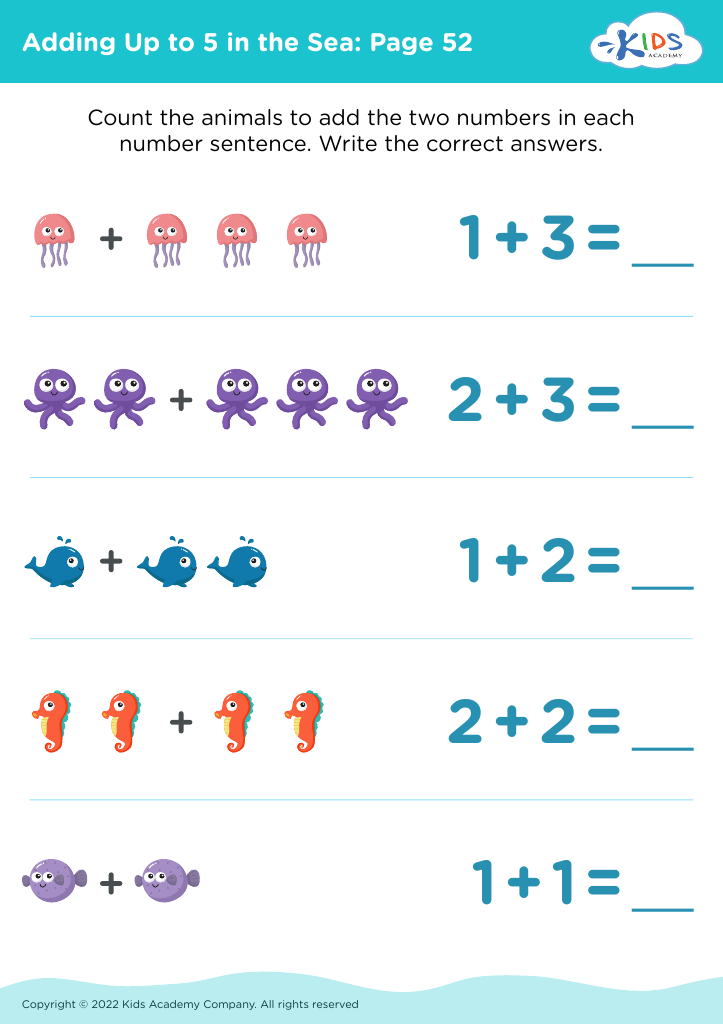
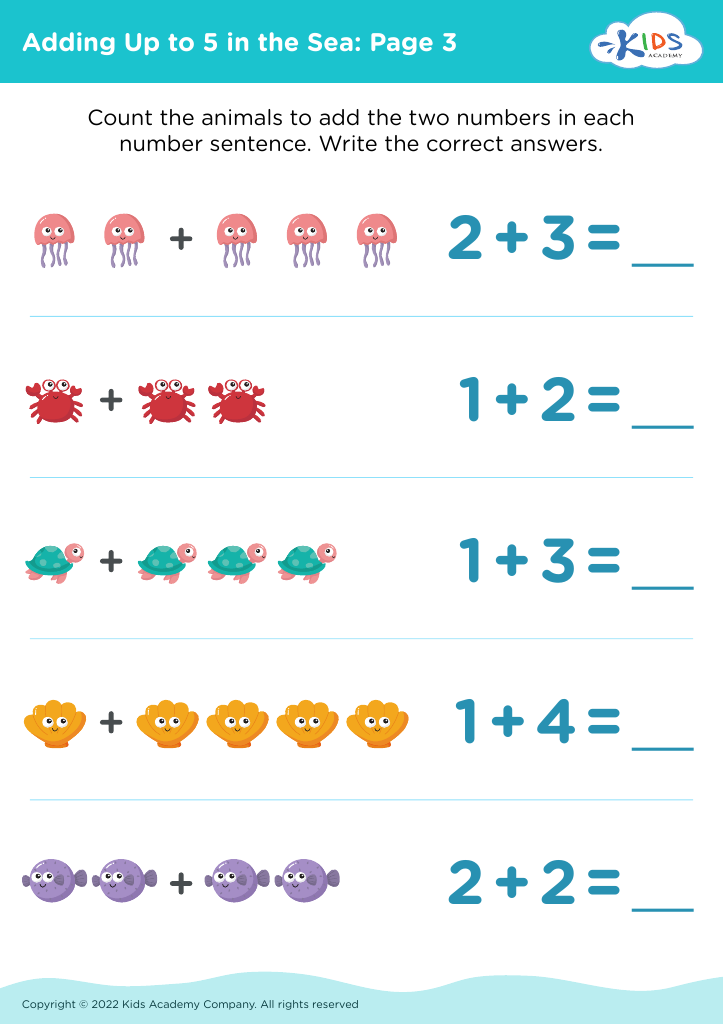
Introduce your littlest learners to the wonders of the ocean with our Underwater Animal Identification Worksheets for Ages 3-8. Engaging and educational, these printable worksheets will help children discover and identify various underwater creatures through fun activities and vibrant illustrations. Ideal for early learners, these activities enhance critical skills like observation, memory, and hand-eye coordination. Perfect for classrooms and at-home learning, each worksheet is designed to stimulate curiosity and expand young minds. Dive into learning today and watch your child's knowledge swim to new depths! Visit our website and start exploring the underwater world together.
Favorites
With answer key
Interactive
Join Kids Academy for Free
Who is primarily going to use this learning content?







Parents and teachers should care about underwater animal identification for children ages 3-8 because it fosters a love for nature, enhances learning, and encourages critical thinking and curiosity. At this age, children are highly impressionable and curious about the world, and learning about underwater animals expands their understanding of biodiversity and ecosystems. Through engaging activities such as identifying colorful fish, playful dolphins, or mysterious octopuses, children are introduced to scientific concepts in a fun and accessible way.
Engagement with underwater animal identification can also improve cognitive and language skills. As children learn new names and characteristics of these animals, their vocabulary and comprehension expand. Additionally, discussing these creatures and their habitats develops communication skills and encourages descriptive language use.
Moreover, this knowledge can instill a sense of responsibility and conservation awareness in young minds. Understanding the beauty and complexity of underwater life can motivate children to care about environmental protection and sustainable practices. Building empathy for living creatures at a young age lays the foundation for responsible and informed behavior as they grow older.
Introducing underwater animal identification is not merely an academic exercise but a delightful way to nurture curiosity, interdisciplinary learning, and a lasting respect for our planet's aquatic environments.








