Understanding symmetry Adding 2-digit Numbers Worksheets for Ages 3-8
5 filtered results
-
From - To
Introducing our "Understanding Symmetry Adding 2-digit Numbers Worksheets," specially designed for children ages 3-8! These engaging worksheets help young learners master the fundamentals of adding 2-digit numbers while exploring symmetry. Through colorful, interactive exercises, kids will develop critical math skills and spatial awareness. Perfect for early grade students, these activities ensure a fun, hands-on learning experience that builds confidence and proficiency in mathematics. With clear instructions and a variety of problems, our worksheets make math enjoyable and comprehensible for young minds. Give your child a head start in math with our expertly crafted resources!
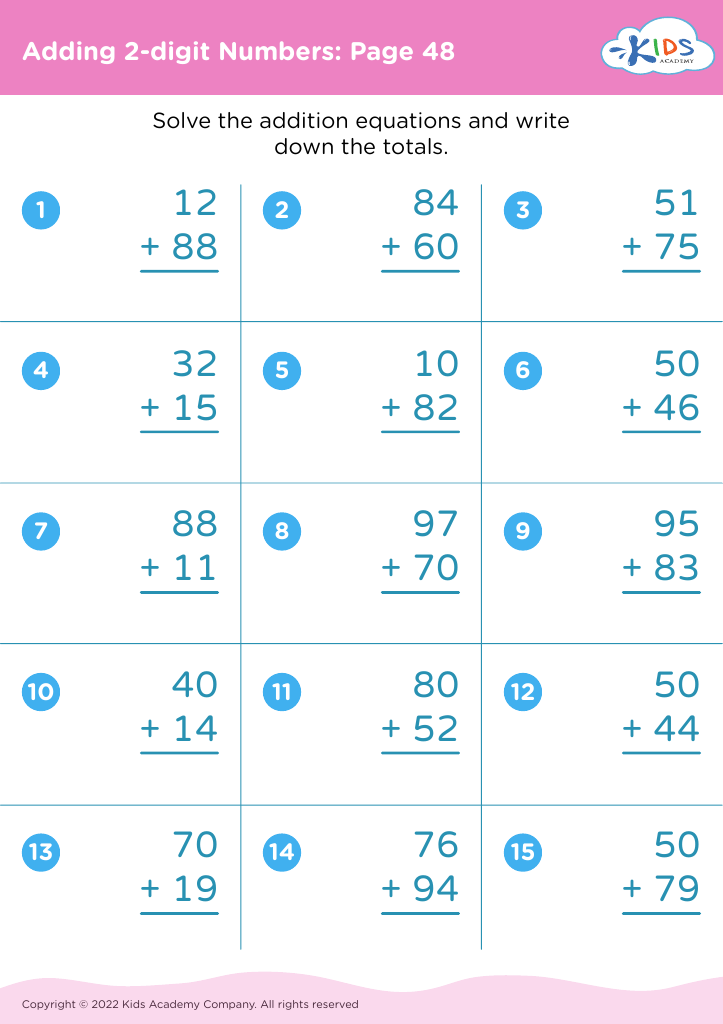
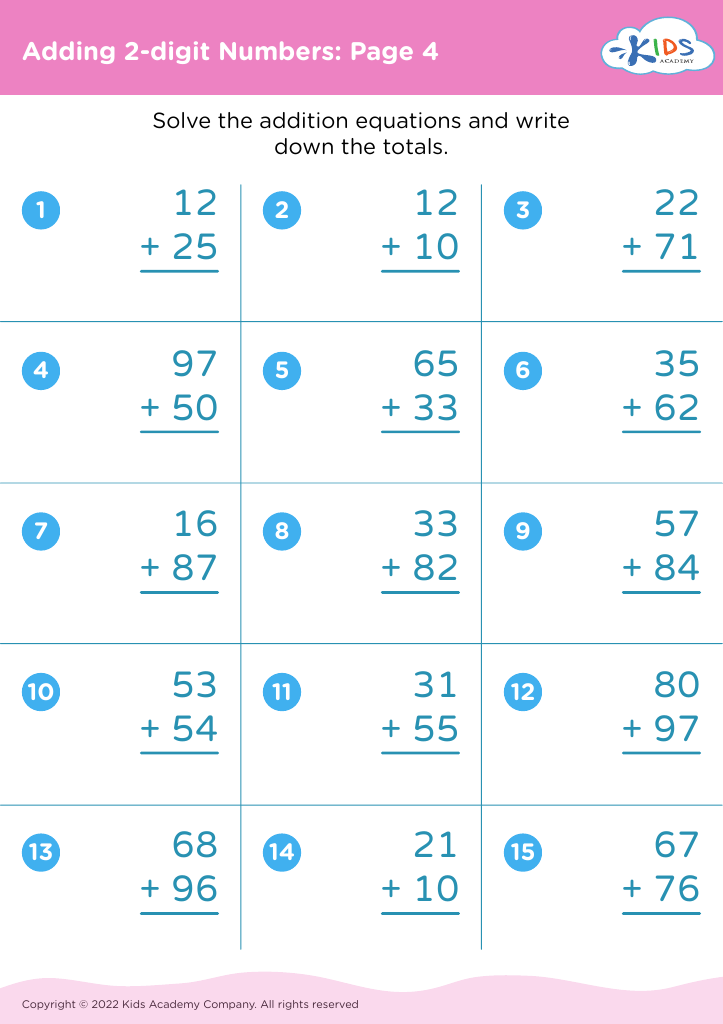
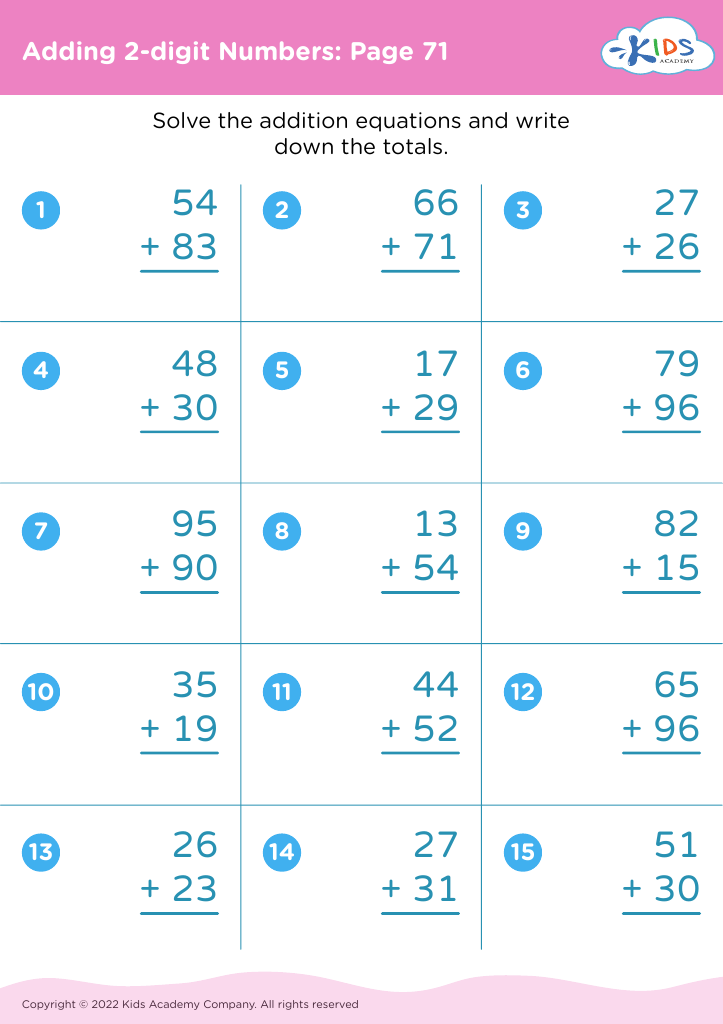
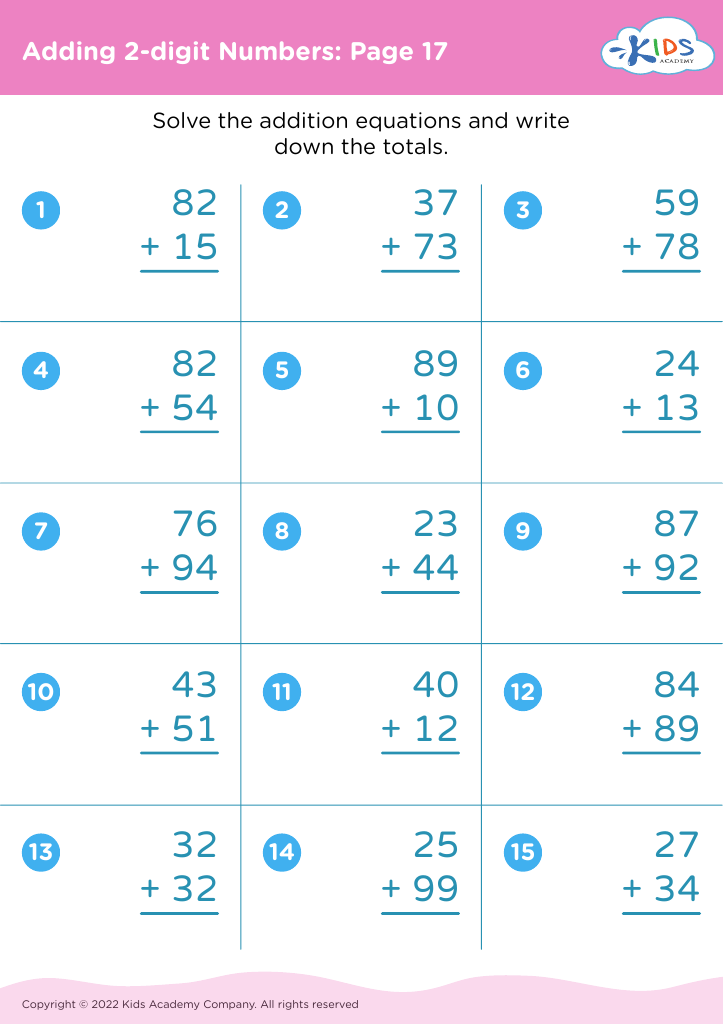
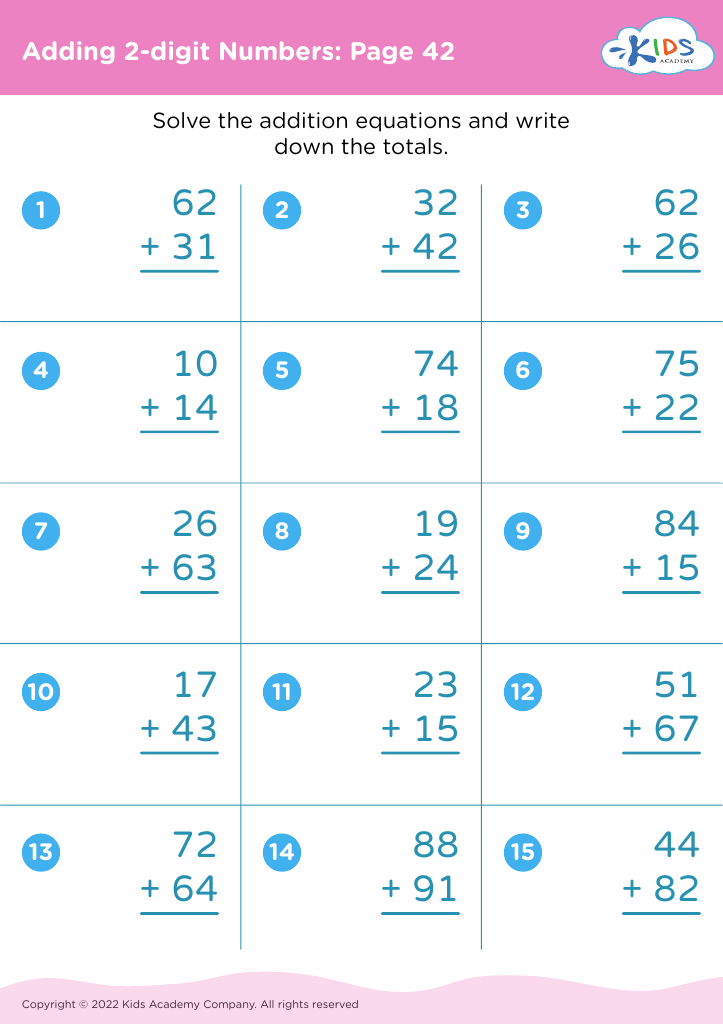








Understanding symmetry and adding 2-digit numbers are foundational skills with lasting significance for young learners aged 3-8.
Symmetry helps children develop spatial awareness and visual perception. Recognizing symmetrical patterns allows kids to better understand balance and proportions, which lays the groundwork for geometry and other branches of mathematics. It also enhances their ability to recognize patterns in nature and art, thus fostering creativity and observational skills.
Adding 2-digit numbers introduces basic numerical operations and is crucial for mathematical fluency. When children practice addition with 2-digit numbers, they gain number sense, which includes understanding the values and relationships between numbers. This skill impacts everyday activities, such as handling money or telling time, and forms the basis for more complex arithmetic in the future.
Early exposure to these concepts encourages logical thinking and problem-solving skills. For teachers and parents, focusing on these areas ensures children build confidence and enjoy math rather than seeing it as a challenge. It’s essential to nurture a positive early experience with math, setting children on a path toward academic success and fostering a lifelong love of learning.
By integrating symmetry and 2-digit addition in playful and engaging ways, adults can support children in developing critical cognitive skills that will benefit them across various disciplines and real-life situations.








