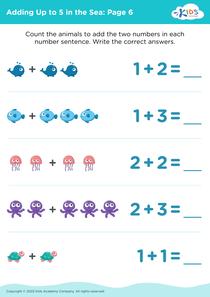
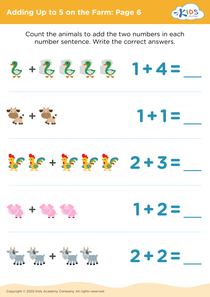
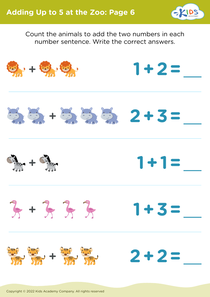
Animal recognition Adding in the Forest Worksheets for Ages 3-8
15 filtered results
-
From - To
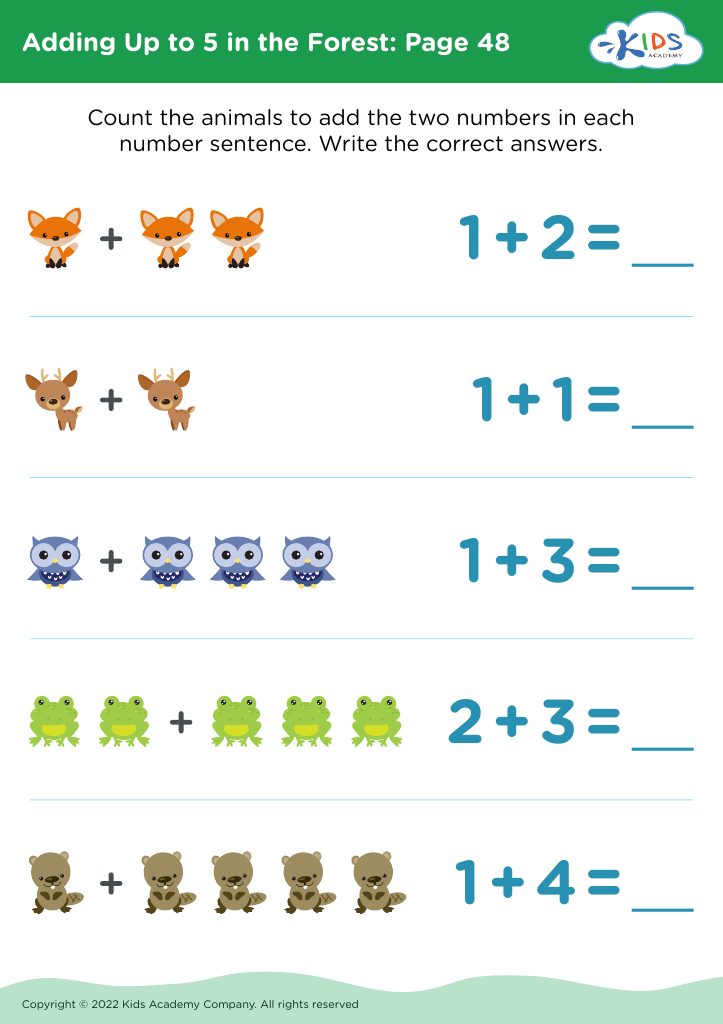
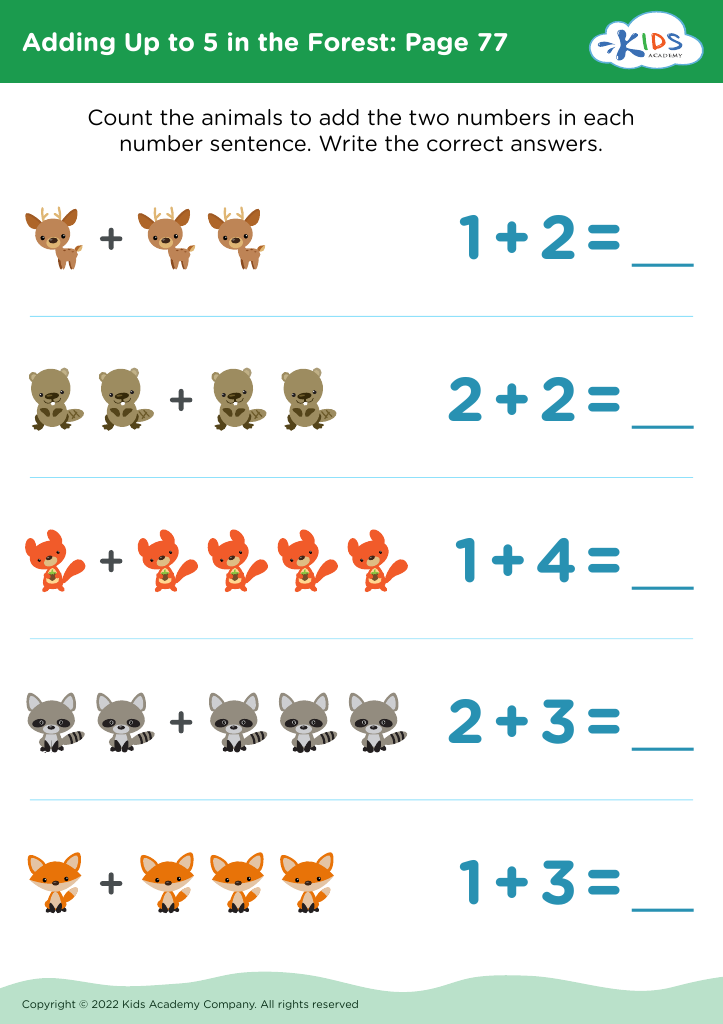
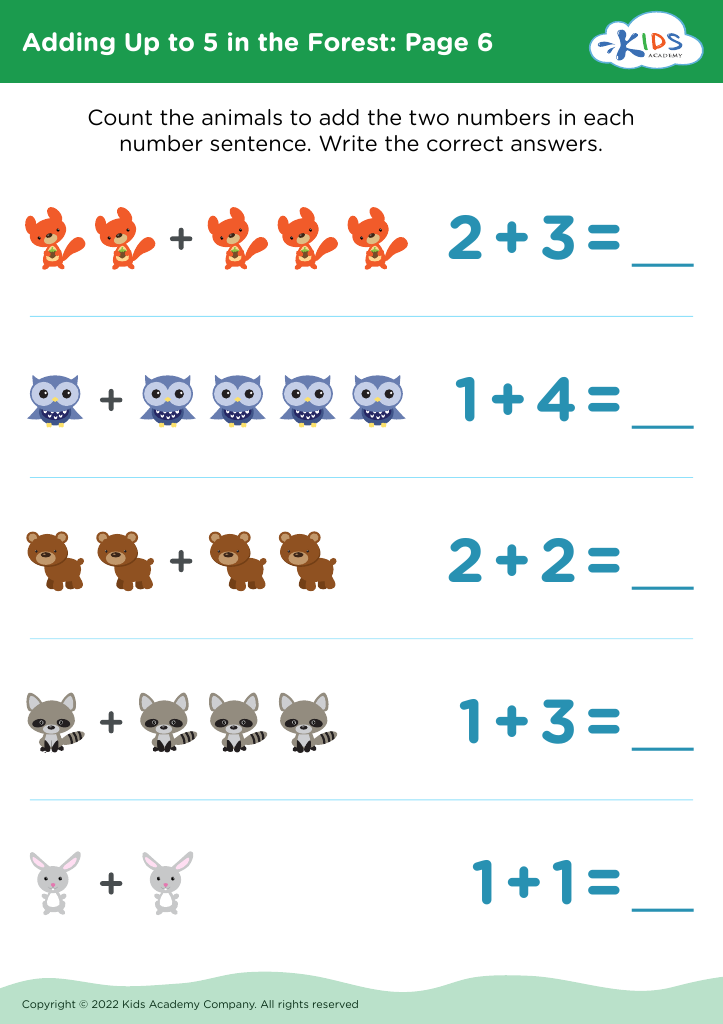
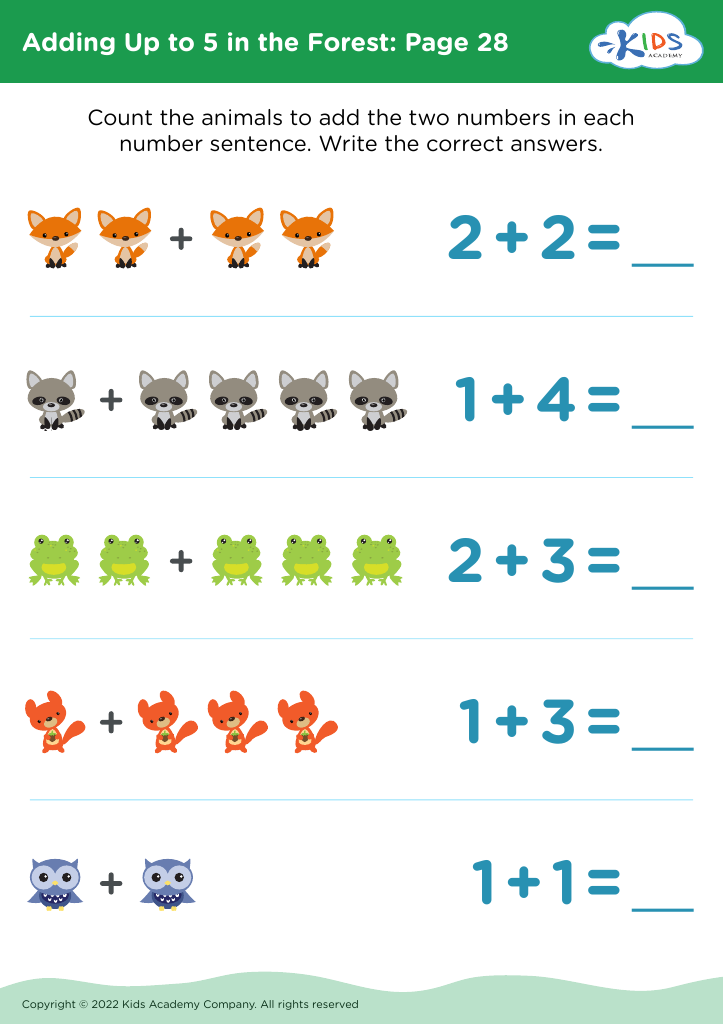
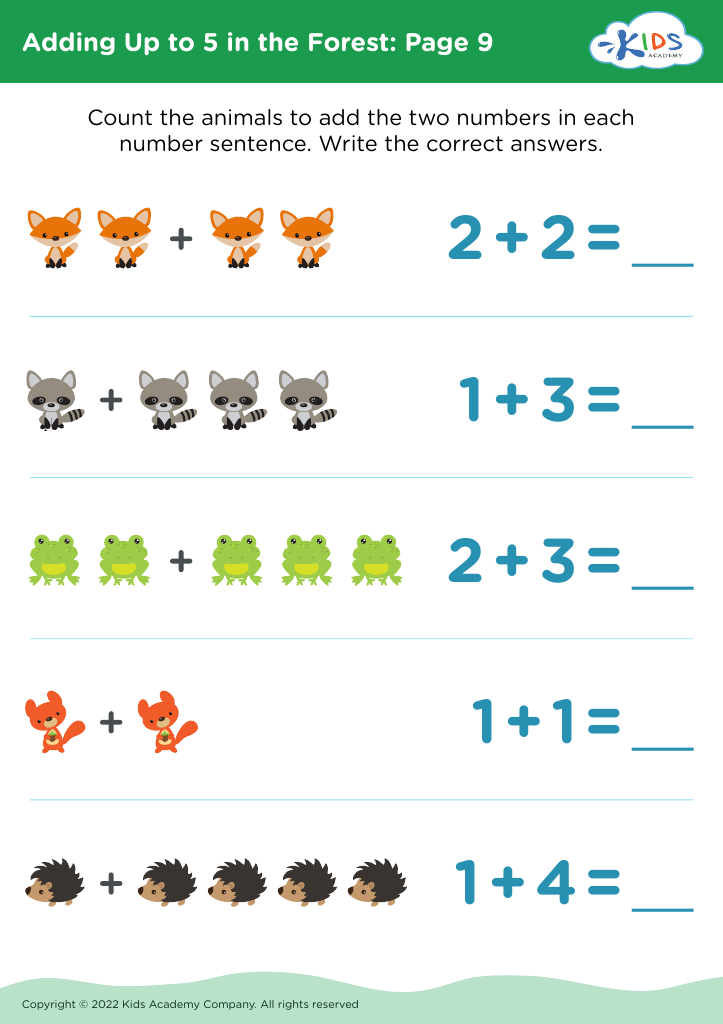
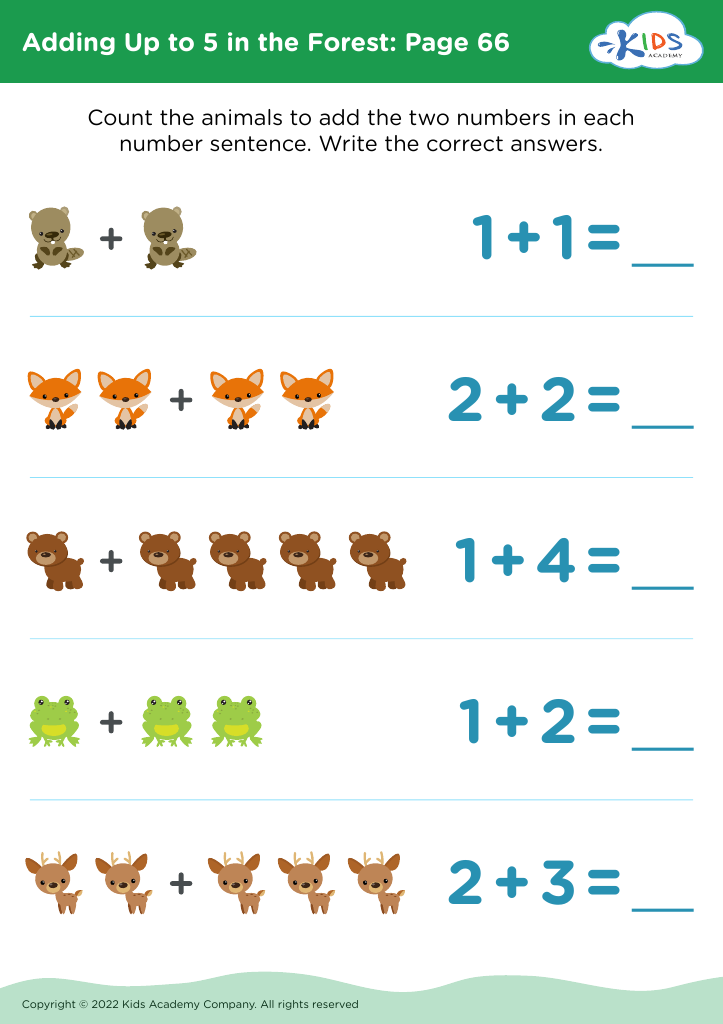
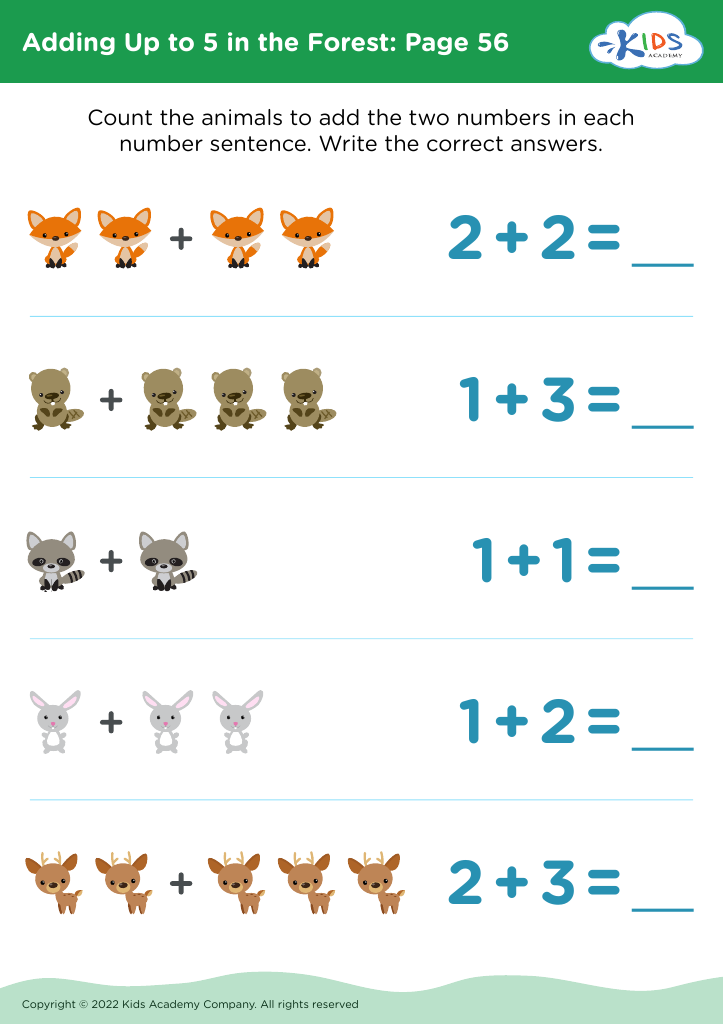
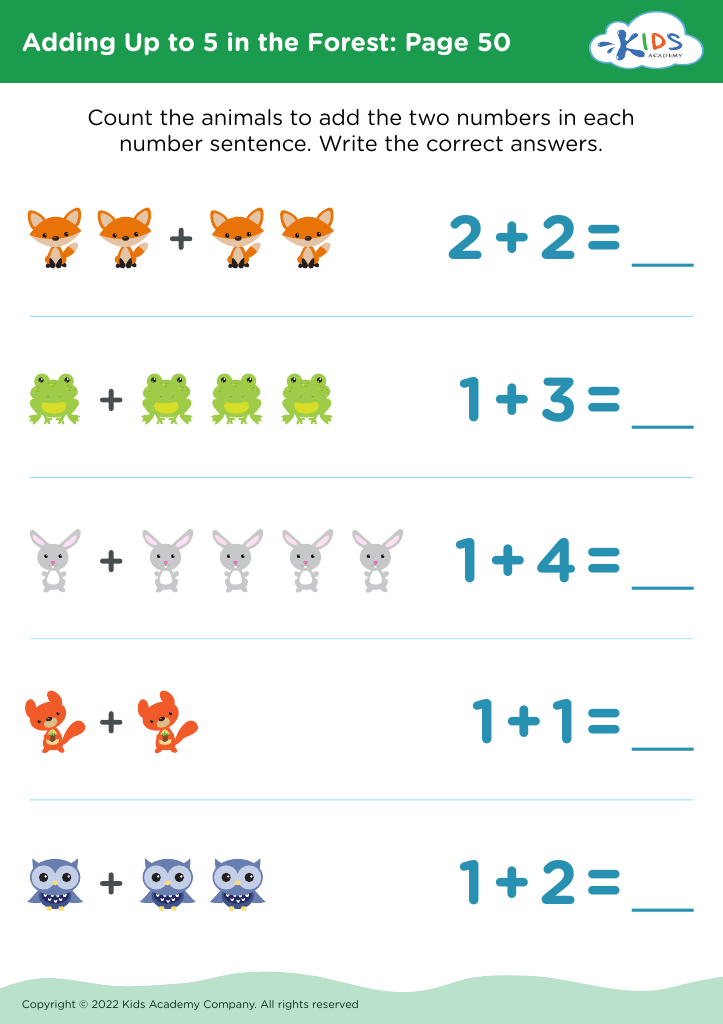
Explore our engaging "Animal Recognition Adding in the Forest Worksheets" designed for children ages 3-8! These worksheets combine the joy of outdoor exploration with foundational math skills, helping young learners enhance their addition abilities while recognizing different animals found in the forest. Each worksheet features vibrant illustrations and captivating themes, encouraging kids to identify animals and practice simple equations. Perfect for preschool and early grade classrooms, our resources foster a love for nature and learning. Download these worksheets today and watch your child's confidence in math and animal knowledge flourish in a fun, interactive way!
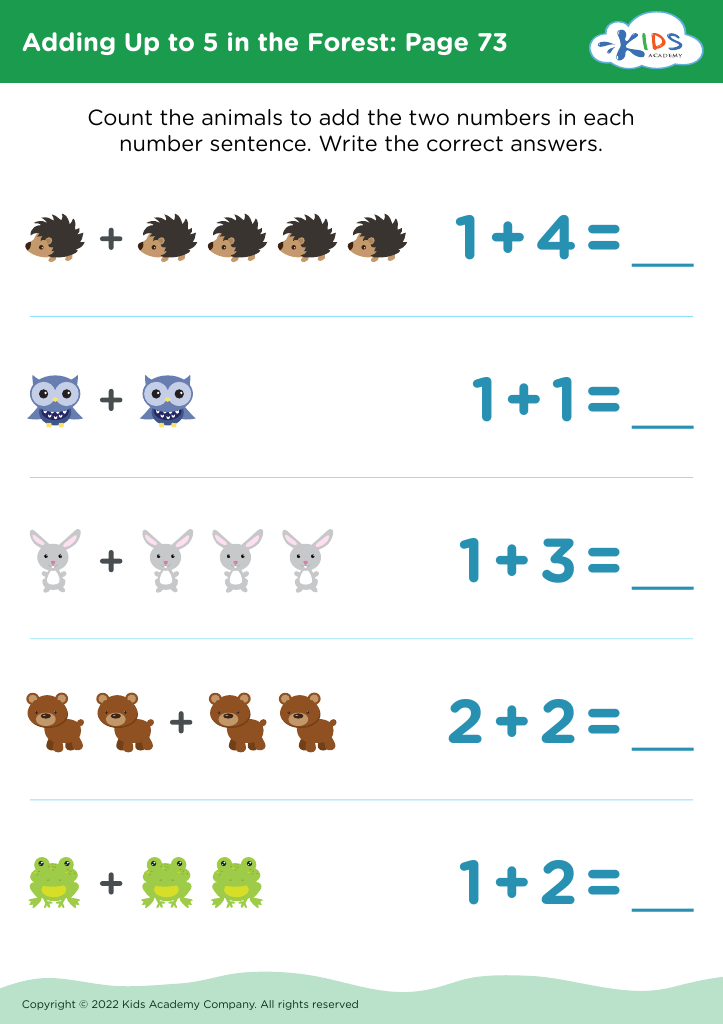
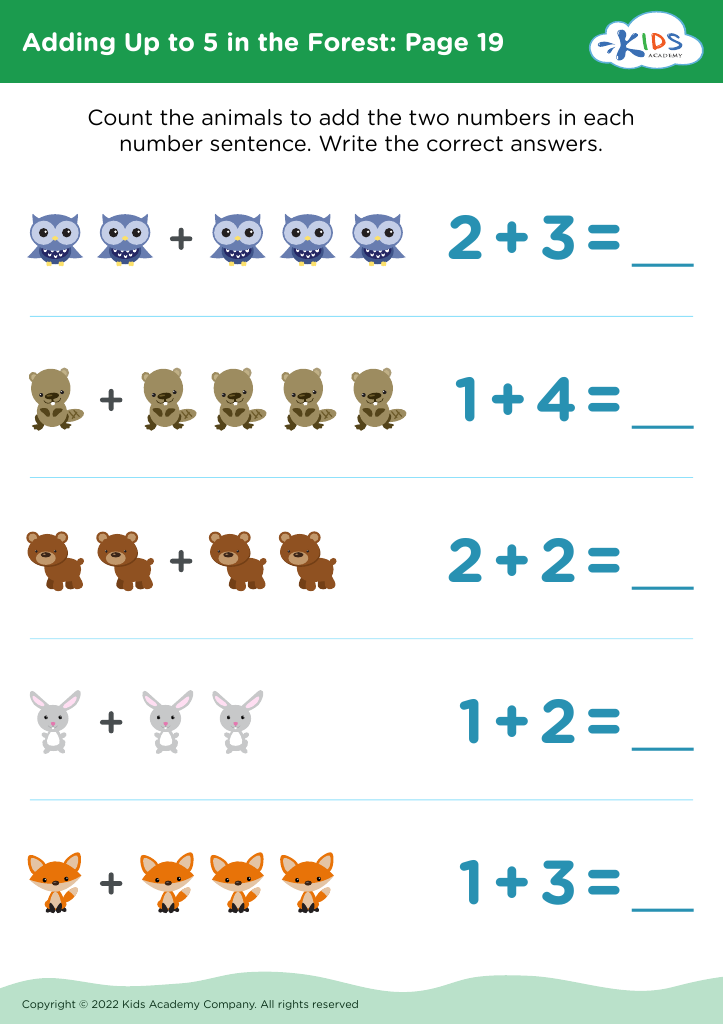
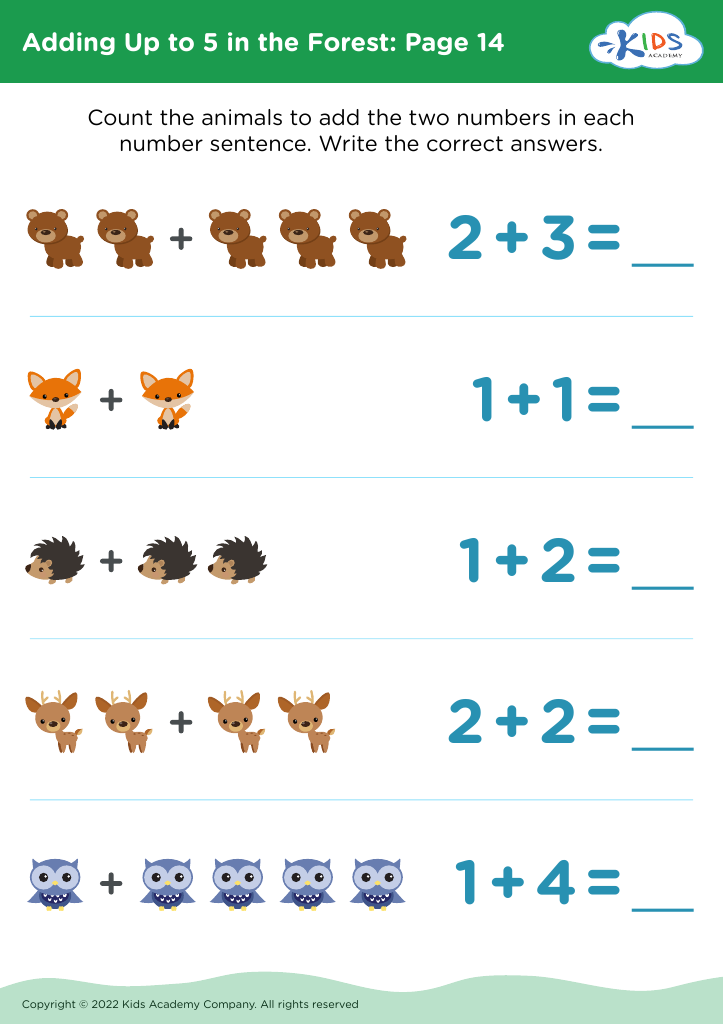
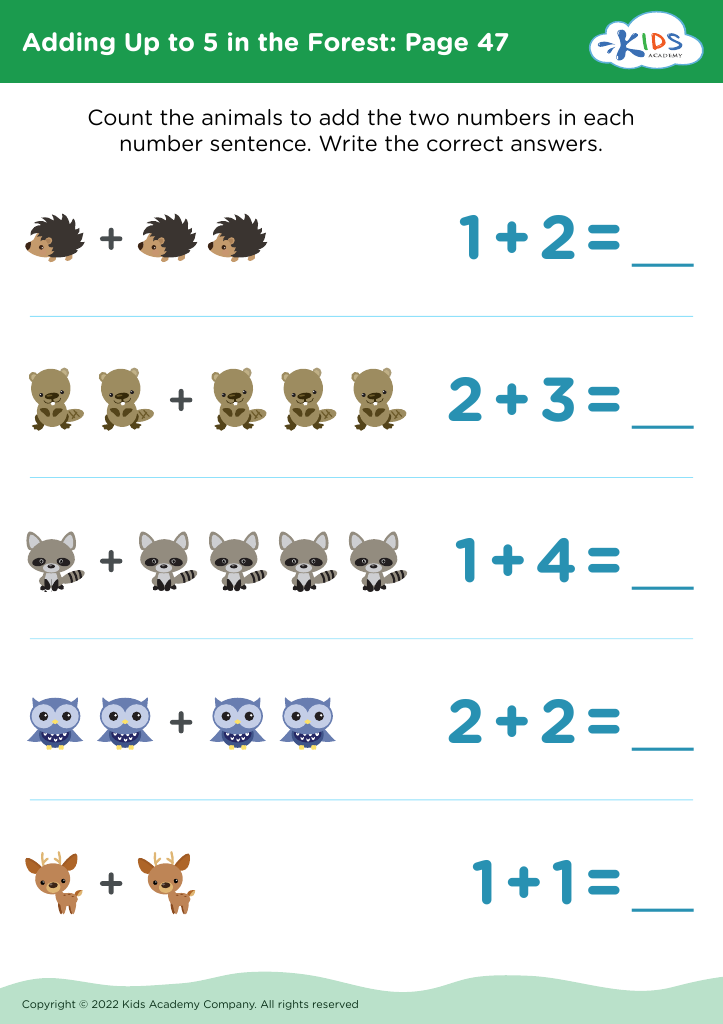
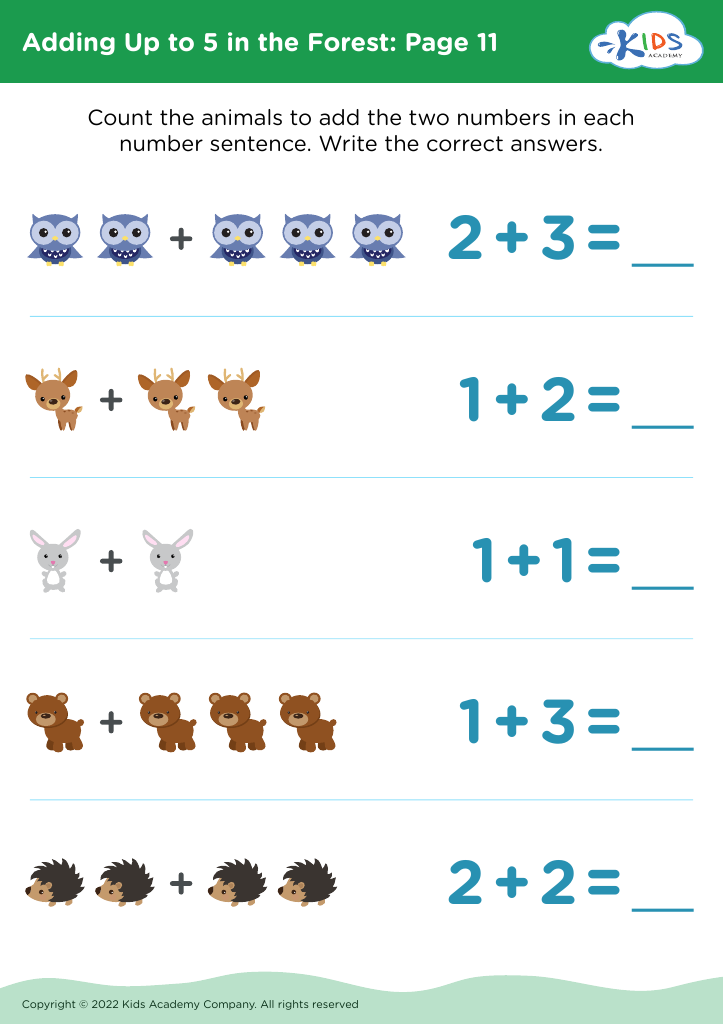
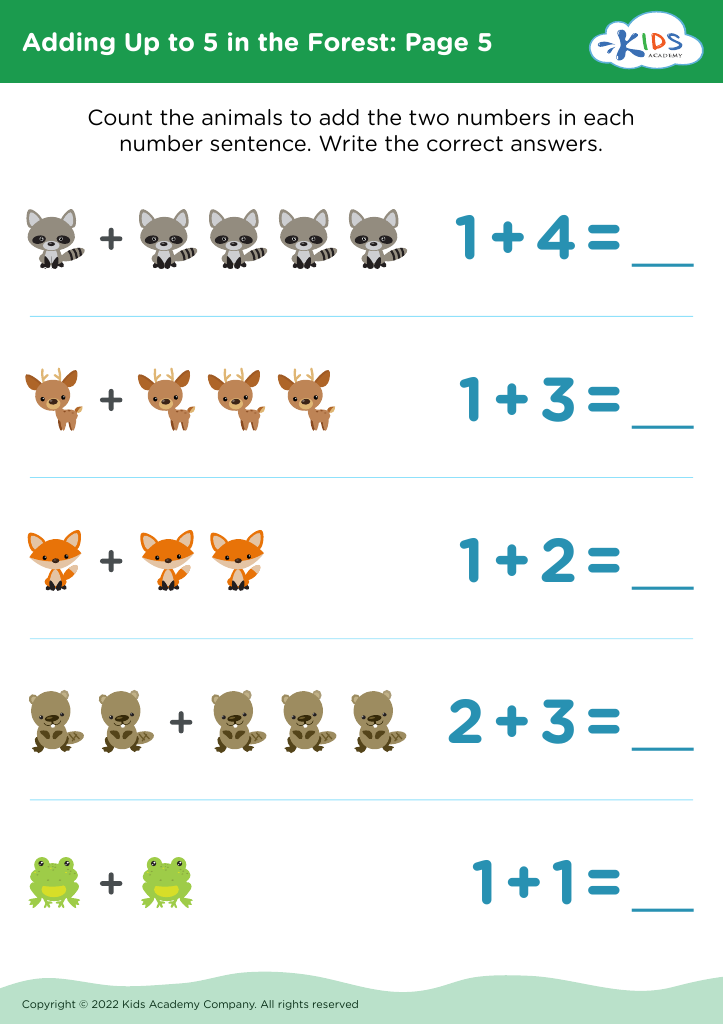
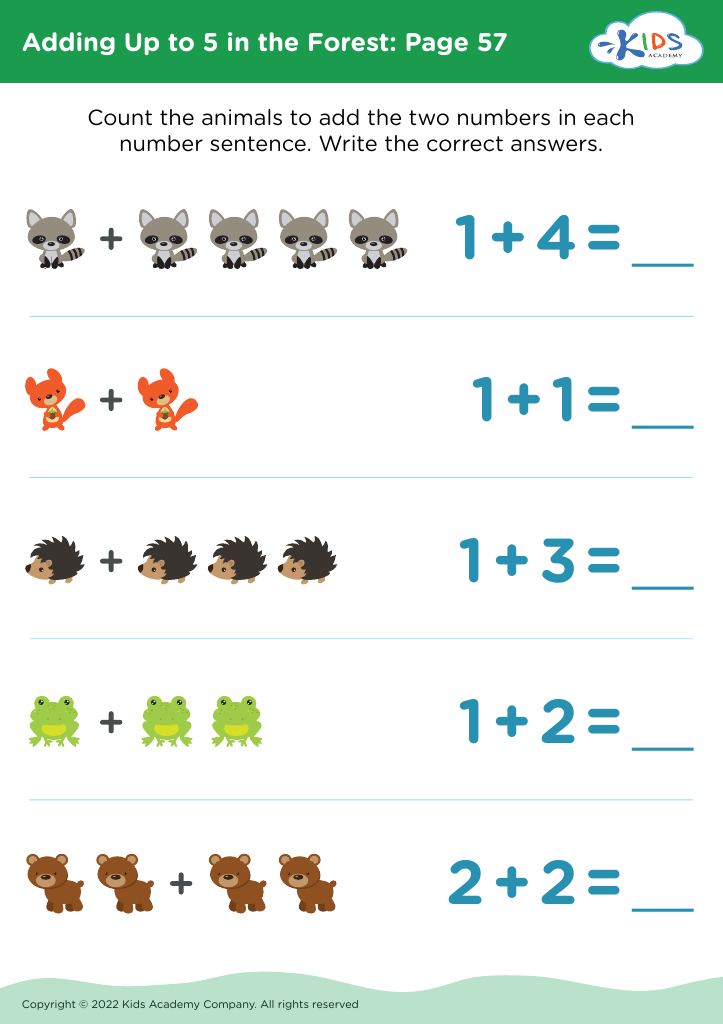



Animal recognition in a forest setting is vital for children's development, particularly for ages 3-8. First, it fosters a sense of wonder and curiosity about the natural world, encouraging children to explore and engage with their environment. Through identifying various animals, children learn about biodiversity and the importance of ecosystems, nurturing a sense of responsibility toward nature.
Additionally, animal recognition promotes cognitive skills such as observation, memory, and critical thinking. Children learn to differentiate characteristics, behaviors, and habitats of animals, enhancing their analytical abilities. This activity also supports language development, as kids expand their vocabulary through names and descriptions of animals.
Socially, learning about animals in the forest can be a collaborative activity, encouraging teamwork and communication. It provides opportunities for parents and teachers to bond with children while reinforcing concepts of empathy and respect for all living beings.
Importantly, this awareness can instill a lifelong appreciation for wildlife and environmental stewardship. As children grow, these foundational experiences can lead them to become informed and active participants in conservation efforts, safeguarding the planet for future generations. By prioritizing animal recognition, parents and teachers significantly contribute to the holistic development of young learners.