Basic Addition Skills Adding in the Forest Worksheets for Ages 3-8 - Page 3
55 filtered results
-
From - To
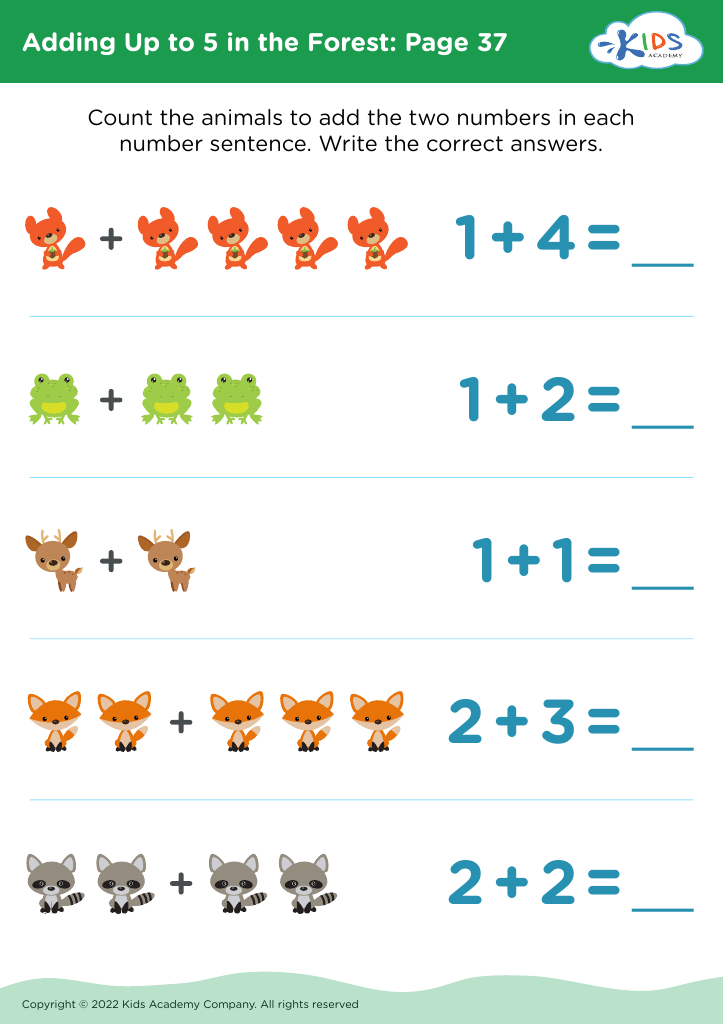
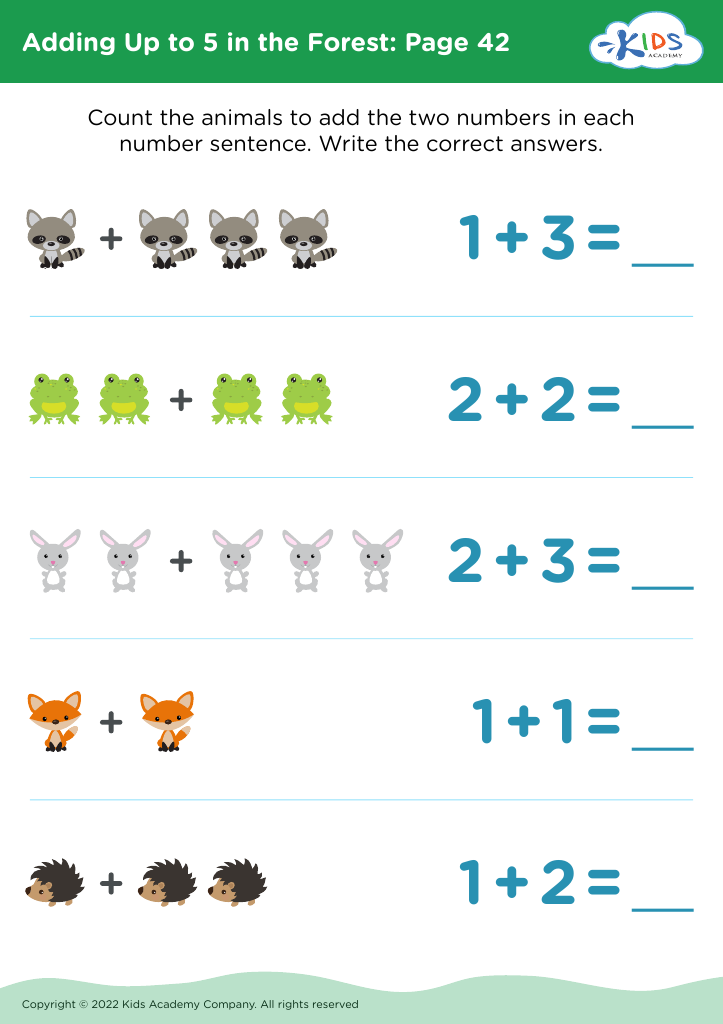
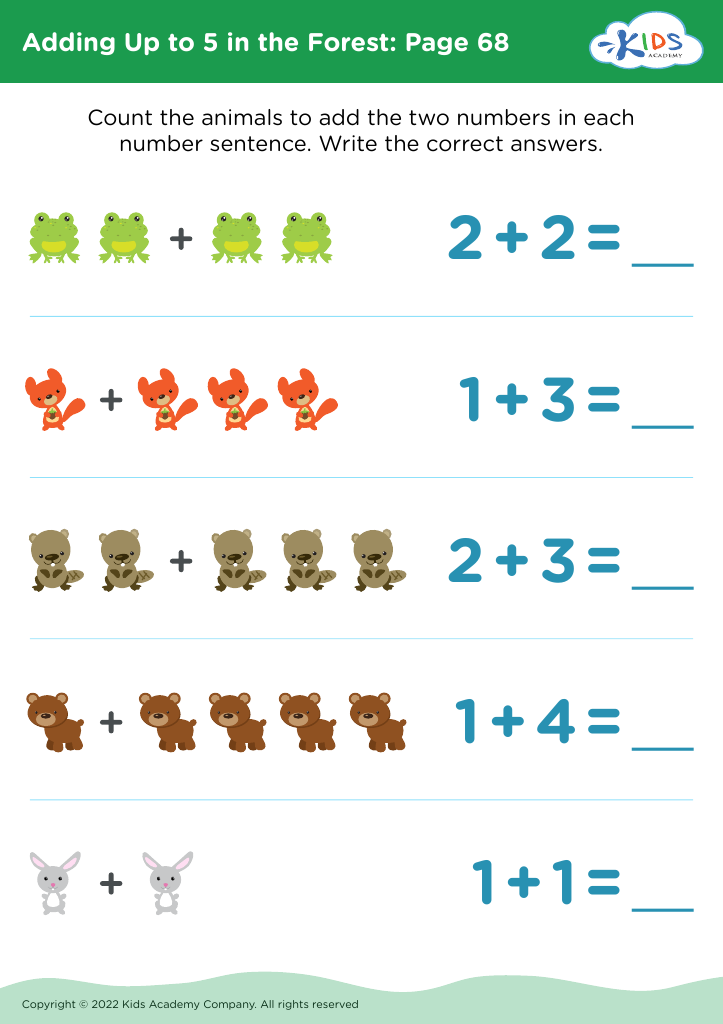
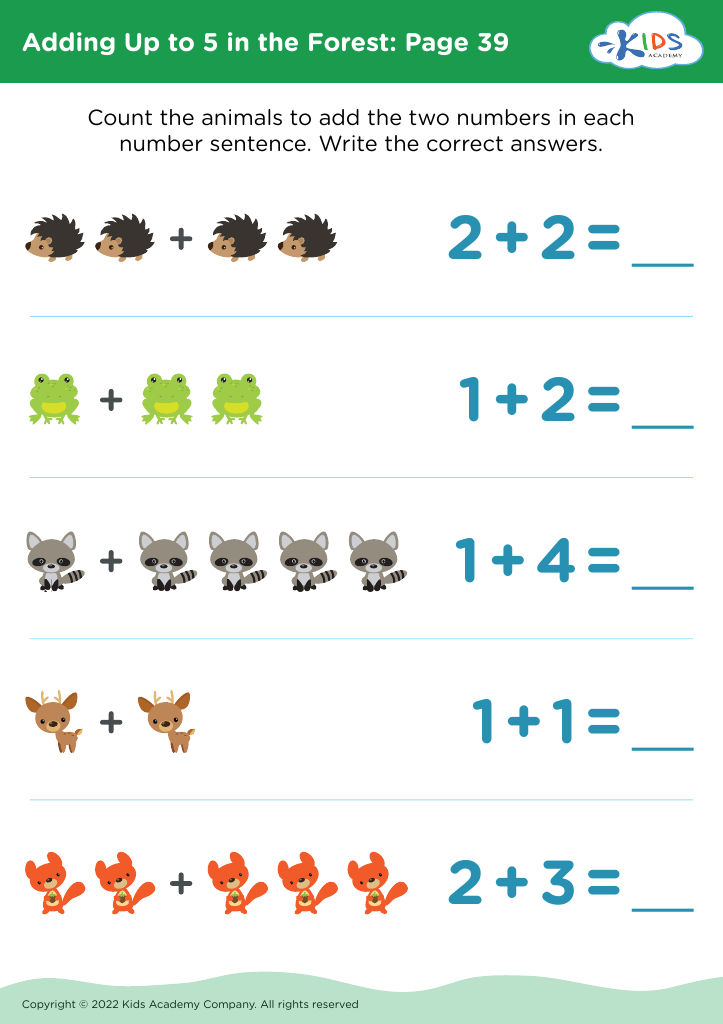
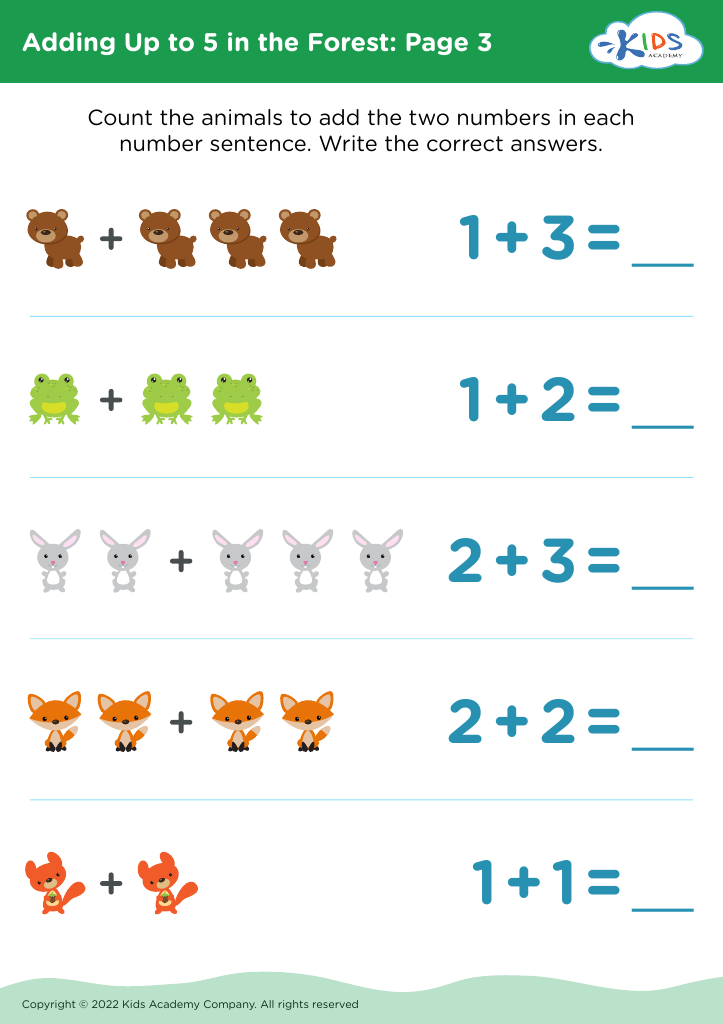
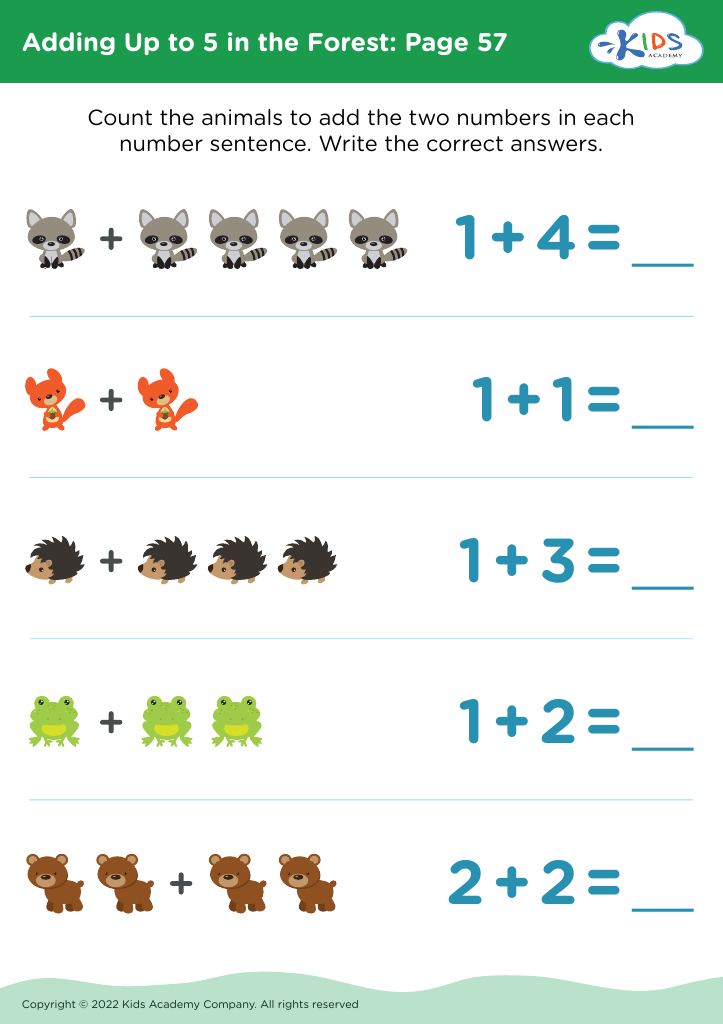
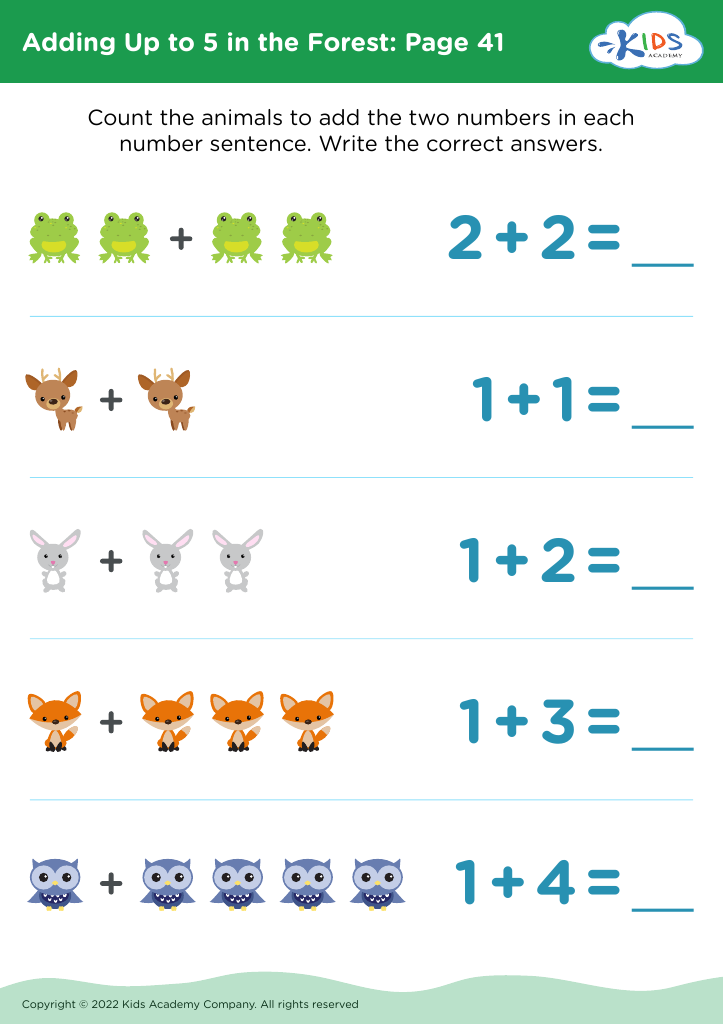




Basic addition skills are fundamental for young children, especially those aged 3-8, as they lay the groundwork for future mathematical understanding. A program like "Adding in the Forest" engages children in a playful, immersive environment, making learning math enjoyable. This approach taps into a child’s natural curiosity and love for exploration, using hands-on activities that encourage the use of real objects found in nature.
Parents and teachers should care about developing these skills because strong numeracy abilities early on can positively influence overall academic success. Mastering basic addition helps build confidence in children, fostering a willingness to tackle more complex math concepts as they progress through their education.
Moreover, “Adding in the Forest” promotes social skills through cooperative learning, where children work together to solve problems and share resources. This not only enhances their mathematical skills but also builds essential communication and teamwork capabilities.
By emphasizing early addition skills in a playful and supportive context, we prepare children not just for math, but for lifelong learning and problem-solving. Investing in foundational skills now pays dividends in the form of engaged, confident learners, which can lead to successful future experiences in school and beyond.