Understanding Quantities Adding in the Forest Worksheets for Ages 3-8
6 filtered results
-
From - To
Welcome to our "Understanding Quantities: Adding in the Forest" worksheets, designed for children aged 3-8! These engaging resources introduce young learners to the fundamental concepts of addition through captivating forest-themed activities. Kids will interact with charming illustrations of woodland creatures and vibrant environments, making math both fun and relatable. Our worksheets help develop number recognition and basic addition skills, all while fostering a love for nature. Perfect for home or classroom use, these worksheets are ideal for hands-on learning and enhance cognitive development. Explore the wonders of quantities and watch your child thrive in their mathematical journey!
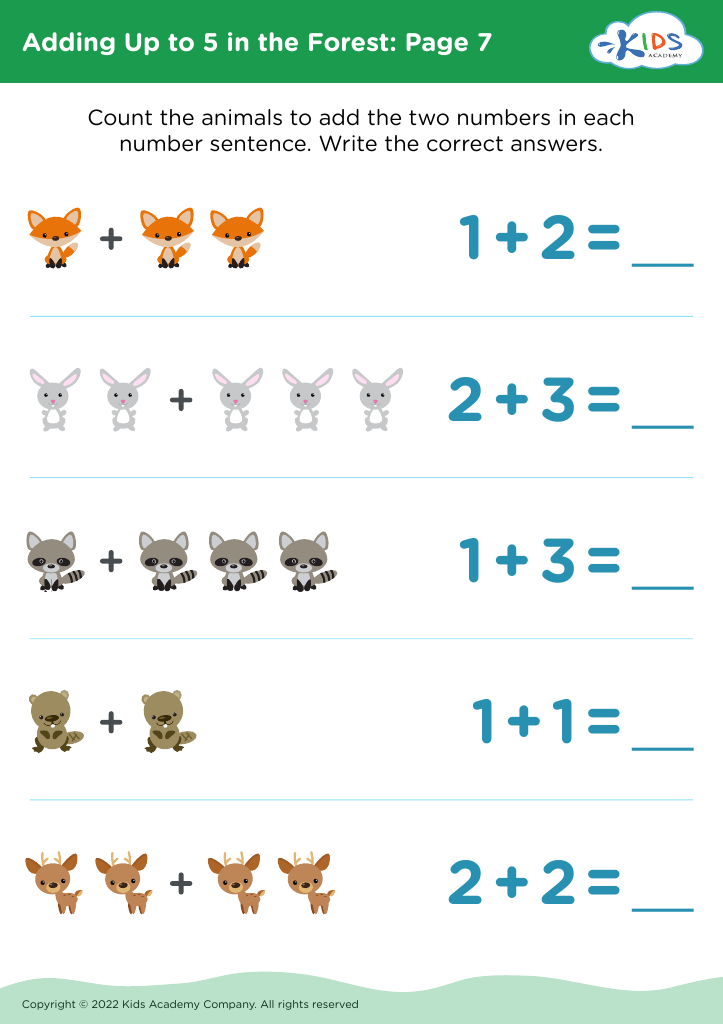
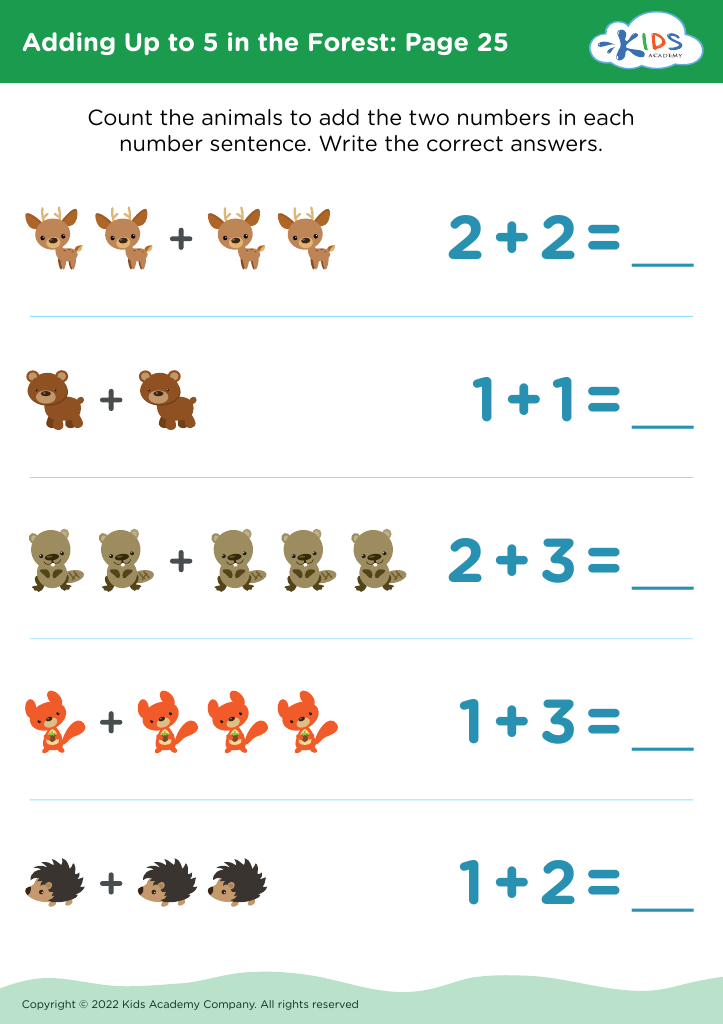
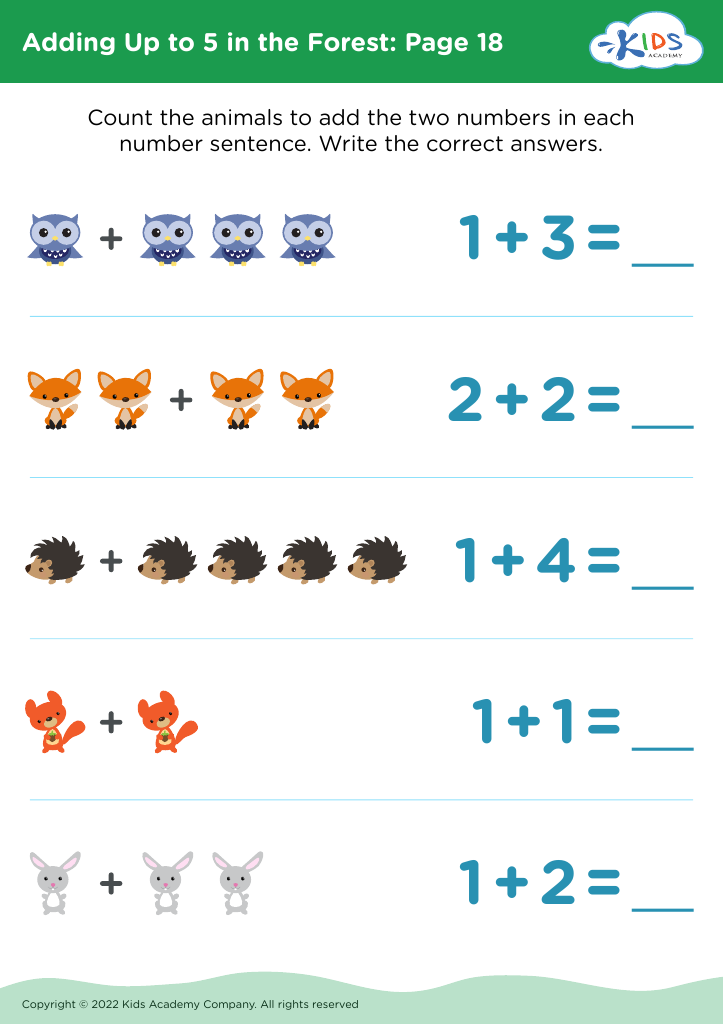
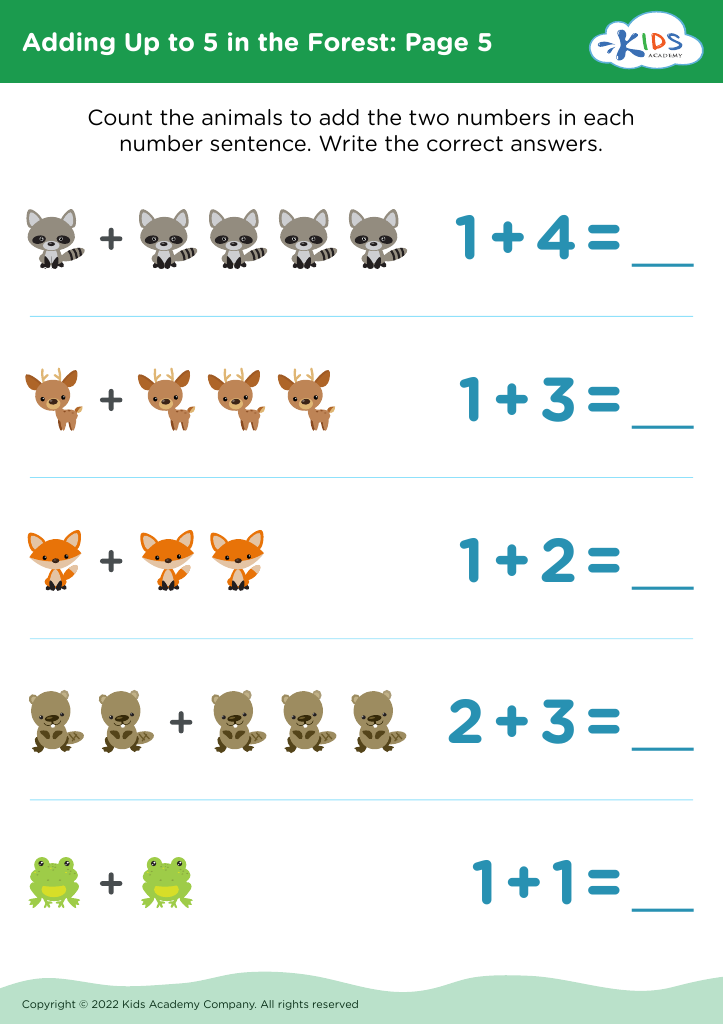
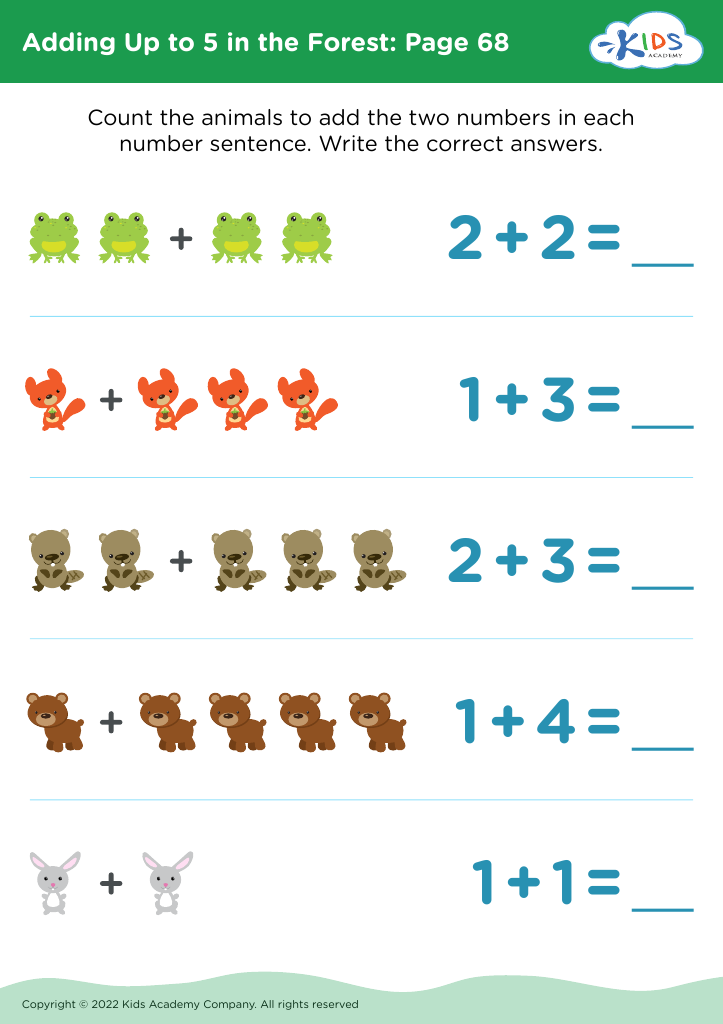
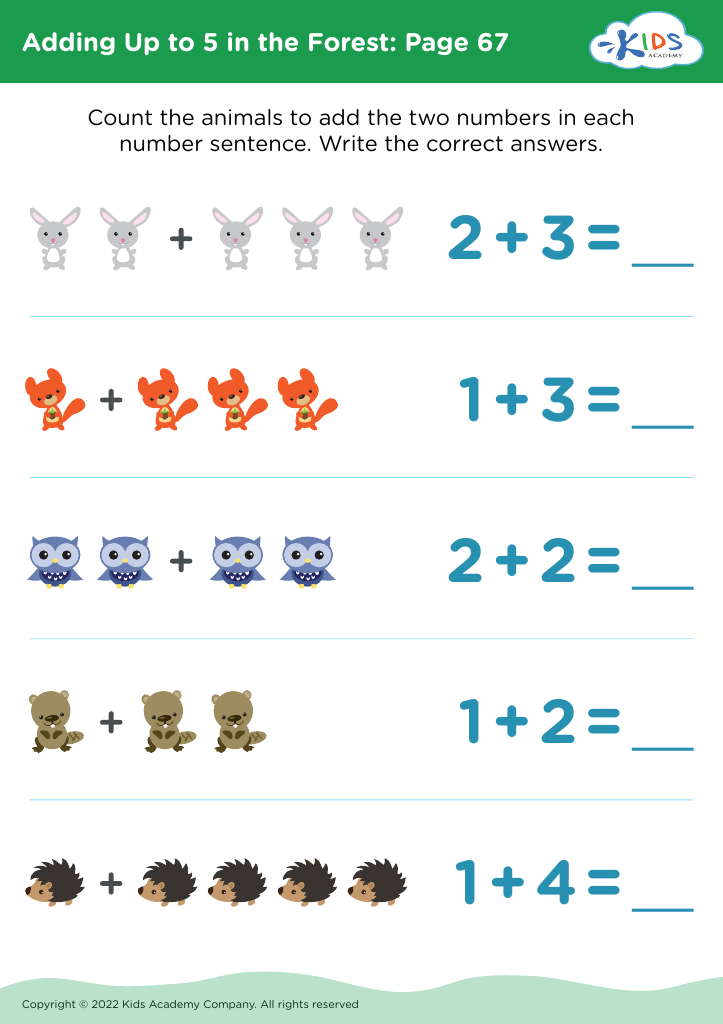



Understanding quantities and basic addition is crucial for children aged 3-8 as it lays the foundation for future math skills. Engaging in activities like "Understanding Quantities: Adding in the Forest" offers a fun and immersive way for young learners to grasp these concepts. This approach integrates natural settings, allowing children to connect mathematical ideas with real-world experiences, making learning more relatable and enjoyable.
Parents and teachers should care about this method because it promotes hands-on learning, which encourages exploration, curiosity, and a deeper understanding of numbers. By utilizing nature, children can visually see quantities in their environment, such as counting leaves, acorns, or stones, making abstract concepts more concrete.
Moreover, incorporating outdoor activities enhances physical and social skills as kids often work in groups, fostering teamwork and communication. This playful context can diminish the stress often associated with learning math, cultivating a positive attitude towards the subject. As early mathematics is linked to later academic success, fostering a strong numerical foundation in a delightful, interactive way ultimately shapes enthusiastic, confident learners ready to tackle more complex math challenges in the future. Thus, this creative approach offers holistic development enriched by the wonders of nature.