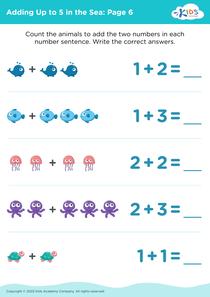
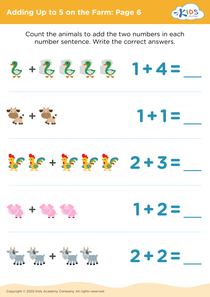
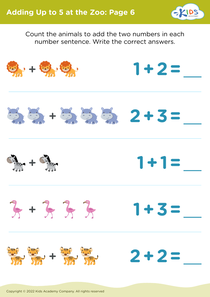
Visual Learning Adding in the Forest Worksheets for Ages 3-8
12 filtered results
-
From - To
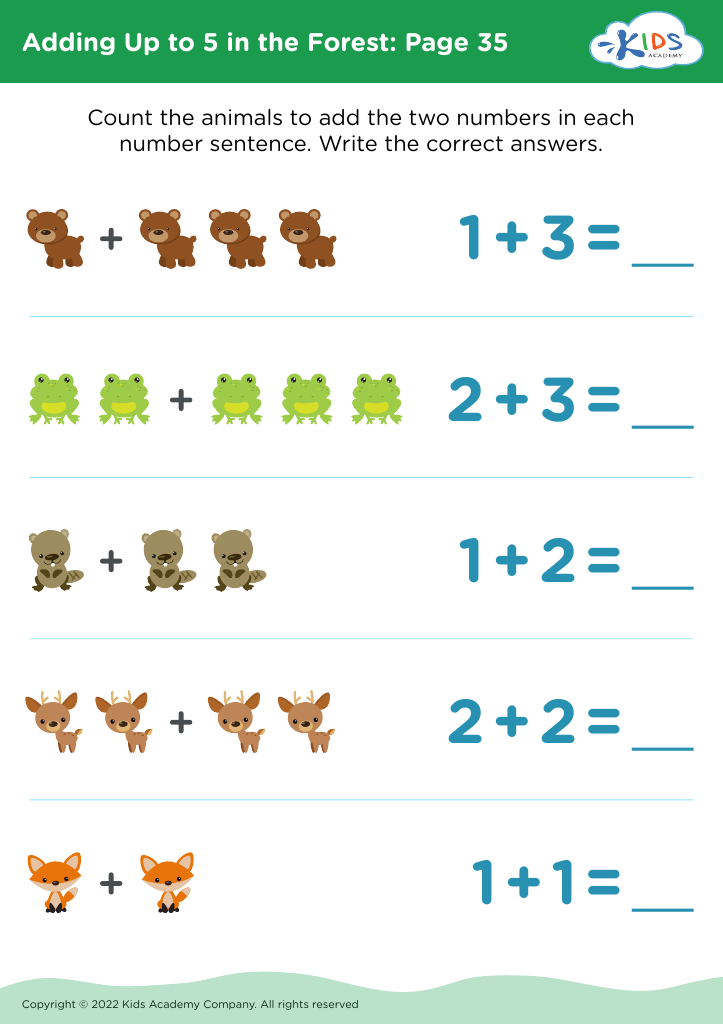
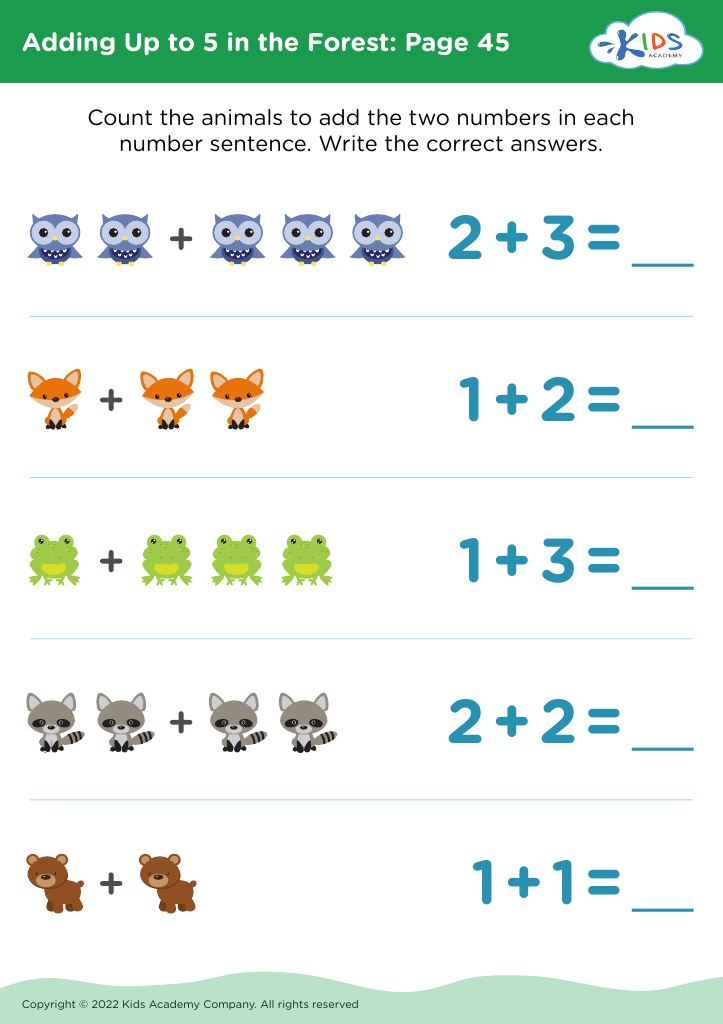
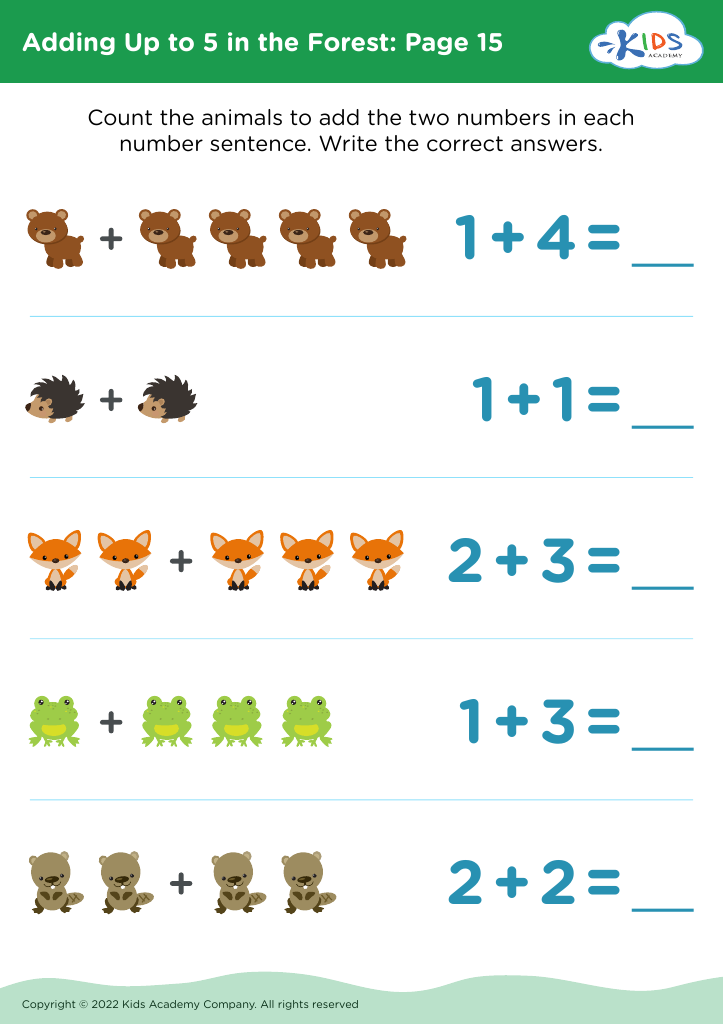
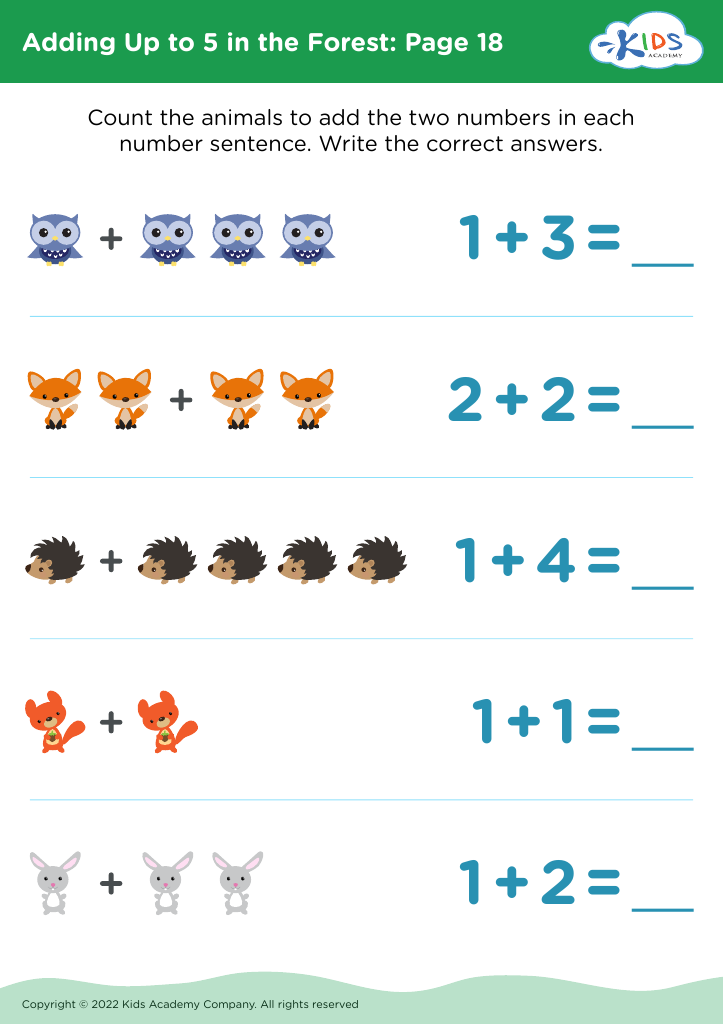
Explore our "Visual Learning Adding in the Forest Worksheets" designed for ages 3-8! These engaging worksheets combine nature elements with foundational math skills, making learning addition enjoyable and relatable. Children will interact with vibrant illustrations of woodland creatures, enhancing their visual learning experience as they practice counting and addition through fun, hands-on activities. These worksheets support the development of critical thinking and problem-solving skills while fostering a love for nature and learning. Perfect for parents and educators seeking to enrich early math education, these resources encourage creativity and exploration in a captivating forest setting. Start your child’s math journey today!
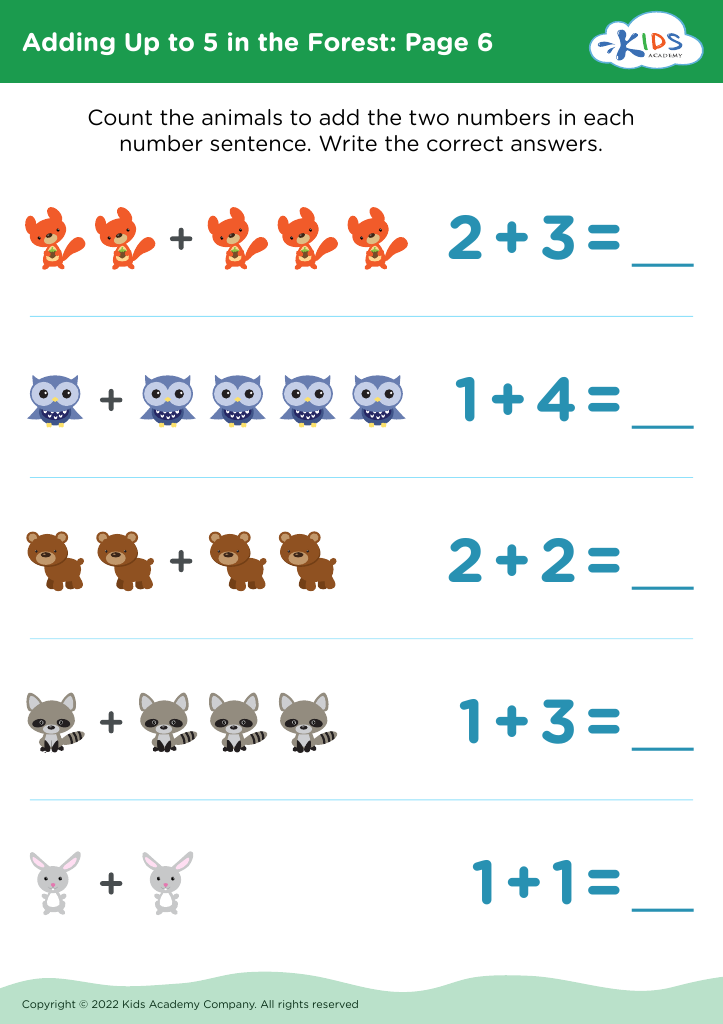
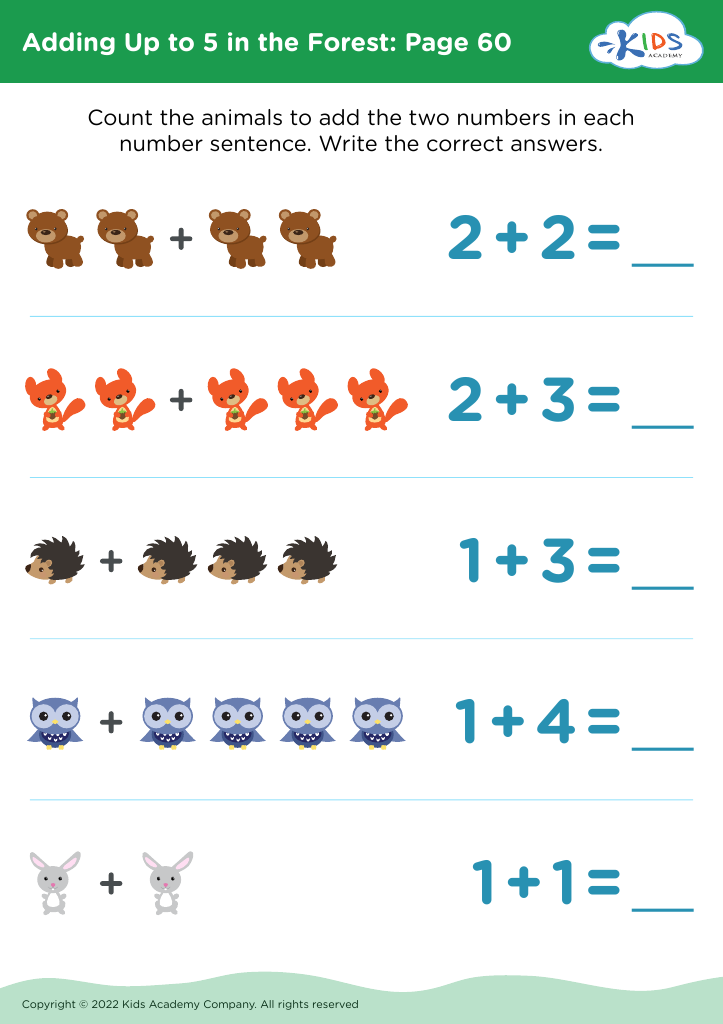
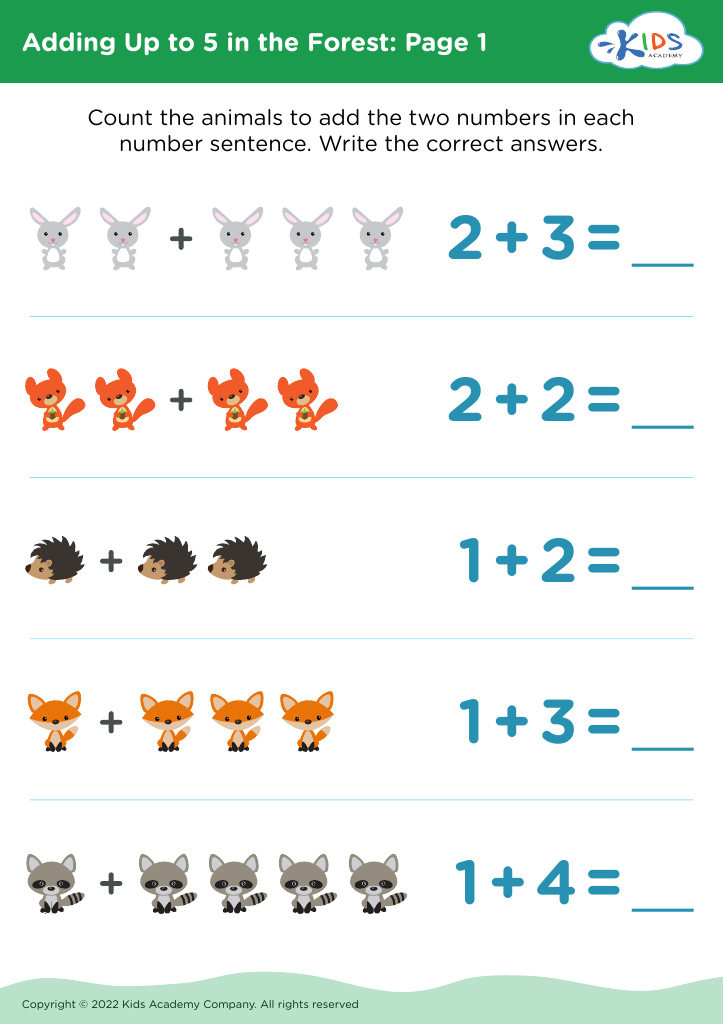
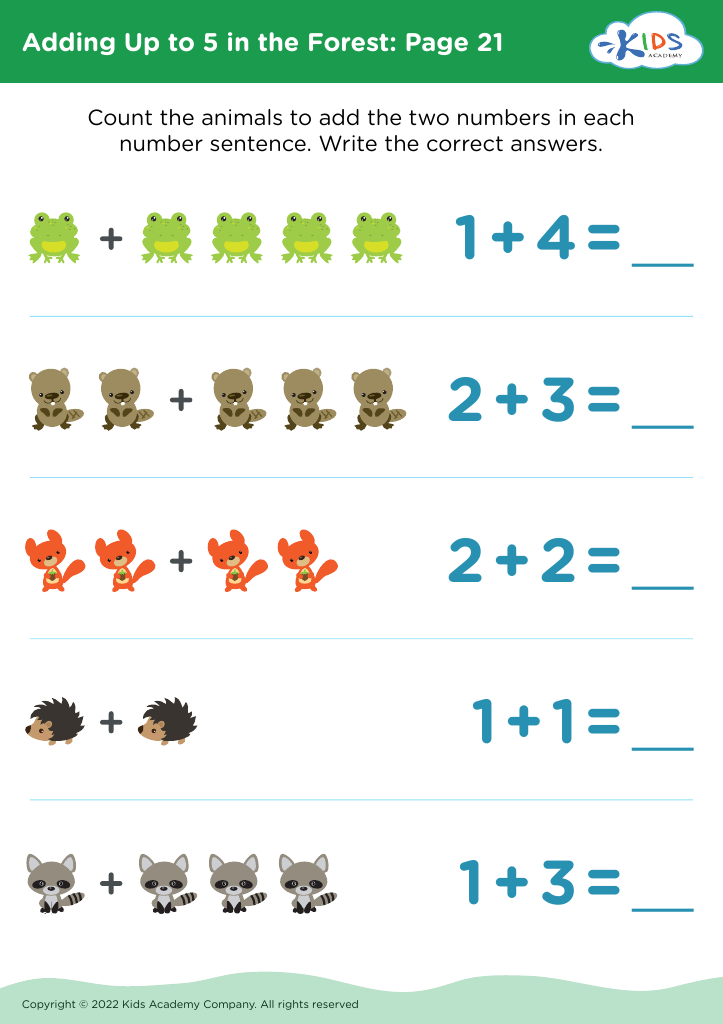
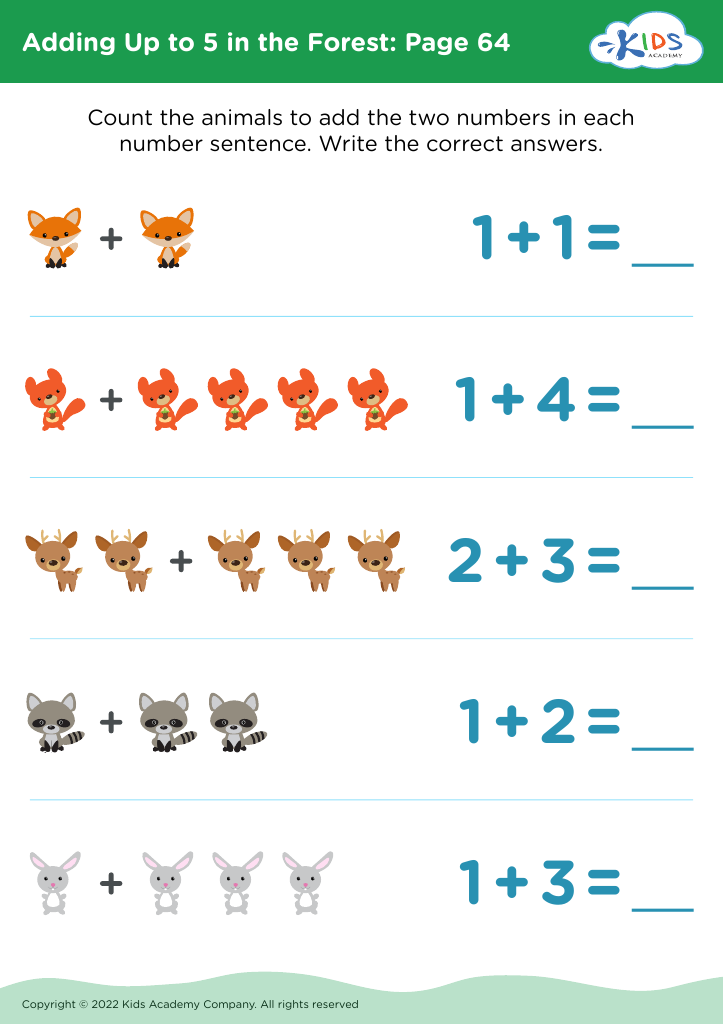
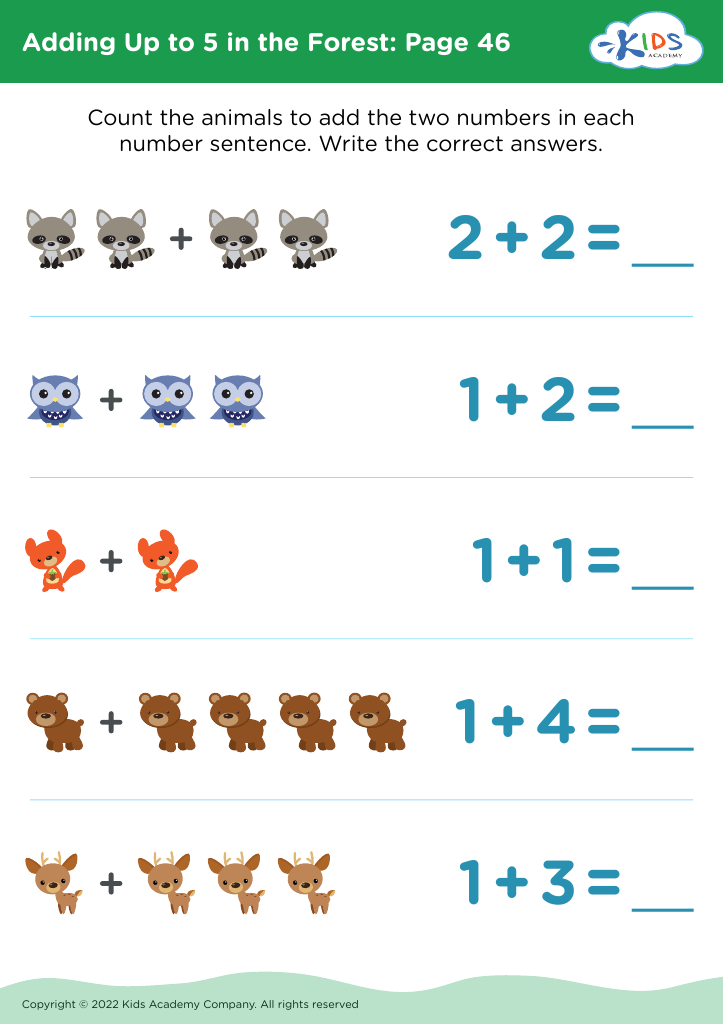
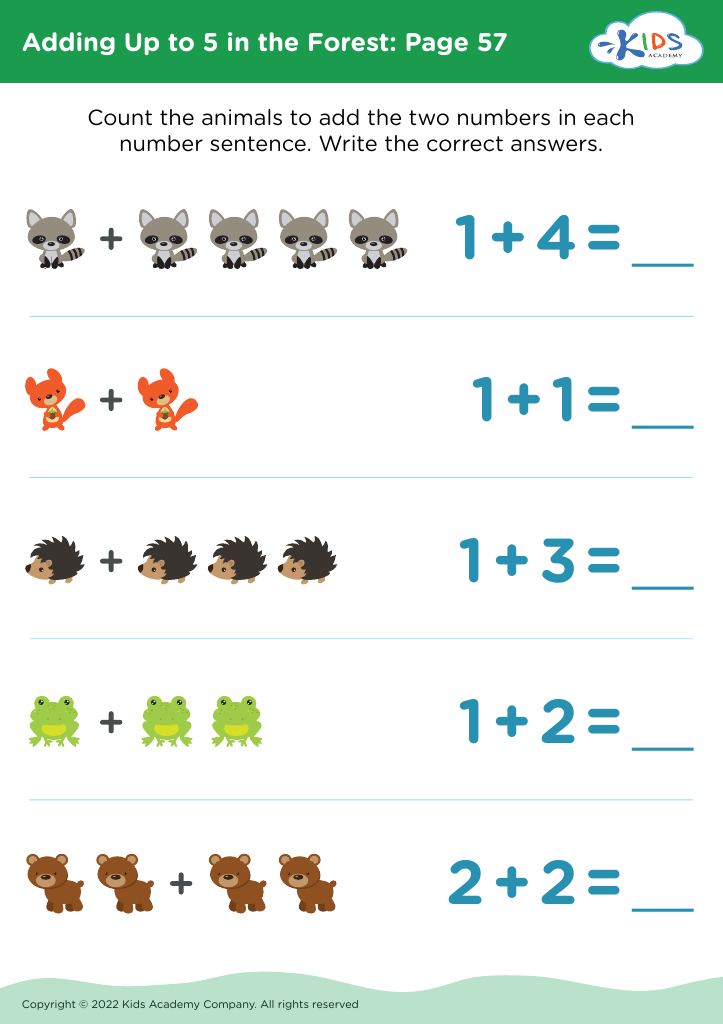
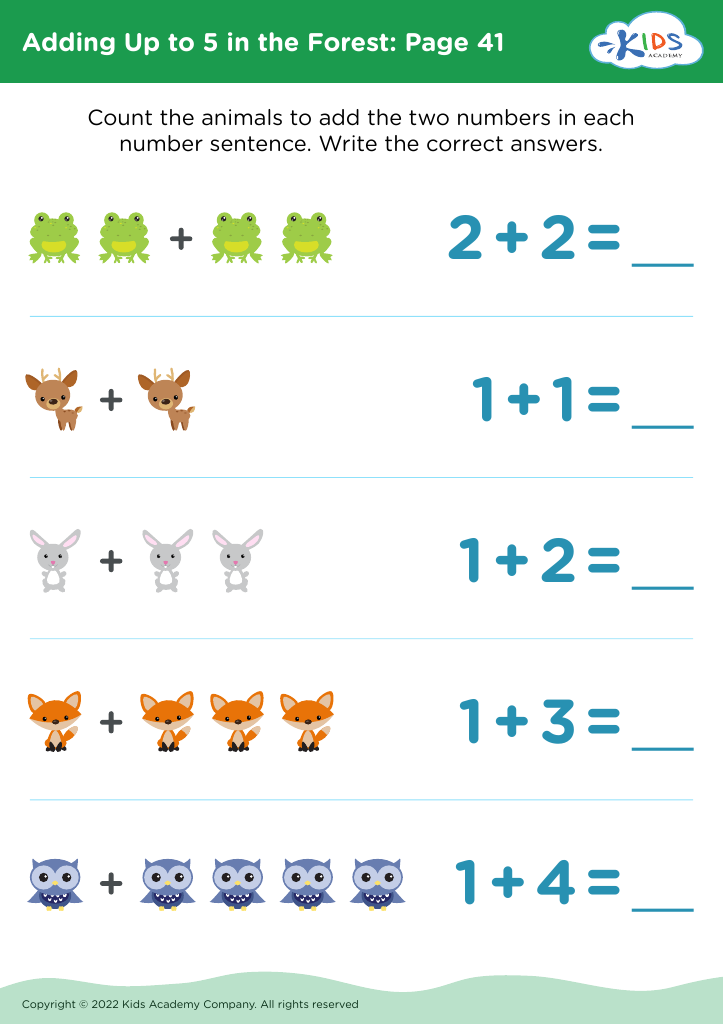



Visual learning in a forest setting offers children unique opportunities to engage with nature while developing critical cognitive skills. For children aged 3-8, this learning approach is beneficial because it taps into their natural curiosity and inclination toward visual stimuli. In a forest, children can observe patterns, colors, and textures that enhance their understanding of the world around them.
Teachers and parents should care about this approach because visual learning fosters creativity and problem-solving skills. When children explore the forest, they are not just observing—they are analyzing and interacting with their environment. This hands-on experience reinforces concepts learned in the classroom, such as science and critical thinking, through direct connection with real-world elements.
Moreover, forest learning enhances emotional and social development. In group settings, children engage in collaborative activities, build friendships, and learn to communicate effectively. The serene forest environment also provides a calming effect that can reduce anxiety, allowing children to focus better and develop a love for learning.
Incorporating visual learning in a forest setting not only enriches educational experiences but also instills a respect for nature, fostering environmentally responsible citizens from a young age. Parents and teachers should advocate for these experiential learning opportunities to support overall child development.