Color Identification Adding up to 100 Misc Worksheets for Ages 3-8
4 filtered results
-
From - To
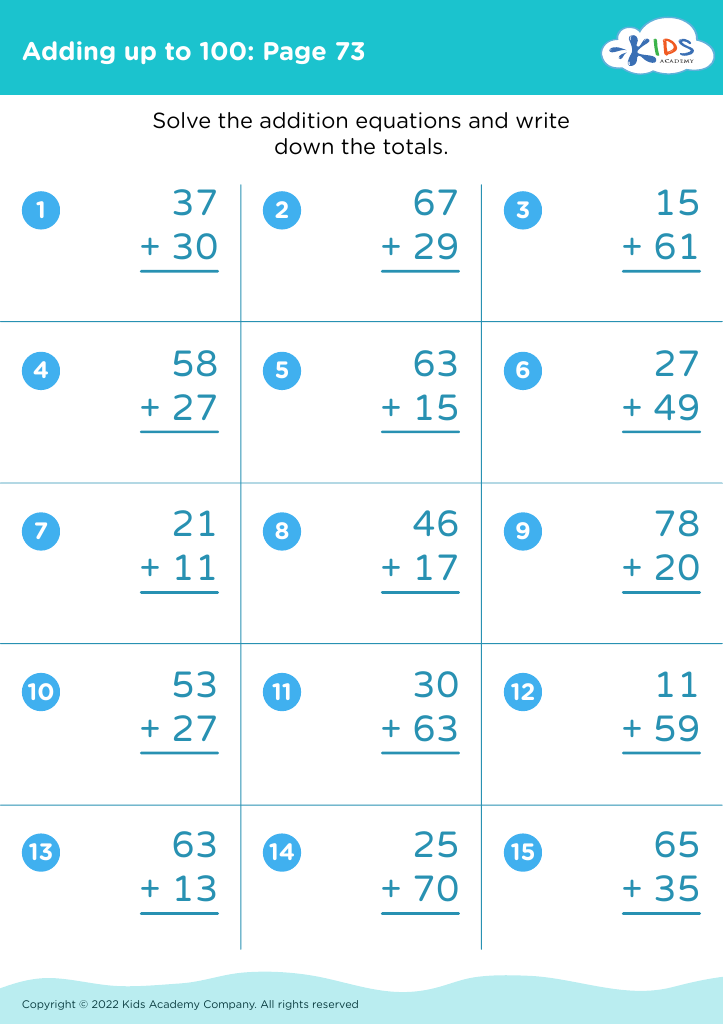
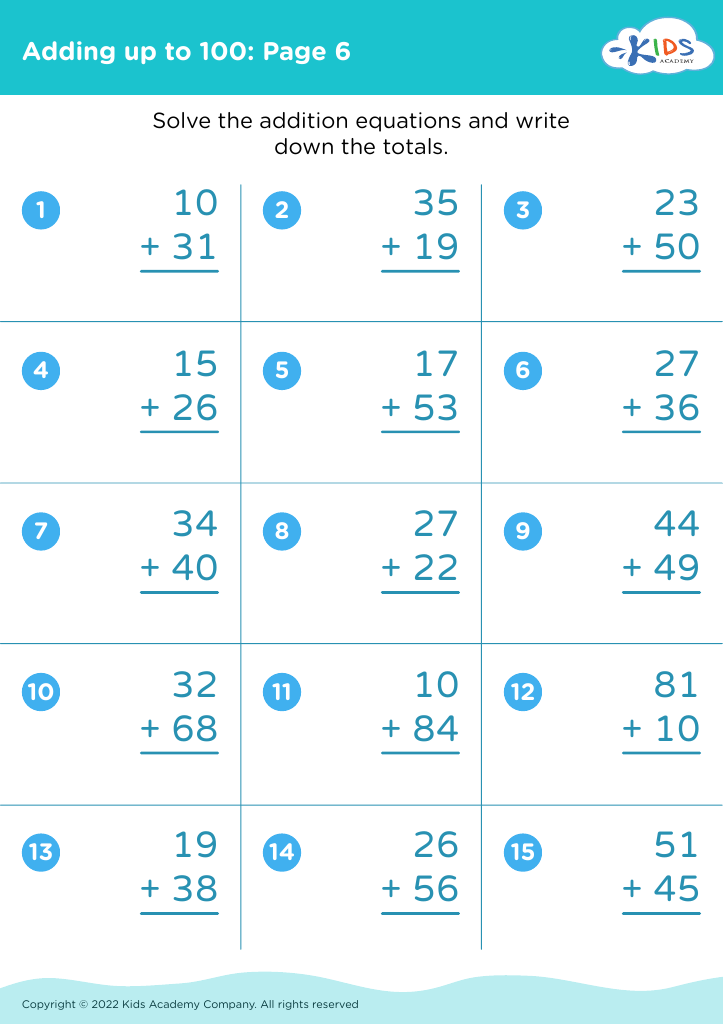
Unlock the power of learning with our "Color Identification Adding up to 100 Misc Worksheets" designed for children aged 3 to 8. This fun and interactive collection of worksheets helps young learners recognize colors while mastering addition skills up to 100. Each worksheet integrates vibrant visuals with engaging activities, making learning an enjoyable experience. Perfect for preschoolers and early elementary students, these resources promote cognitive development and reinforce color awareness alongside math proficiency. Whether at home or in the classroom, our worksheets provide a delightful way for kids to explore colors and numbers simultaneously. Join us in making learning colorful and fun!
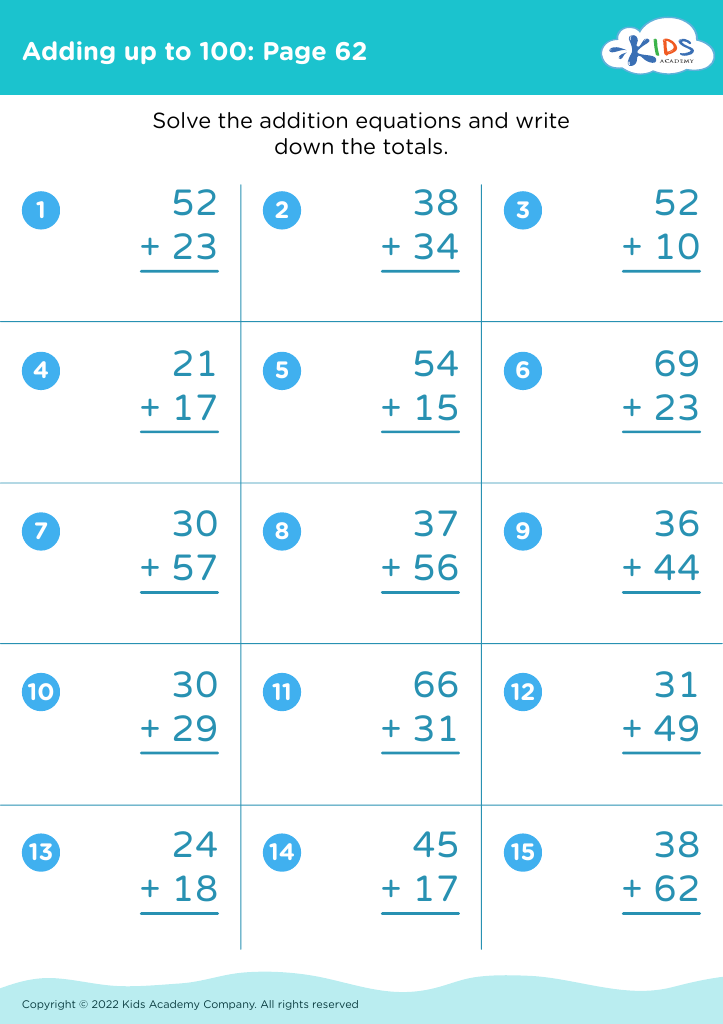
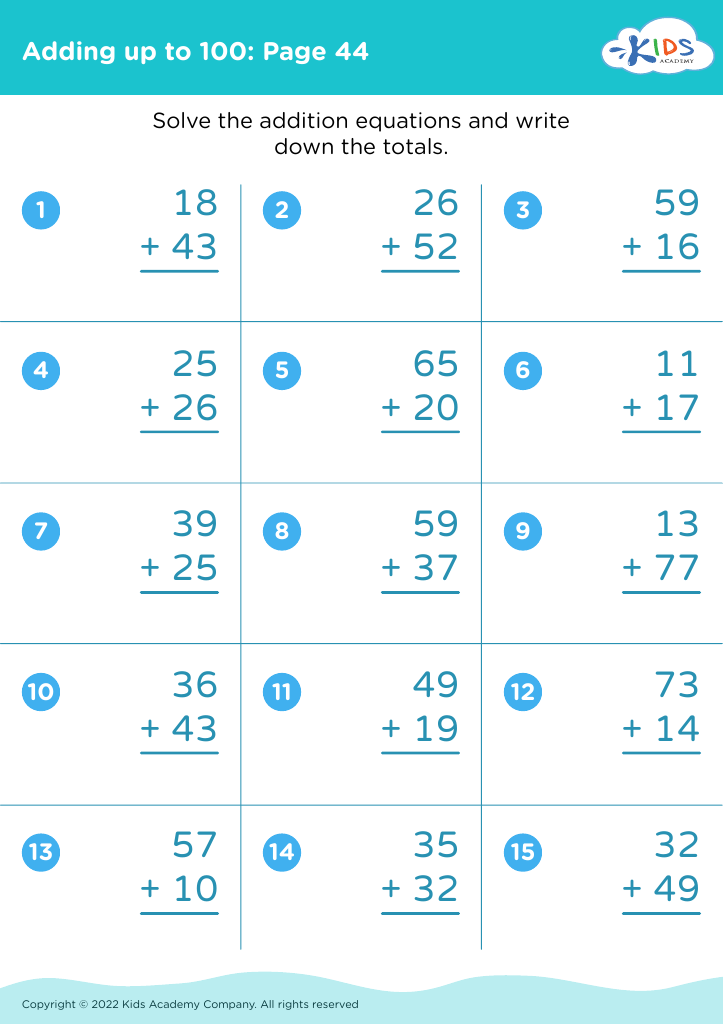


Color identification and foundational math skills, such as adding up to 100, are fundamental to a child’s overall development and learning. For children aged 3-8, understanding colors not only enhances their ability to communicate and express their creativity but also helps to build cognitive skills. Recognizing and naming colors can improve memory and attention, as children learn to categorize and differentiate objects in their environment.
Additionally, incorporating these skills with math concepts, such as adding up to 100, introduces children to foundational numeracy. They learn to count, recognize patterns, and solve problems in a fun and engaging way. This dual focus on colors and numbers helps children make connections in their learning, reinforcing concepts across different areas.
Parents and teachers should care about these skills because they form the building blocks for more advanced concepts in mathematics and the arts, which are crucial in later educational stages. Early mastery encourages confidence, enhances fine motor skills through activities like coloring, and supports social interactions during group activities. By fostering these skills, adults equip children with the tools necessary for lifelong learning and resilience in an increasingly complex world.