Comparing Fractions Adding up to 100 Misc Worksheets for Ages 3-8
10 filtered results
-
From - To
Unlock your child's mathematical potential with our "Comparing Fractions Adding up to 100 Miscellaneous Worksheets for Ages 3-8." These thoughtfully designed worksheets focus on helping young learners grasp the concept of comparing fractions while also practicing their addition skills up to 100. Suitable for kids aged 3-8, these exercises are perfect for building a solid foundation in math. With colorful visuals and engaging problems, your child will find learning fun and stimulating. Guide your little mathematician to confidence and competence with activities specifically tailored for their age group and skill level. Make math both enjoyable and educational today!
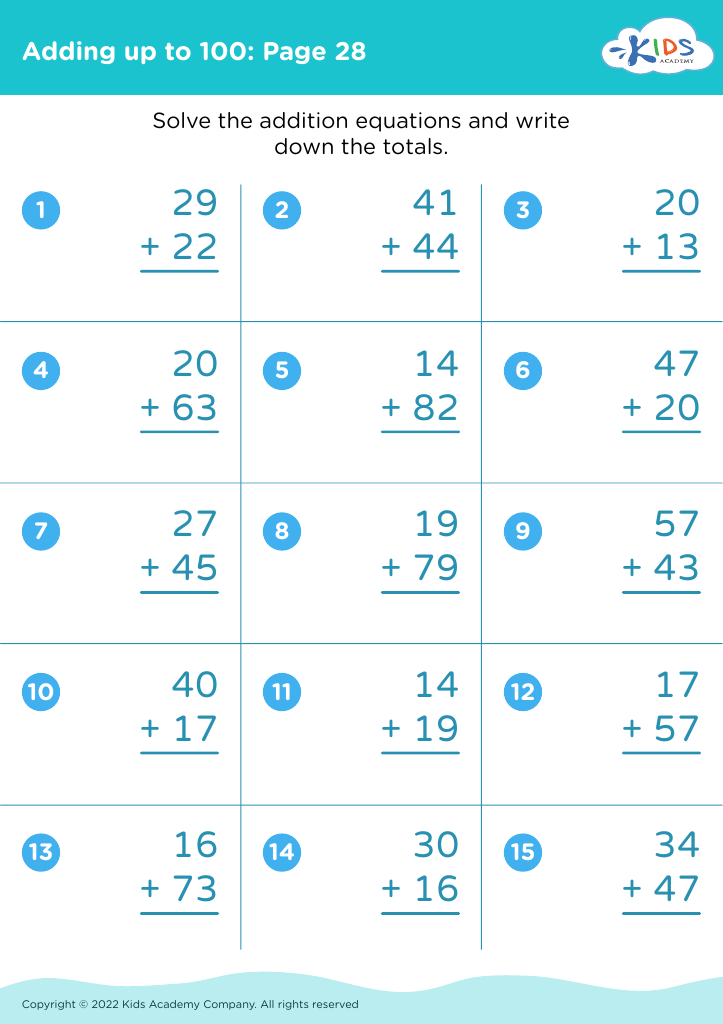
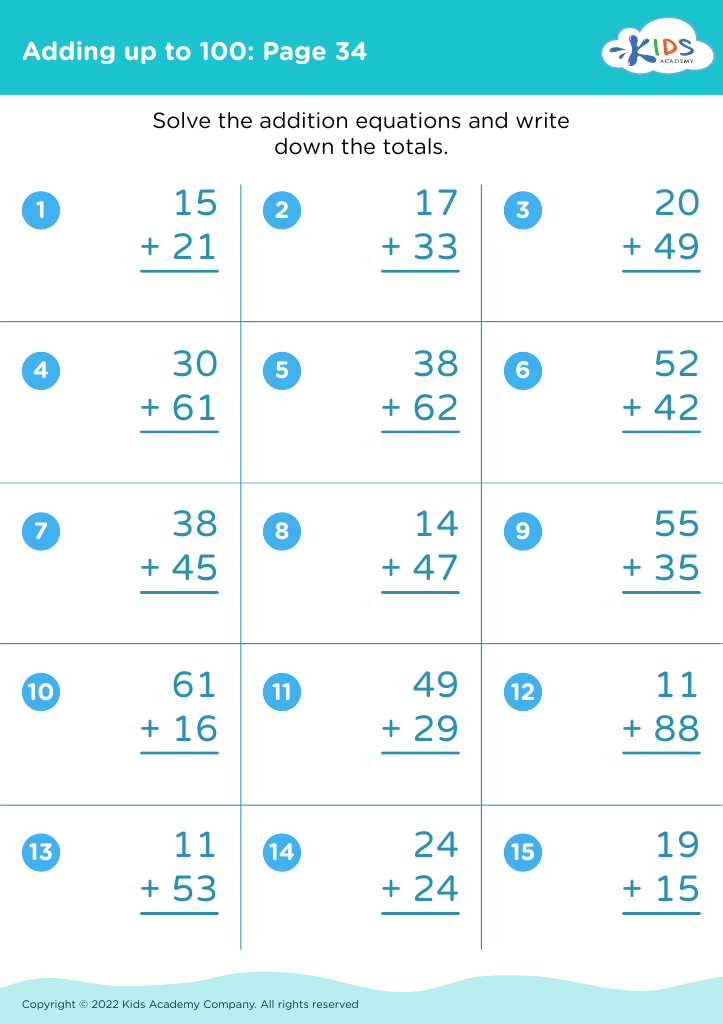
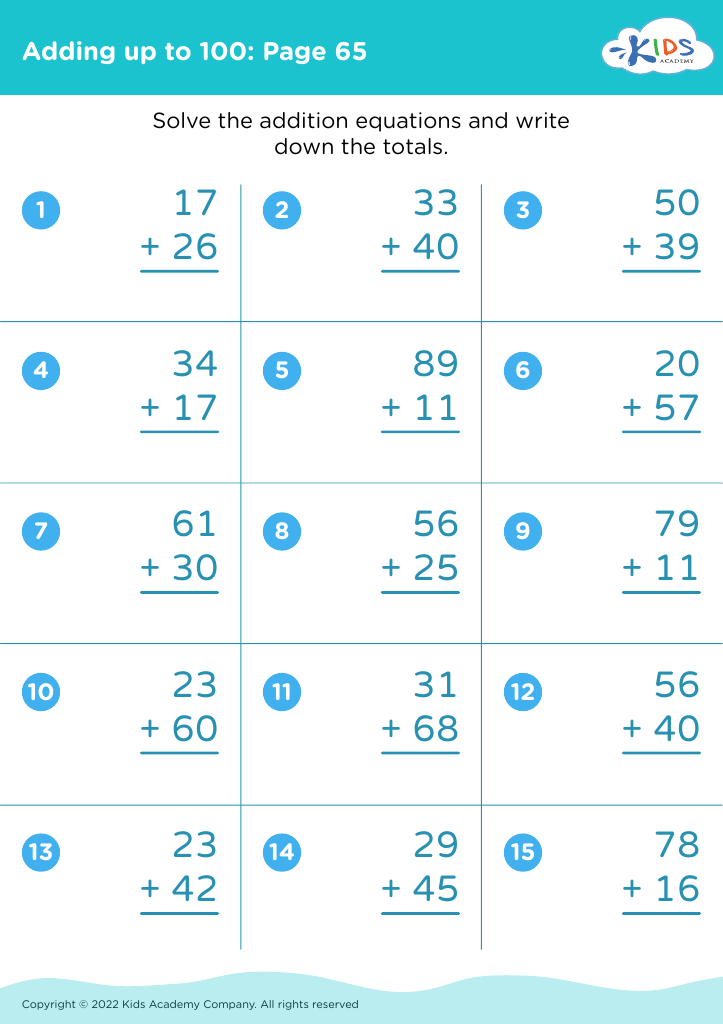
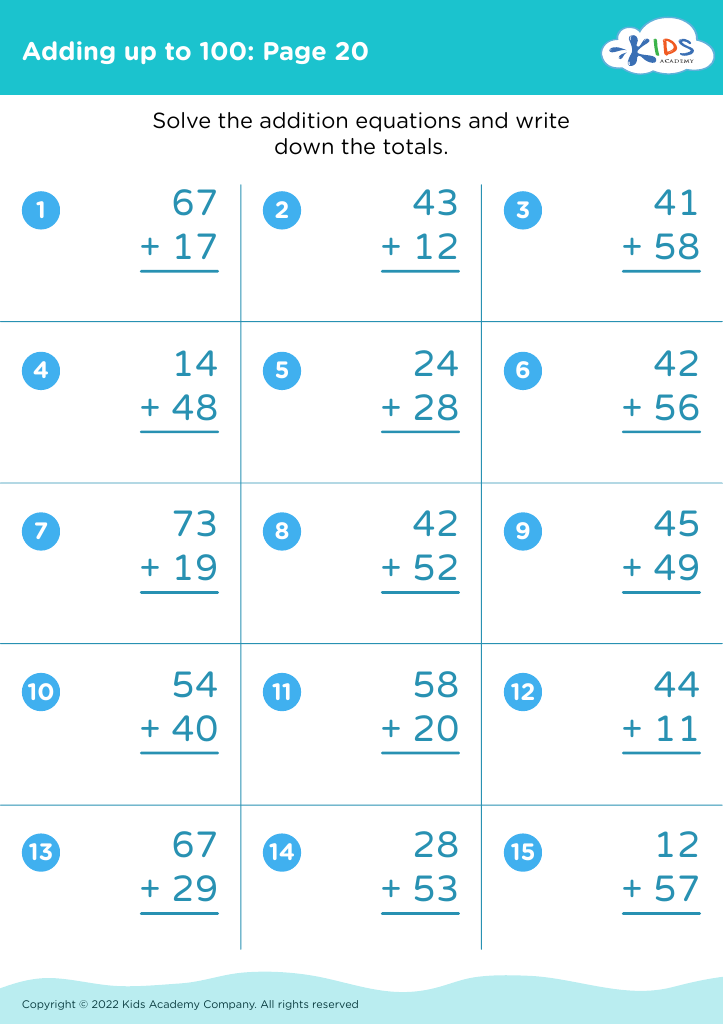
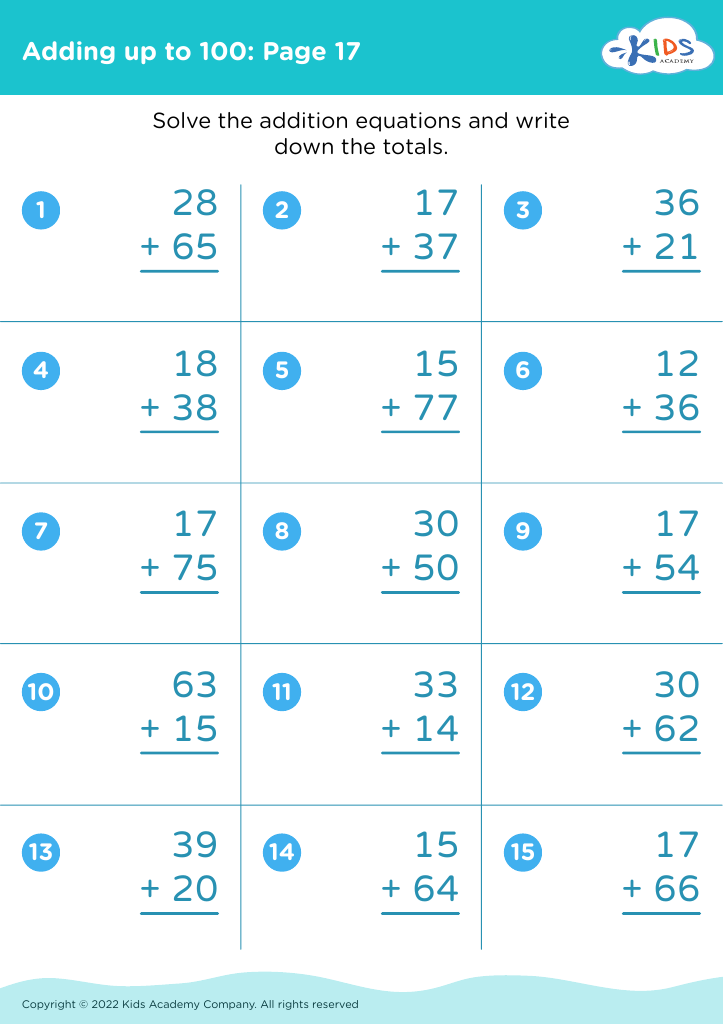
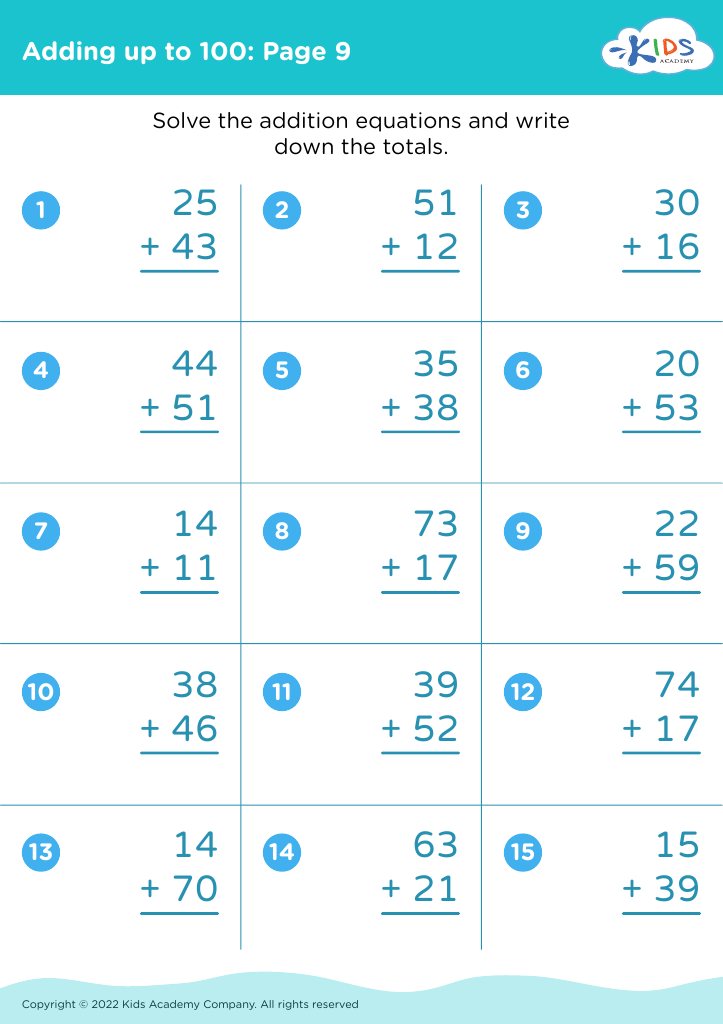
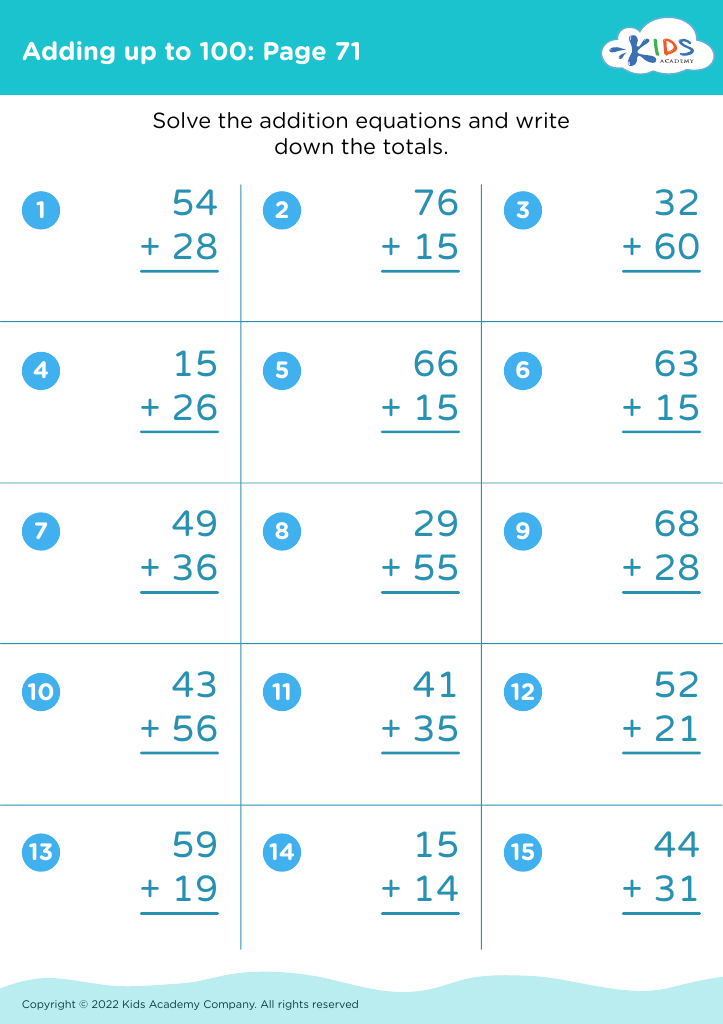
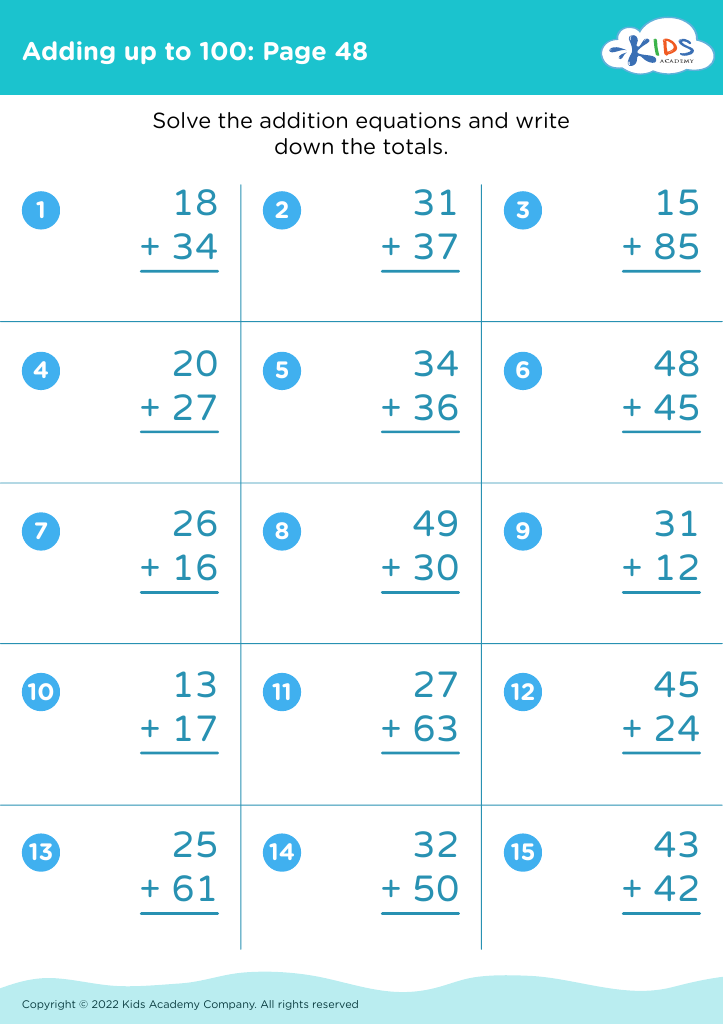
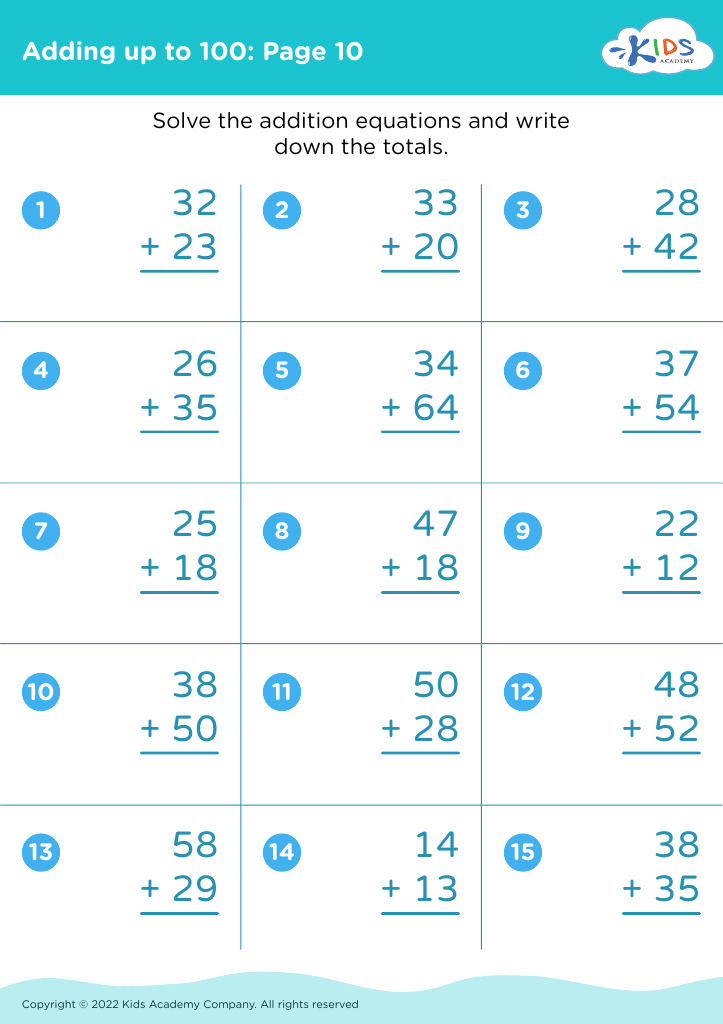
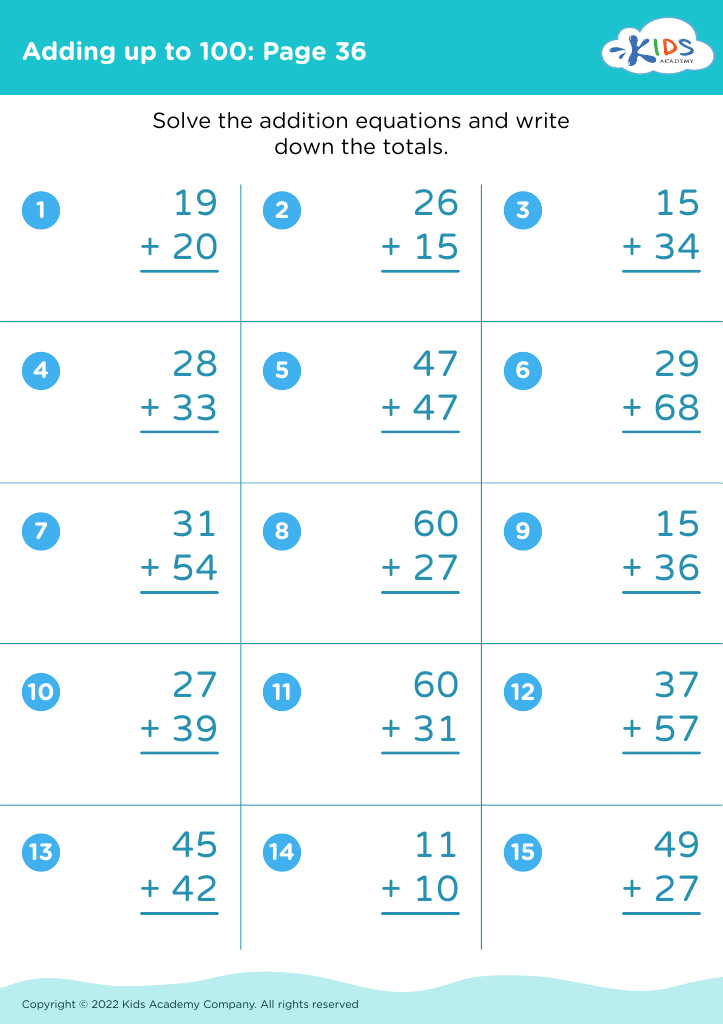


Parents and teachers play crucial roles in the foundational development of young children's mathematical skills. Introducing concepts like comparing fractions, additions up to 100, and other miscellaneous math activities at ages 3-8 sets the stage for academic success and logical reasoning in later years.
Comparing fractions, for instance, helps children understand proportions, relationships, and equivalences, crucial for developing number sense. Early exposure to fractions also demystifies them, preventing the fear that often comes when they are introduced in higher grades.
Basic addition up to 100 enhances arithmetic fluency, helping children master one of the fundamental operations in math. This skill builds a solid foundation for more complex calculations and problem-solving, supporting cognitive development and confidence in handling numbers.
Miscellaneous math exercises that introduce a variety of problems keep young learners engaged and foster versatile thinking. This age-appropriate exposure to diverse mathematical concepts also encourages curiosity, perseverance, and a positive attitude towards learning.
Workshop these skills gently, ensuring that the activities are fun and pressure-free, and celebrate successes to build confidence. Together, these practices support a child's overall cognitive development and knack for problem-solving, essential skills both in academics and everyday life.