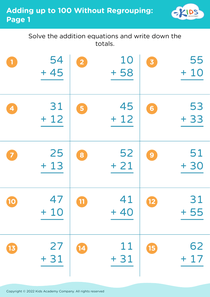
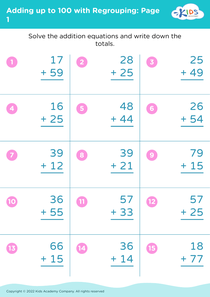
Enhance number recognition Adding up to 100 Misc Worksheets for Ages 3-8
5 filtered results
-
From - To
Enhance number recognition for children aged 3-8 with our "Adding Up to 100 Miscellaneous Worksheets." These engaging and interactive resources are designed to build foundational math skills in a fun and enjoyable way. Our worksheets feature colorful visuals and playful themes to keep young learners motivated while they practice counting, identifying numbers, and basic addition. These activities not only improve number recognition but also foster problem-solving skills and boost confidence in mathematics. Perfect for home or classroom use, our worksheets provide a variety of exercises to accommodate different learning styles. Transform math learning into an exciting adventure today!
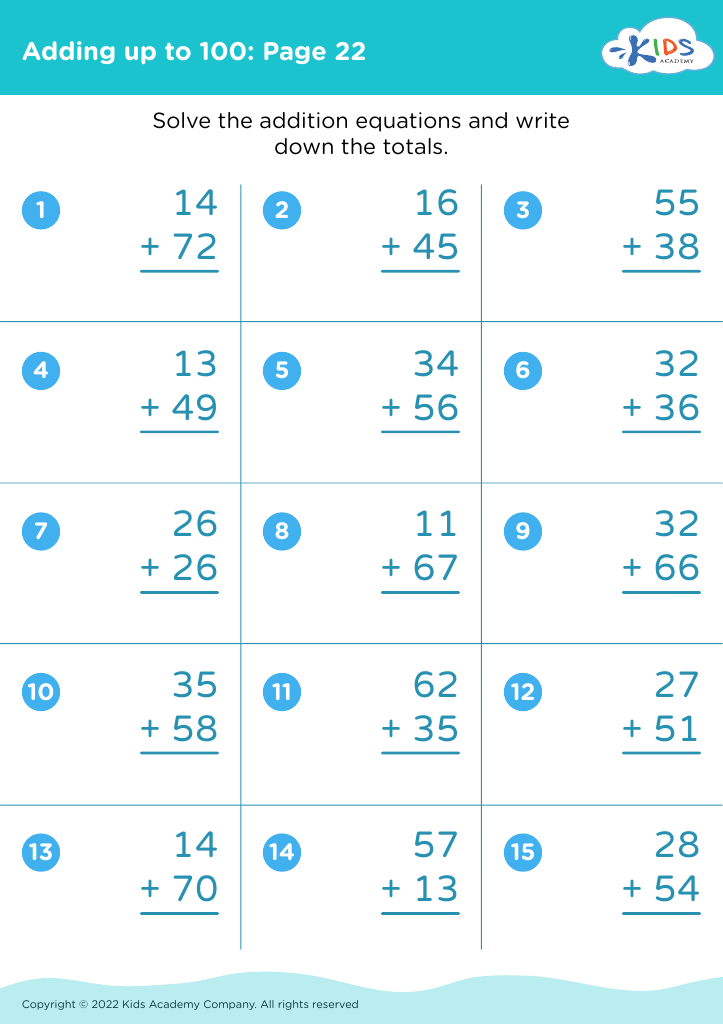
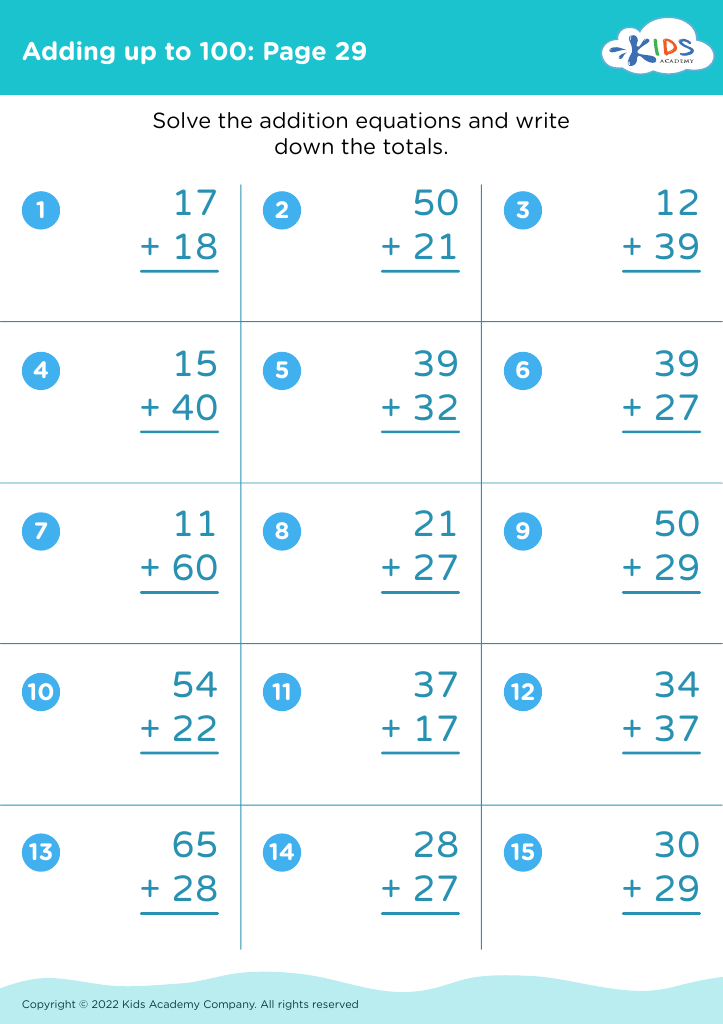
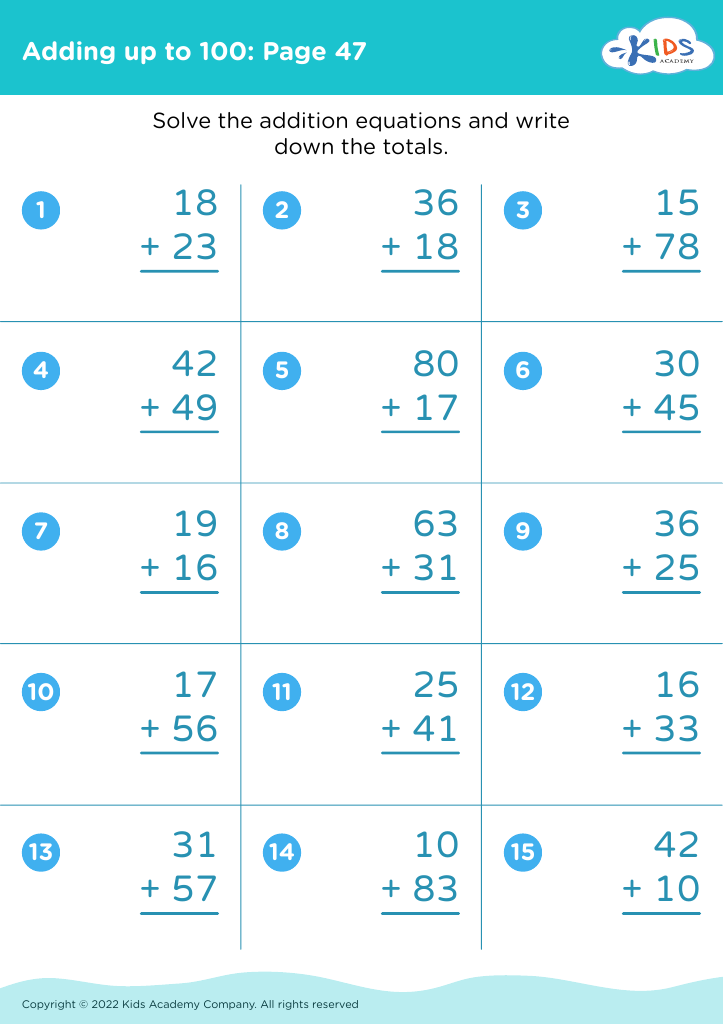
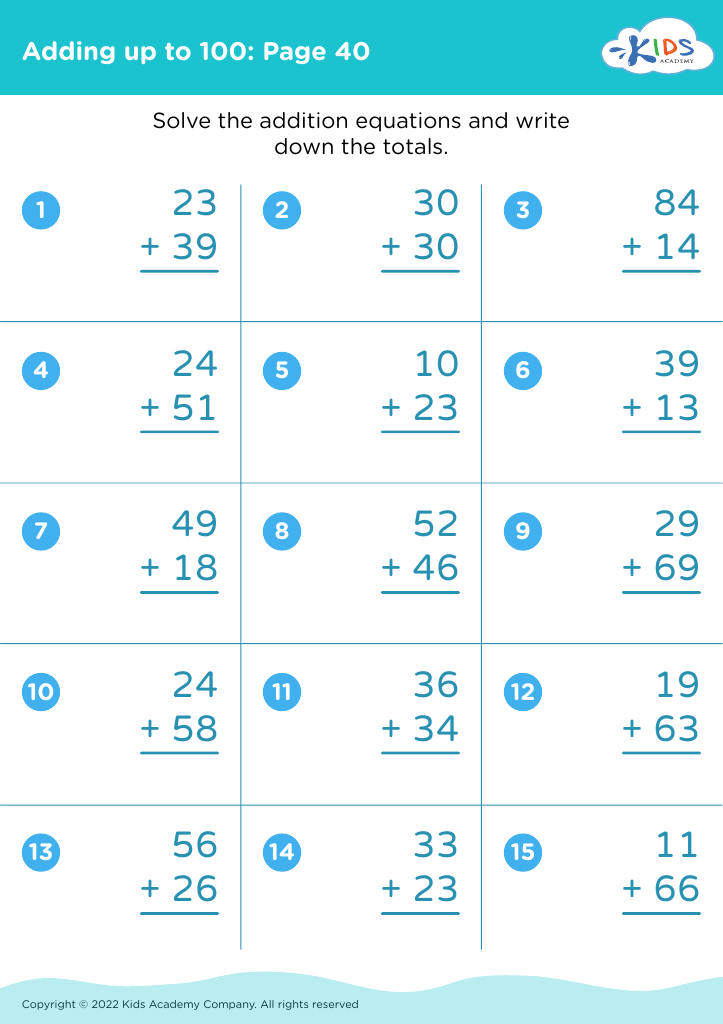
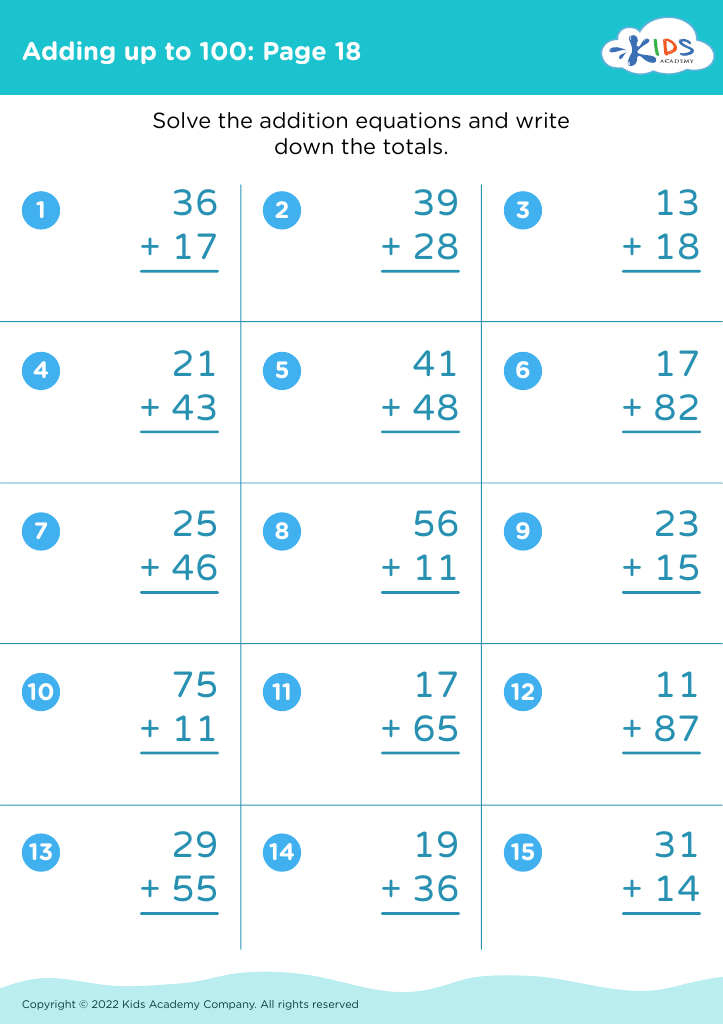


Enhancing number recognition and foundational math skills, such as addition up to 100, is crucial for children aged 3-8. As this age group is critical for cognitive development, fostering strong numerical skills lays the groundwork for future academic success. Number recognition is not just about identifying numbers; it builds a child's confidence and enthusiasm for learning.
For parents and teachers, incorporating engaging activities that promote enhanced number recognition cultivates a child's ability to perform basic calculations, understand mathematical concepts, and apply them in real-world contexts. When children can confidently add up to 100, they develop critical thinking and problem-solving skills, essential for later stages in education.
Additionally, early exposure to math can bridge achievement gaps and fortify a child's social and emotional well-being, resulting in positive attitudes towards education. Fun activities, games, and challenges that center around number recognition can make learning enjoyable, promoting collaboration, communication, and desired social skills among peers.
Furthermore, strong foundational skills in mathematics set children on the path to becoming lifelong learners, equipping them with tools to succeed in an increasingly complex world. Overall, parents and teachers play an essential role in fostering young learners’ mathematical abilities, ensuring they are prepared for future challenges.