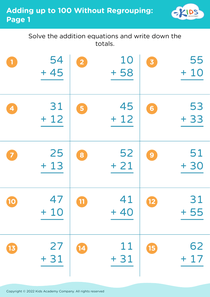
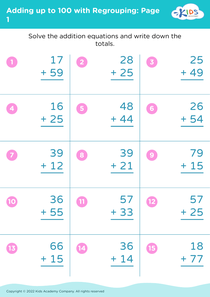
Problem-Solving Skills Adding up to 100 Misc Worksheets for Ages 3-8
7 filtered results
-
From - To
Introducing our "Problem-Solving Skills Adding up to 100 Misc Worksheets for Ages 3-8"! Perfectly designed for young learners, these engaging worksheets foster foundational math skills while enhancing problem-solving abilities. Structured for kids aged 3-8, the activities focus on addition up to 100, providing a fun and educational experience. Each printable worksheet challenges children to think critically and solve various math problems, promoting confidence and proficiency. Ideal for both classroom and home use, these resources are a fantastic way to support your child's mathematical journey and encourage a love of learning. Explore and download today!
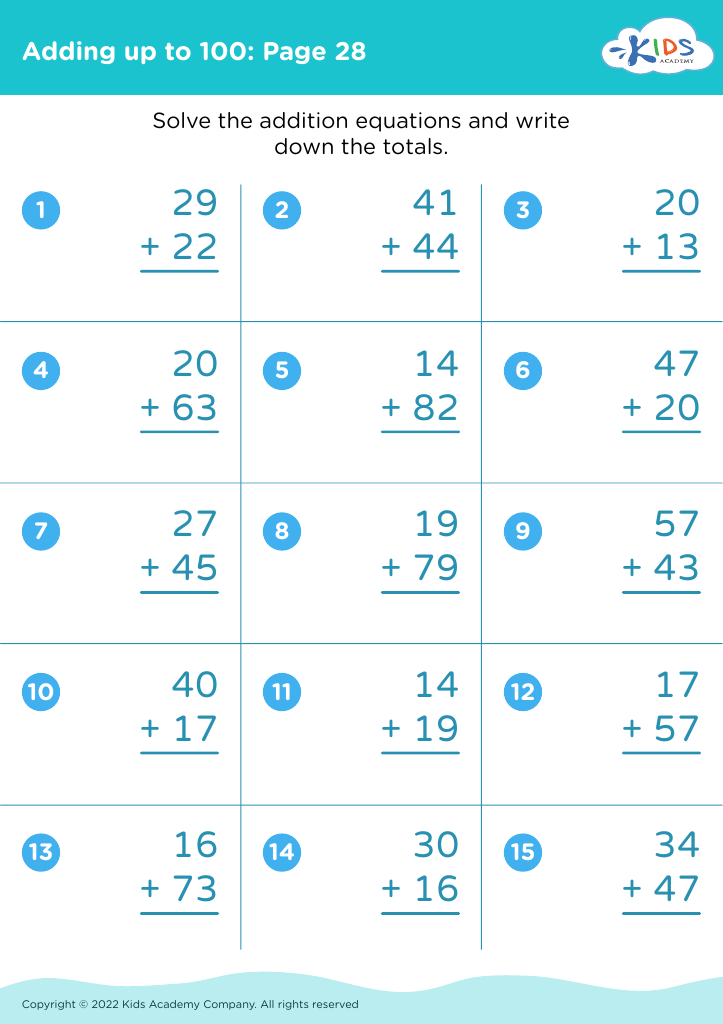
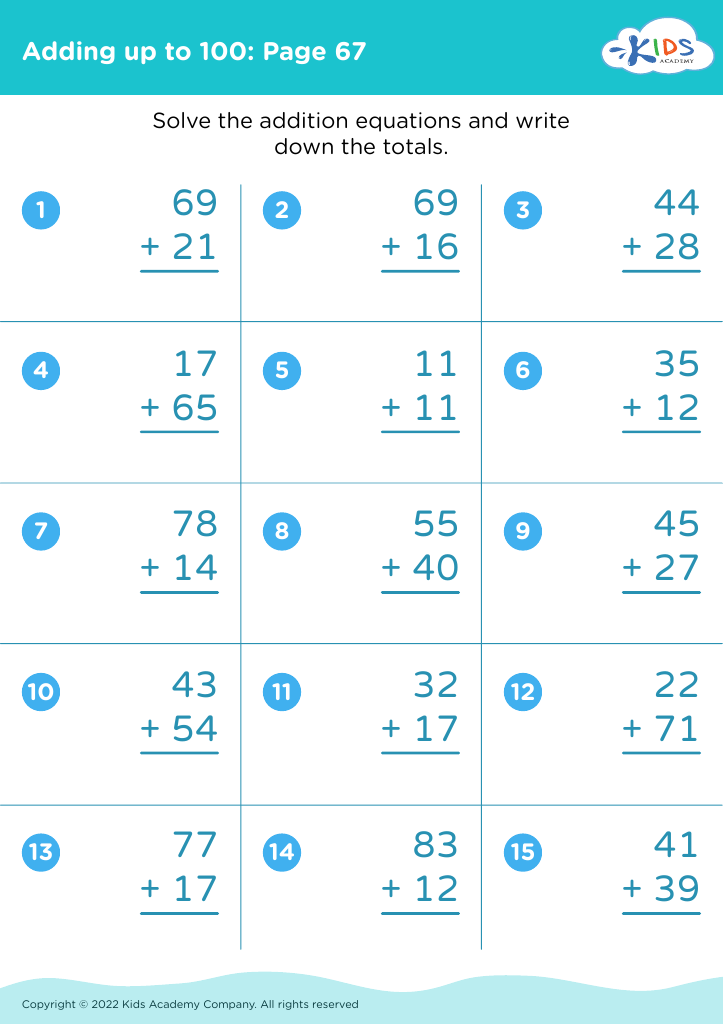
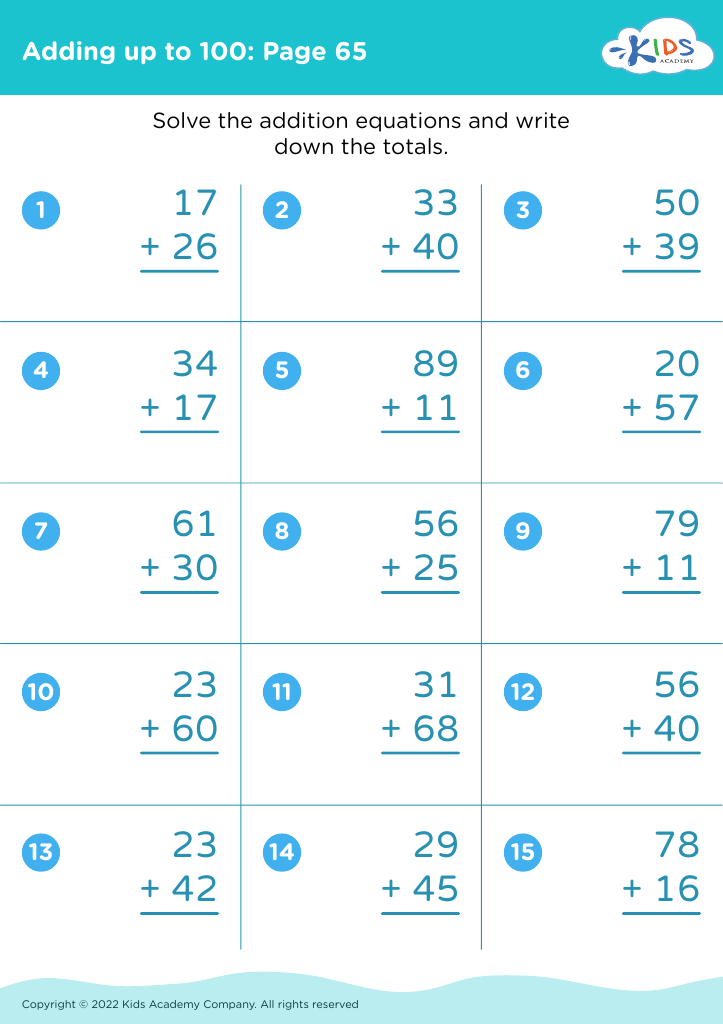
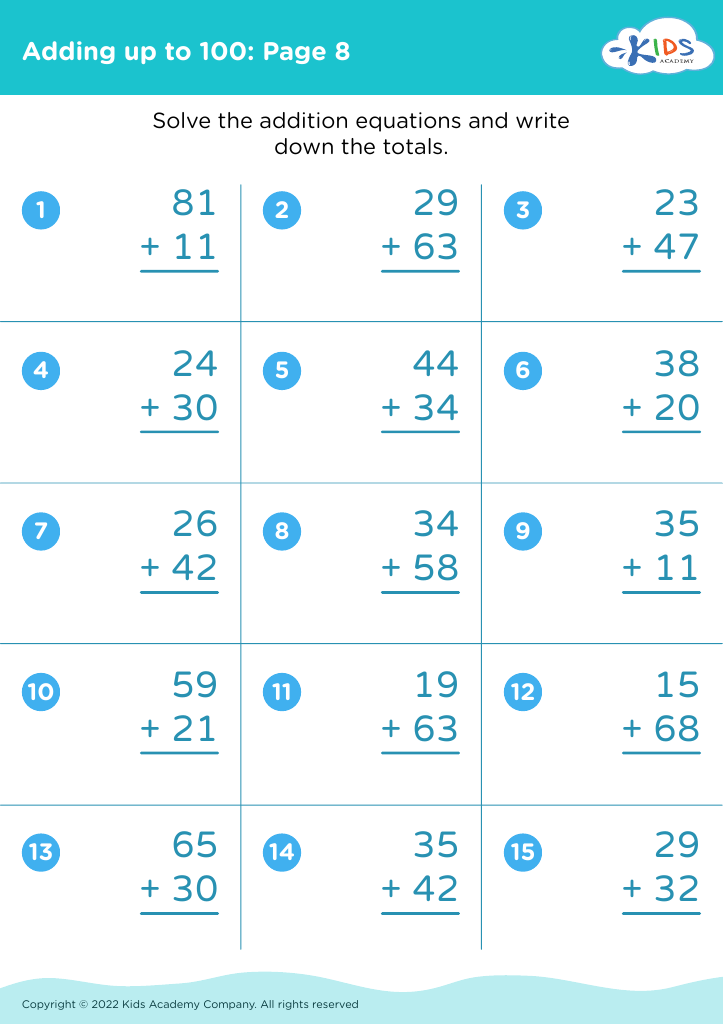
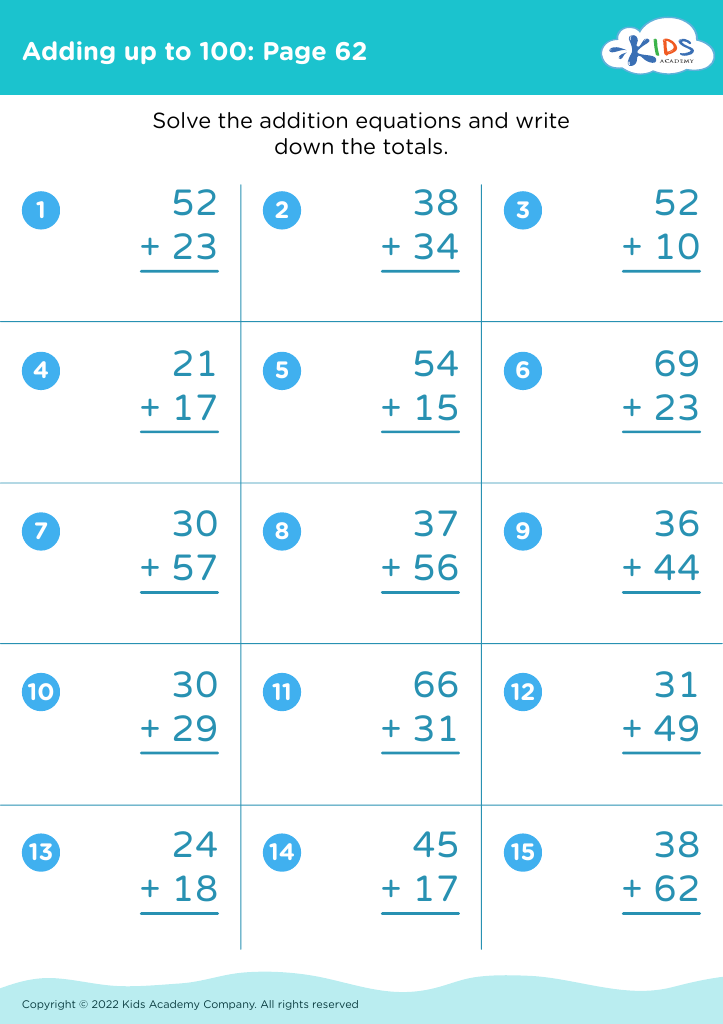
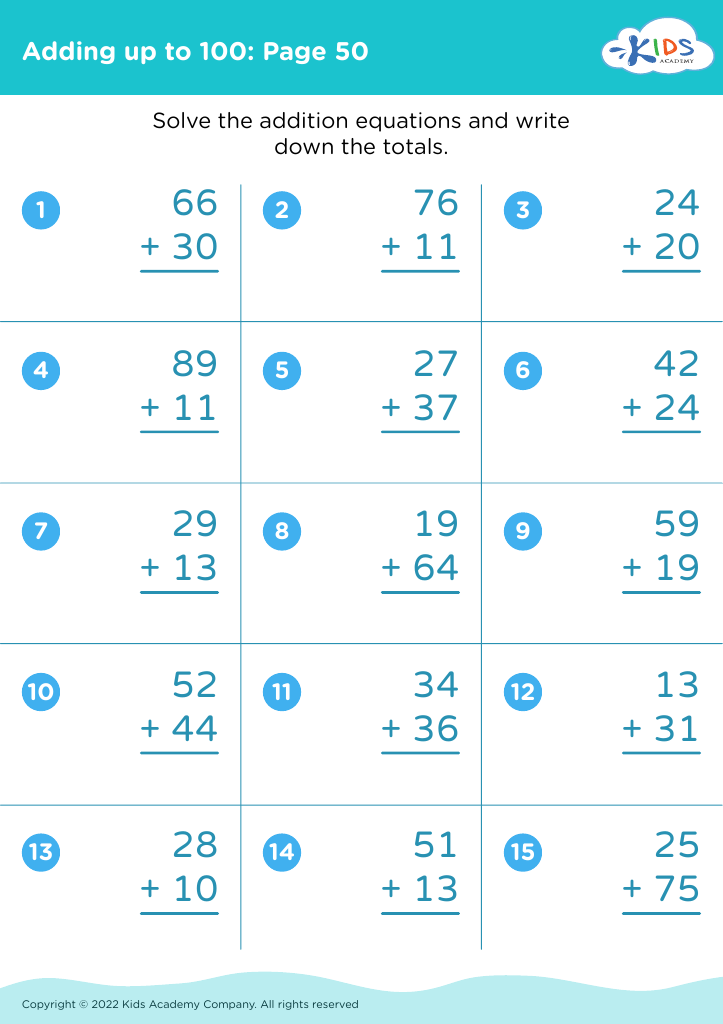
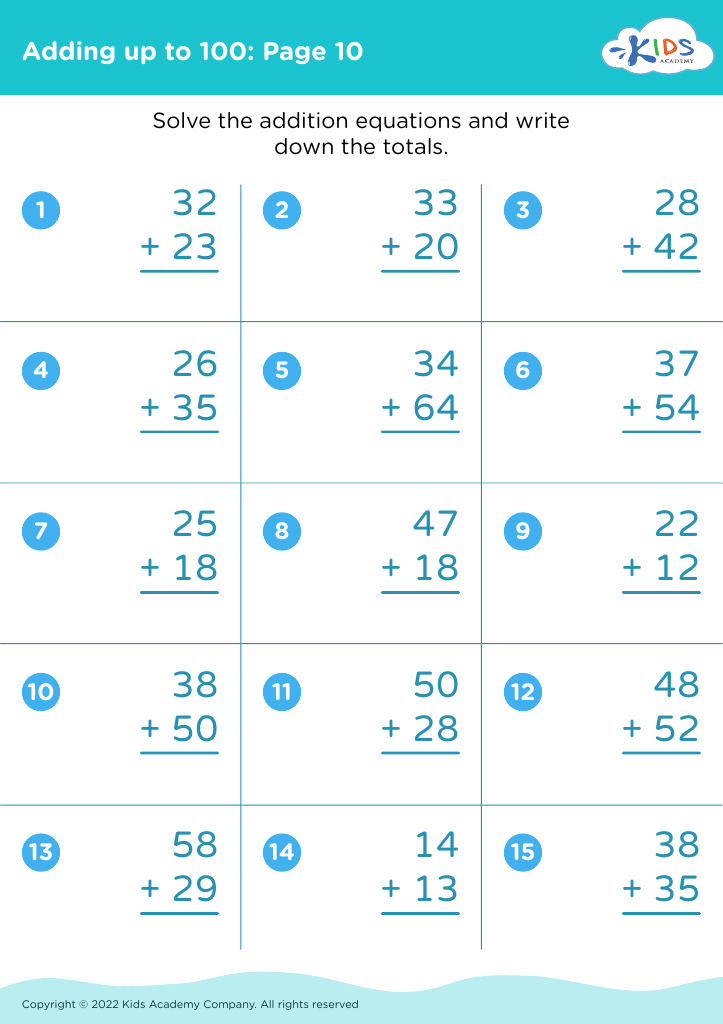


Problem-solving skills are foundational for young children's overall cognitive development, including their ability to think critically, make decisions, and understand the world around them. When young children, ages 3-8, engage in activities like adding up numbers to 100, they are not just learning mathematics, but they are also honing essential life skills.
Firstly, problem-solving with numbers helps children develop their numerical sense. Early exposure to addition up to 100 builds a strong foundation for future math skills and instills confidence in handling numbers. Kids who are comfortable with these concepts will likely find math more enjoyable and less intimidating as they grow older.
Secondly, such activities stimulate their brain, encouraging logical thinking and pattern recognition. As children figure out how to add numbers, they practice and enhance their reasoning and analytical abilities.
Thirdly, engaging with numerical problems can improve a child's patience and persistence. Working to solve a problem cultivates resilience and helps them learn to cope with challenges constructively.
Lastly, teaching problem-solving skills fosters an interactive and engaging learning environment. Whether through educational apps, games, or hands-on activities, children learn better when they are actively involved and having fun. By focusing on these skills early, parents and teachers can support well-rounded intellectual and emotional development.