Reading comprehension Adding up to 100 Misc Worksheets for Ages 3-8
3 filtered results
-
From - To
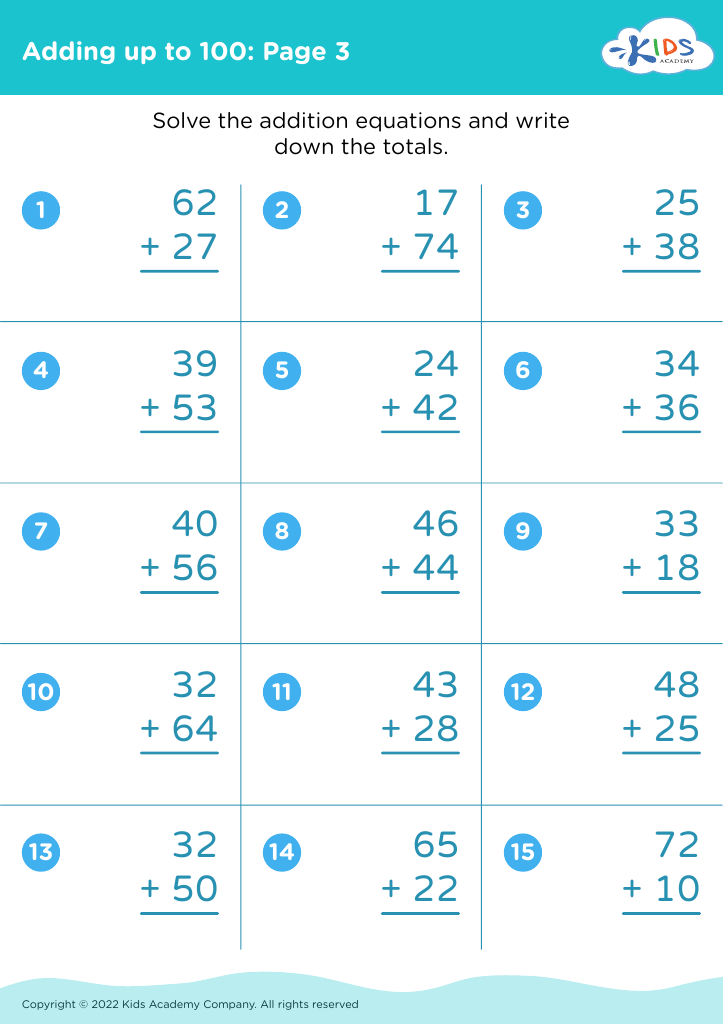
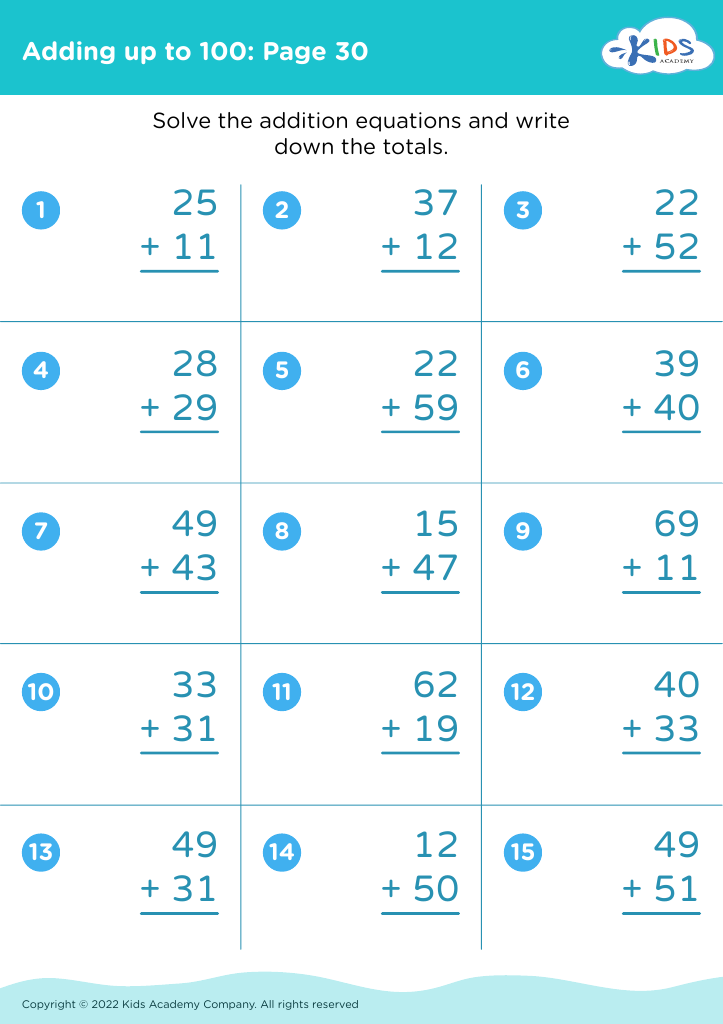
Enhance your child's learning journey with our specialized "Reading Comprehension Adding up to 100 Misc Worksheets for Ages 3-8." These educational worksheets aim to strengthen both math and reading skills simultaneously. Designed for young learners, they offer engaging activities that combine simple addition problems up to 100 with fun reading comprehension exercises. Perfect for preschool through second grade, this collection supports cognitive development and boosts confidence in solving math while understanding texts. Discover a fun way to build foundational skills with Kids Academy's diverse set of worksheets, tailored to make learning enjoyable and effective. Join our educational adventure today!
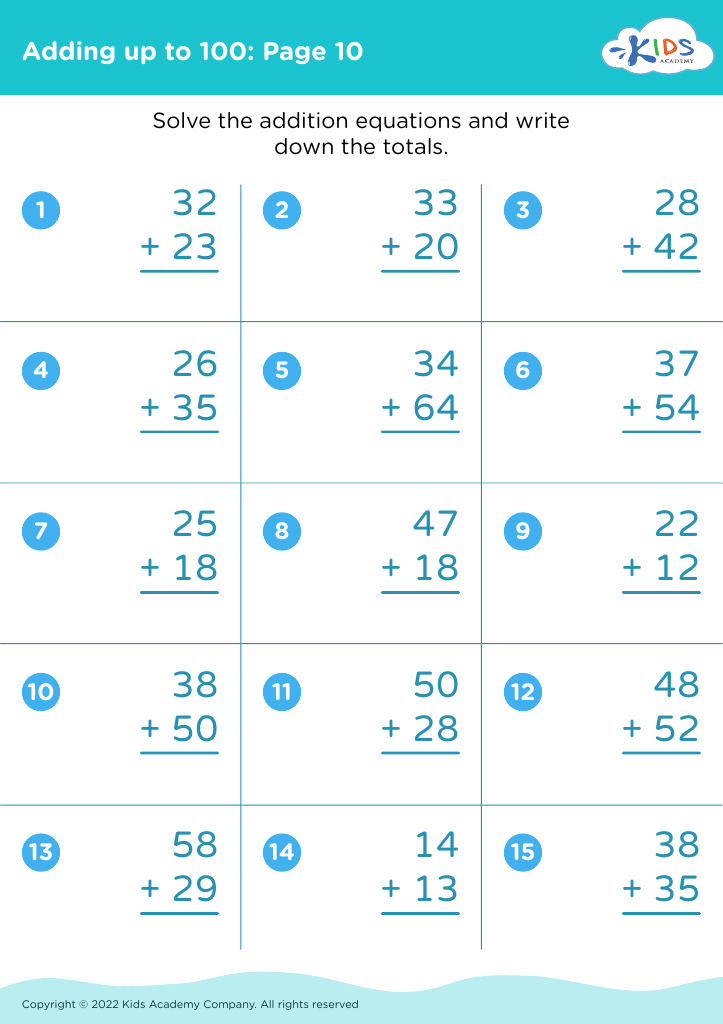


Reading comprehension and basic arithmetic skills, such as adding up to 100, are foundational competencies that significantly impact a child's overall academic success and daily life. Parents and teachers should prioritize these skills for several reasons.
Firstly, strong reading comprehension enables children to understand and process information effectively, fostering a love for reading and learning. It helps them follow instructions, absorb new ideas, and gain knowledge across all subjects. By understanding what they read, children can build a robust vocabulary, improve their writing, and develop critical thinking skills.
Secondly, mastering arithmetic basics, like adding up to 100, is crucial for cognitive development. These skills not only form the foundation for more advanced mathematical concepts but are also vital for everyday activities, such as counting money, telling time, and problem-solving. Early proficiency in math boosts confidence and reduces anxiety around more complex problems later in life.
Combined, these skills empower students to achieve academic success, fostering self-confidence and independence. For ages 3-8, developing these skills in a supportive, encouraging environment is essential. Engaging learning tools, such as storybooks and interactive math games, can make this process enjoyable. Invested parents and teachers can create stimulating learning experiences, setting children on a path to lifelong learning and success.