Recognizing shapes Adding up to 100 Misc Worksheets for Ages 3-8
4 filtered results
-
From - To
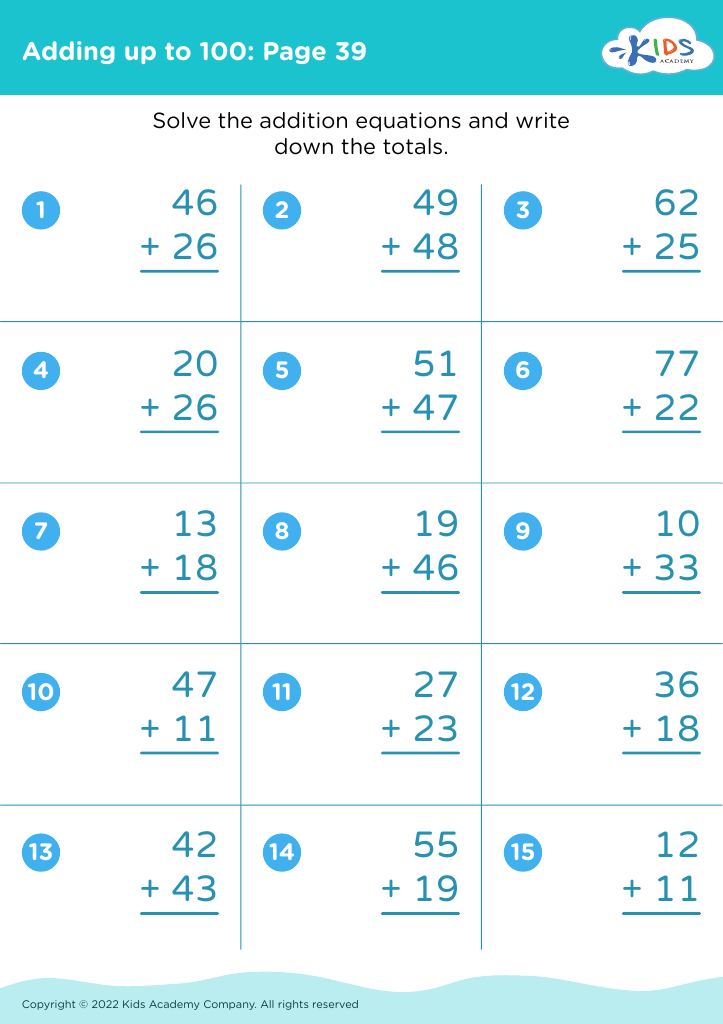
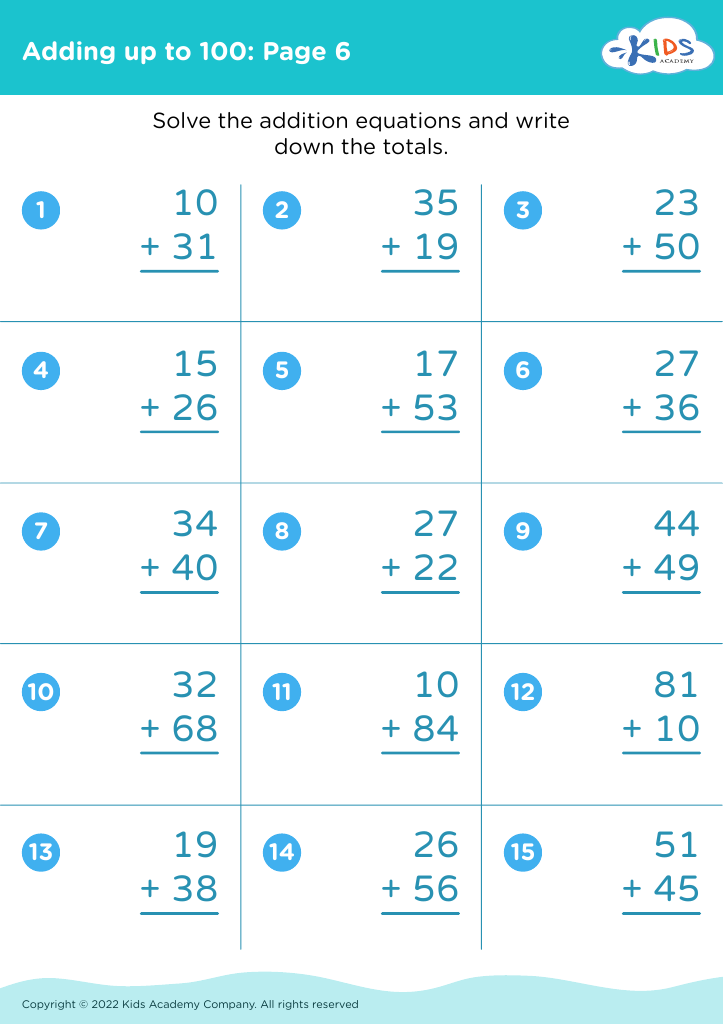
Discover an engaging assortment of worksheets designed specifically for children ages 3-8, focusing on recognizing shapes and adding up to 100. These expertly crafted activities make learning fun and effective by blending foundational math skills with interactive shape recognition exercises. Young learners can enhance their problem-solving abilities and develop essential mathematical competencies as they explore numbers and shapes in a playful, educational environment. These worksheets support early childhood education by promoting cognitive growth and preparing kids for more advanced mathematical concepts. Ideal for both classroom and home use, they provide a comprehensive, enjoyable learning experience for young children.
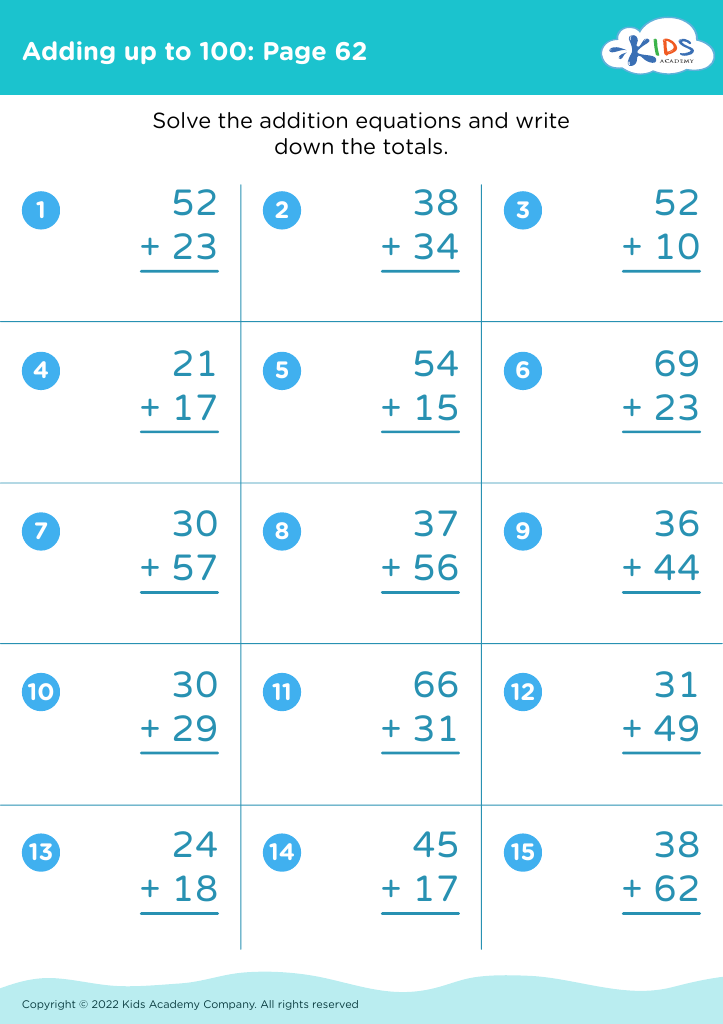
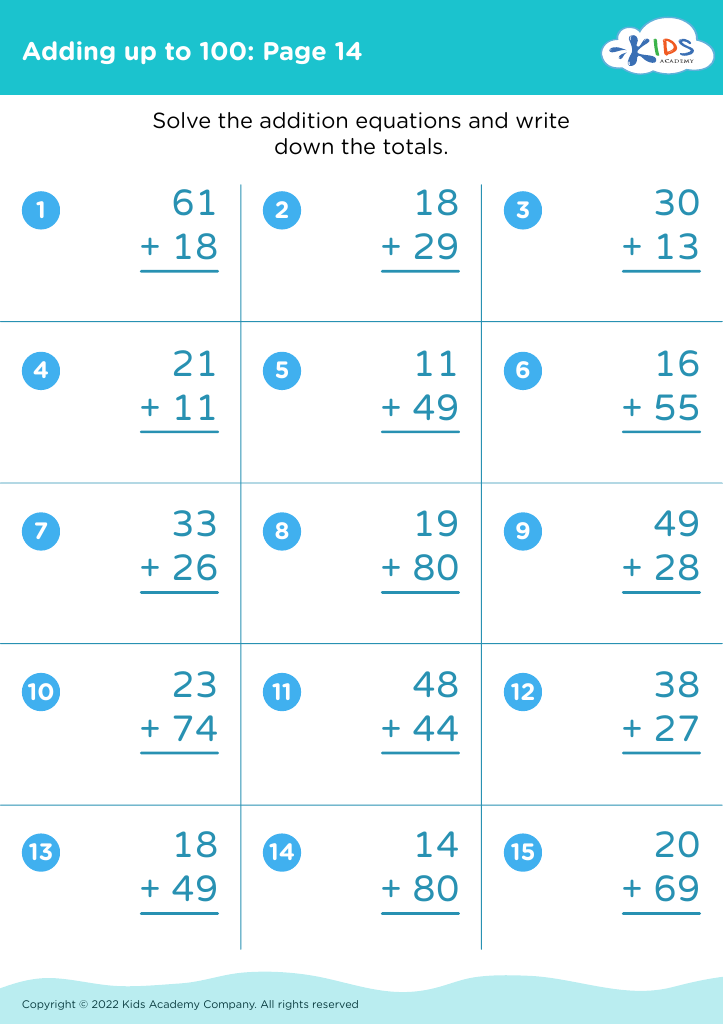


Why should parents and teachers focus on recognizing shapes, adding up to 100, and other key skills for children aged 3-8? These early educational fundamentals serve as building blocks for future academic success and cognitive development.
Recognizing shapes helps preschoolers and early elementary children not only develop visual and spatial skills but also aids in understanding geometry. Knowing different shapes helps children observe and categorize the world around them, forming the basis for further mathematical learning and problem-solving skills. For instance, identifying a triangle or rectangle prepares children for more complex geometric concepts that they will encounter later.
Adding up to 100 by ages 7-8 builds a crucial foundation for arithmetic, critical thinking, and number sense. Early experience in straightforward addition develops mathematical confidence and competence in young learners. This foundation is vital because it lays the groundwork for understanding more complex operations, such as multiplication and division, which are essential skills for higher-level math.
In addition to shapes and numbers, miscellaneous skills like pattern recognition, basic reading, and social skills round out early childhood education. These set the stage for effective learning habits, emotional intelligence, and adaptability, which are indispensable for lifelong learning and success. Thus, giving attention to these foundational skills primes children for academic excellence and well-rounded development.