Understanding patterns Adding up to 100 Misc Worksheets for Ages 3-8
6 filtered results
-
From - To
Dive into the world of patterns with our "Understanding Patterns Adding Up to 100 Misc Worksheets," designed specifically for children aged 3-8. These engaging worksheets focus on enhancing critical math skills while fostering a love for learning. Young learners will explore visual and numerical patterns, helping them develop reasoning abilities and discover connections within math concepts. With a variety of fun activities and colorful illustrations, these worksheets make mastering patterns both exciting and effective. Perfect for classroom and home use, our resources cater to diverse learning styles, ensuring every child can thrive while adding up to 100! Let’s make math a playful adventure!
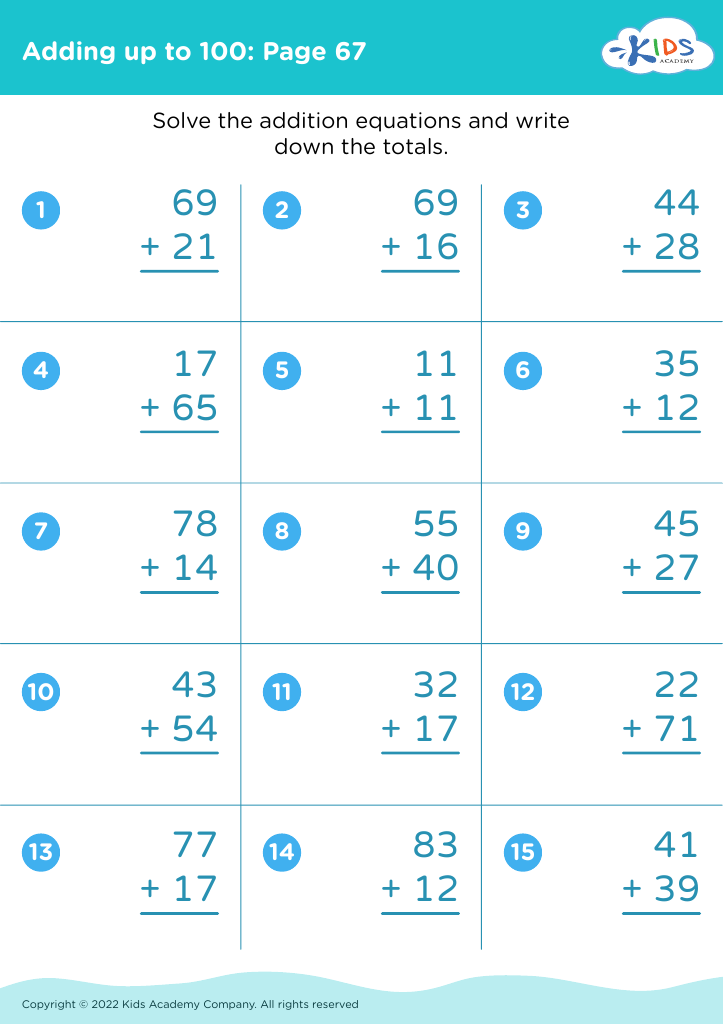
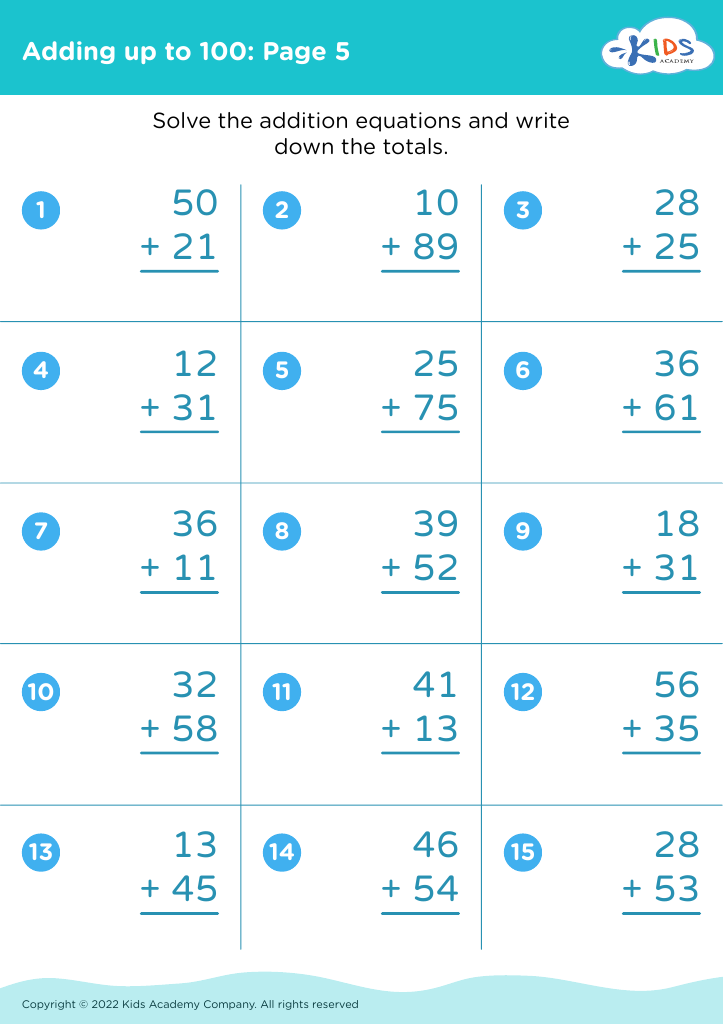
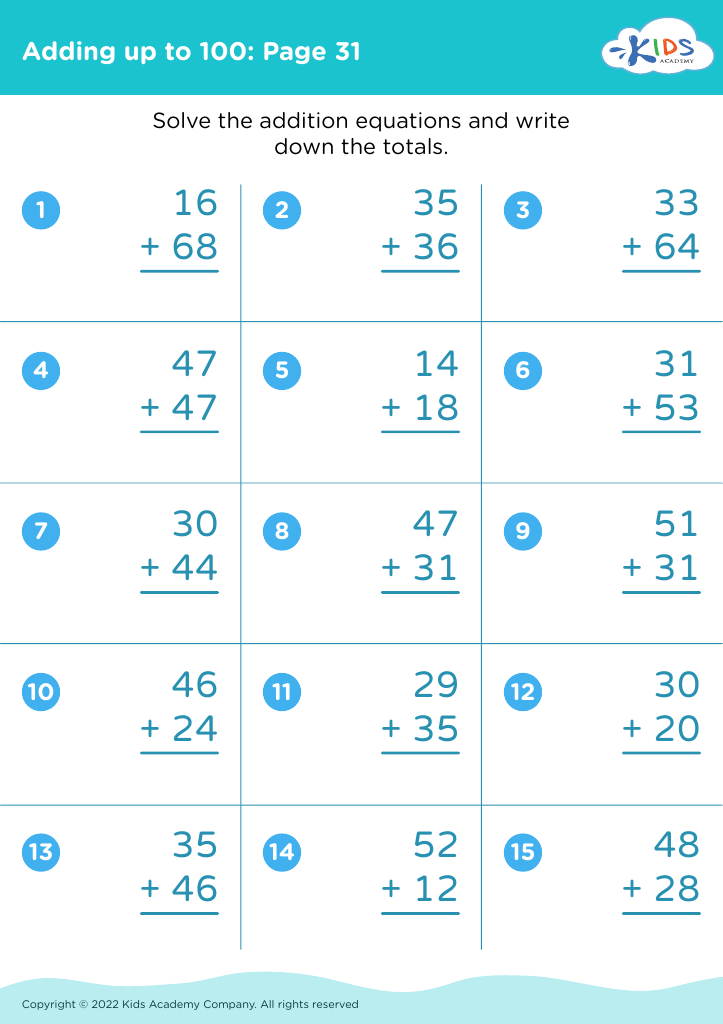
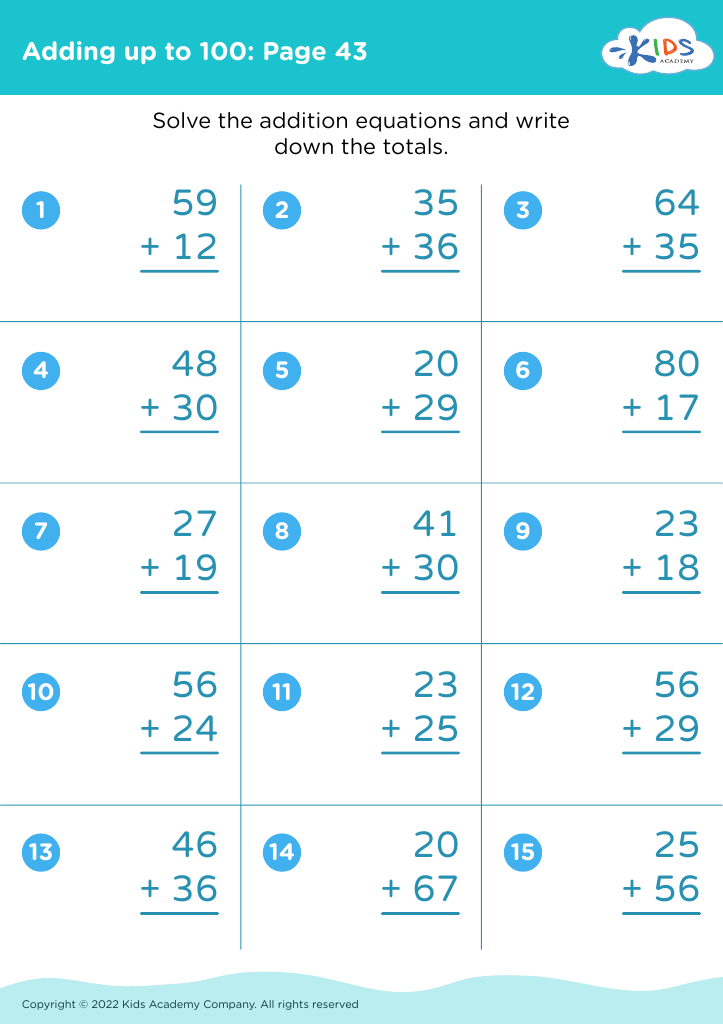
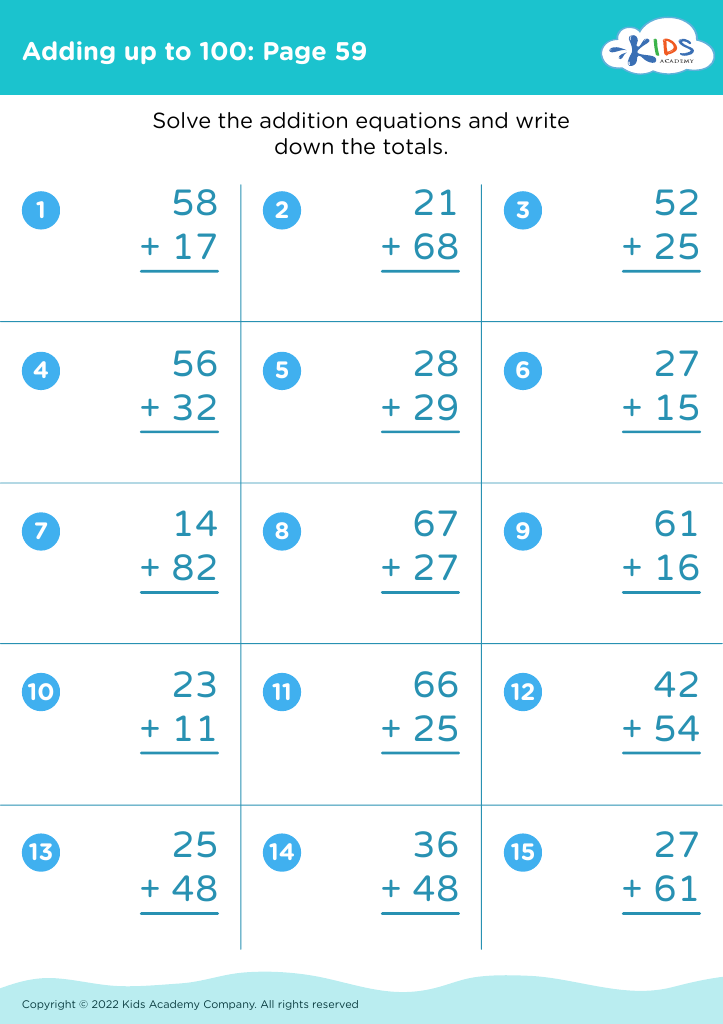
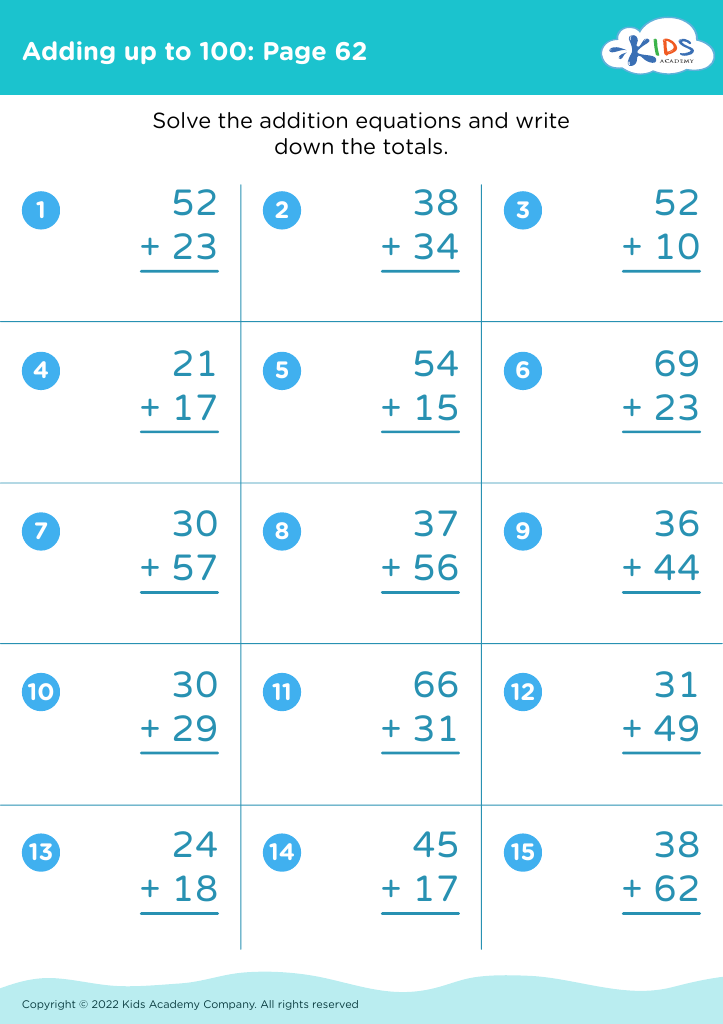


Understanding patterns and basic arithmetic, like adding up to 100, is crucial for children ages 3-8 as it lays the foundation for their mathematical development. Young learners are naturally curious, making it an opportune time to introduce concepts such as patterns and addition. By recognizing patterns, children develop critical thinking and reasoning skills. They learn to identify sequences, predict outcomes, and enhance cognitive functions.
Additionally, starting with simple addition exercises that lead up to 100 helps children grasp the concept of number relationships, which is vital for their future math experiences. This early exposure aids in building confidence and fluency in mathematics, reducing math anxiety later on. Patterns in mathematics often translate to other subjects and real-world scenarios, promoting a well-rounded education.
Moreover, engaging parents and teachers in this learning process creates a supportive environment. Parents can reinforce these concepts through playful activities, while teachers can incorporate them into their curriculum through interactive games and collaborative projects. Together, they play a fundamental role in nurturing a child’s mathematical journey, encouraging them to become enthusiastic learners who enjoy exploring the world of numbers and problem-solving. Ultimately, caring about these foundational concepts will enhance children’s overall academic success and future skill development.