Understanding Sequences Adding up to 100 Misc Worksheets for Ages 3-8
4 filtered results
-
From - To
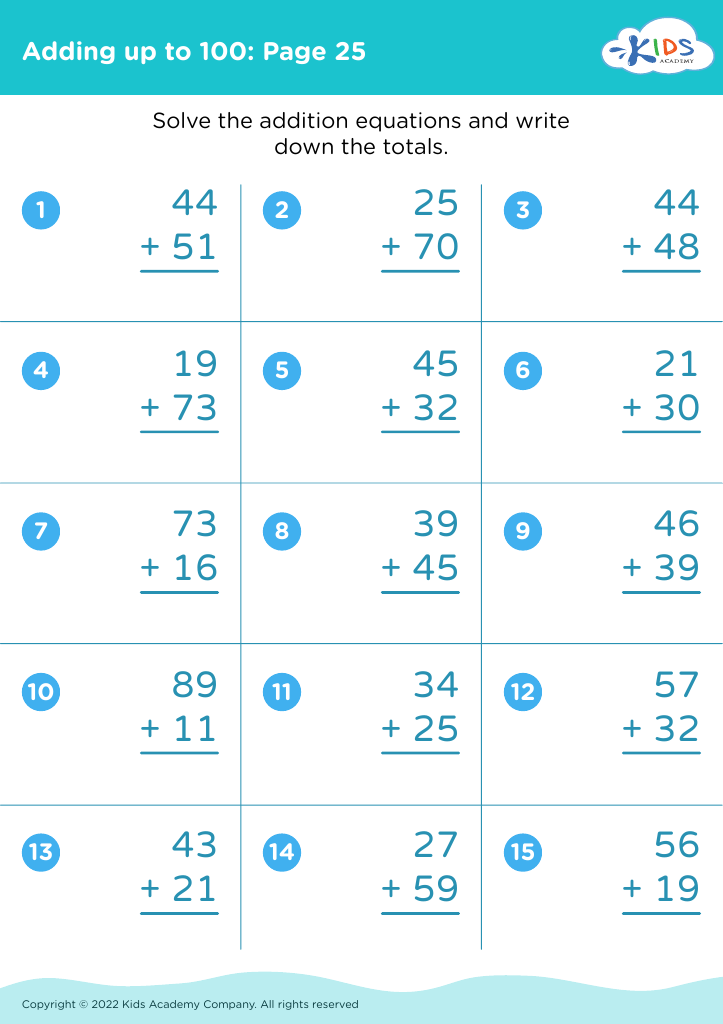
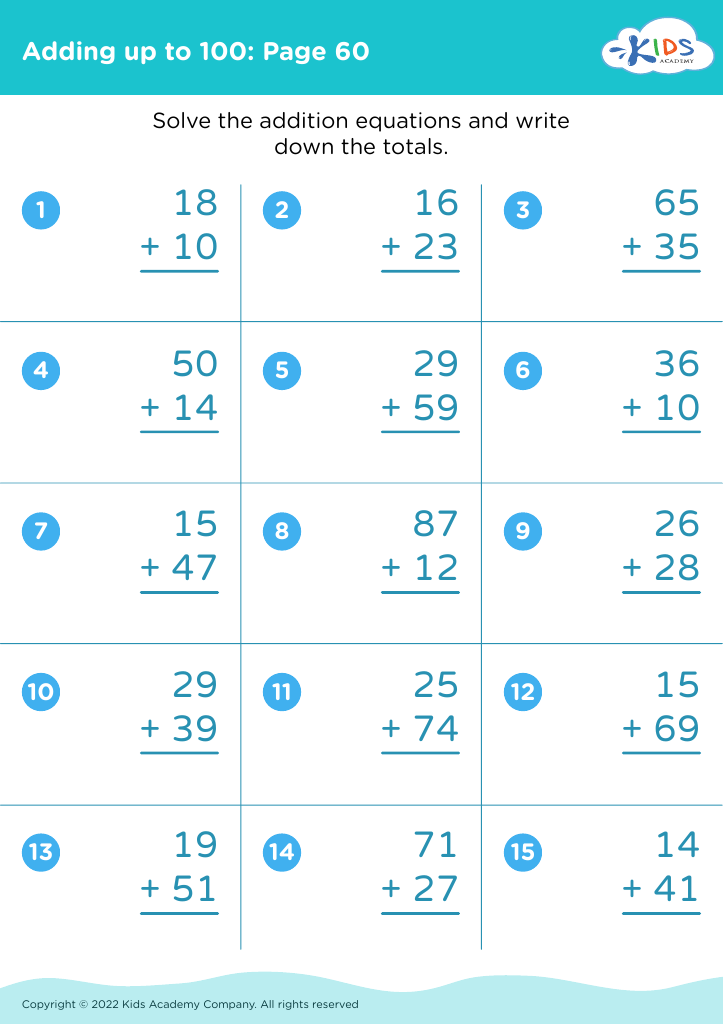
Welcome to our "Understanding Sequences: Adding Up to 100" worksheets designed for children ages 3-8. These engaging, interactive resources support young learners in grasping the concepts of sequences and addition. With a variety of fun and educational activities, children will explore how numbers connect, recognizing patterns and building confidence in their math skills. Each worksheet is crafted to be accessible and enjoyable, fostering a love for learning while mastering essential math concepts. Perfect for classroom use or home practice, these worksheets provide a solid foundation for future math success. Start your child's journey toward numerical fluency today!
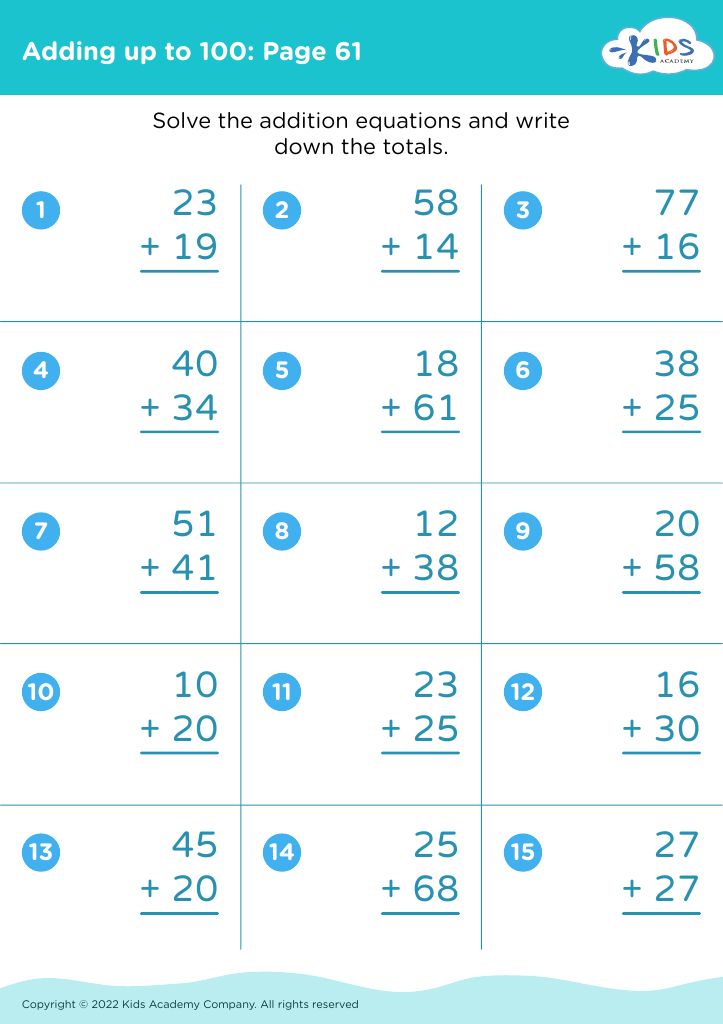
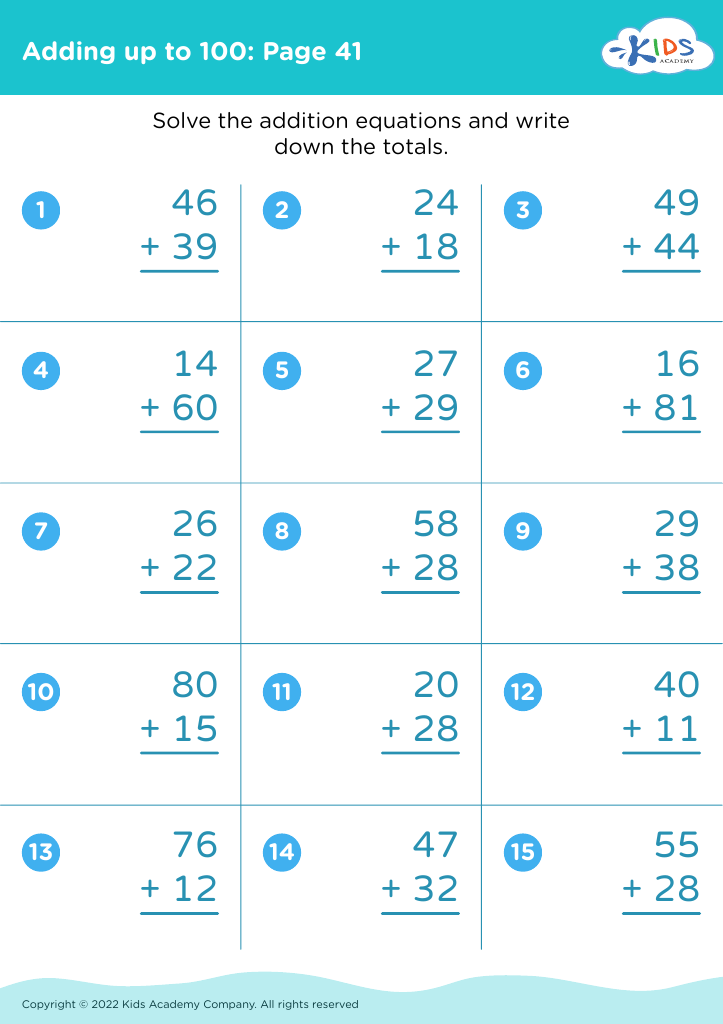


Understanding sequences and the ability to add up to 100 are foundational skills for young learners aged 3-8. These skills provide vital cognitive structures that promote logical thinking and problem-solving abilities, which are essential for future academic success.
By mastering sequences, children learn to recognize patterns, which enhances their ability to make predictions and connections, crucial aspects of mathematical understanding. For instance, recognizing sequences in numbers helps children understand the concept of place value, which is fundamental for arithmetic and later mathematical operations.
Moreover, the ability to add up to 100 fosters number sense, enabling young learners to perform calculations with confidence. This promotes engagement and decreases math anxiety, empowering them to tackle more complex mathematical concepts as they progress.
Parents and teachers should prioritize these skills because early mastery lays a strong foundation for later learning in subjects such as math, science, and even literacy. Encouraging playful activities that incorporate these mathematical concepts makes learning enjoyable. Additionally, fostering these skills improves children's critical thinking and boosts their self-esteem, supporting a love for learning that can last a lifetime. Thus, a focus on understanding sequences and addition paves the way for well-rounded, confident learners.