Comparing Fractions Adding up to 1000 Misc Worksheets for Ages 3-8
5 filtered results
-
From - To
Discover "Comparing Fractions Adding Up to 1000 Misc Worksheets," an engaging resource tailored for children ages 3-8. These worksheets help young learners develop foundational math skills by comparing fractions with varying denominators. Fun and interactive, our exercises incorporate visual aids and hands-on activities to make learning enjoyable. As children practice comparing fractions, they will strengthen their understanding of number relationships and enhance critical thinking. Ideal for home learning or classroom use, these worksheets provide the perfect complement to your math curriculum. Unlock the world of fractions for your students today with our thoughtfully designed materials that make math fun and accessible!
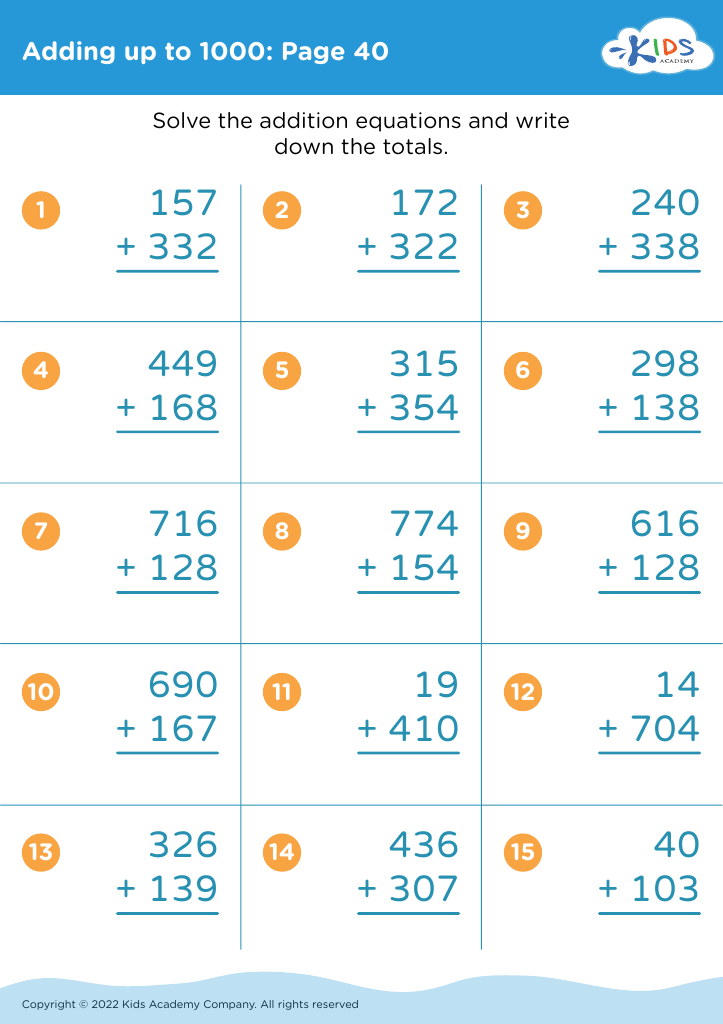
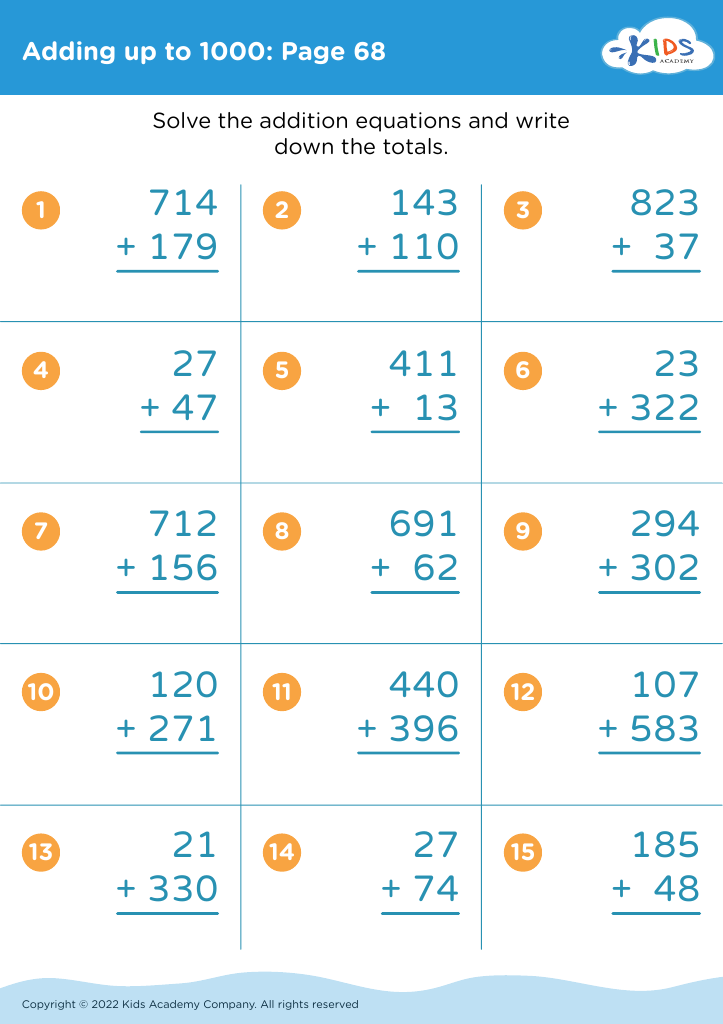
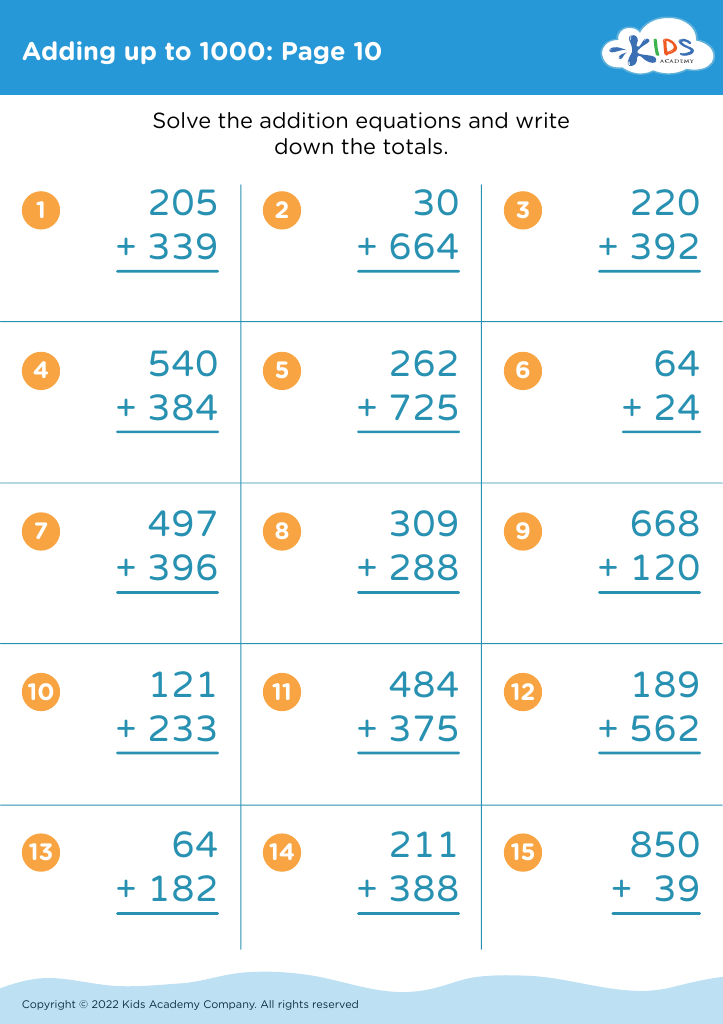
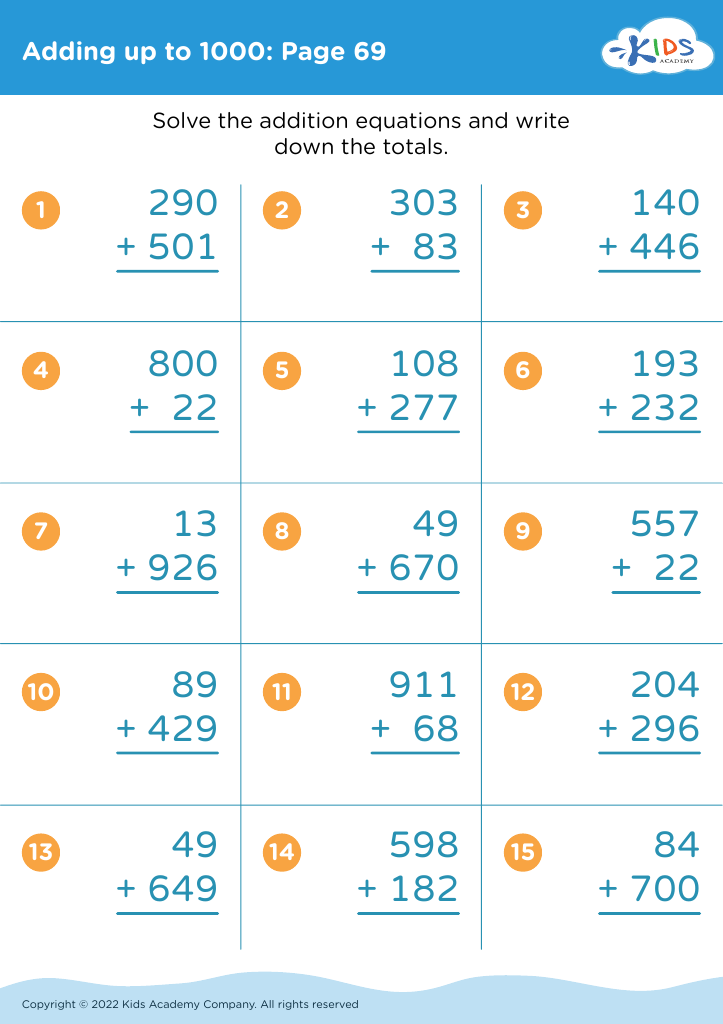
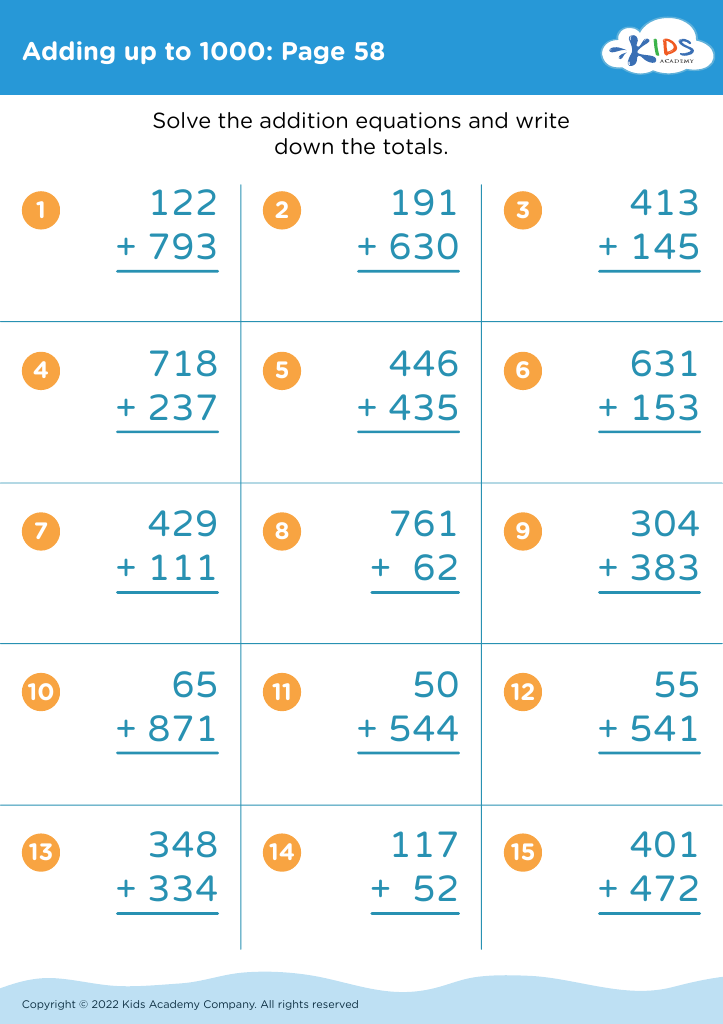


Understanding fractions lays a solid foundation for mathematical literacy, particularly for children ages 3-8. Comparing fractions, particularly in concepts like those that add up to 1000, allows young learners to grasp essential number relationships which are crucial for their overall cognitive development. Parents and teachers should care about this topic because it enhances critical thinking, problem-solving abilities, and everyday math skills.
From a practical perspective, discussing fractions helps children make sense of real-world situations, such as sharing food or measuring ingredients in cooking, fostering both collaboration and communication. It engages them in hands-on learning, encouraging exploration and curiosity about numbers. Moreover, this early exposure to fractions builds confidence and prepares them for more complex mathematical concepts in future schooling.
Additionally, incorporating engaging activities while comparing fractions can make learning enjoyable. Using visual aids, such as fraction bars or pie charts, can make abstract concepts more tangible for young minds. By emphasizing the importance of fractions now, parents and teachers equip children with essential skills for academic success and everyday life, ultimately fostering a positive attitude towards mathematics. Engaging young learners with fractions can spark lifelong interest and proficiency in math.