Mathematical reasoning Adding up to 1000 Misc Worksheets for Ages 3-8
5 filtered results
-
From - To
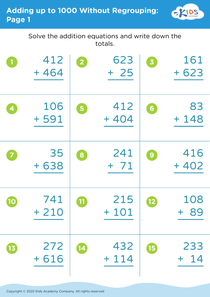
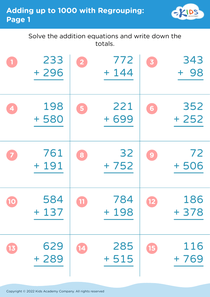
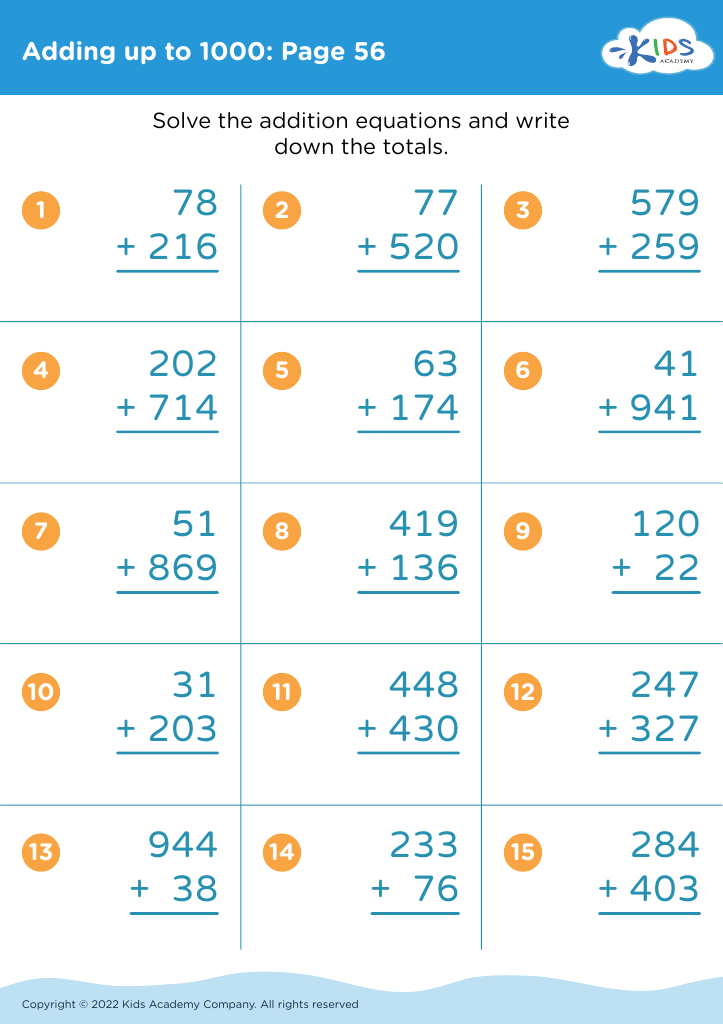
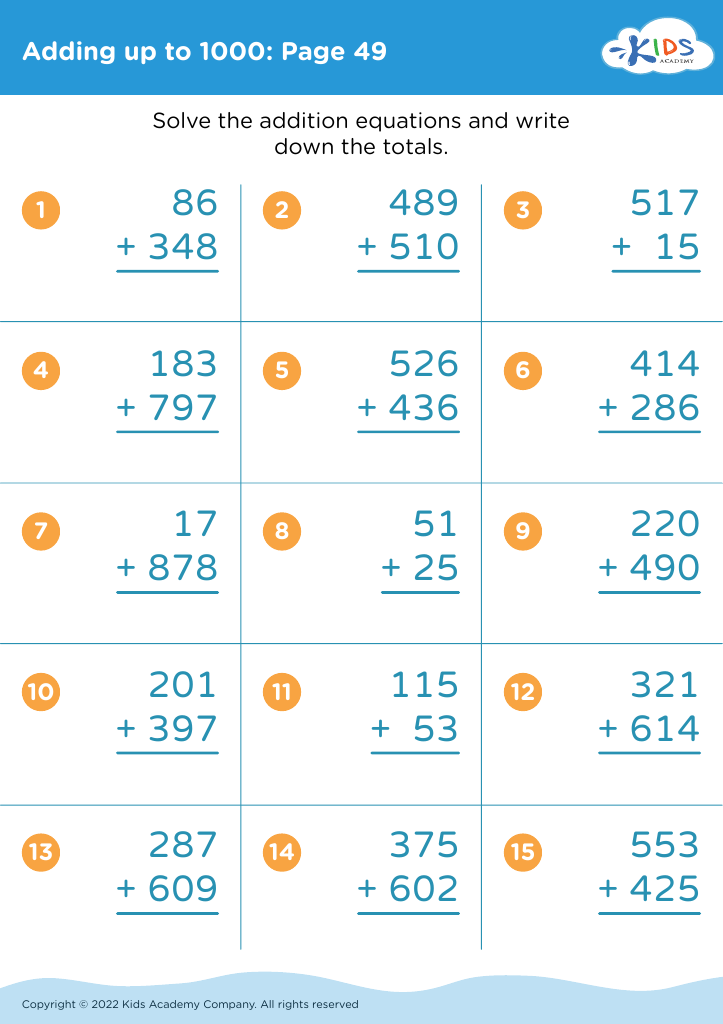
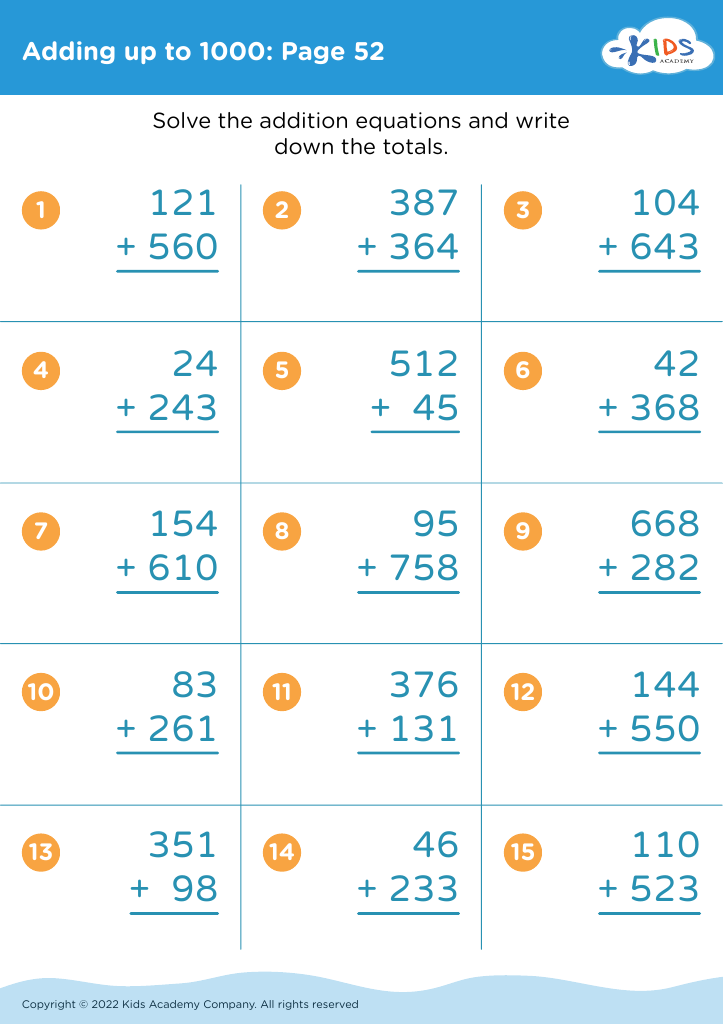
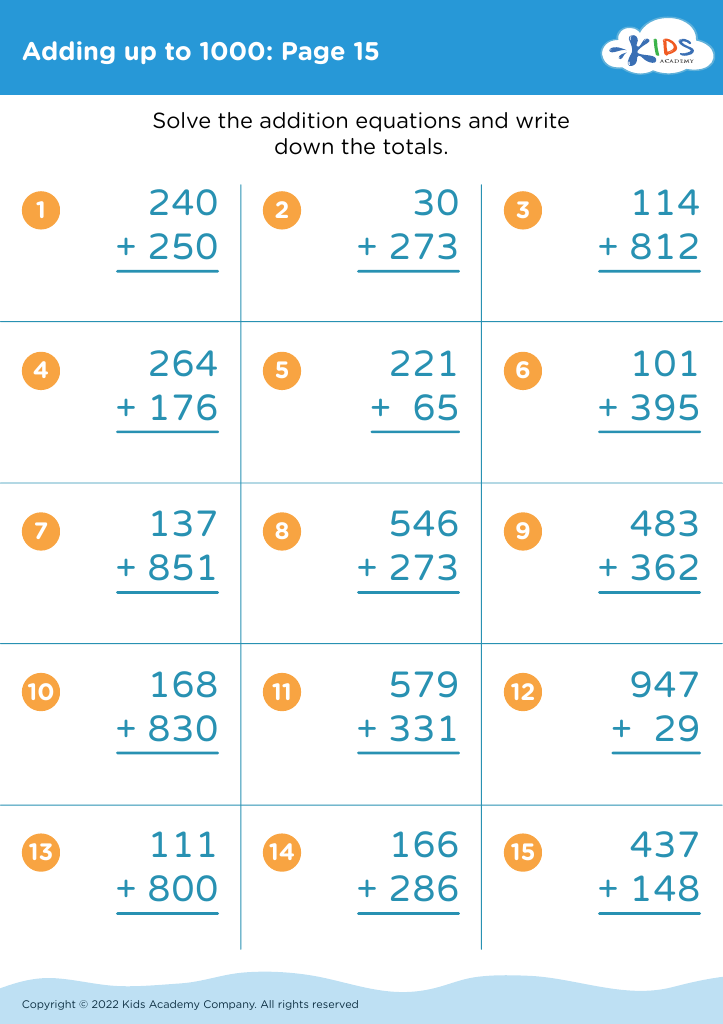
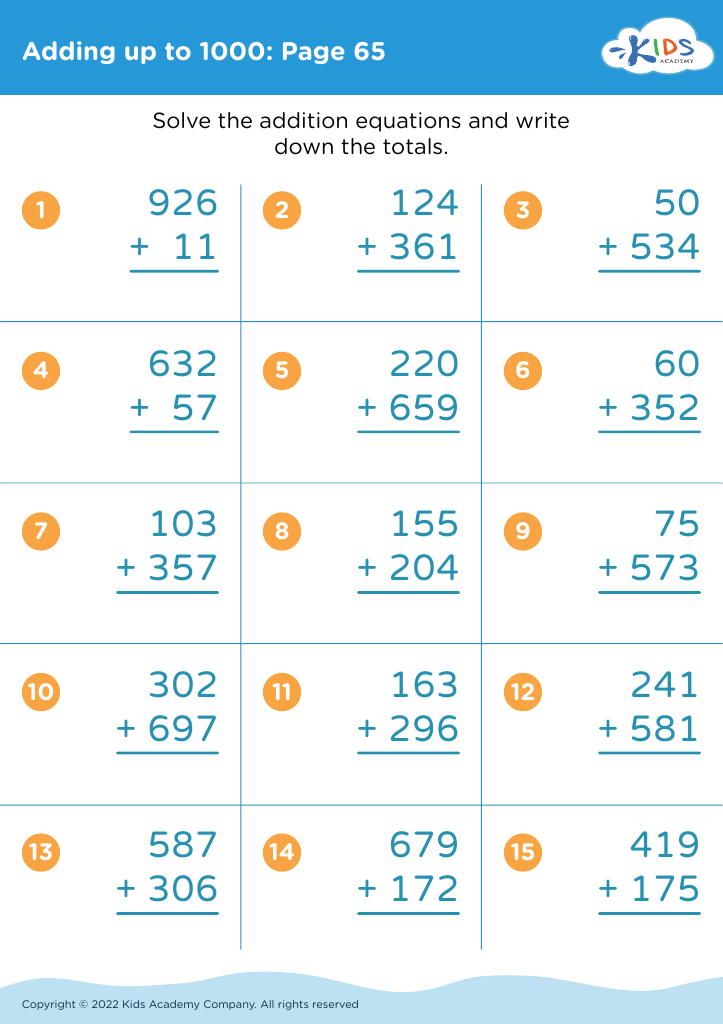
Explore our comprehensive collection of "Adding Up to 1000" miscellaneous worksheets designed specifically for children aged 3-8. These engaging resources focus on developing mathematical reasoning skills, enabling young learners to comprehend and solve addition problems confidently. Our worksheets provide a variety of fun activities that promote critical thinking and enhance number sense as children practice adding numbers. With clear instructions and vibrant illustrations, these materials are perfect for both classroom and home use. Foster a love for math as kids build a strong foundation while enjoying the learning process. Empower your child's mathematical journey today!


Mathematical reasoning, particularly concepts like adding up to 1000, is essential for children aged 3-8, as it lays the groundwork for critical thinking and problem-solving skills. Parents and teachers should prioritize this early exposure for several reasons.
Firstly, understanding numbers and operations strengthens cognitive development. By engaging with mathematical reasoning, children learn to recognize patterns, make connections, and grasp mathematical concepts, which improves their overall cognitive abilities.
Secondly, foundational math skills contribute significantly to later academic success. Proficiency in basic arithmetic equips children with the confidence and skills needed for more advanced mathematics in their future education.
Moreover, teaching children to reason through math fosters independence and self-efficacy. When kids learn how to approach problems logically, they become more resilient, capable of tackling challenges in various subjects and life situations.
Additionally, incorporating mathematical reasoning in a fun and relatable way can enhance the learning experience. Using everyday objects, games, or visual aids allows for hands-on engagement, making math enjoyable and relatable.
Ultimately, investing in mathematical reasoning for young children not only supports their immediate learning but also prepares them for lifelong success, making it a critical focus for parents and educators alike.