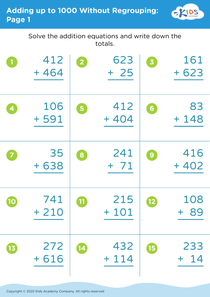
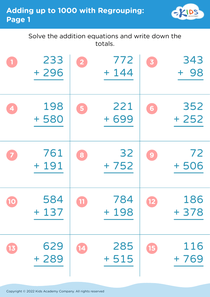
Problem-Solving Skills Adding up to 1000 Misc Worksheets for Ages 3-8
14 filtered results
-
From - To
Unlock your child's potential with our engaging "Adding Up to 1000 Misc Worksheets for Ages 3-8," designed to enhance problem-solving skills. These worksheets provide a fun and interactive way for young learners to explore addition, improve their math abilities, and develop critical thinking skills. Each sheet is designed with colorful visuals and age-appropriate challenges that cater to diverse learning styles. By solving these problems, children will build confidence in their math skills and learn to approach challenges strategically. Foster a love for math and empower your child to tackle math concepts with our comprehensive workbooks available for immediate download!
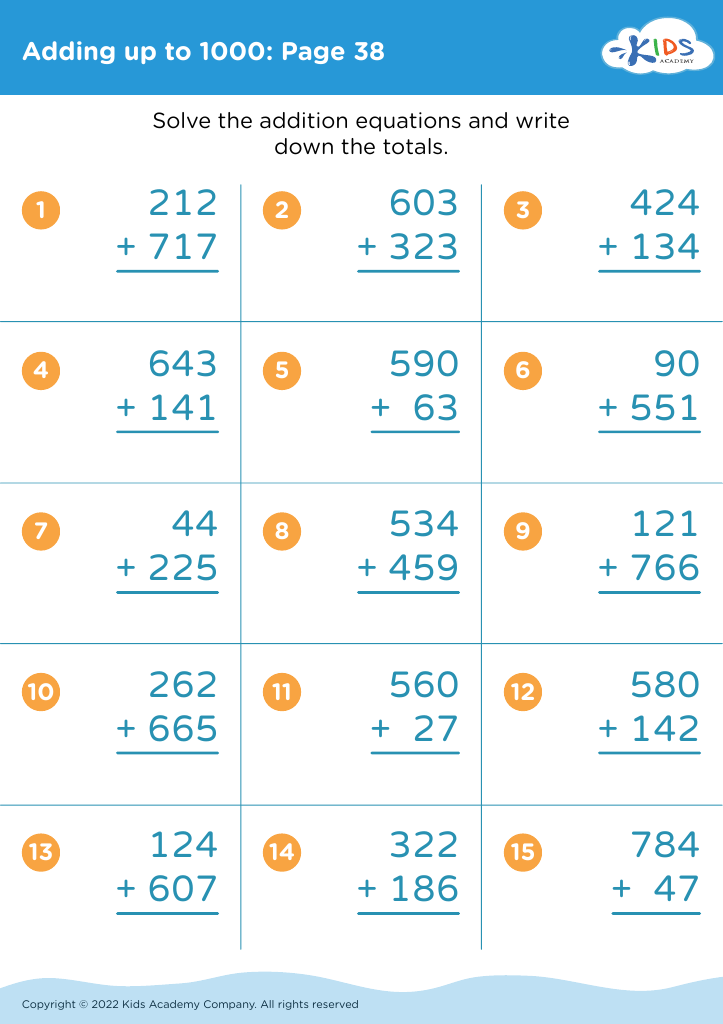
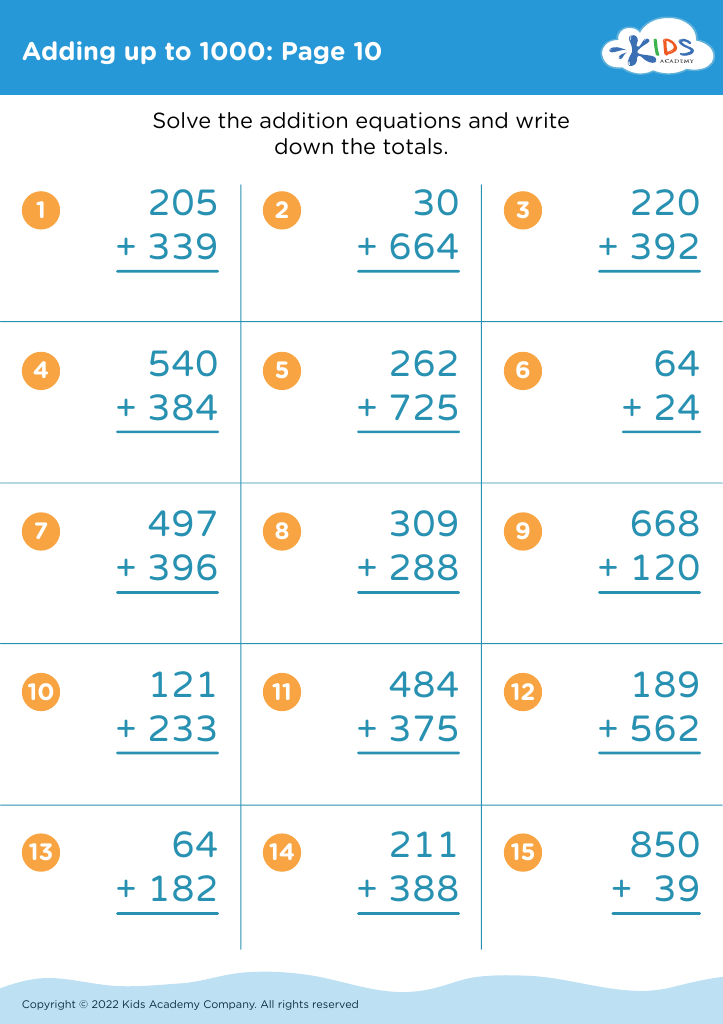
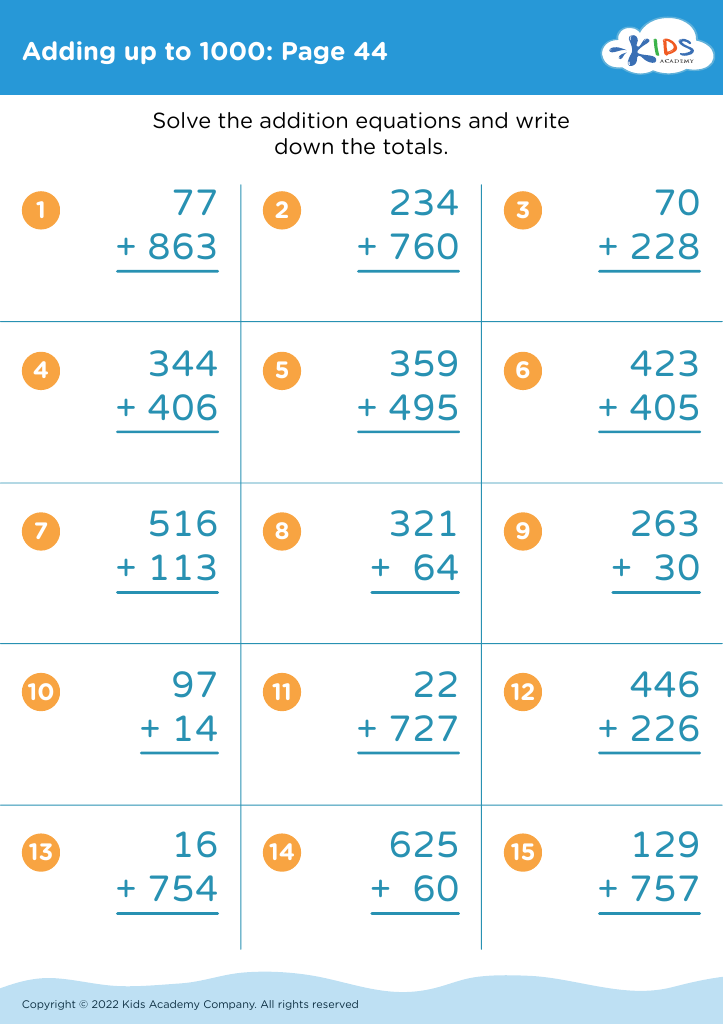
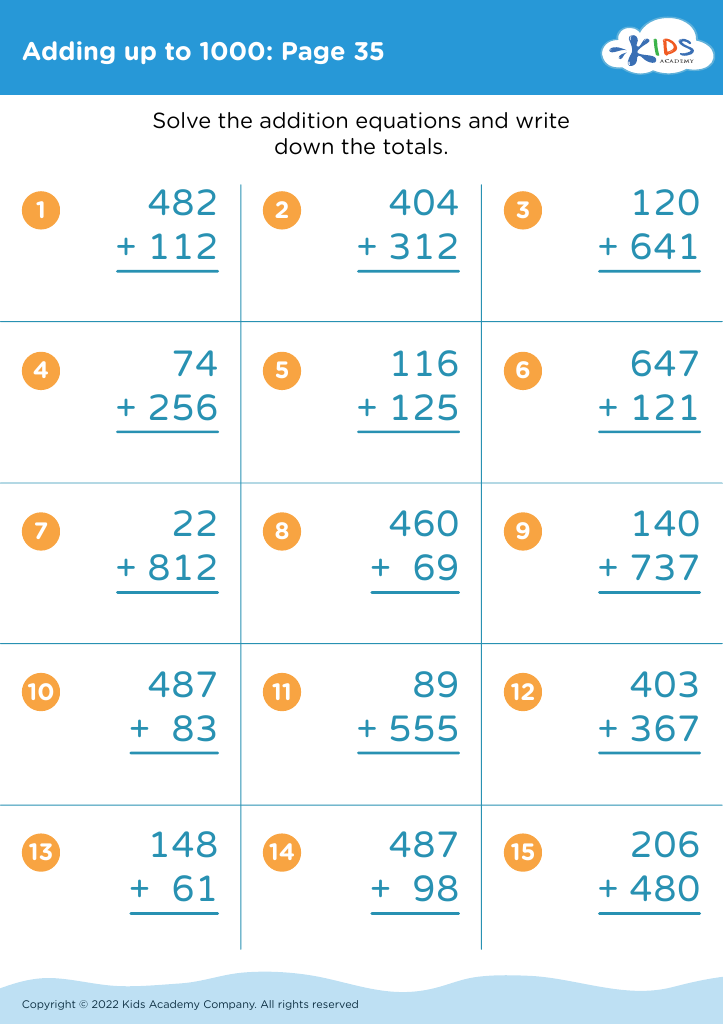
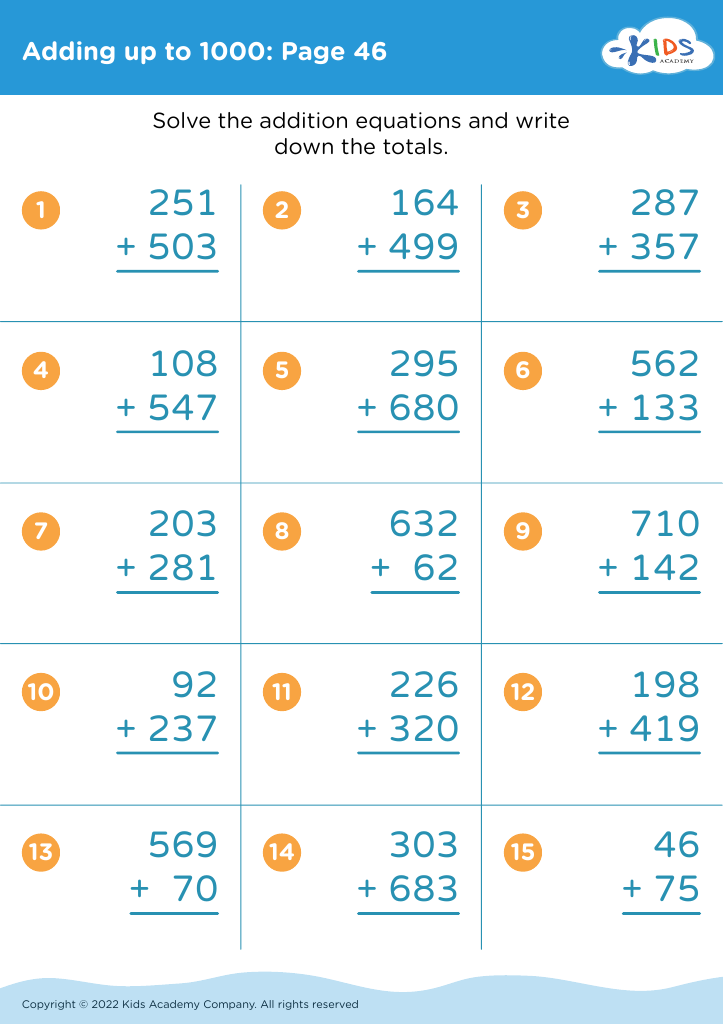
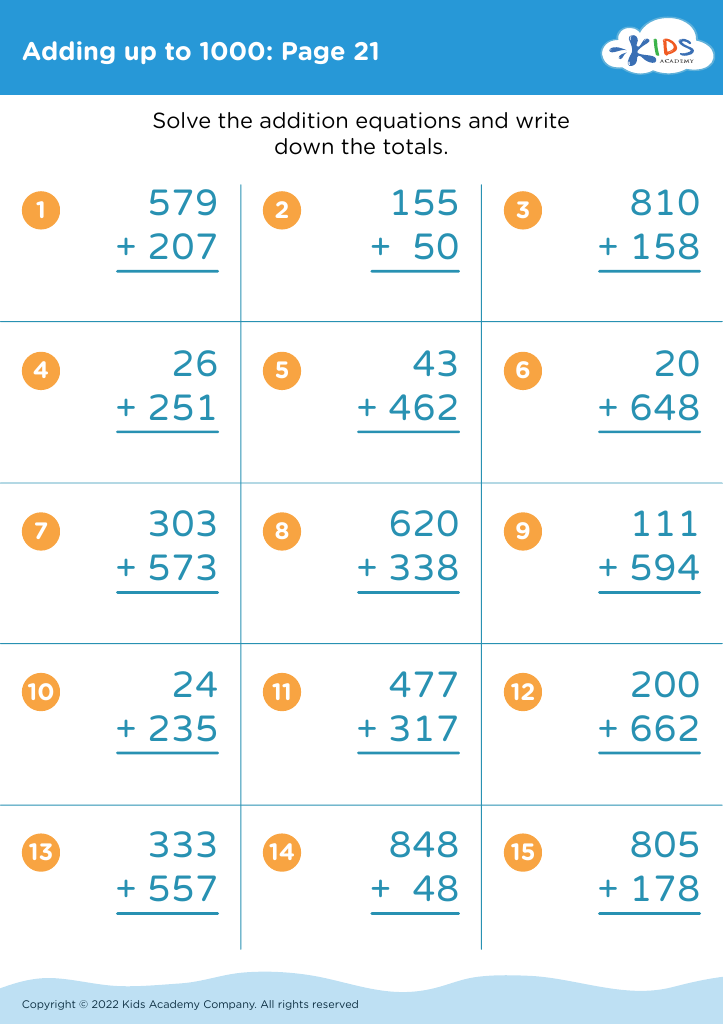
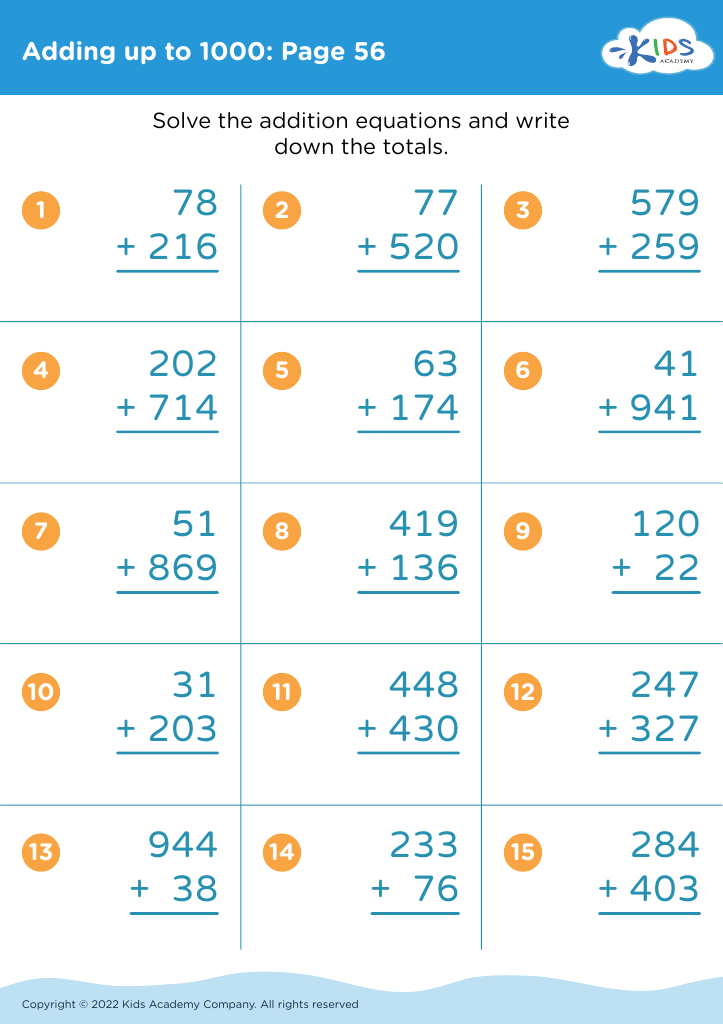
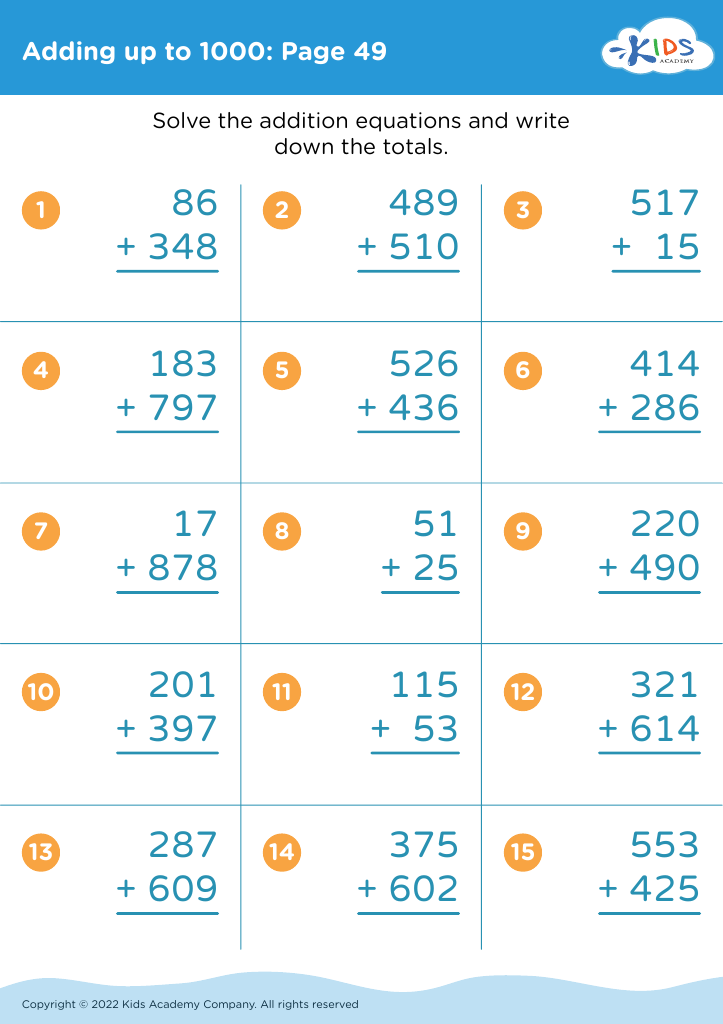
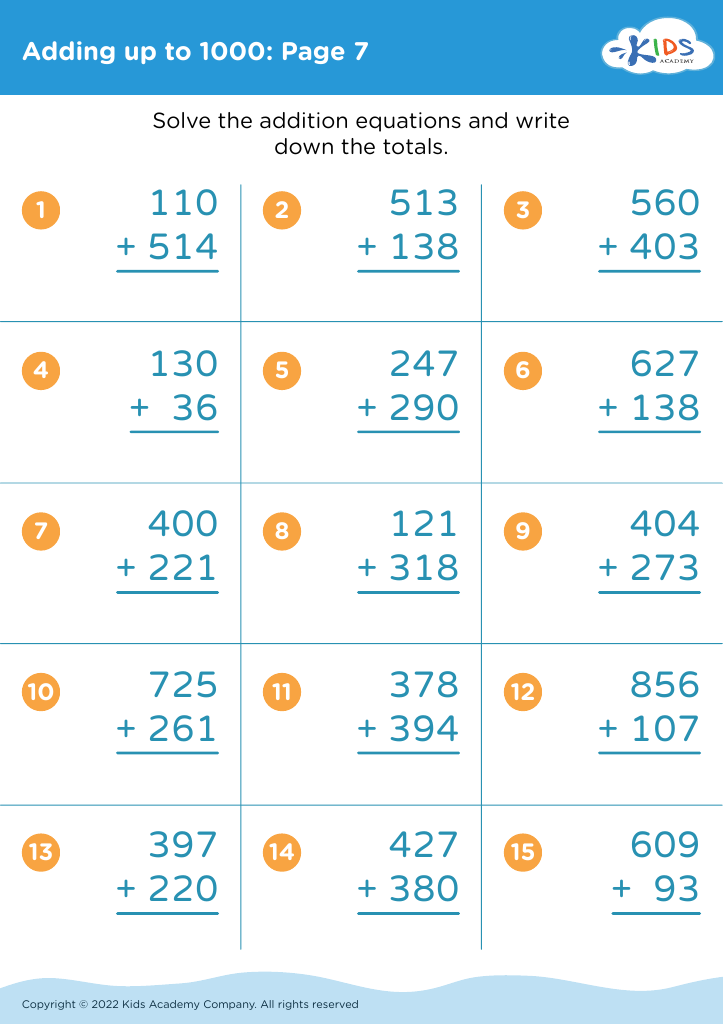
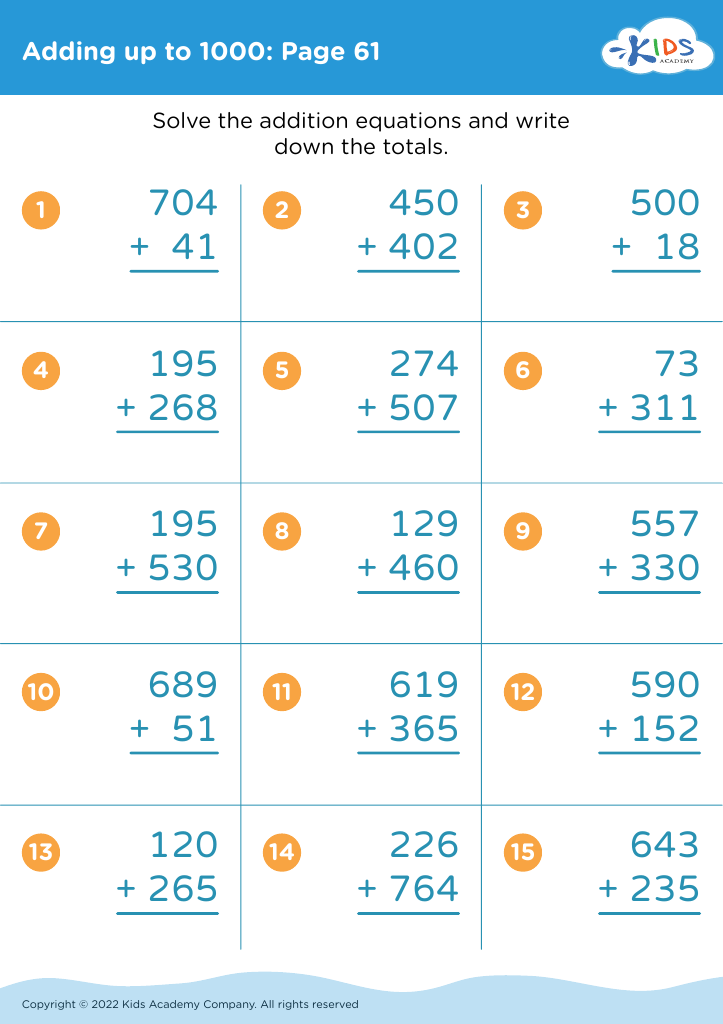
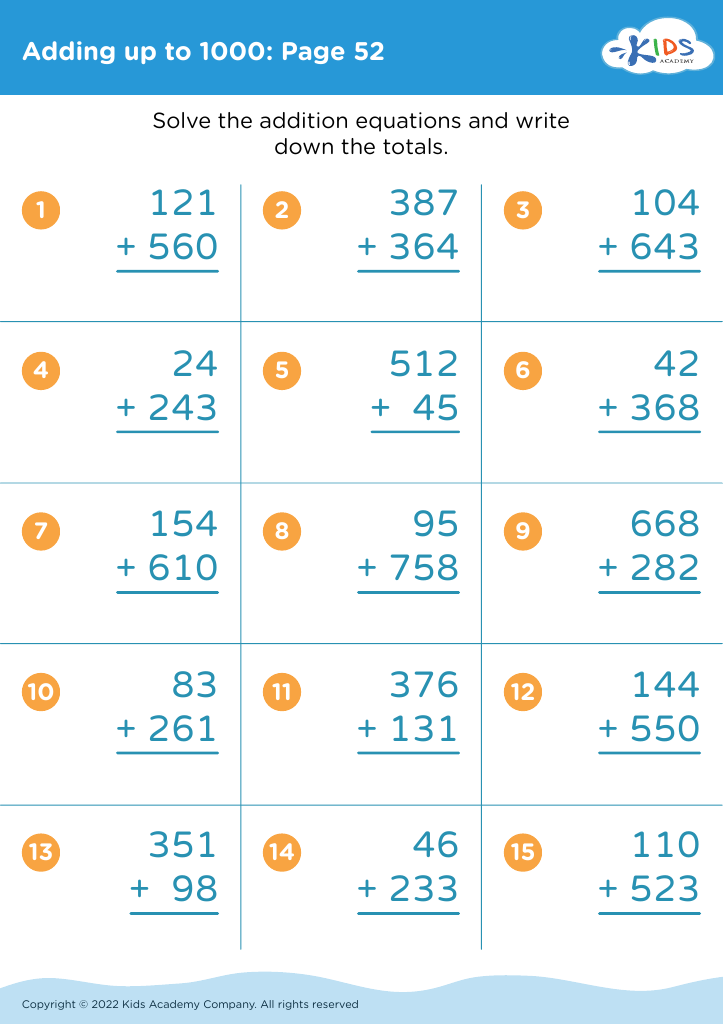
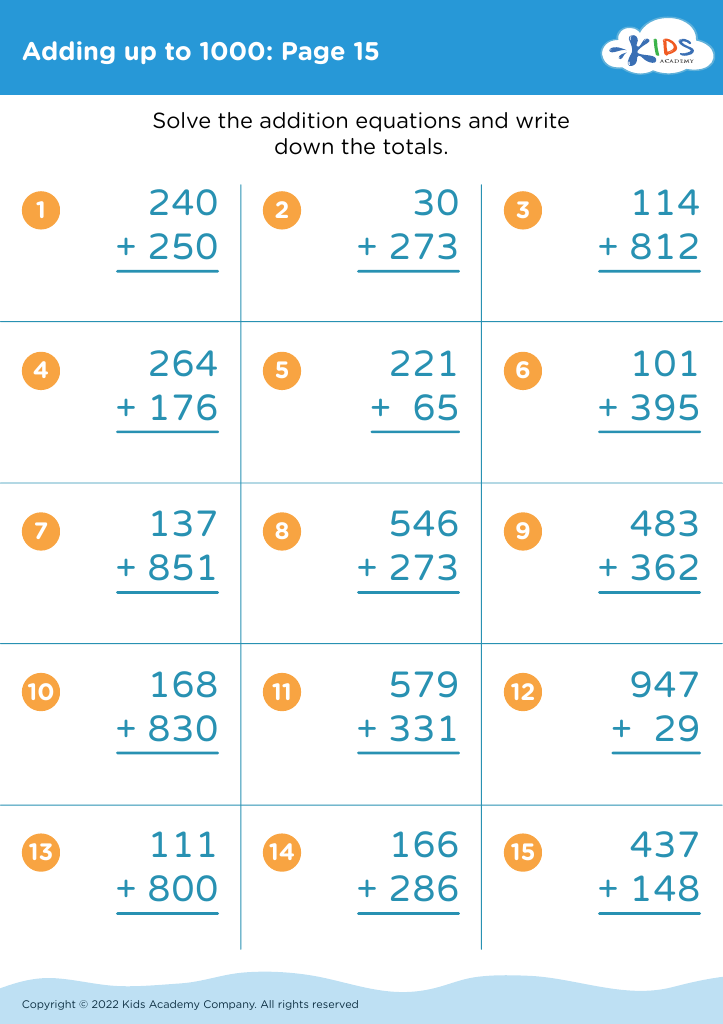
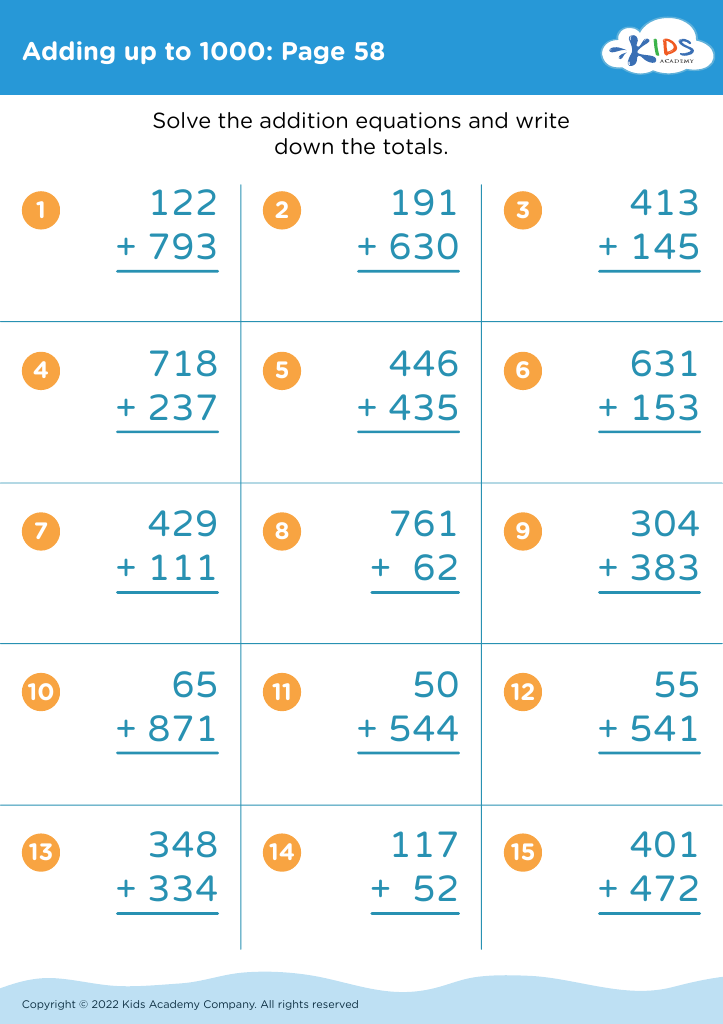
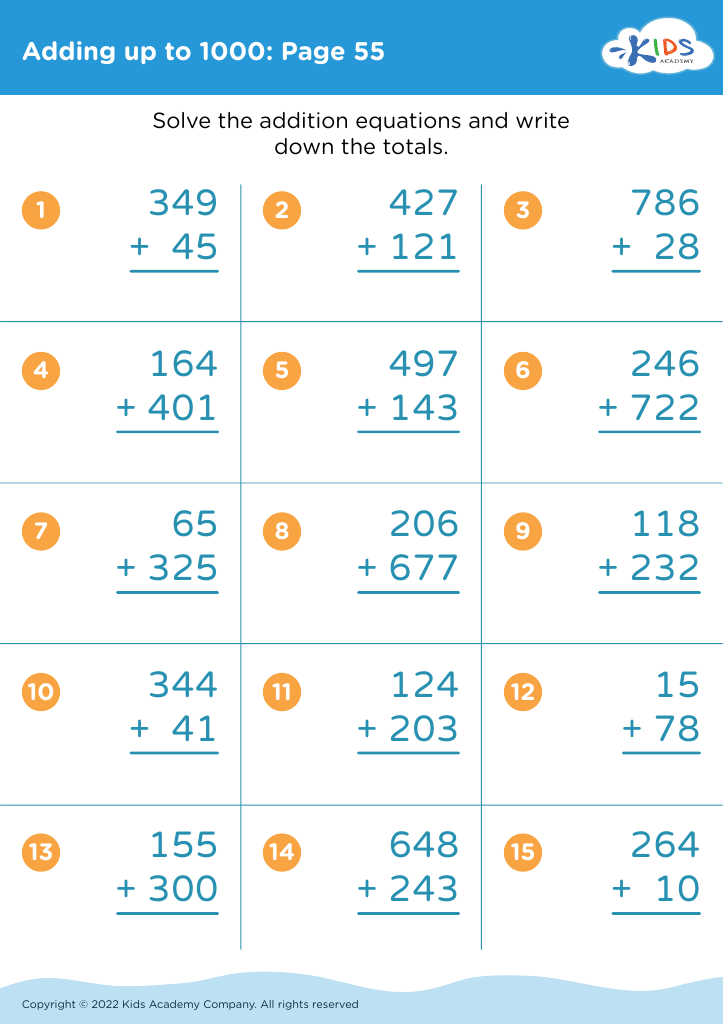


Problem-solving skills are essential for young children, particularly those aged 3-8, as they lay the foundation for critical thinking and decision-making throughout life. Engaging in activities like “Adding up to 1000 Misc” teaches students how to approach challenges systematically. It promotes logical reasoning and encourages them to think outside the box, which are vital skills not just in mathematics but in everyday life.
By focusing on problem-solving, parents and teachers can help children build resilience. When children learn to tackle problems, they develop a growth mindset, understanding that failures are opportunities to learn. This mindset fosters perseverance, enabling them to face challenges with confidence.
Furthermore, enhancing problem-solving skills promotes collaboration and communication. When children work together to solve complex problems, they learn to share ideas and listen to others, nurturing social and emotional development.
Involving parents in this process enhances family engagement in education, reinforcing learning at home. By prioritizing problem-solving activities, educators and parents ensure that children are well-prepared for future academic challenges and real-world situations. Ultimately, strengthening these skills in early education sets the stage for lifelong learning and success, paving the way for well-rounded, capable individuals.