Understand multiplication Adding up to 1000 Misc Worksheets for Ages 3-8
3 filtered results
-
From - To
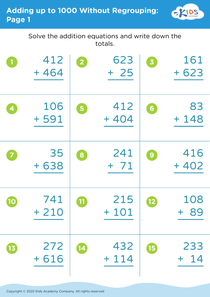
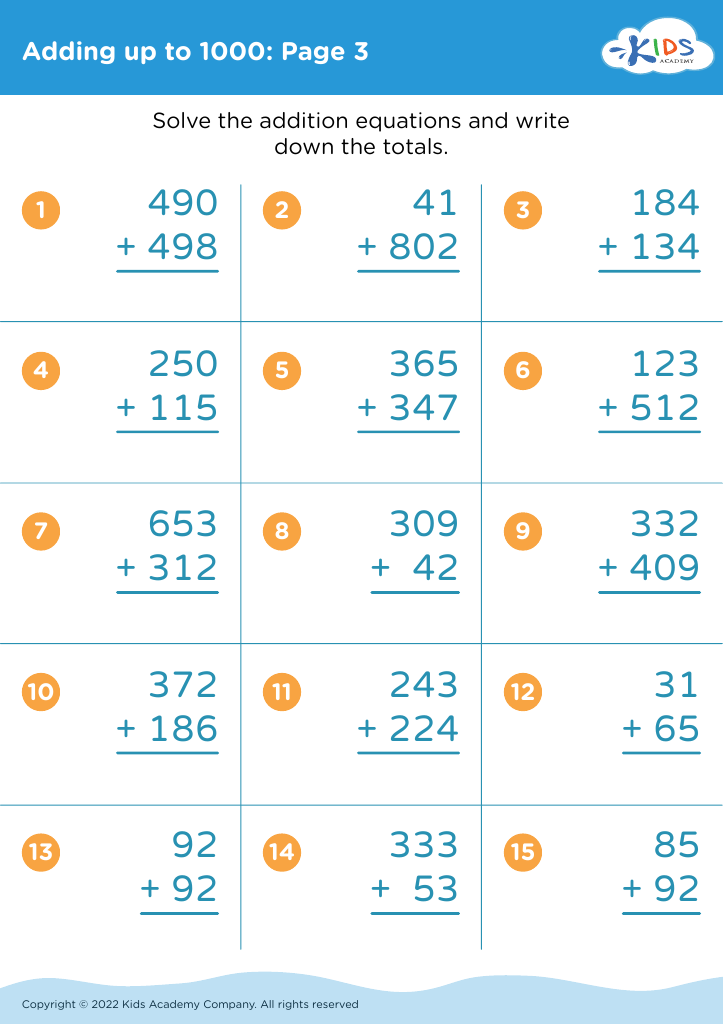
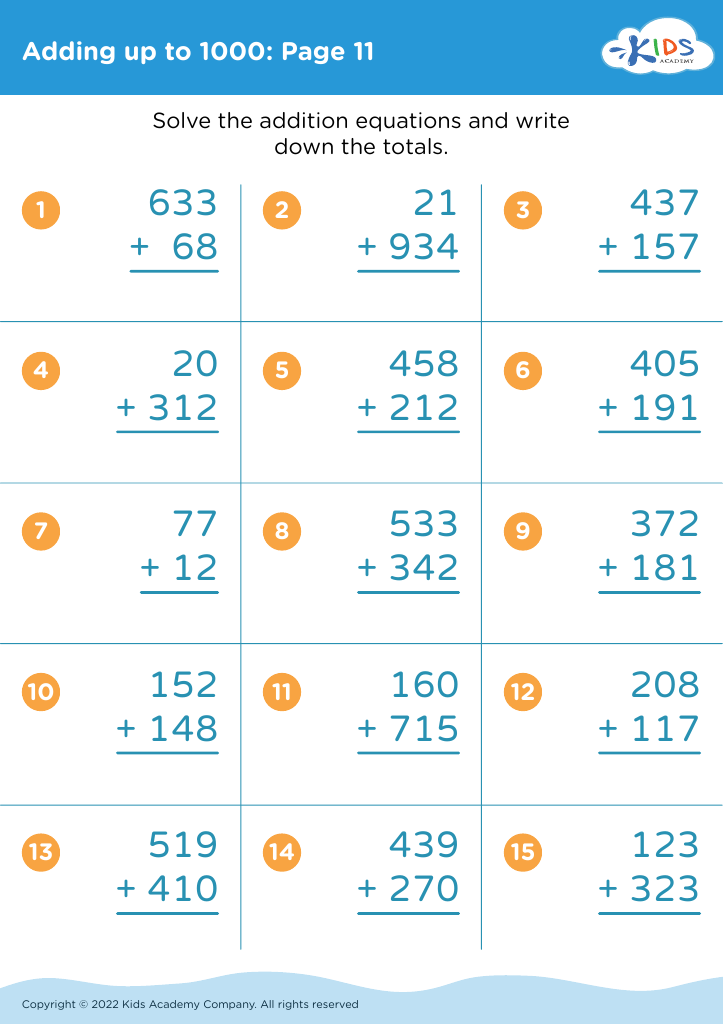
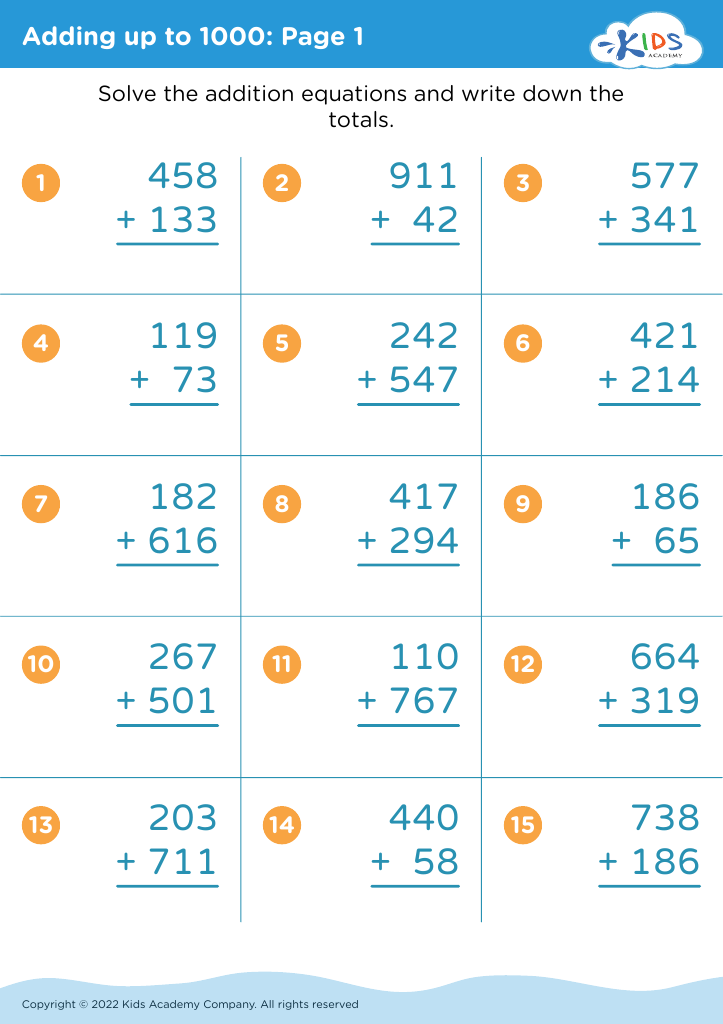
Boost your child's mathematical skills with our comprehensive "Understand Multiplication: Adding Up to 1000" worksheets, designed for ages 3-8. These engaging activities seamlessly blend fun and learning, helping young learners grasp the concept of multiplication while practicing addition up to 1000. With visually appealing exercises and step-by-step instructions, children will build a solid foundation in math through interactive methods. Perfect for early learners, parents, and educators, these miscellaneous worksheets foster a love for numbers and prepare kids for advanced mathematical concepts. Transform learning into an exciting adventure today with our expertly designed worksheets!


Understanding multiplication and the principles of addition up to 1,000 are key foundational math skills for young children aged 3-8. Here are the reasons why parents and teachers should prioritize this early education:
1. Builds Essential Math Skills: Multiplication is a fundamental arithmetic skill that aids in understanding not just more complex math concepts like division, fractions, and algebra, but also in day-to-day activities. Adding and understanding sums up to 1,000 ensures that children can manage real-life situations, like counting money or measuring ingredients, with ease.
2. Cognitive Development: Early exposure to math stimulates cognitive development. Learning multiplication and extensive addition fosters problem-solving skills and logical reasoning. By solving these problems, children enhance their numerical sense and mental calculation abilities.
3. Confidence Boost: Mastery of these skills at a young age can greatly boost a child's confidence. When children successfully solve multiplication and addition problems, they feel a sense of achievement, encouraging a positive attitude towards learning.
4. Academic Preparedness: Proficiency in basic math skills ensures that children are well-prepared for future academic challenges. They will be more comfortable with advanced math topics in later grades.
Parents and teachers should thus see the importance of understanding multiplication and addition up to 1,000 as a strong predictor of future academic and personal success.