Shape Recognition Adding up to 1000 with Regrouping Worksheets for Ages 3-8
6 filtered results
-
From - To
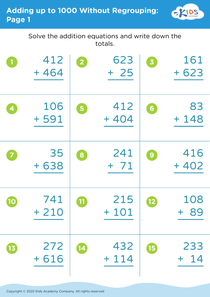
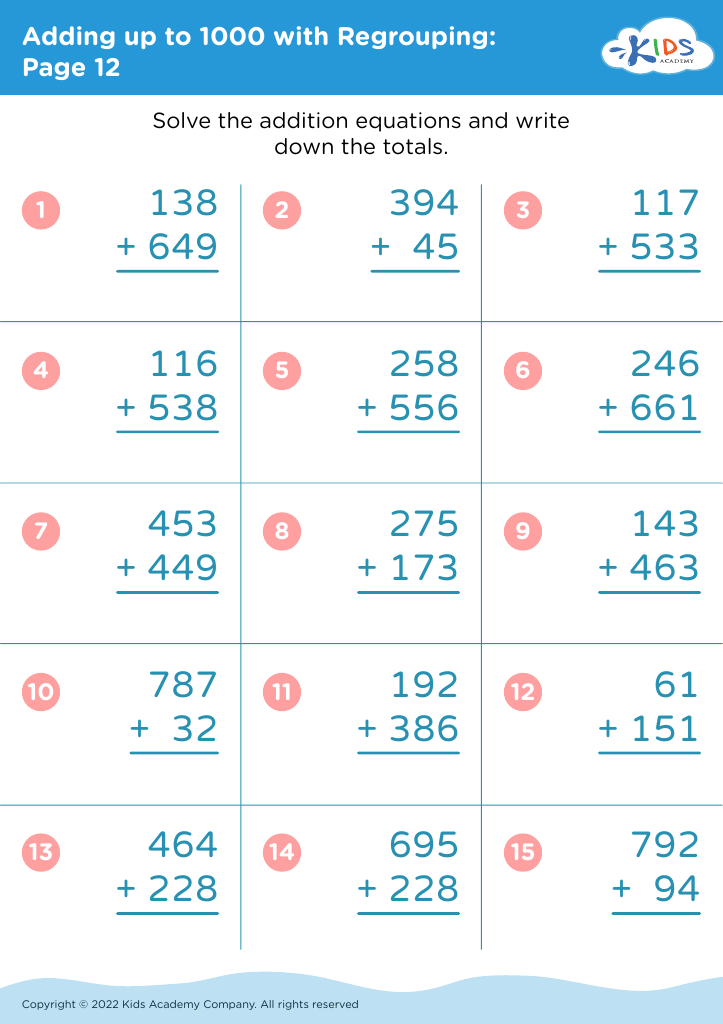
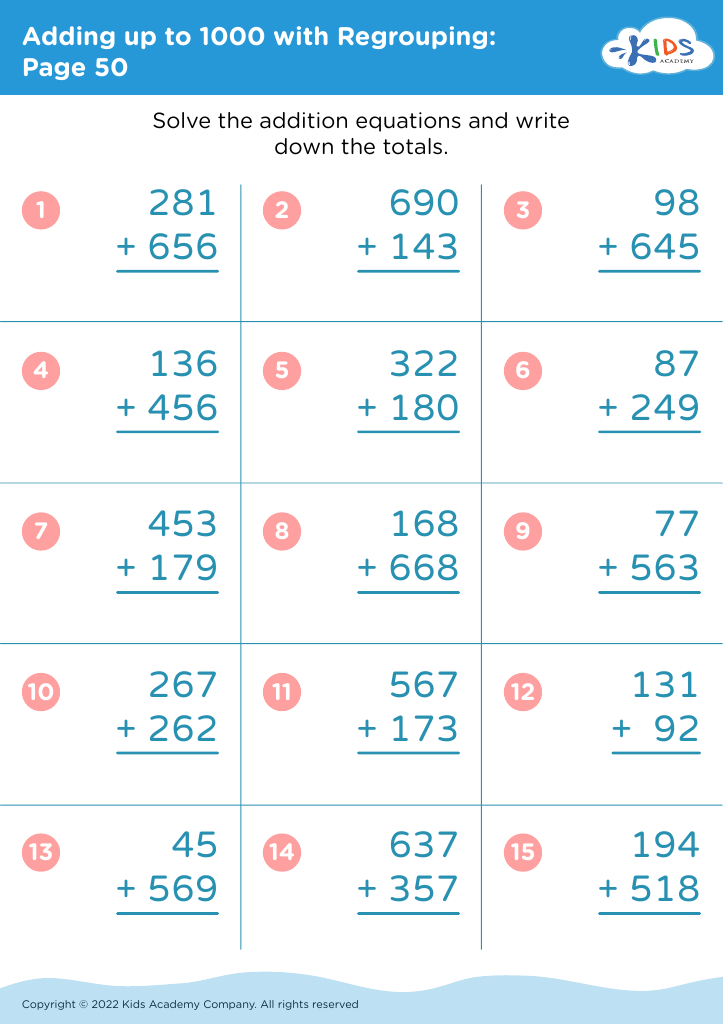
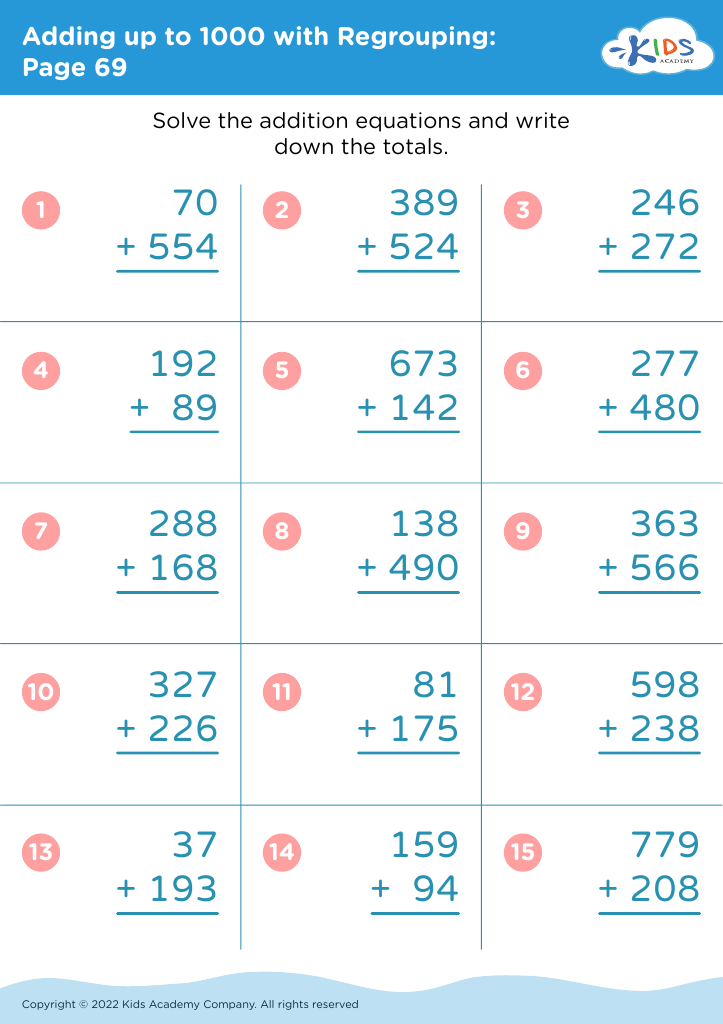
Introduce young learners to the exciting world of math with our "Shape Recognition Adding up to 1000 with Regrouping Worksheets," designed for ages 3-8. These engaging worksheets help children master shape recognition while building essential addition skills. By combining colorful shapes with fun, interactive problems, kids will enjoy learning to regroup and add up to 1000. Perfect for early learners, this resource supports the development of critical thinking and problem-solving abilities. Tailored to fit young minds, these worksheets make mastering math concepts through play both effective and enjoyable!
Download these worksheets today to make learning math fun!
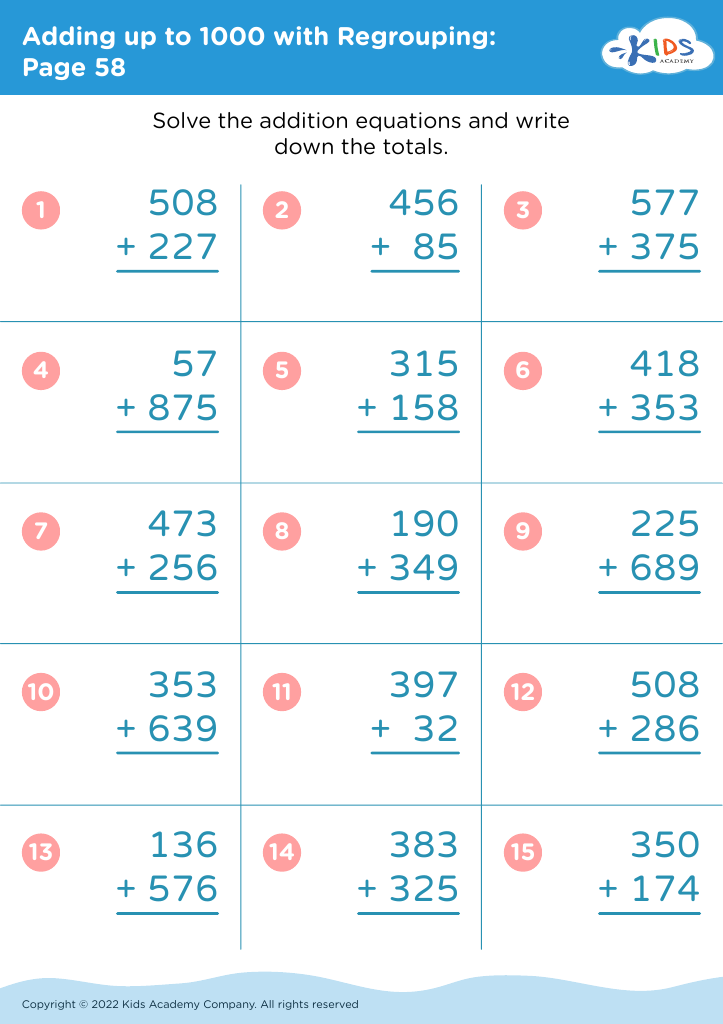
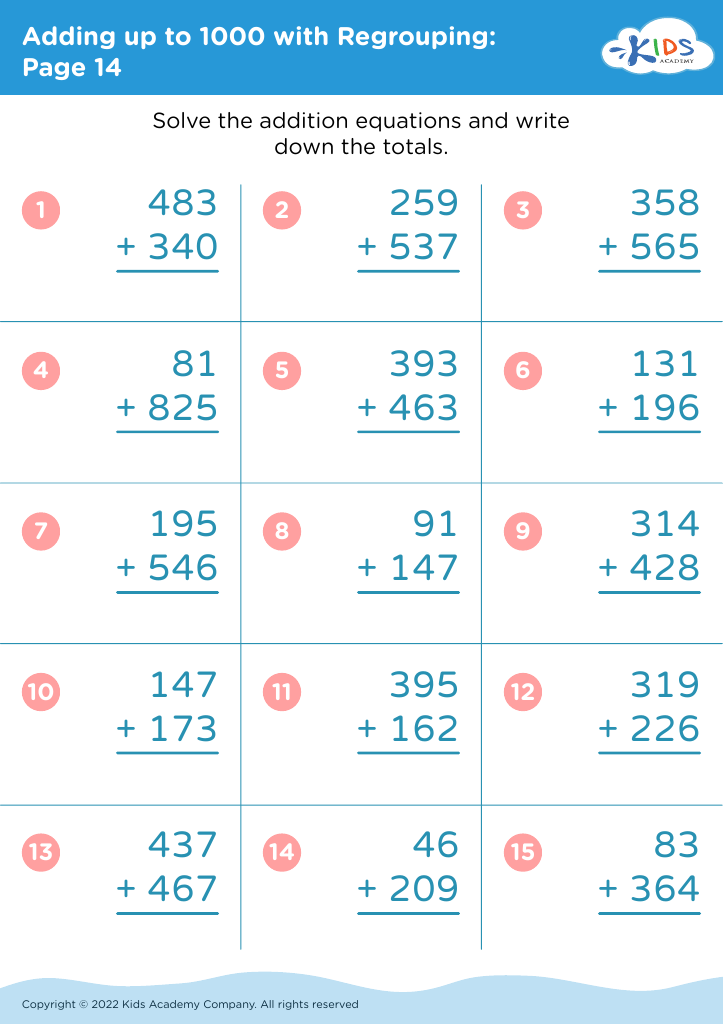
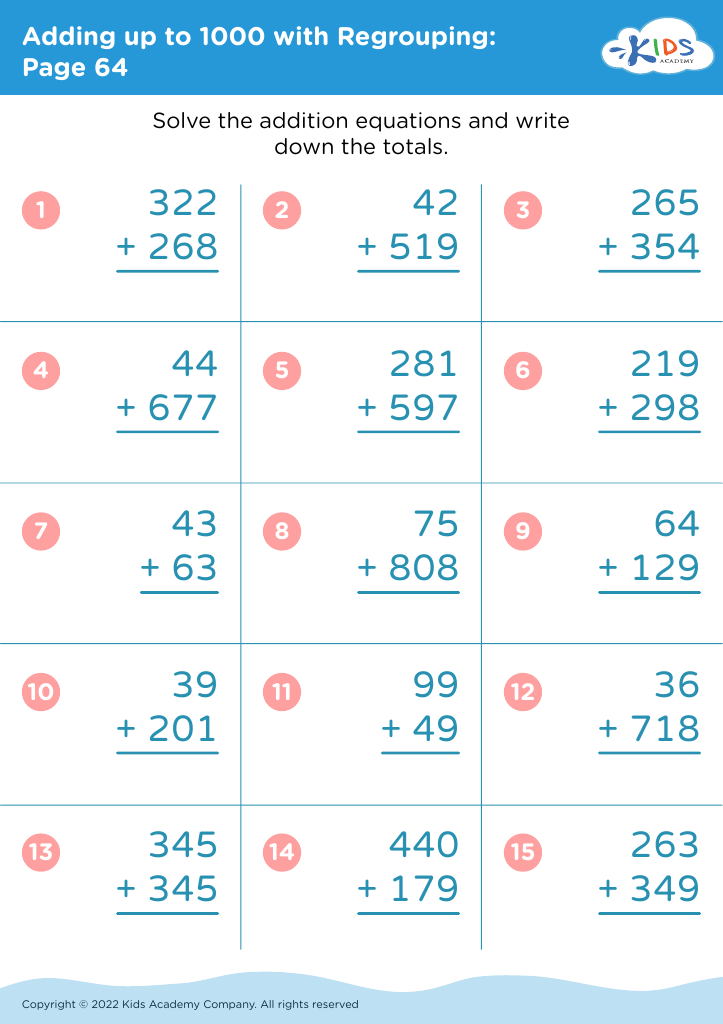


Shape recognition and basic math skills lay the groundwork for a child's academic journey and cognitive development. Parents and teachers need to emphasize Shape Recognition and Adding up to 1000 with Regrouping for children aged 3-8 for several compelling reasons.
Firstly, shape recognition enhances spatial awareness and geometric understanding, fundamental concepts in more advanced mathematics. For example, recognizing shapes helps children grasp the properties and relations between different figures, fostering problem-solving skills.
Adding up to 1000 with regrouping introduces young learners to fundamental arithmetic operations and the concept of place value. This complex idea can initially be challenging, but mastering it builds a strong mathematical foundation necessitating future calculations and algebra.
Secondly, shape recognition and addition also contribute to developing a child's fine motor skills, visual discrimination, and pattern recognition, essential cognitive abilities extending beyond mathematics.
Finally, early success in these areas boosts confidence, encouraging a positive attitude toward learning and academic subjects. Acquiring these skills prime children for later challenges, ensuring they progress with the necessary knowledge, motivation, and confidence to succeed in school.
In summary, focusing on these skills in early education promotes solid cognitive development, a crucial foundation for future academic success and everyday problem-solving.