Understanding fractions Adding up to 1000 with Regrouping Worksheets for Ages 3-8

Filters

18 filtered results

Clear all filters
Favorites
With answer key
Interactive

18 filtered results

Difficulty Level

Grade


Explore our "Understanding Fractions: Adding Up to 1000 with Regrouping Worksheets" designed for children aged 3-8. These engaging worksheets introduce young learners to the concept of fractions through interactive and age-appropriate activities. Children will learn how to add fractions and understand their foundations while practicing regrouping techniques. Our worksheets are crafted to enhance mathematical skills, enabling kids to visualize and manipulate numbers effectively. Perfect for classrooms or at-home learning, these resources foster confidence in budding mathematicians. Dive into the fun world of fractions and discover how they relate to everyday life with our expertly designed material!
Check out this FREE Trial Lesson on Adding up to 1000 with Regrouping for age 3-8!

Sorting Objects into 3 Categories

Favorites
With answer key
Interactive
  • 3-8
  • Understanding fractions
  • Adding up to 1000 with Regrouping
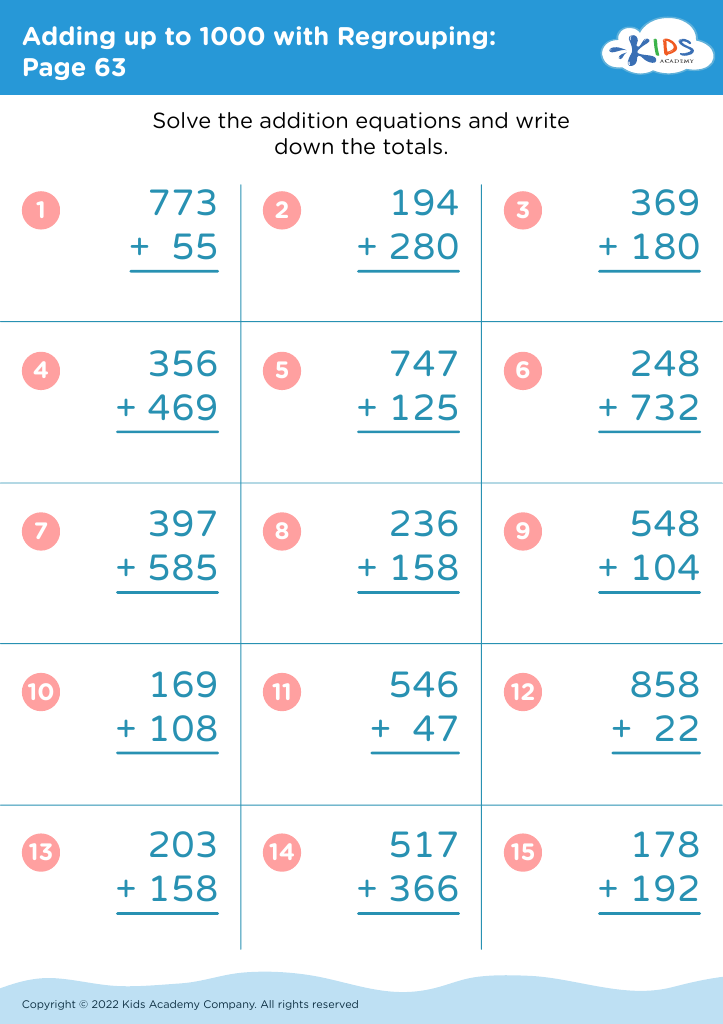
Adding up to 1000 with Regrouping: Page 63
Worksheet
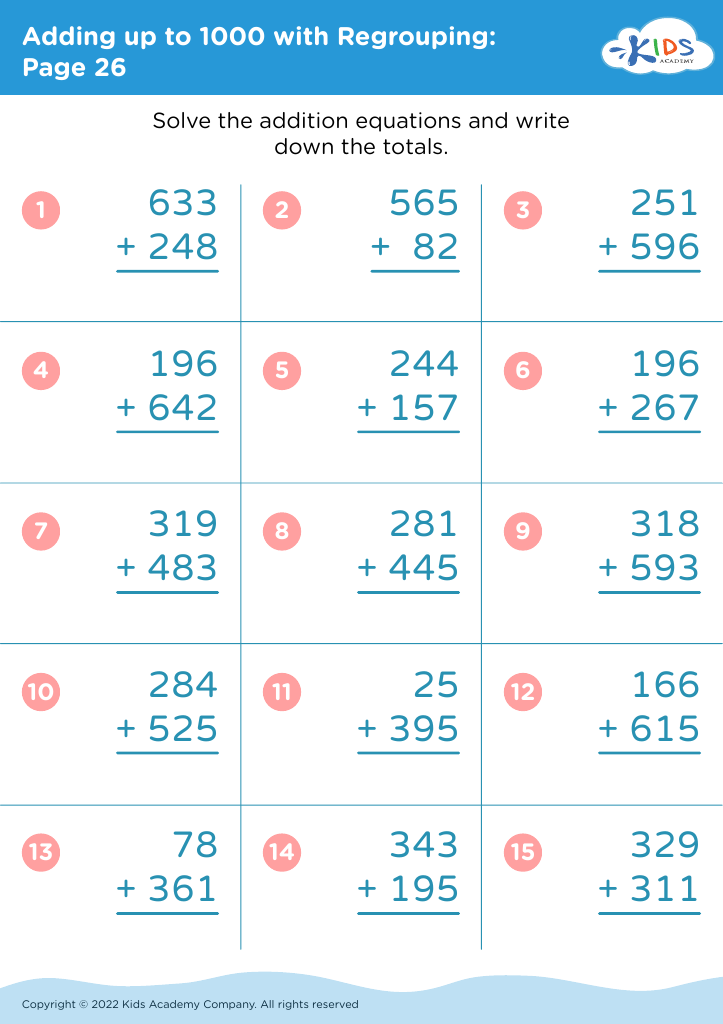
Adding up to 1000 with Regrouping: Page 26
Worksheet
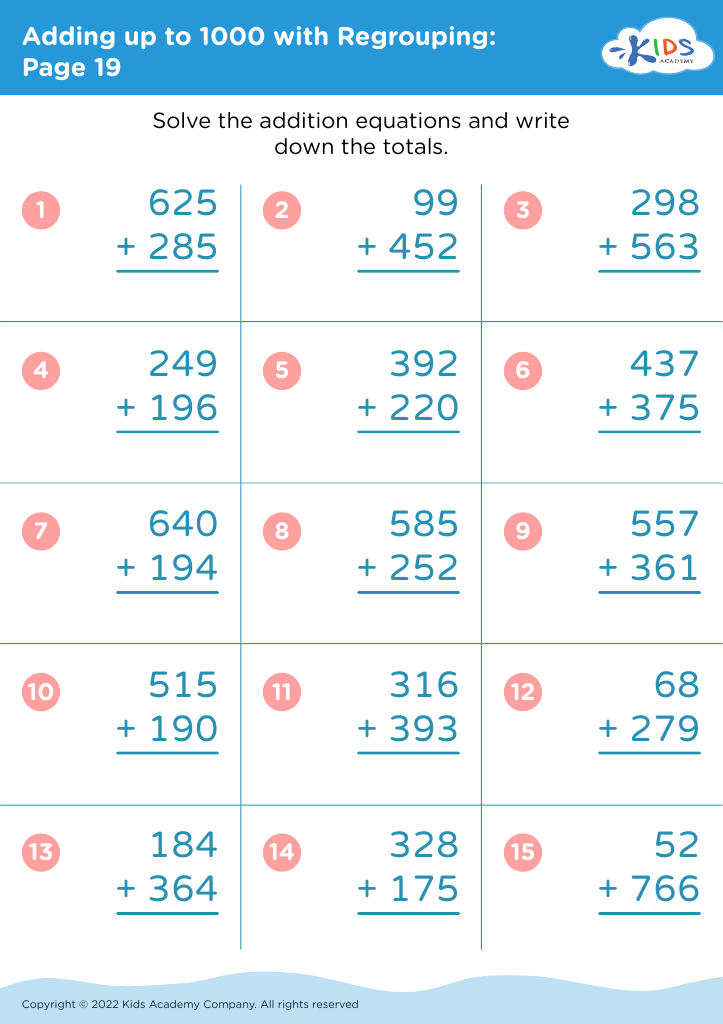
Adding up to 1000 with Regrouping: Page 19
Worksheet
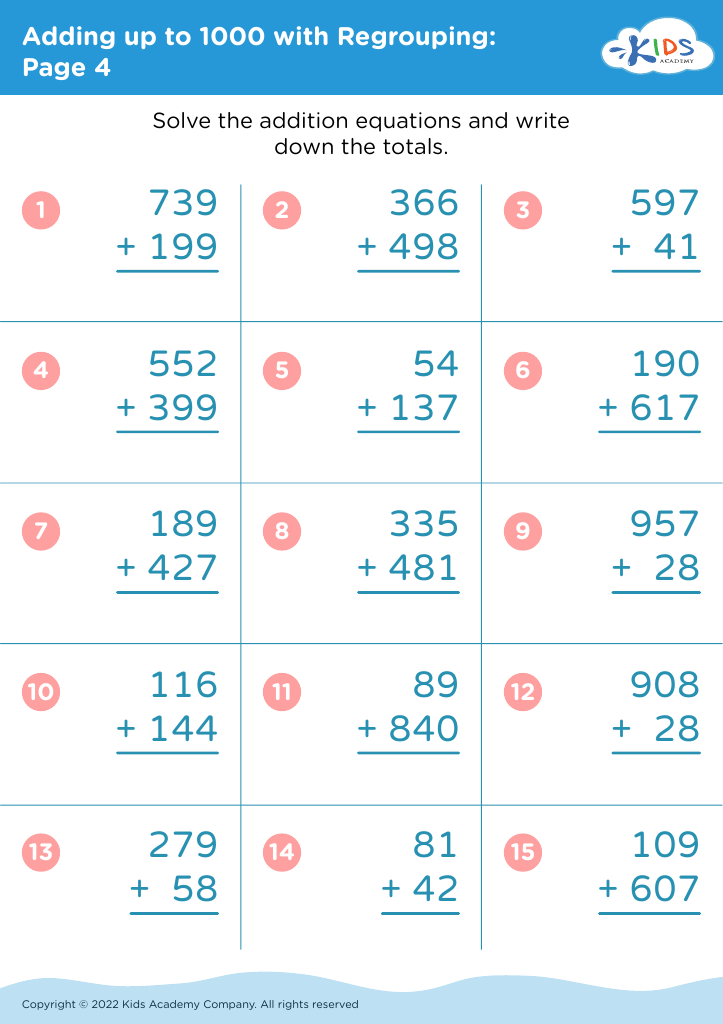
Adding up to 1000 with Regrouping: Page 4
Worksheet
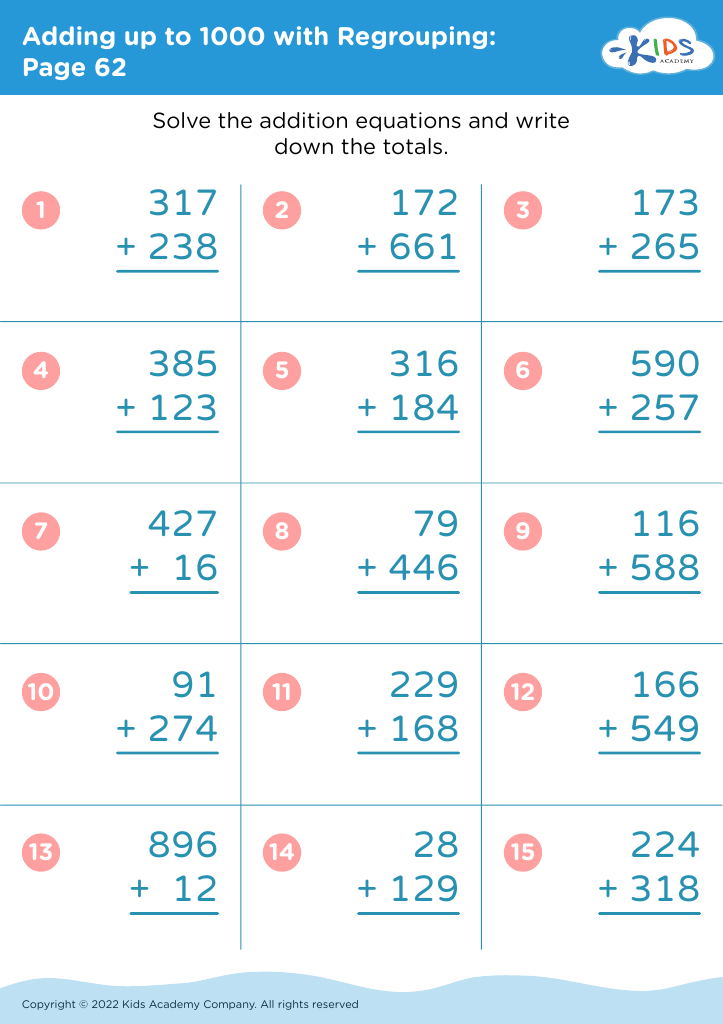
Adding up to 1000 with Regrouping: Page 62
Worksheet
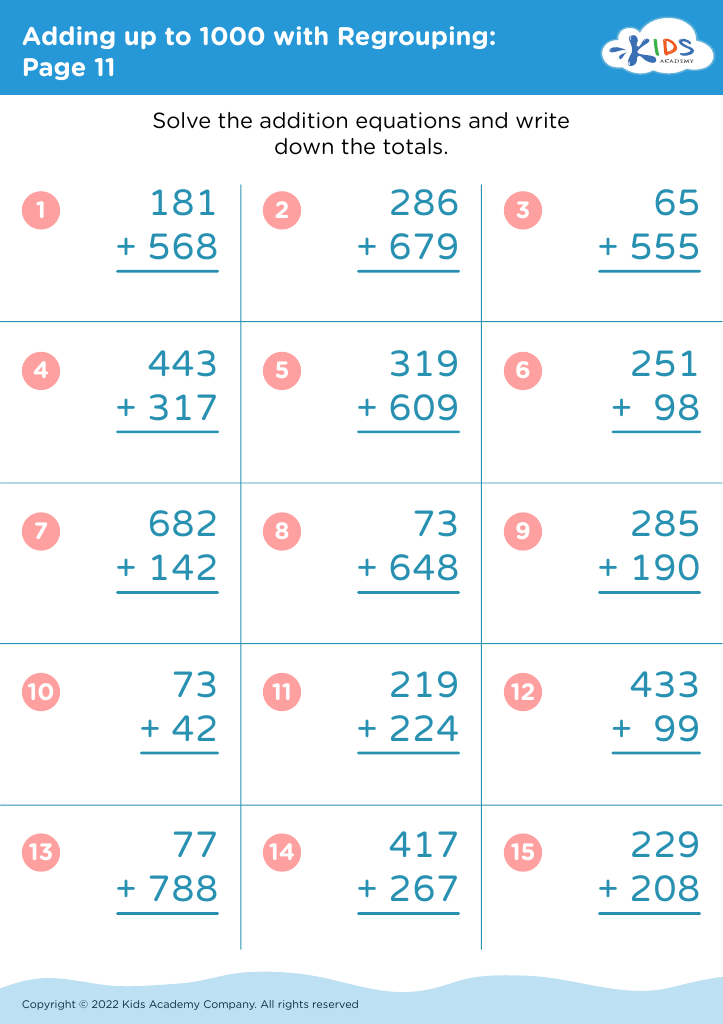
Adding up to 1000 with Regrouping: Page 11
Worksheet
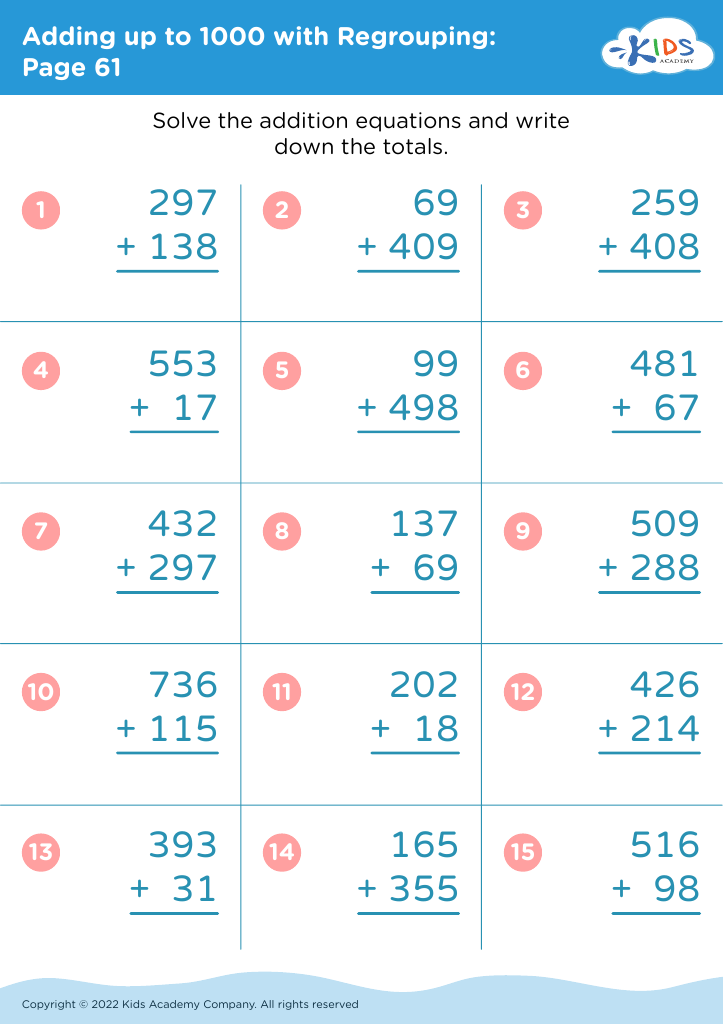
Adding up to 1000 with Regrouping: Page 61
Worksheet
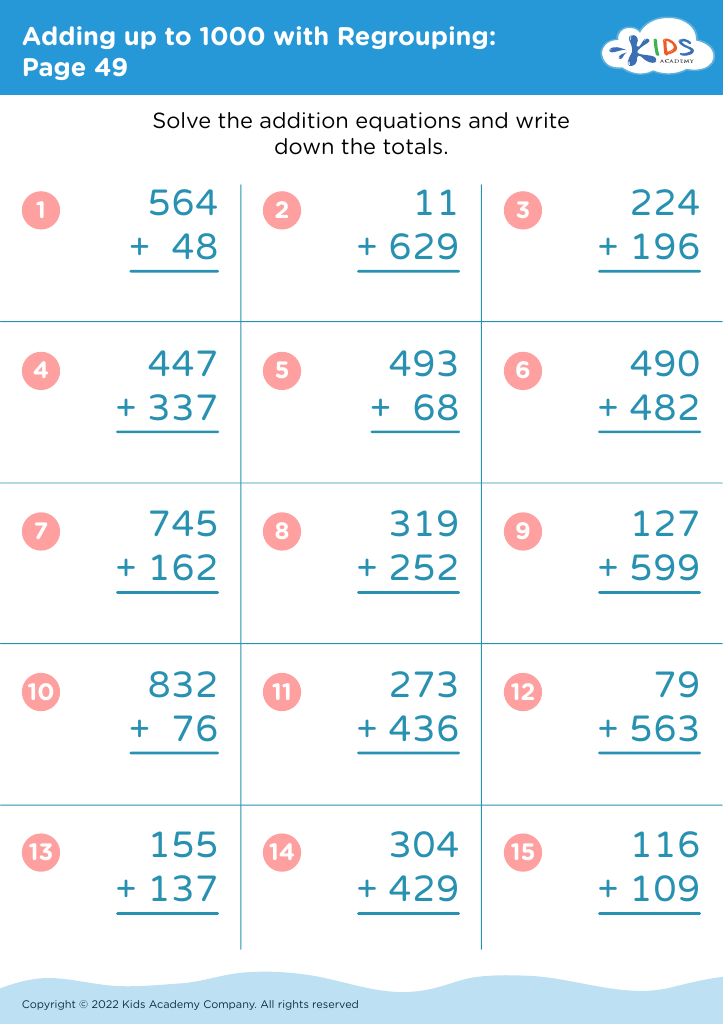
Adding up to 1000 with Regrouping: Page 49
Worksheet
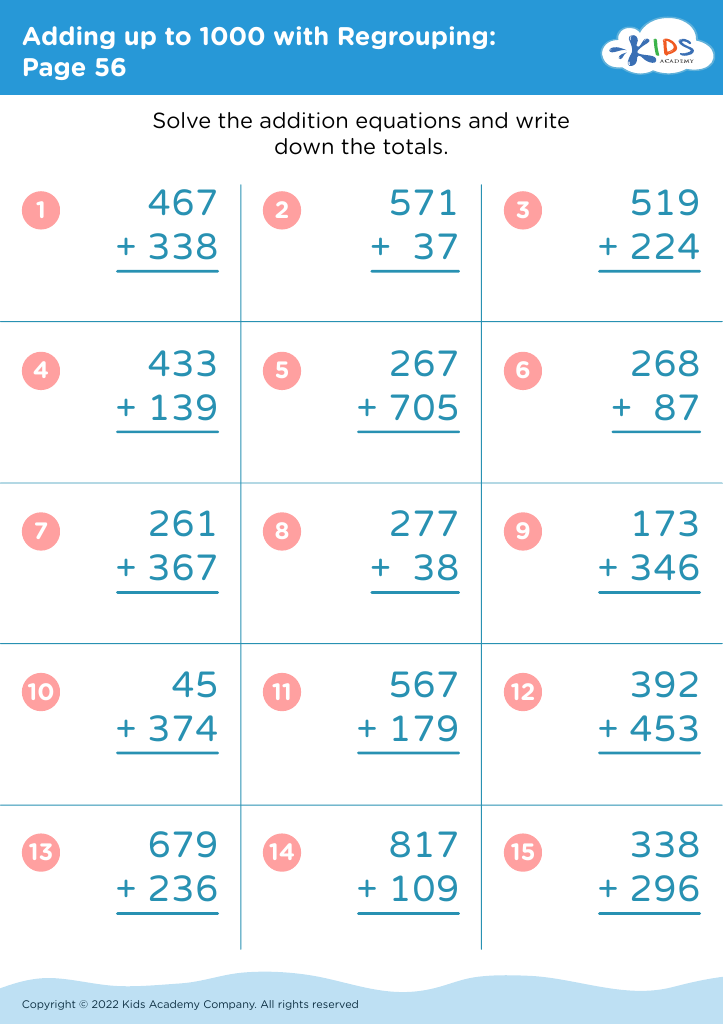
Adding up to 1000 with Regrouping: Page 56
Worksheet
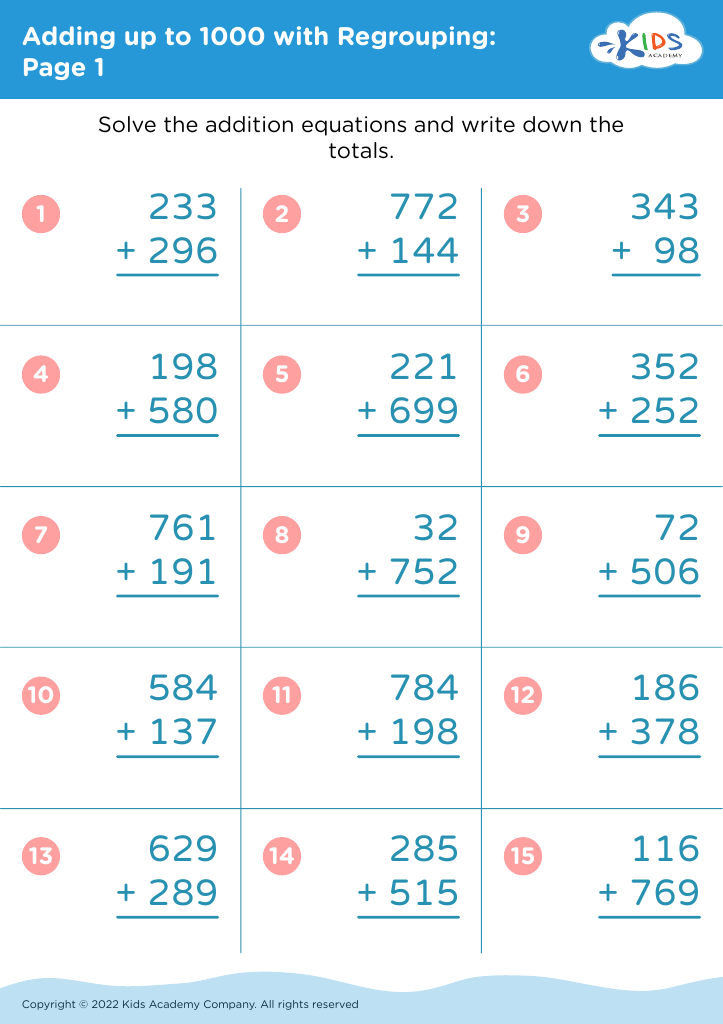
Adding up to 1000 with Regrouping: Page 1
Worksheet
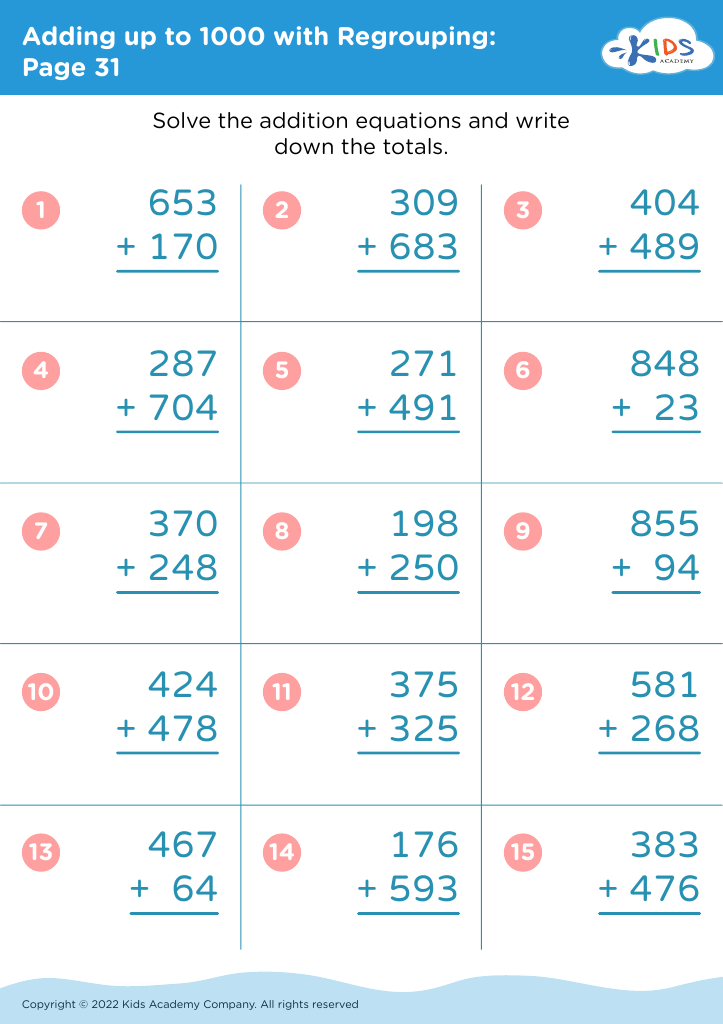
Adding up to 1000 with Regrouping: Page 31
Worksheet
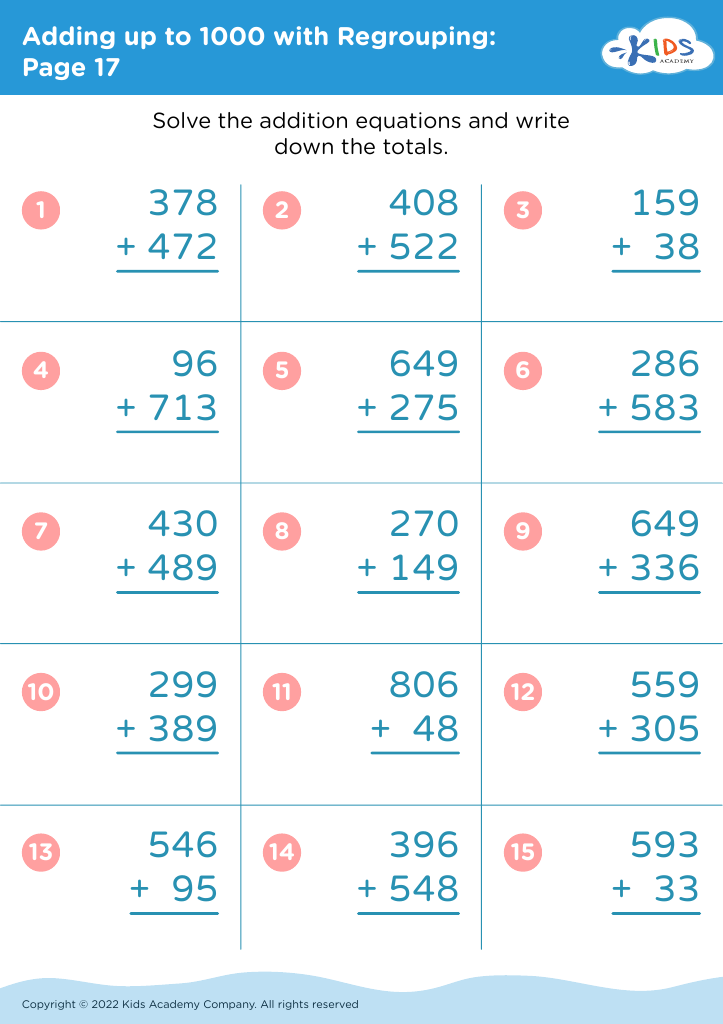
Adding up to 1000 with Regrouping: Page 17
Worksheet
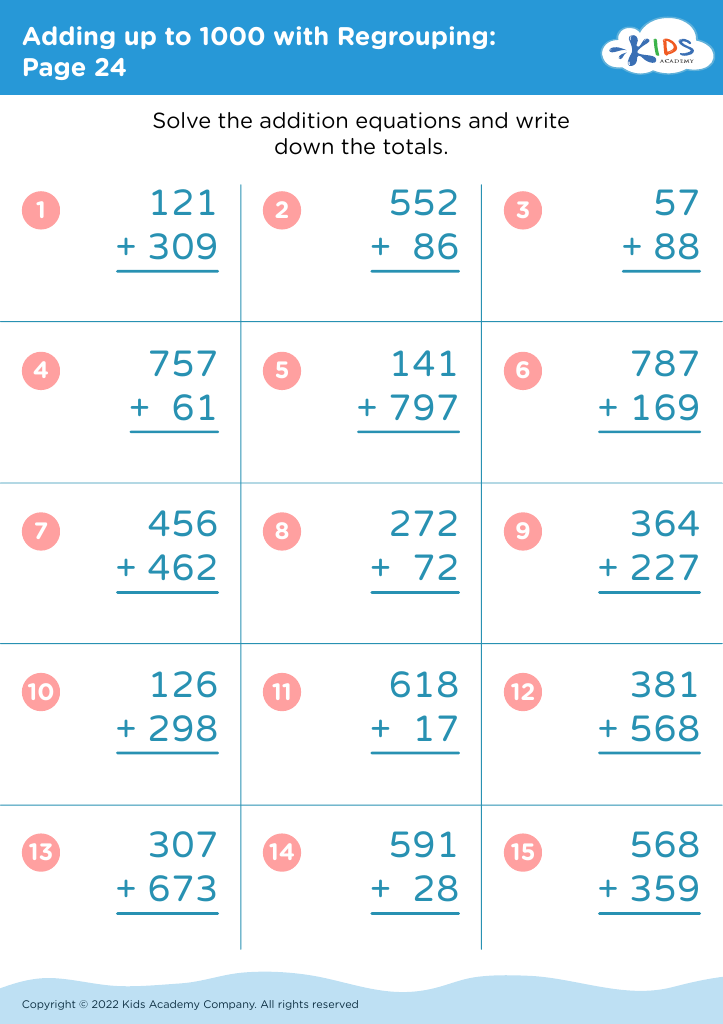
Adding up to 1000 with Regrouping: Page 24
Worksheet
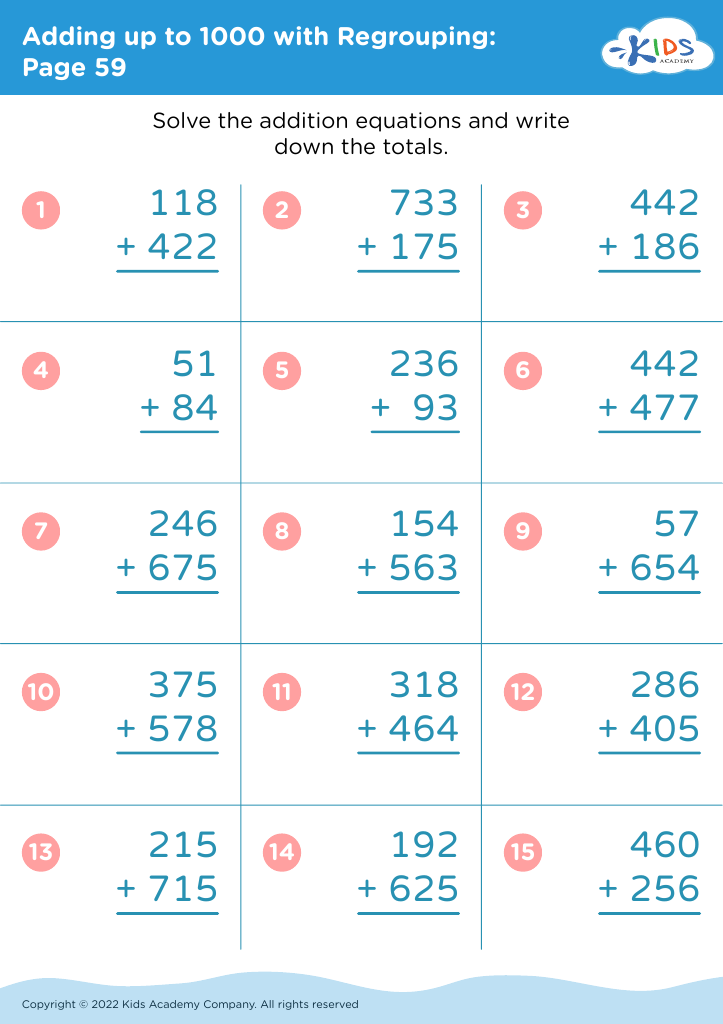
Adding up to 1000 with Regrouping: Page 59
Worksheet
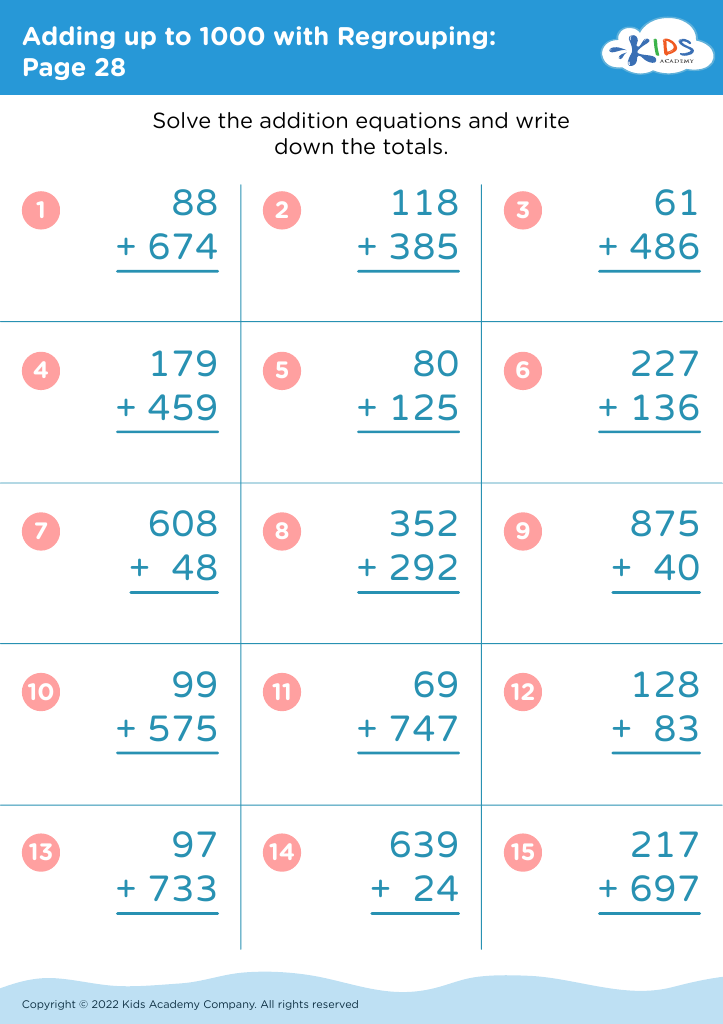
Adding up to 1000 with Regrouping: Page 28
Worksheet
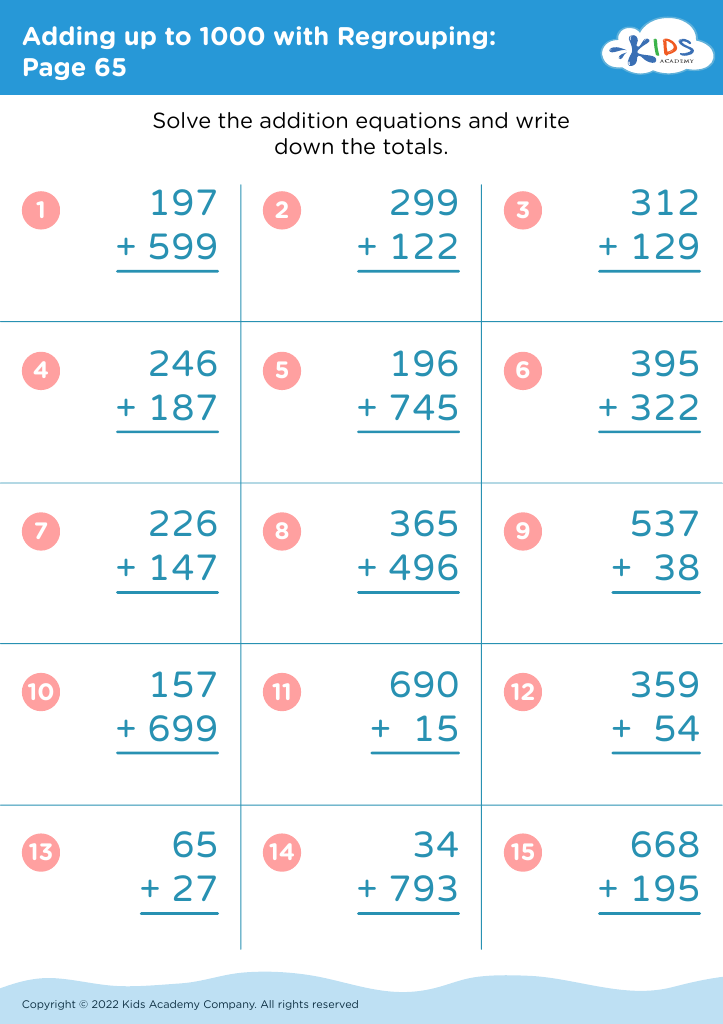
Adding up to 1000 with Regrouping: Page 65
Worksheet
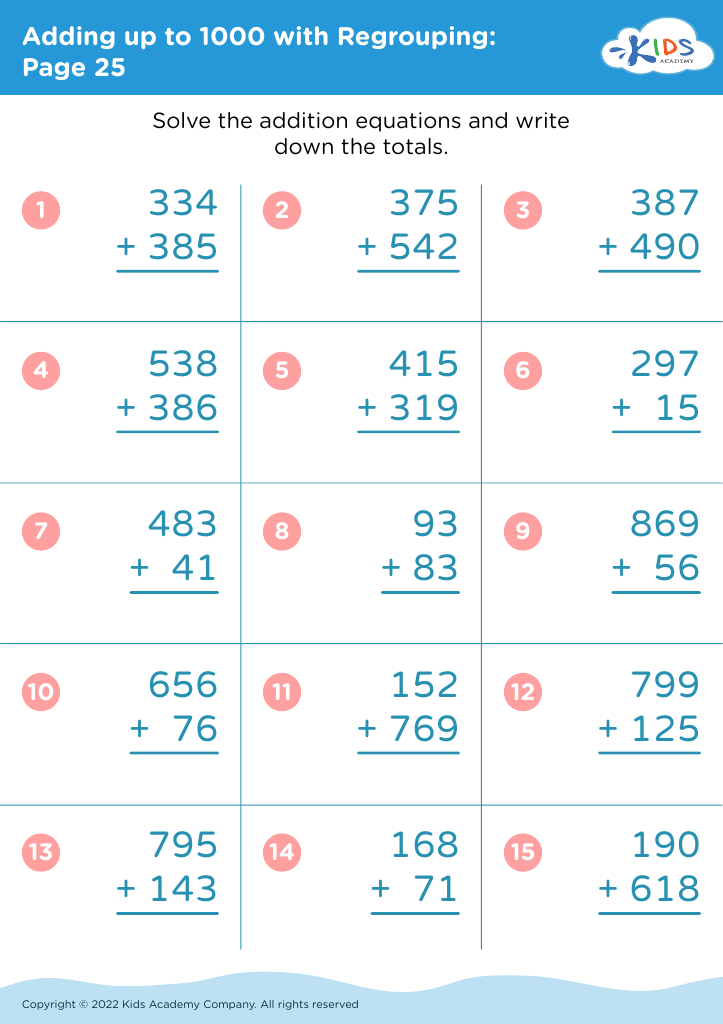
Adding up to 1000 with Regrouping: Page 25
Worksheet
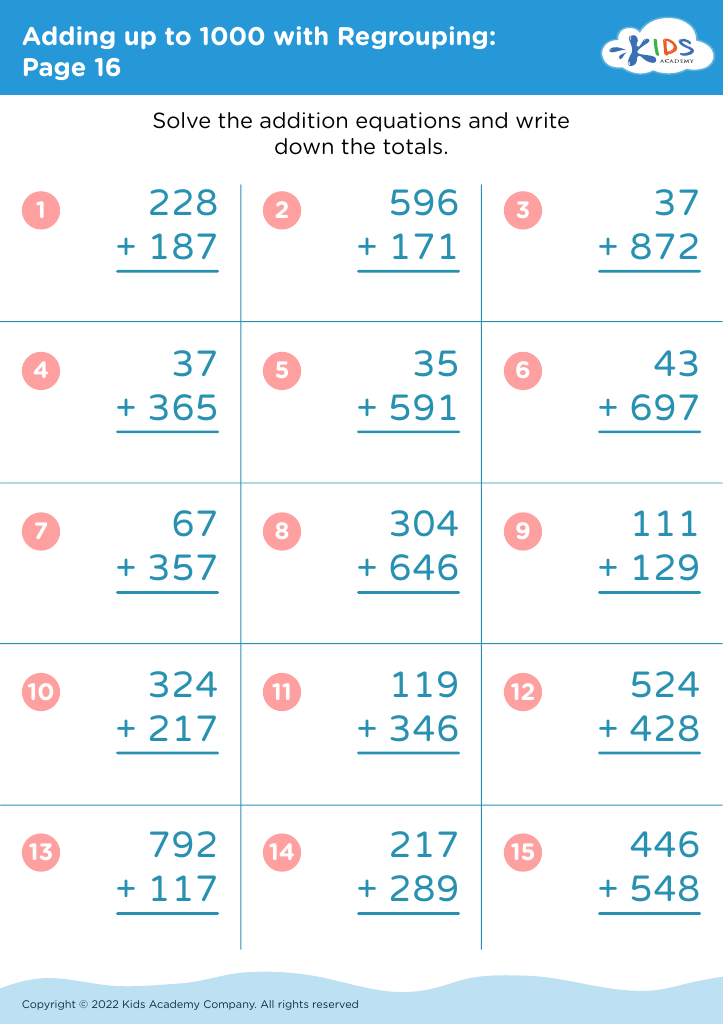
Adding up to 1000 with Regrouping: Page 16
Worksheet


Understanding fractions and the concept of adding up to 1000 with regrouping is crucial for children aged 3-8 because it lays the foundation for their mathematical development and critical thinking skills. First, introducing these concepts early helps young learners recognize the importance of parts and wholes, essential in daily life and further math operations. Recognizing fractions encourages children to understand sharing, division, and proportional relationships, nurturing a practical grasp of mathematics.

Additionally, working with addition and regrouping teaches valuable strategies for solving complex problems. For example, as children learn to regroup numbers, they develop skills in estimation and numerical flexibility. This adaptability is pivotal as they encounter and solve more challenging mathematical equations later in their education.

Moreover, fostering a strong mathematical base enhances children's confidence in their ability to navigate numerical challenges. Engaging with fractions and regrouping cultivates a positive attitude toward math, which can influence their future academic choices. Parents and teachers who focus on these concepts are investing in their children's cognitive growth, preparing them for higher-level math and real-world applications as they advance in their education. Overall, understanding fractions and regrouping is essential for holistic development in early childhood.