Understanding Sequences Adding up to 1000 with Regrouping Worksheets for Ages 3-8
4 filtered results
-
From - To
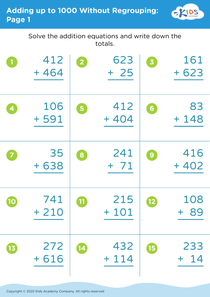
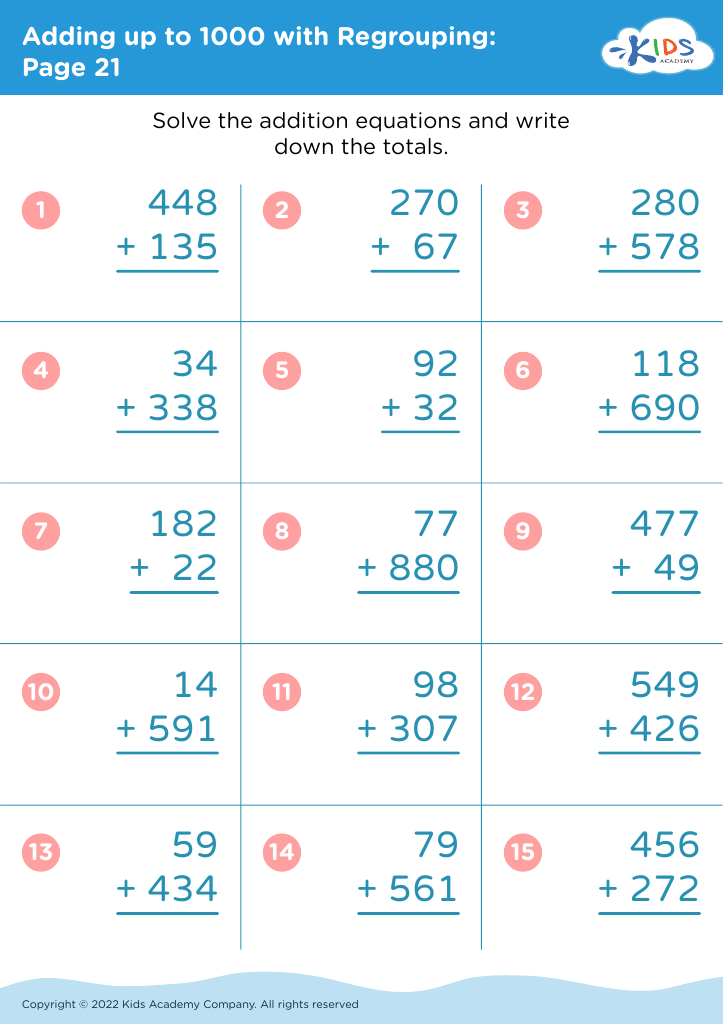
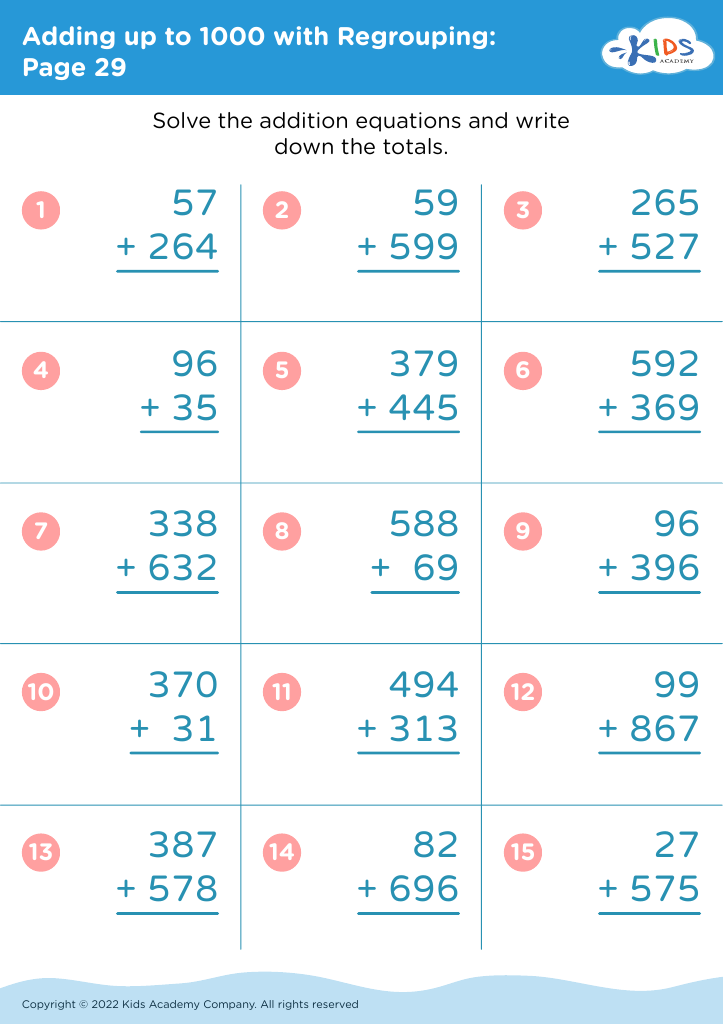
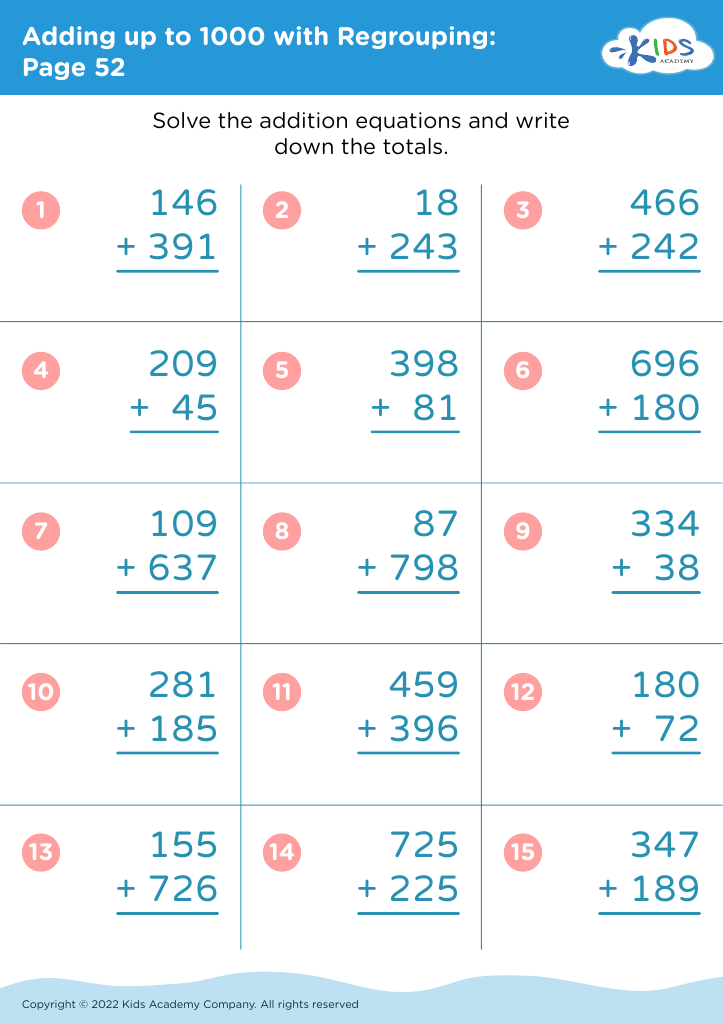
Enhance your little one's math skills with our expertly crafted worksheets designed for ages 3-8, focusing on sequences adding up to 1000 with regrouping. These engaging activities help children understand complex concepts through fun exercises that reinforce addition, number patterns, and regrouping strategies. Each worksheet progressively builds on prior knowledge, promoting critical thinking and confidence in solving bigger problems. Perfect for both classrooms and home learning, they ensure foundational math skills are achieved with an interactive approach. Experience a comprehensive learning journey with our Understanding Sequences Adding up to 1000 with Regrouping Worksheets, tailored to inspire young mathematical minds!
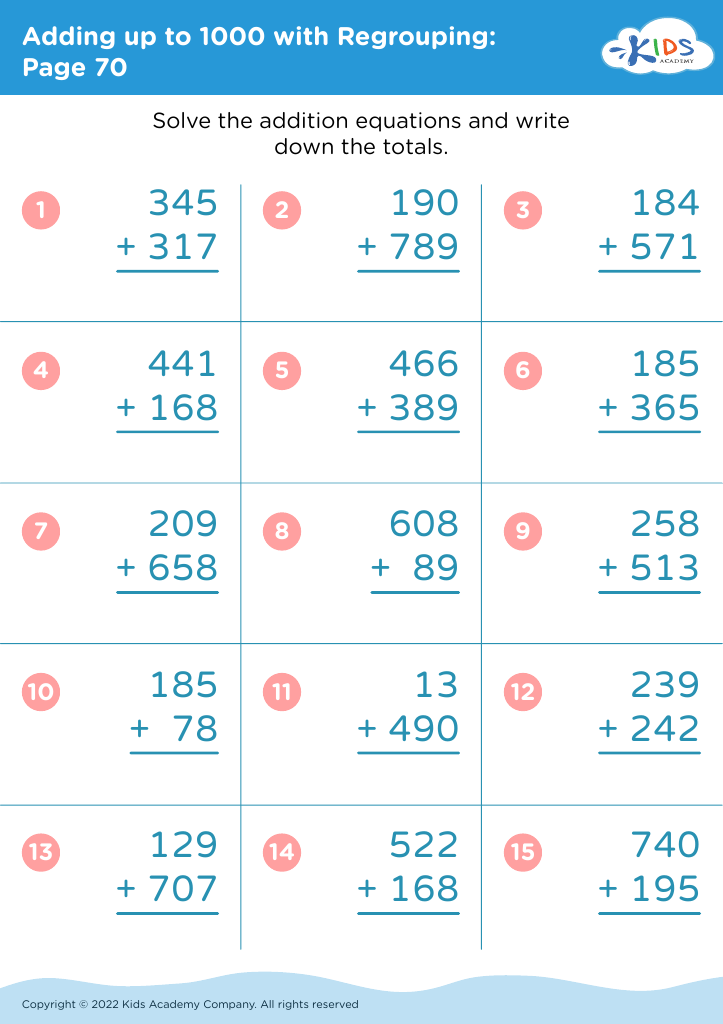


Parents and teachers should care about teaching sequences adding up to 1000 with regrouping for children ages 3-8 because this foundational math skill nurtures their cognitive and numeracy development. Understanding sequences and regrouping fosters critical thinking, problem-solving, and logical reasoning—key abilities that enhance a child’s overall academic performance.
Introducing these concepts early on helps solidify a child’s grasp on the base-10 number system, a cornerstone of more advanced math topics like multiplication, division, and fractions. By breaking down numbers and reassembling them (regrouping), children learn the flexibility of numbers and hone mental math skills, preparing them for more complex operations in future grades.
Moreover, learning sequences and regrouping encourages resilience and perseverance, as children often have to tackle step-by-step processes and multiple attempts to get the correct answer. This strengthens their ability to approach challenges methodically.
Additionally, making math engaging for young children can stimulate a positive attitude towards learning. Fun and interactive activities involving adding sequences foster an enthusiasm for math, creating a solid foundation and reducing math anxiety in later education stages.
In summary, focusing on sequences and regrouping with young children builds crucial early math skills, enhances cognitive development, fosters problem-solving abilities, and establishes a positive, resilient learning mindset essential for lifelong academic success.