Alphabet Recognition Adding up to 1000 Without Regrouping Worksheets for Ages 3-8
3 filtered results
-
From - To
Discover our engaging "Alphabet Recognition Adding up to 1000 Without Regrouping Worksheets" designed for children aged 3-8! These interactive worksheets combine foundational alphabet recognition with essential math skills, making learning both fun and effective. Children will enhance their letter knowledge while practicing addition up to 1000, all without the complexity of regrouping. Ideal for parents and teachers, these resources support early literacy and numeracy development through playful activities and colorful visuals. Perfect for home or classroom use, these worksheets pave the way for confident learners, ensuring they build a solid foundation for future academic success. Start their learning journey today!
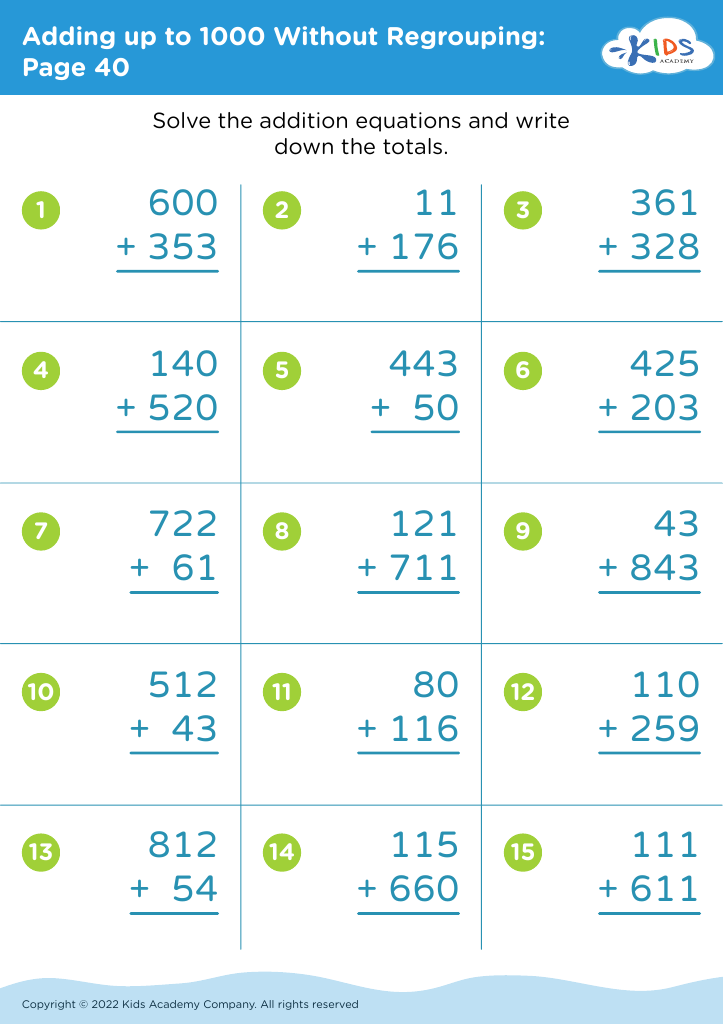
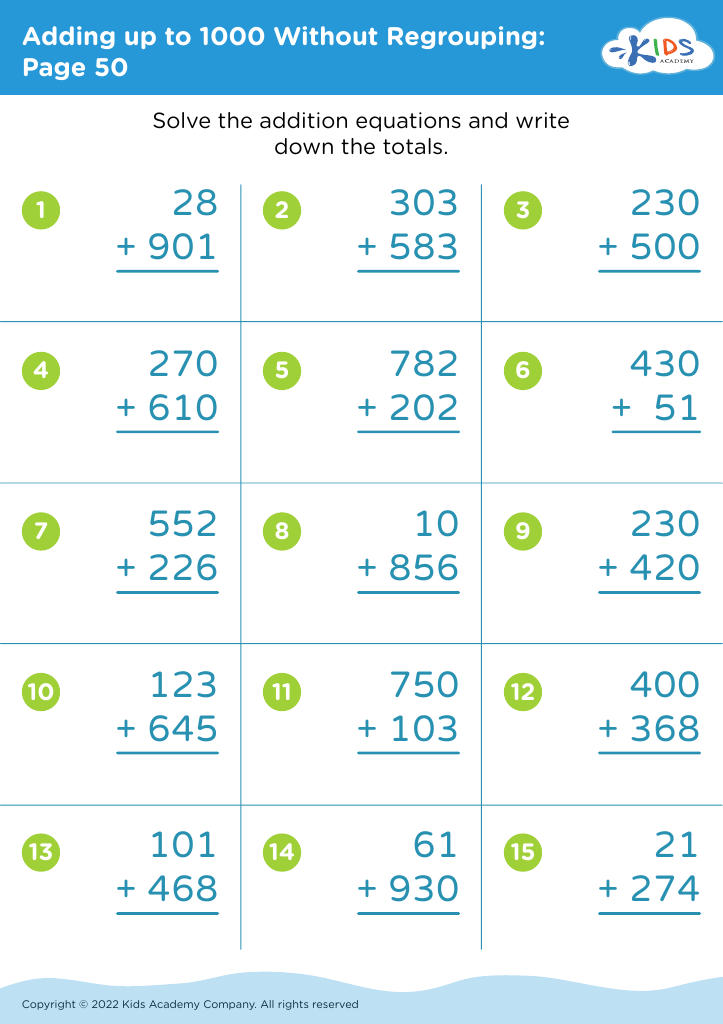
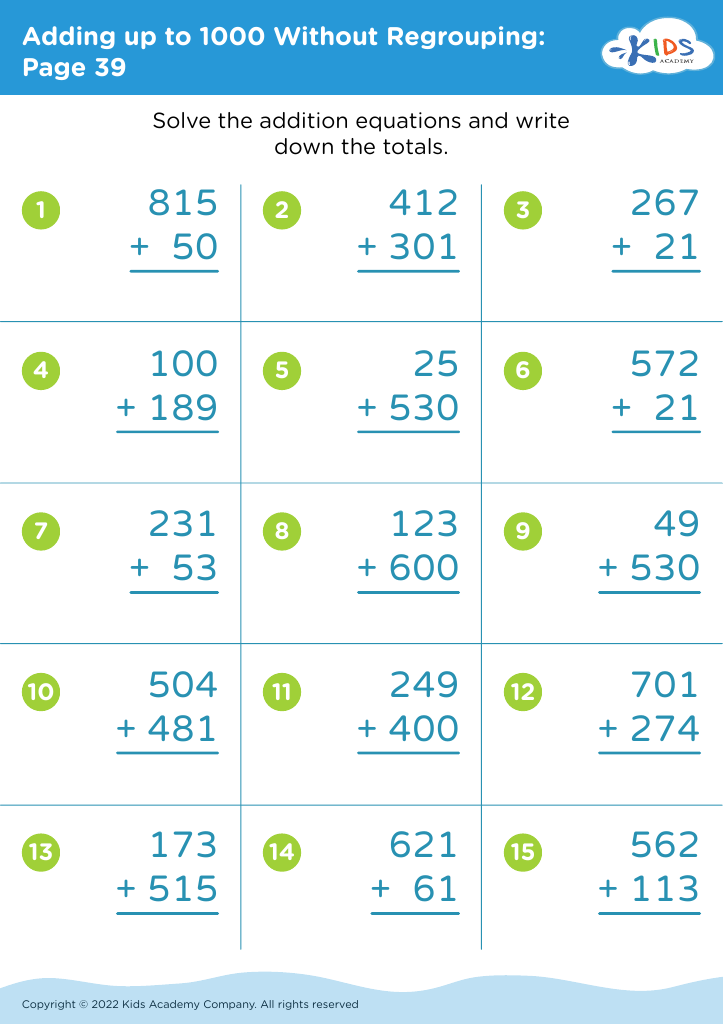


Alphabet recognition and foundational math skills, such as adding up to 1000 without regrouping, are crucial for children aged 3-8 as they lay the groundwork for academic success. Understanding the alphabet is essential for developing literacy skills, enabling children to read, write, and communicate effectively. Early exposure to letter recognition not only fosters vocabulary development but also enhances phonemic awareness, which is fundamental for reading fluency.
Similarly, mastering basic addition, particularly numbers within 1000 without regrouping, builds a strong mathematical foundation. It develops critical thinking and problem-solving abilities, enabling children to approach more complex math concepts with confidence in later grades. This skill fosters number sense, as students learn to manipulate numbers using mental math strategies, which is vital for everyday calculations.
Teachers and parents should be aware that together, these skills serve a dual purpose: promoting cognitive development and encouraging a positive attitude towards learning. By supporting children in these areas, adults can help students develop essential skills for school readiness and lifelong learning, ultimately nurturing their intellectual curiosity and self-esteem. Engaging with literacy and math in early education cultivates a strong foundation that can influence children’s academic trajectories and future success.