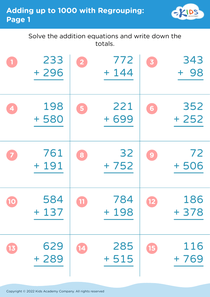
Comparing Fractions Adding up to 1000 Without Regrouping Worksheets for Ages 3-8
3 filtered results
-
From - To
Discover engaging "Comparing Fractions adding up to 1000 Without Regrouping Worksheets" designed for children ages 3-8. These thoughtfully crafted worksheets focus on introducing young learners to the concepts of comparing fractions while boosting their basic arithmetic skills. Specifically tailored to simplify learning without regrouping, these exercises ensure kids build confidence in understanding and comparing fractions. Perfect for classrooms or at-home learning, our unique practice materials make mastering early math concepts fun and interactive. Encourage your little ones to embrace mathematics with our colorful and practical worksheets that pave the way for future math success.
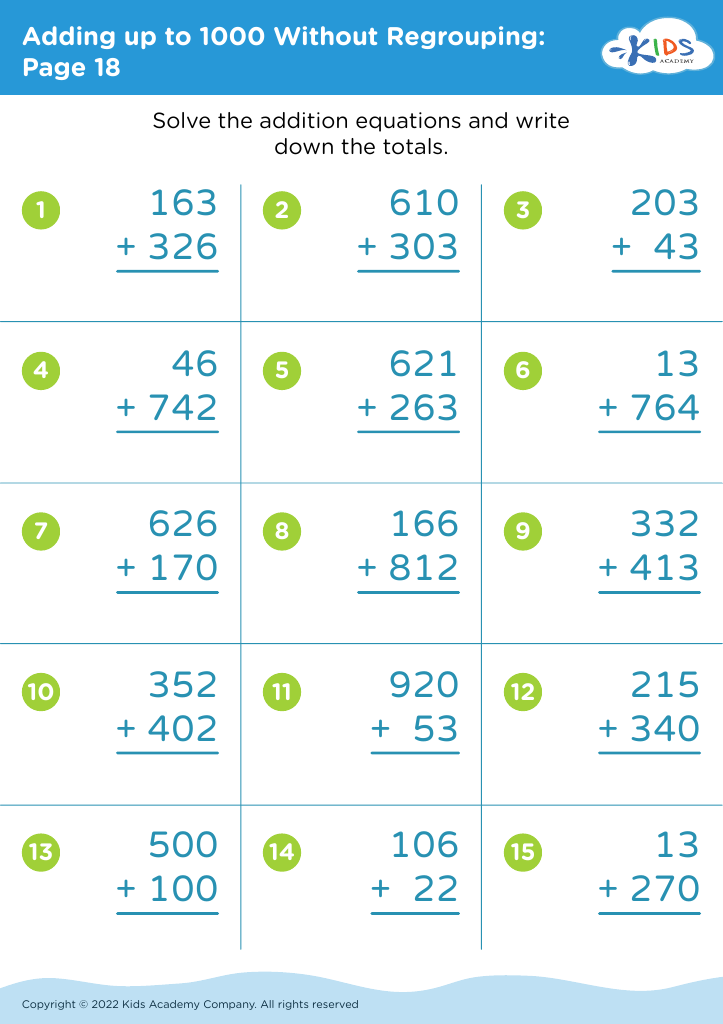
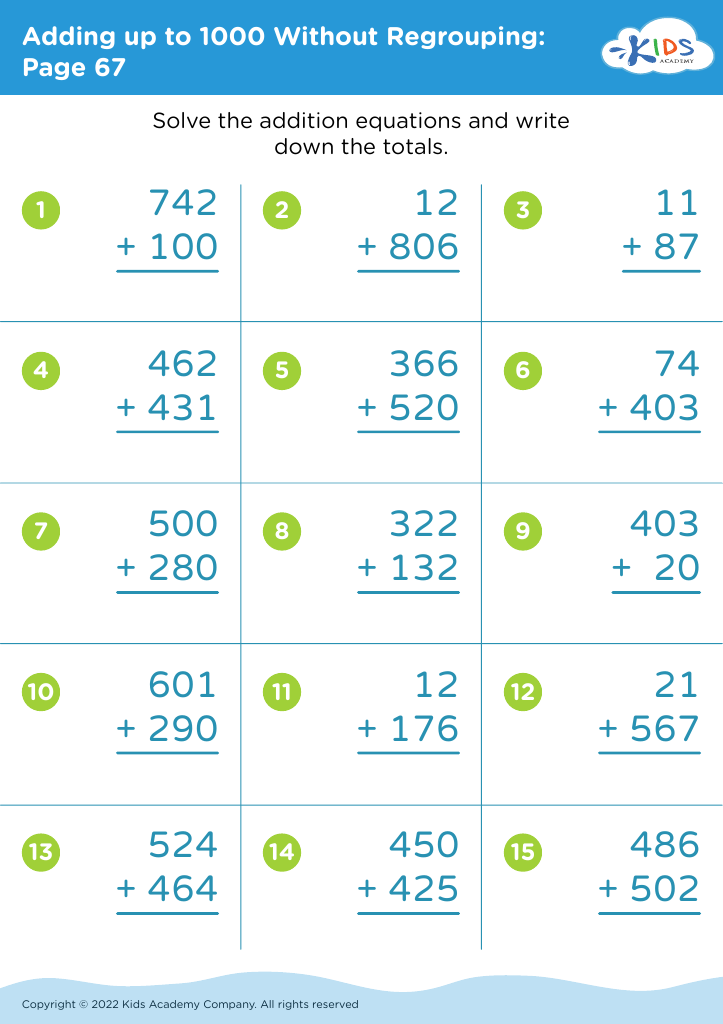
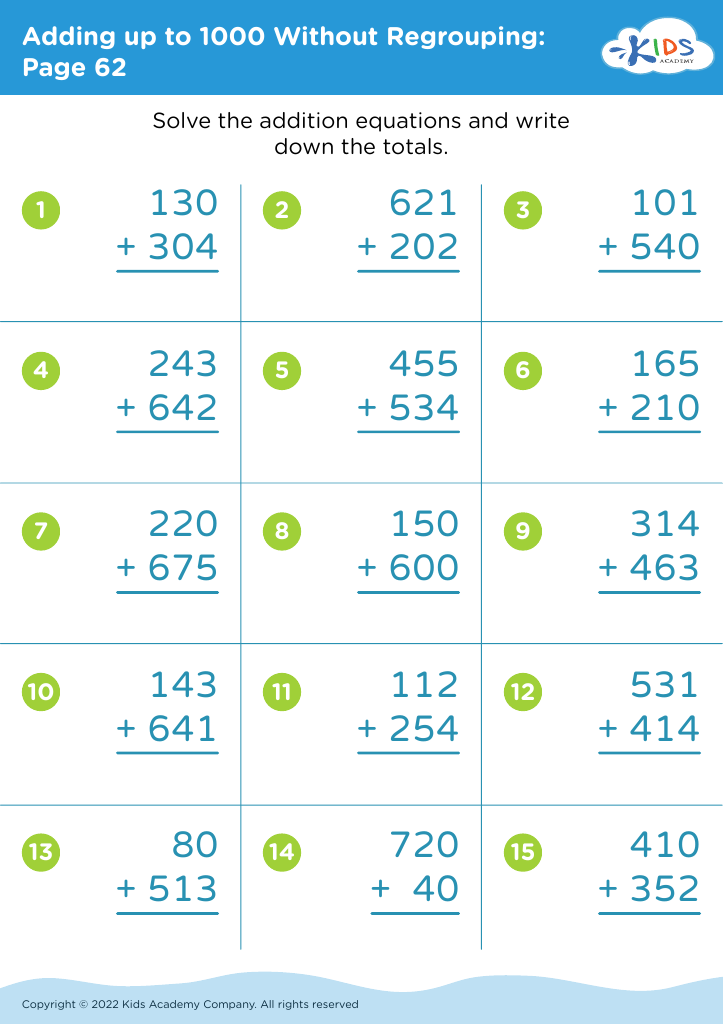


Introducing young children to the concept of comparing fractions and working with numbers up to 1000 without requiring regrouping fosters essential mathematical skills early on. For ages 3-8, this specific focus plays a crucial role in cognitive development and numeracy, which are foundational for future academic success.
First, comparing fractions encourages logical thinking and problem-solving. Children learn to analyze relationships between different parts of a whole, which nurtures critical thinking. Additionally, dealing with larger numbers up to 1000 prepares them for more complex math problems they will encounter later. It enhances their number sense and fluency, making higher-level arithmetic less daunting.
Furthermore, avoiding the need to regroup simplifies the learning process, making it accessible and less intimidating. It builds confidence and encourages a positive attitude toward math. This straightforward approach ensures foundational concepts are grasped firmly before moving on to more advanced operations that involve regrouping, laying a strong groundwork for algebra and more complex mathematics.
For parents and teachers, these Mathematical experiences captivated through engaging activities and games create a strong bond with numbers and shapes. By caring about such early mathematical skill-building, they are equipping children with tools that foster lifelong learning and appreciation for mathematics in everyday life.