Fraction comparison Adding up to 1000 Without Regrouping Worksheets for Ages 3-8
4 filtered results
-
From - To
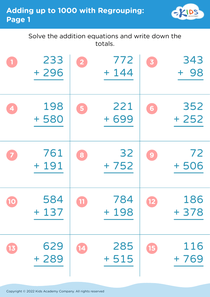
Explore our engaging "Fraction Comparison Adding Up to 1000 Without Regrouping Worksheets" designed for children ages 3 to 8! These worksheets introduce young learners to fractions in a fun and interactive way, helping them grasp the concept of comparing fractions with a clear focus on additive skills. Perfect for supporting foundational math understanding, these resources encourage critical thinking and problem-solving while mastering addition without regrouping. Ideal for home or classroom use, our worksheets provide step-by-step activities that promote confidence and comprehension. Start your child's mathematical journey today and help them build essential skills for future success in mathematics!
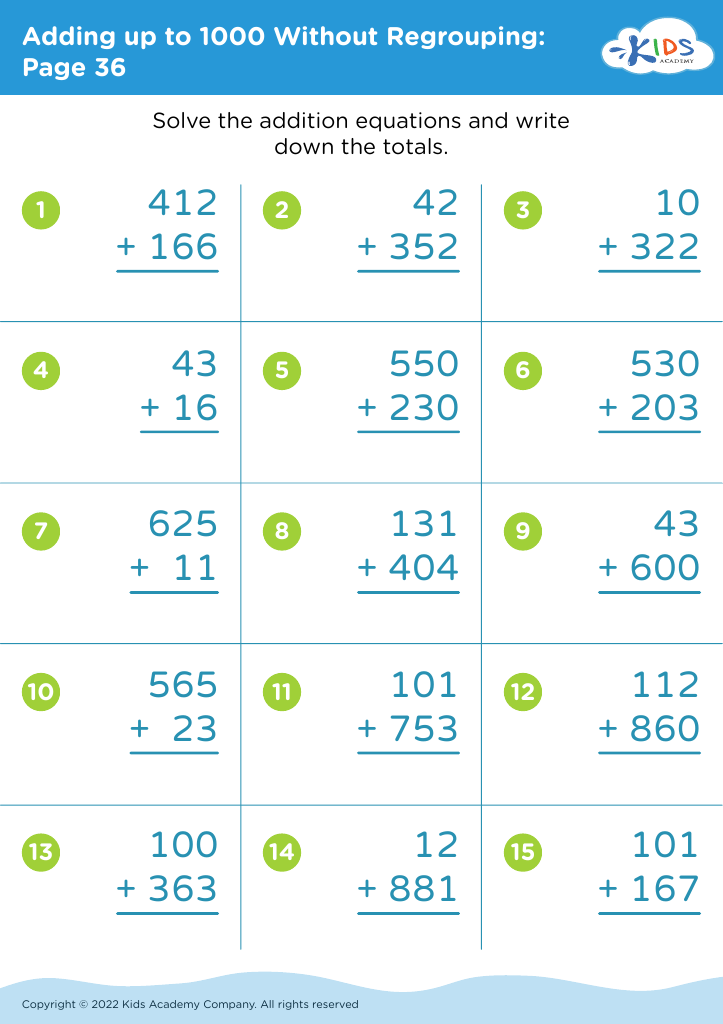
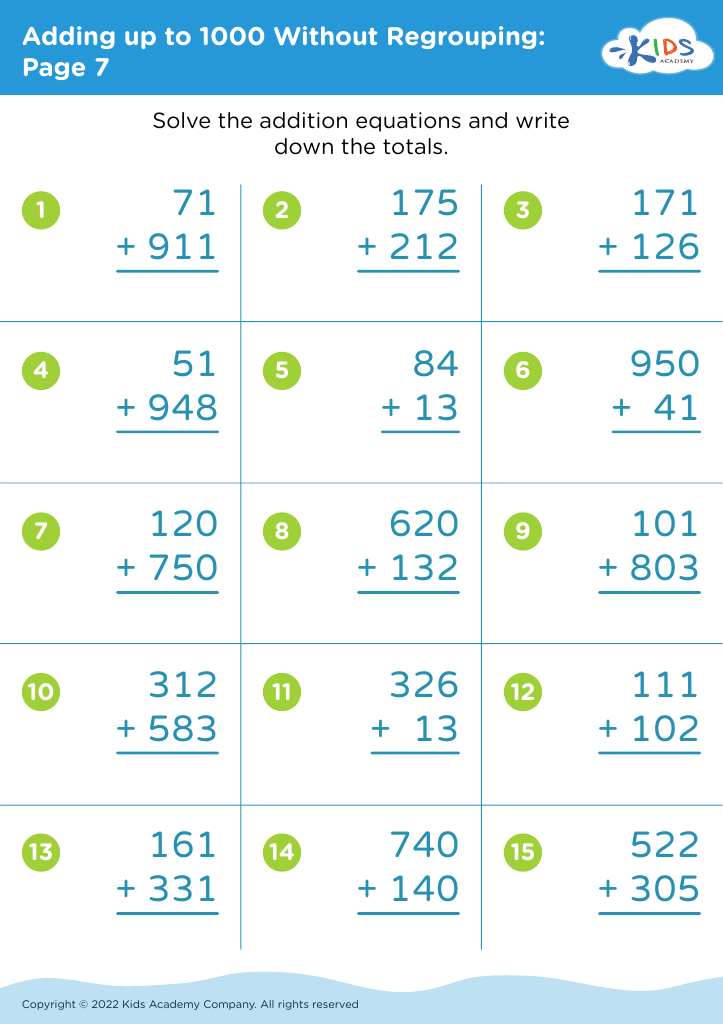
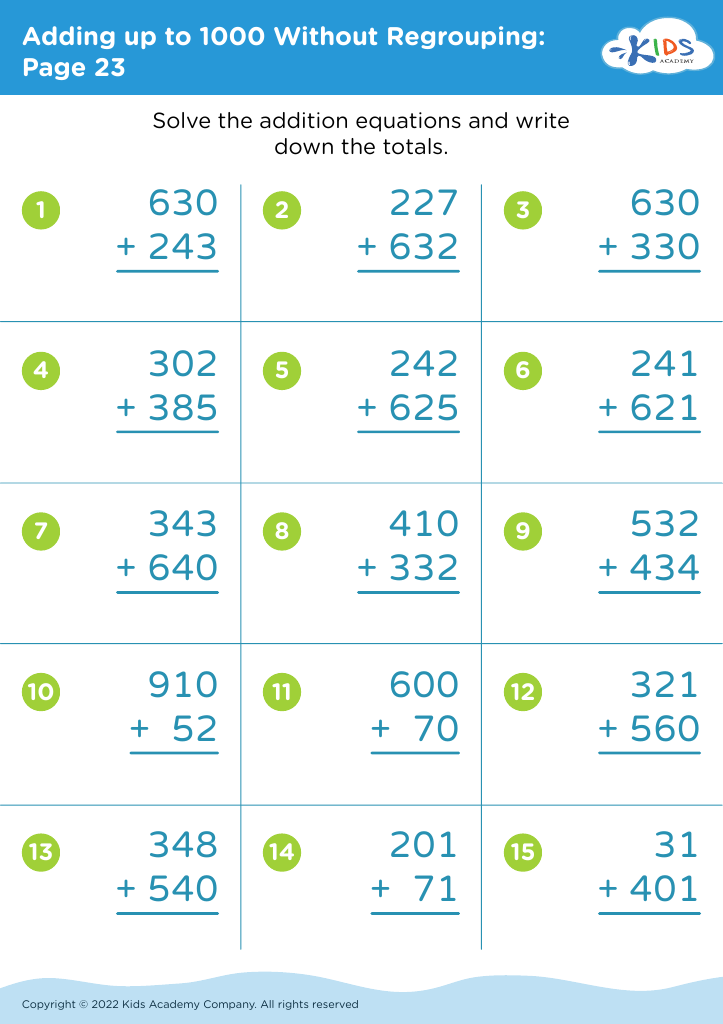
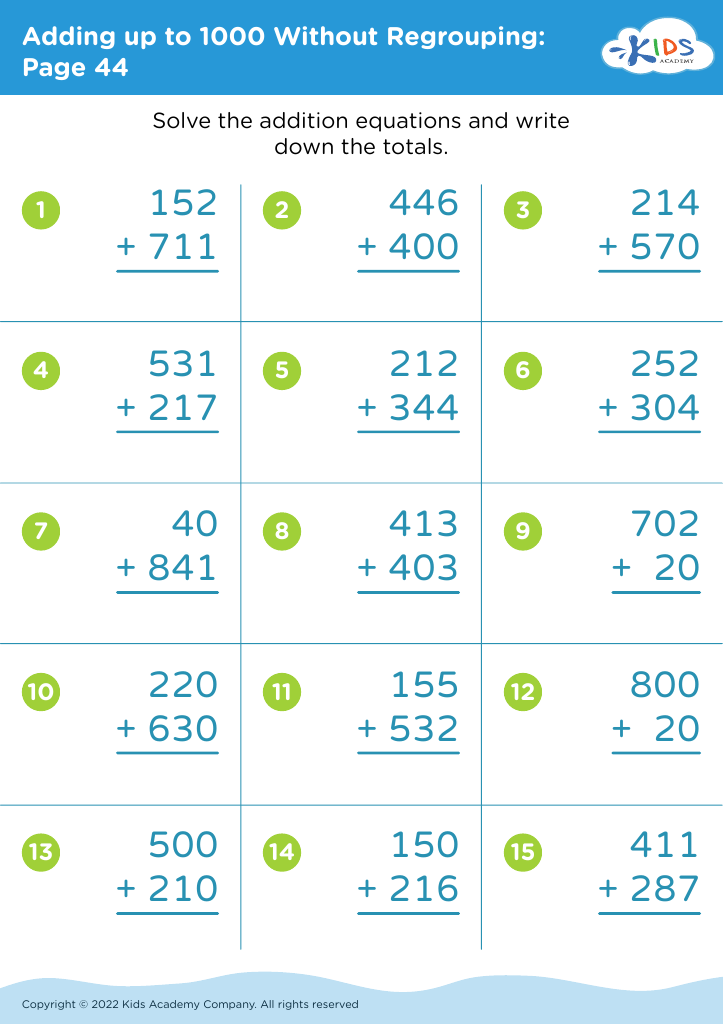


Understanding fraction comparison and adding up to 1000 without regrouping is essential for young learners aged 3-8 as it lays the foundation for their mathematical thinking. At this age, children are developing critical cognitive skills, and these concepts help them grasp more complex ideas later on.
Fraction comparison teaches children to navigate proportions and relationships, enhancing their ability to think analytically. It encourages them to visualize parts of a whole, fostering spatial awareness and problem-solving skills. Mastering fraction concepts can also enhance their everyday activities, like sharing snacks or comparing sizes.
Similarly, understanding how to add up to 1000 without regrouping promotes number fluency. This skill builds confidence and promotes mental math strategies, allowing children to manipulate smaller numbers before moving to larger sums. Strong number sense is crucial as they progress in math, reducing anxiety around calculations and promoting perseverance when faced with challenges.
Moreover, when parents and teachers actively engage in these learning areas, they promote a positive attitude towards math. This positive reinforcement is often linked to a lifelong love of learning and academic success, making it vital for both educators and caregivers to prioritize these concepts in early education.