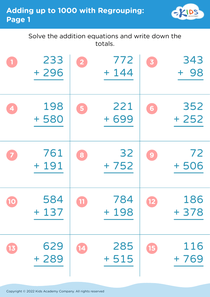
Improving counting skills Adding up to 1000 Without Regrouping Worksheets for Ages 3-8
4 filtered results
-
From - To
Enhance your child's counting skills with our engaging "Improving Counting Skills: Adding Up to 1000 Without Regrouping" worksheets, specifically designed for children aged 3-8. These worksheets provide a fun and interactive approach to mastering addition without regrouping, helping young learners build confidence as they explore numbers. By practicing simple addition problems, children will develop their numerical comprehension and reinforce vital math foundations. Ideal for classroom use or home learning, our worksheets offer a structured way to improve both counting skills and mathematical fluency. Join the journey to numerical mastery and watch your child's skills blossom as they learn through play!
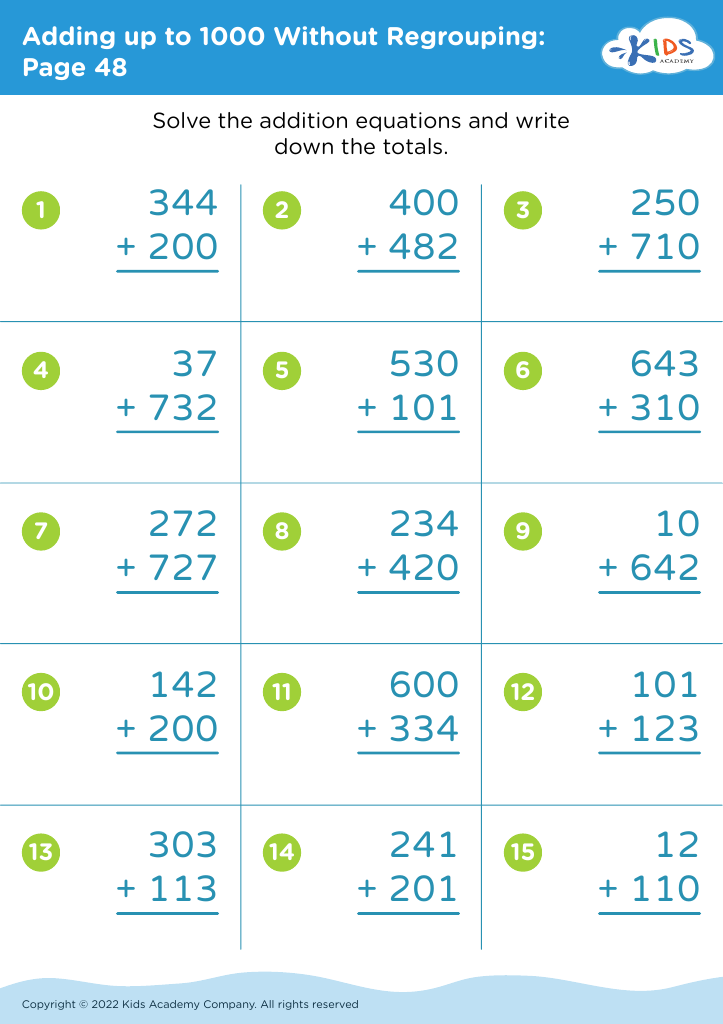
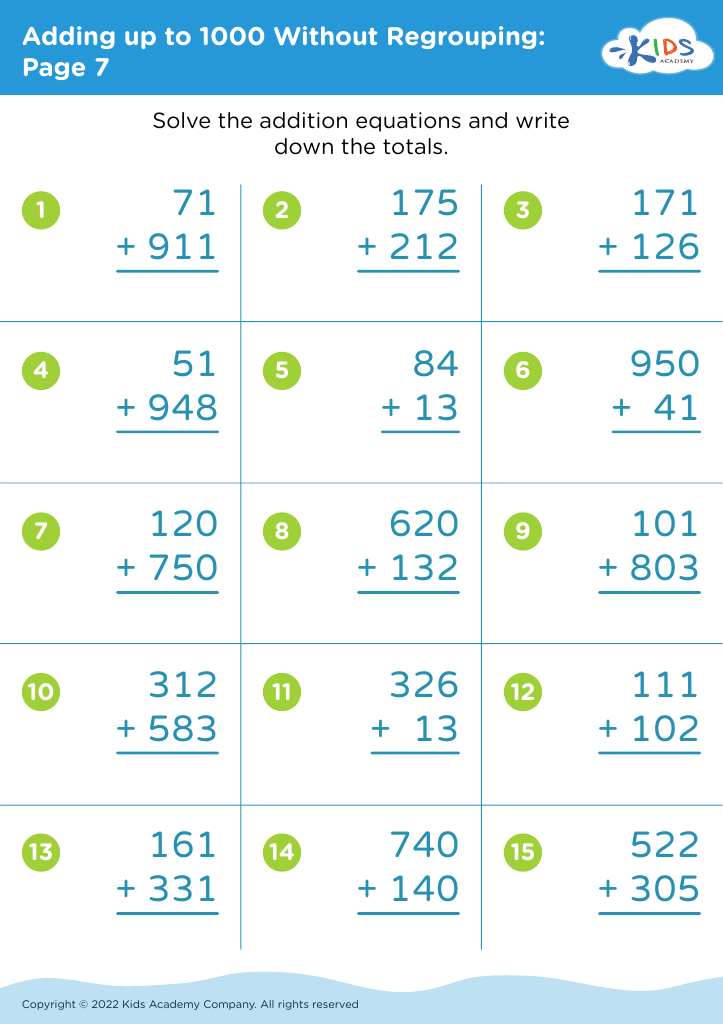
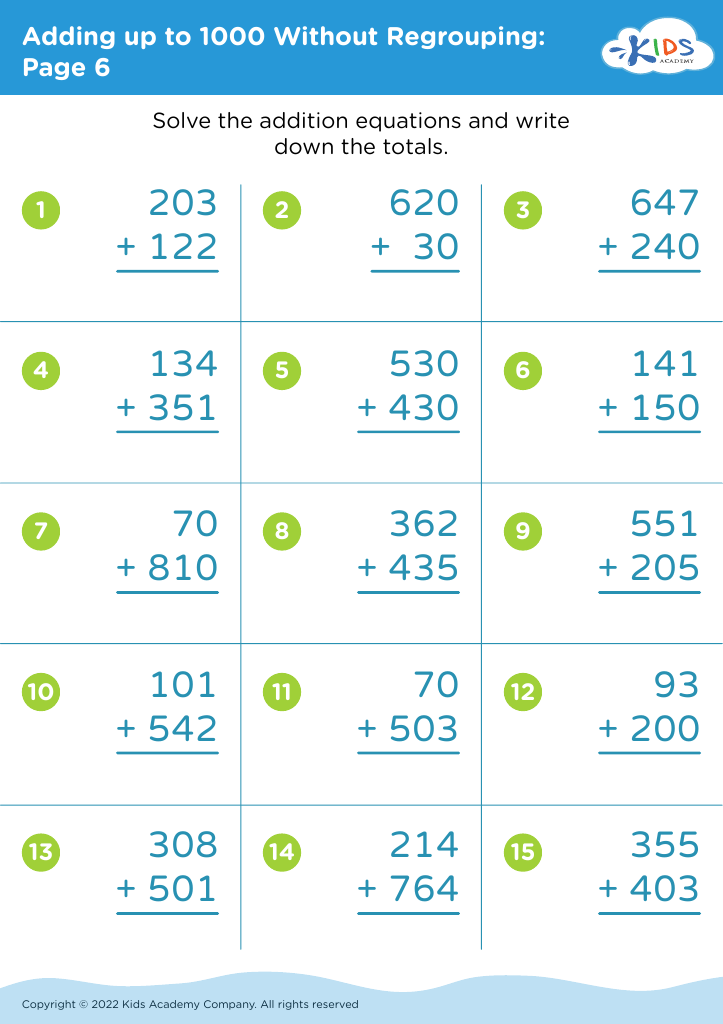
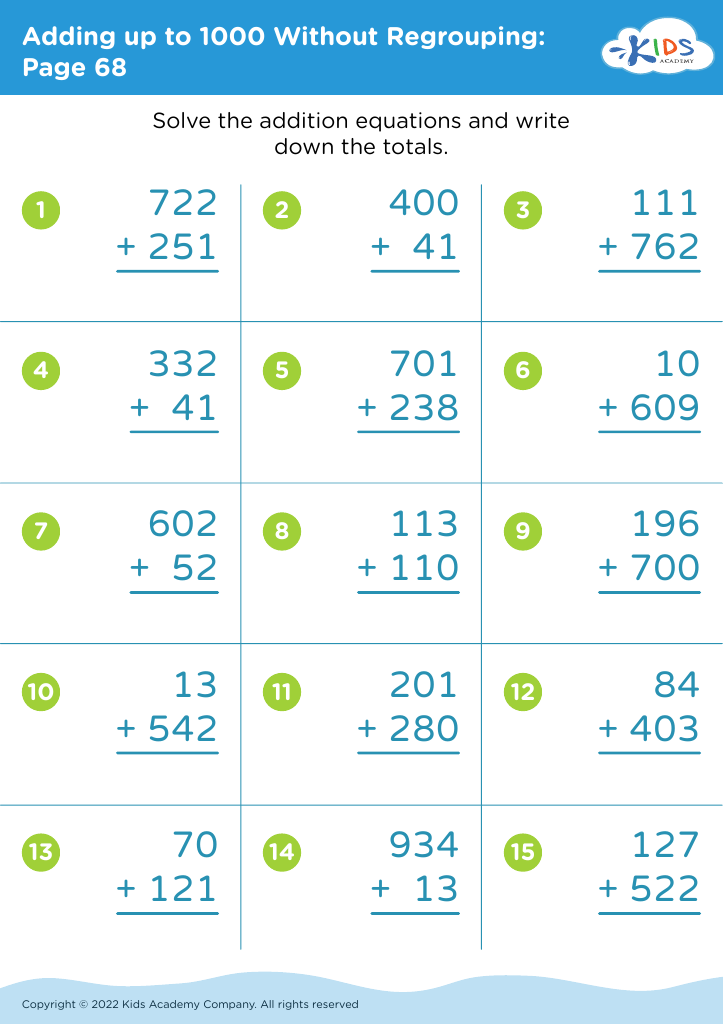


Improving counting skills, especially the ability to add up to 1000 without regrouping, is crucial for children aged 3-8 for several reasons. First, strong counting skills form the foundation of mathematics, allowing children to engage with more complex concepts later in their education, such as addition, subtraction, and beyond. Early proficiency in counting promotes number sense, which is essential for understanding quantities, patterns, and relationships between numbers.
For parents and teachers, supporting children in mastering these skills encourages a positive attitude toward math. By developing confidence through practice, children are more likely to engage with mathematical challenges, leading to better long-term learning outcomes. Furthermore, strong counting abilities enhance problem-solving skills and critical thinking, which are valuable not only in academic settings but in everyday life.
Additionally, as children approach larger numbers like 1000, they begin to comprehend larger-scale mathematical concepts and operations. By providing opportunities for practice in a fun and engaging manner, adults can make learning enjoyable, helping children develop a lifelong love for math. In essence, improving counting skills at a young age sets the stage for future academic success and fosters valuable cognitive abilities necessary for everyday decision-making.