Improving math skills Adding up to 1000 Without Regrouping Worksheets for Ages 3-8
3 filtered results
-
From - To
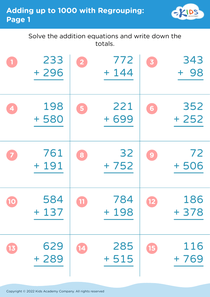
Boost your child’s math skills with our "Adding Up to 1000 Without Regrouping" worksheets, specially designed for ages 3-8. These engaging and colorful resources help young learners practice addition in a fun, stress-free way. By focusing on numbers up to 1000, children will build confidence while improving their mental math abilities. Each worksheet encourages critical thinking and problem-solving without the complexity of regrouping, making it perfect for foundational learning. Ideal for use at home or in the classroom, these worksheets foster a love for math and determination to succeed. Start your child's math journey with our enriching activities today!
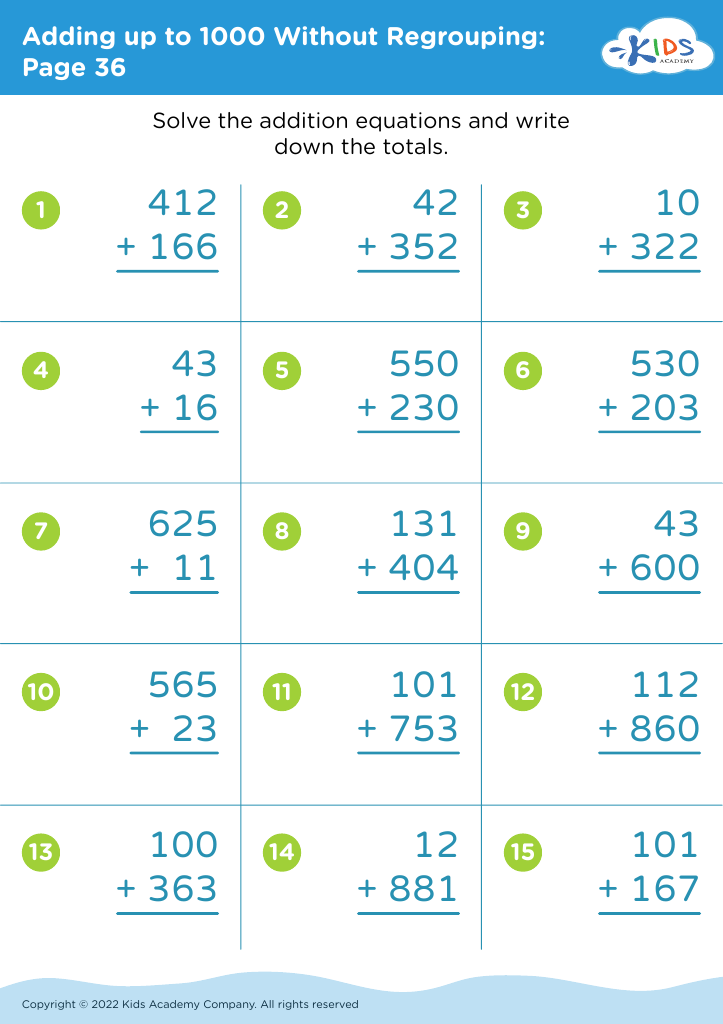
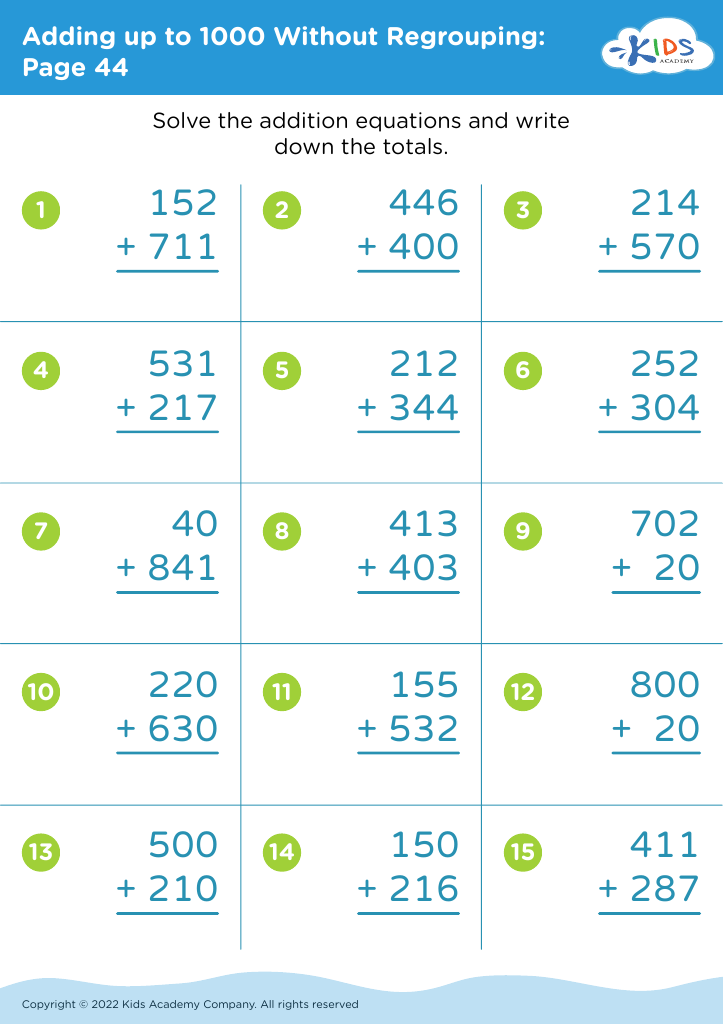
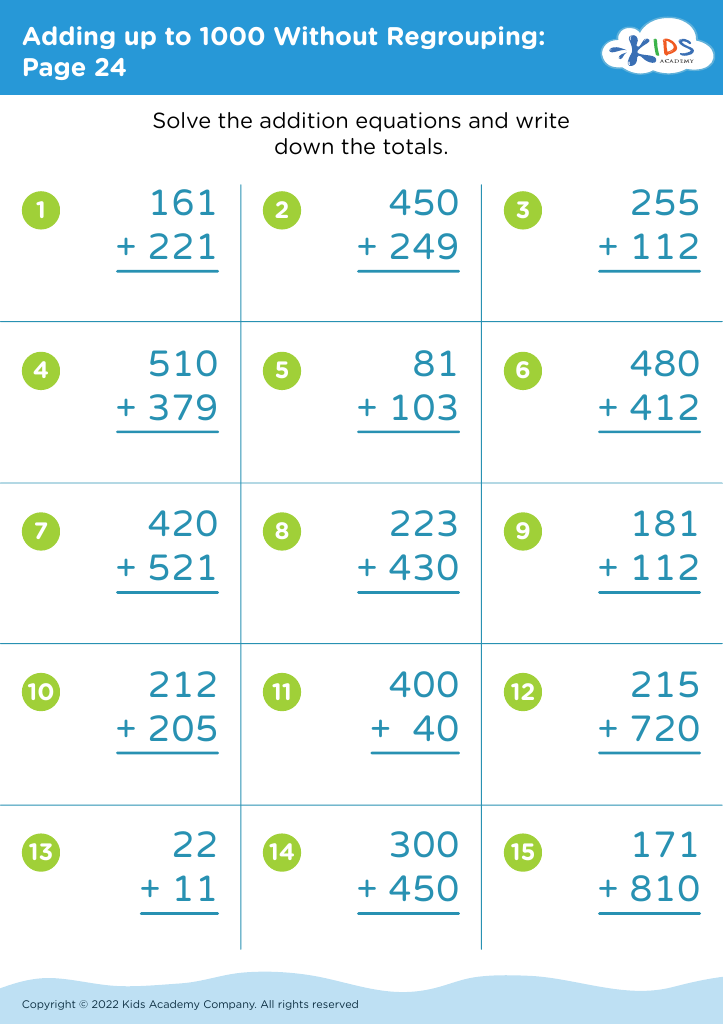


Improving math skills, particularly adding up to 1000 without regrouping, is crucial for children aged 3-8 as it lays the foundation for their future mathematical understanding. Early arithmetic skills foster confidence and comfort with numbers, which are essential for academic success. Mastery in adding without regrouping ensures that young learners grasp the concept of place value, understand the number system, and develop an intuitive sense of quantity.
Furthermore, engaging children with fun and interactive addition activities helps nurture critical thinking and problem-solving abilities. As students build proficiency, it cultivates a growth mindset, encouraging them to take on more challenging math concepts later on.
Parents and teachers play a vital role in this developmental phase. When they prioritize improving math skills, they empower children to become independent and creative learners. Real-life applications of addition can enhance engagement, making math not only educational but also enjoyable. Ultimately, strong early math skills will support success in various subjects and life’s challenges, equipping children with essential skills they will use throughout their education and beyond. By investing time in these foundational skills, parents and teachers can foster a positive attitude toward mathematics and create a brighter future for young learners.