Number Recognition Adding up to 1000 Without Regrouping Worksheets for Ages 3-8
7 filtered results
-
From - To
Help your child master number recognition and addition with our engaging "Number Recognition Adding up to 1000 Without Regrouping Worksheets," designed for ages 3-8. These worksheets provide a fun way to build essential math skills through colorful visuals and interactive challenges. Children will learn to recognize numbers, develop counting strategies, and practice addition up to 1000, all without the need for regrouping. Tailored for early learners, these resources foster a solid foundational understanding of numbers while encouraging independent practice. Perfect for home or classroom use, our worksheets make learning math enjoyable and effective at any age! Explore today!
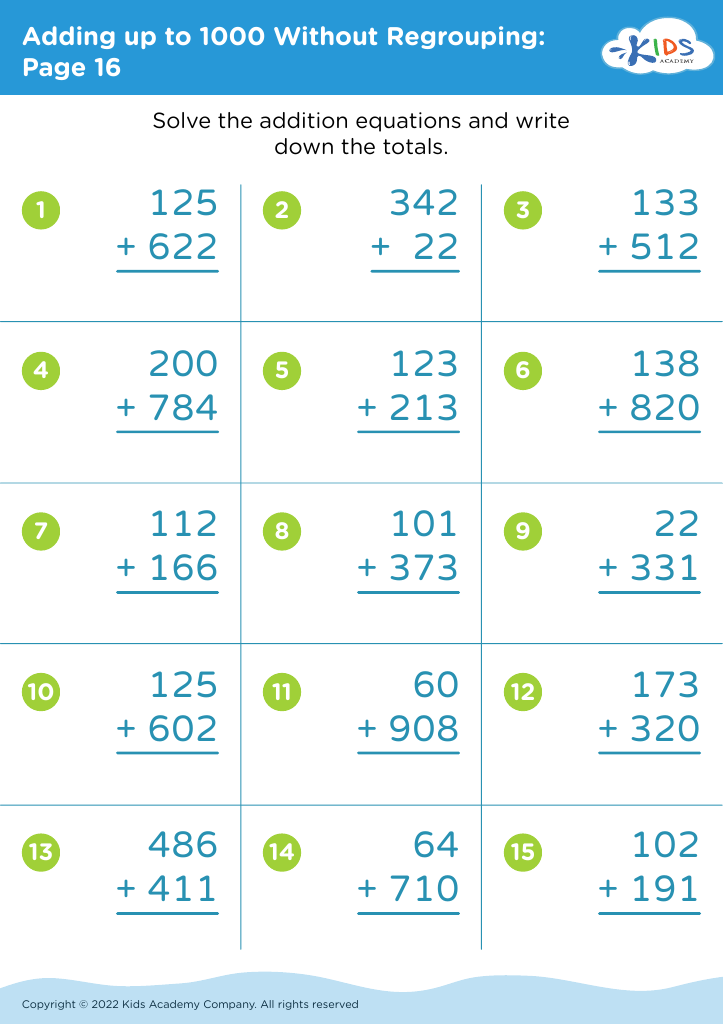
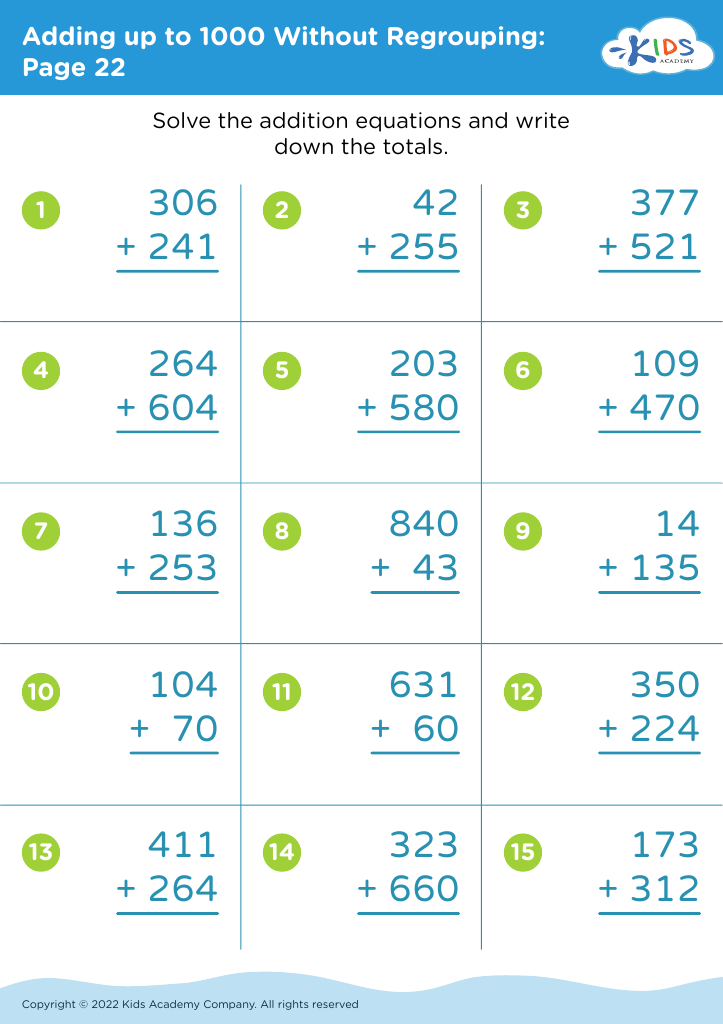
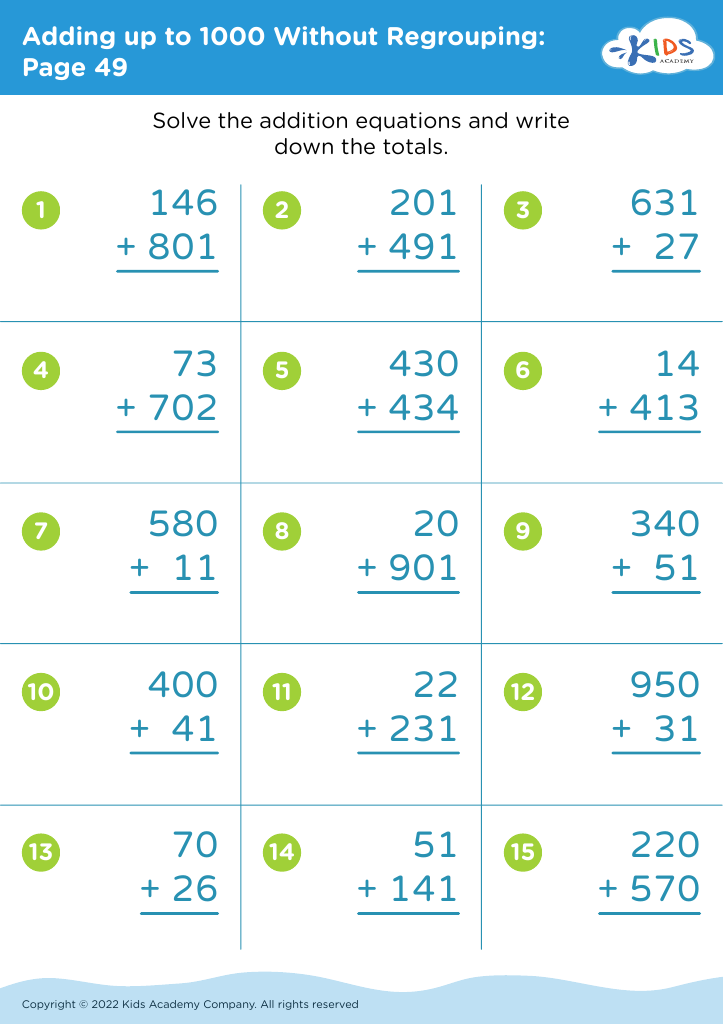
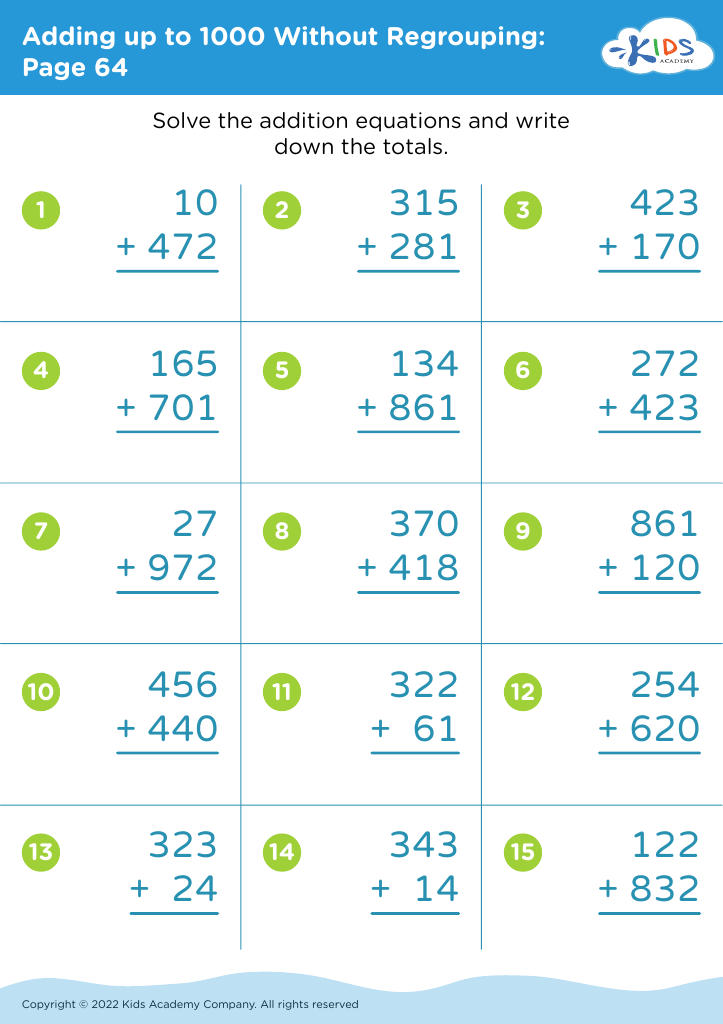
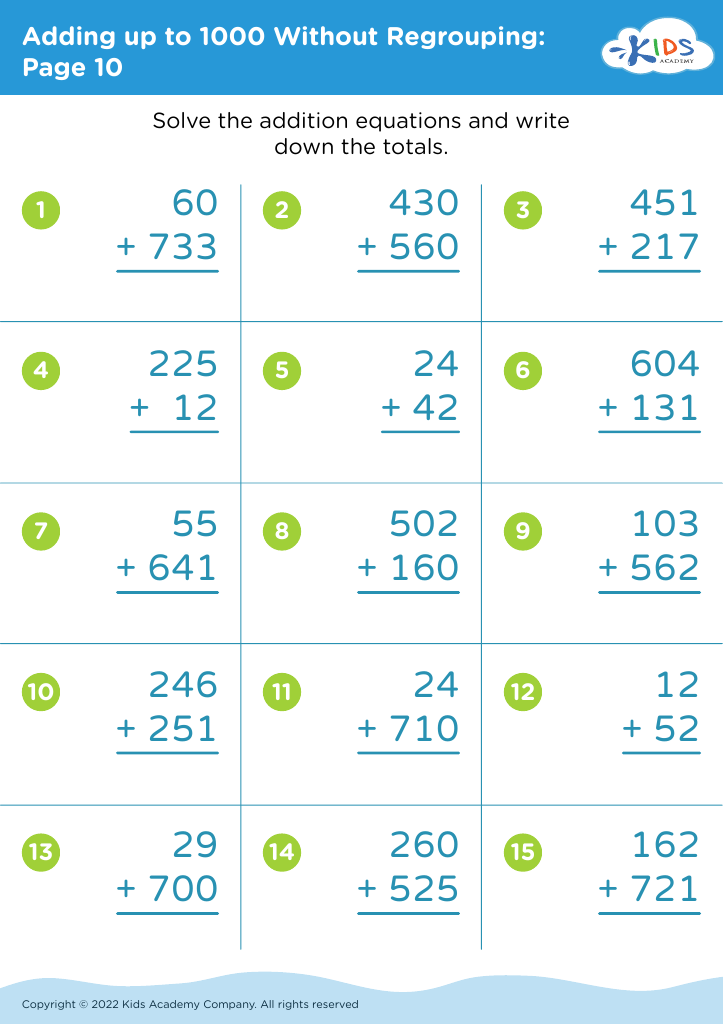
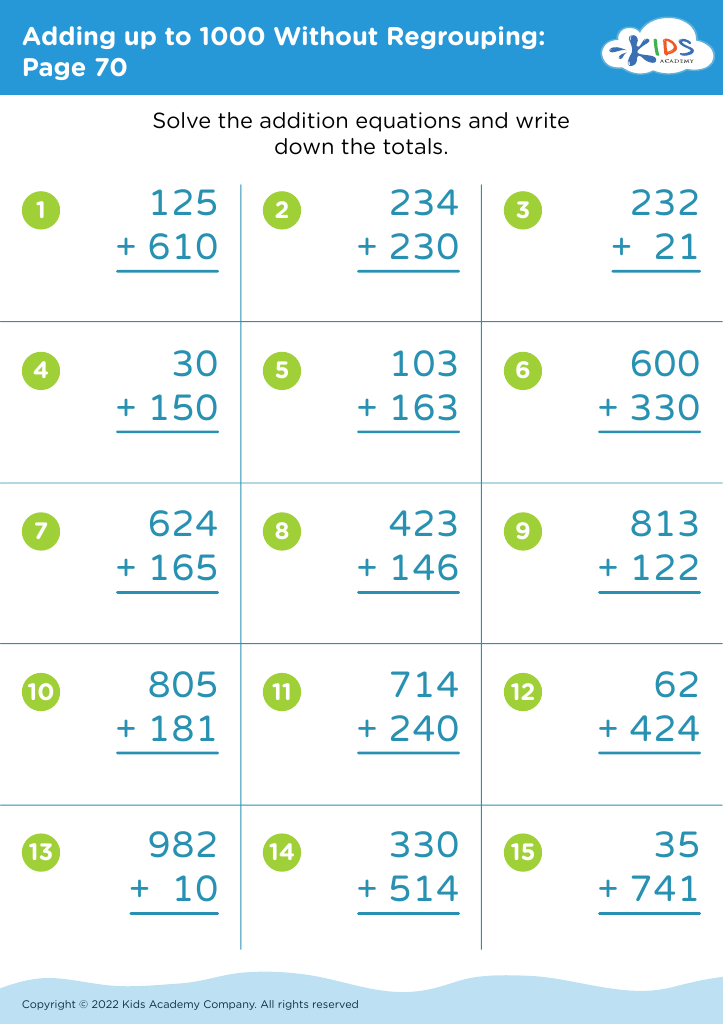
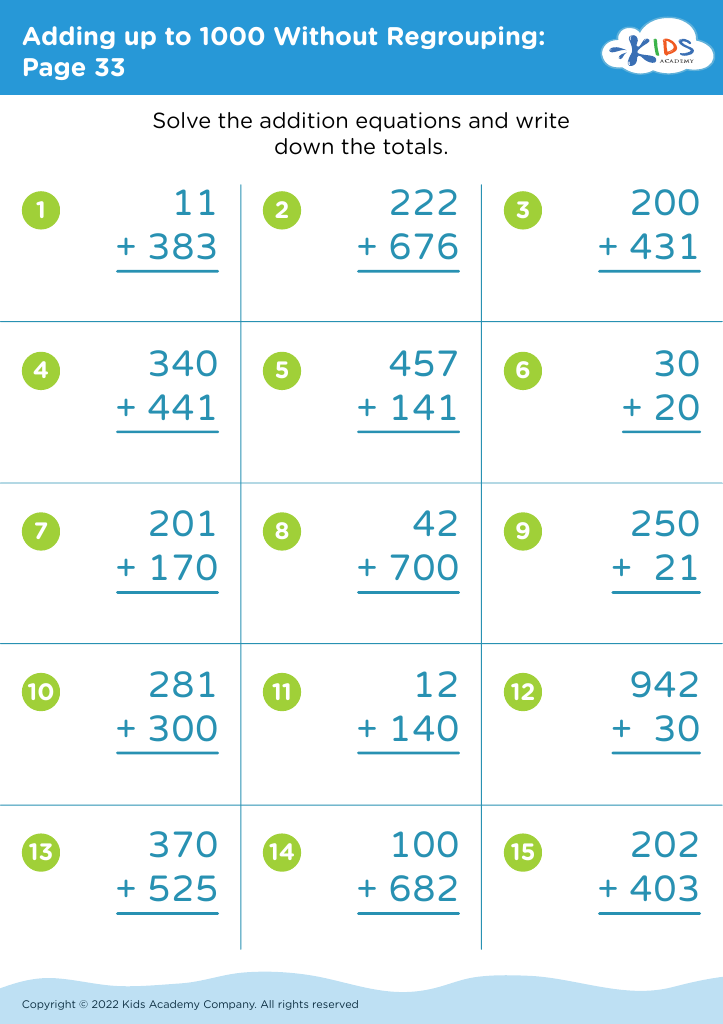


Number recognition and the ability to perform addition without regrouping are foundational skills crucial for early childhood development in children aged 3-8. By recognizing numbers and understanding their values, children build a strong mathematical foundation, which fosters confidence and encourages them to engage with math concepts more deeply. These skills promote numeracy, a key component that impacts later academic success.
When children can comfortably add numbers up to 1000 without regrouping, they develop critical thinking skills and an understanding of relationships between numbers. This not only aids in everyday problem-solving but also sets the stage for more complex mathematics in the future. Additionally, mastering these skills at an early age supports cognitive growth, enhances memory, and improves concentration.
Parents and teachers play a vital role in encouraging this development. Providing fun and engaging learning activities can cultivate a child's interest in mathematics. Early interventions can help identify and support any difficulties, ensuring children feel successful and motivated. Furthermore, building a cooperative environment between home and school fosters continuous learning, making math an enjoyable and integral part of a child's education. Ultimately, investing in these areas ensures a well-rounded development and prepares children for future academic challenges.