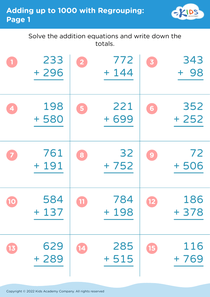
Reading comprehension Adding up to 1000 Without Regrouping Worksheets for Ages 3-8
4 filtered results
-
From - To
Explore our engaging "Reading Comprehension Adding Up to 1000 Without Regrouping Worksheets" designed for children aged 3-8. These worksheets combine essential reading skills with foundational math concepts, ensuring a comprehensive learning experience. Young learners will practice adding numbers up to 1000 without regrouping while enhancing their reading comprehension. Our interactive activities encourage critical thinking and promote mathematical understanding through fun, relatable stories. Ideal for classroom and home use, these worksheets can effectively support early learners in becoming proficient in both literacy and numeracy. Foster your child's love for learning today and watch their confidence soar!
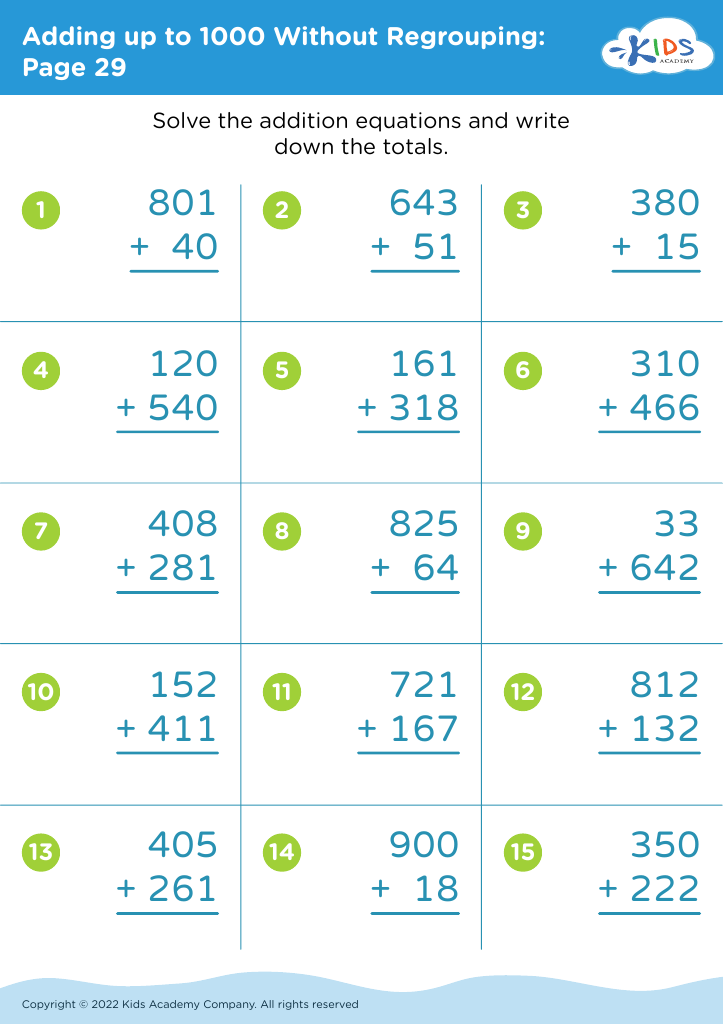
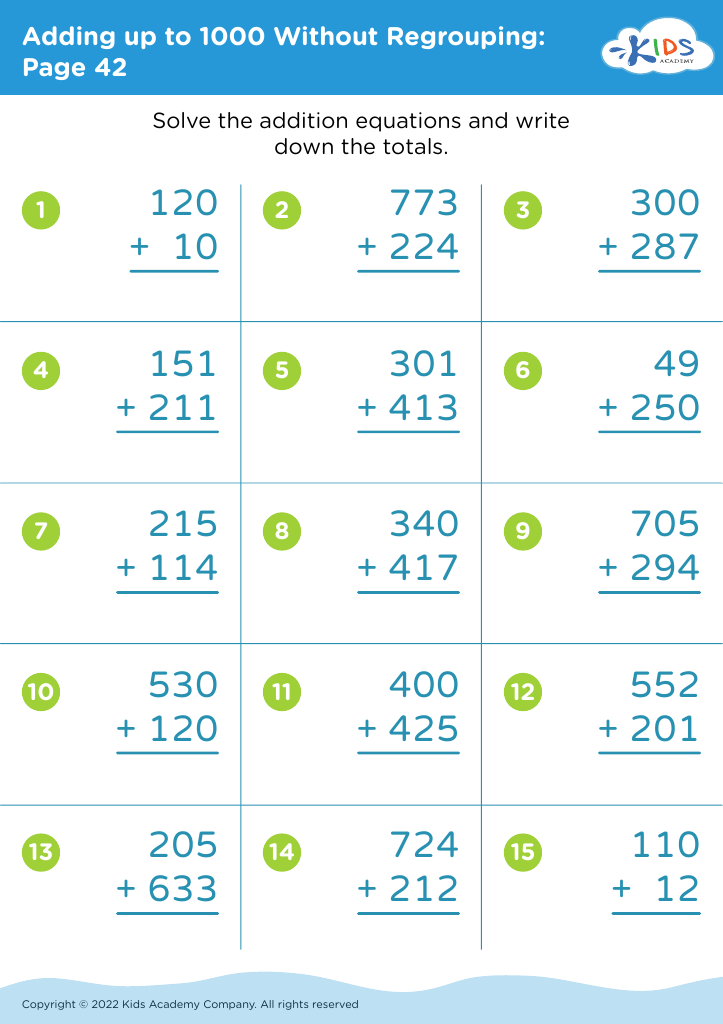
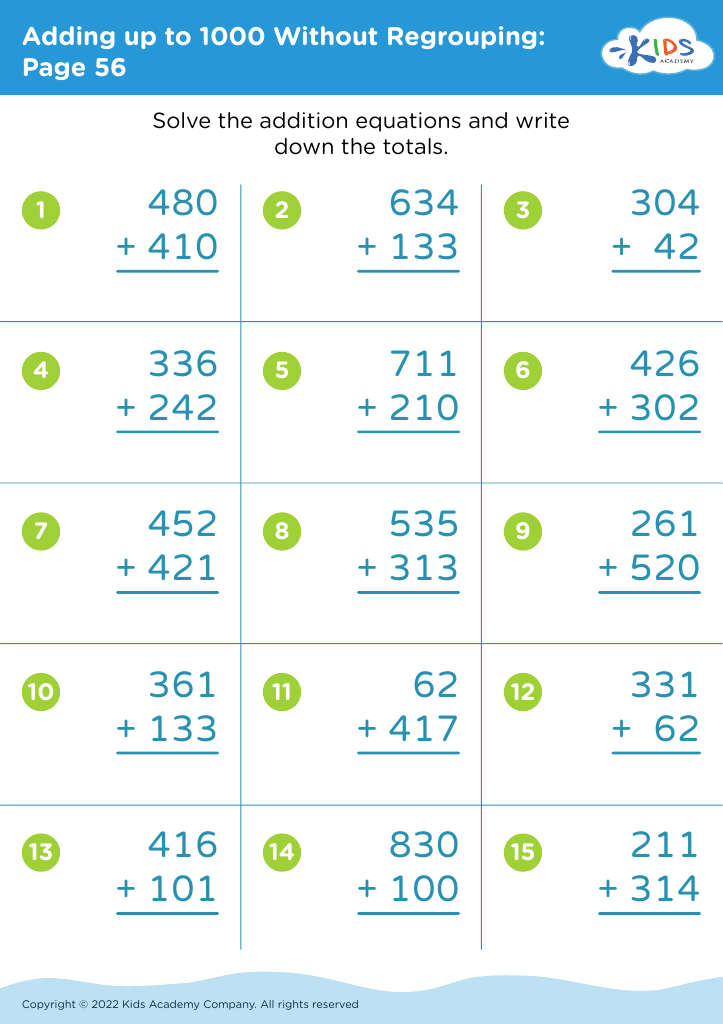
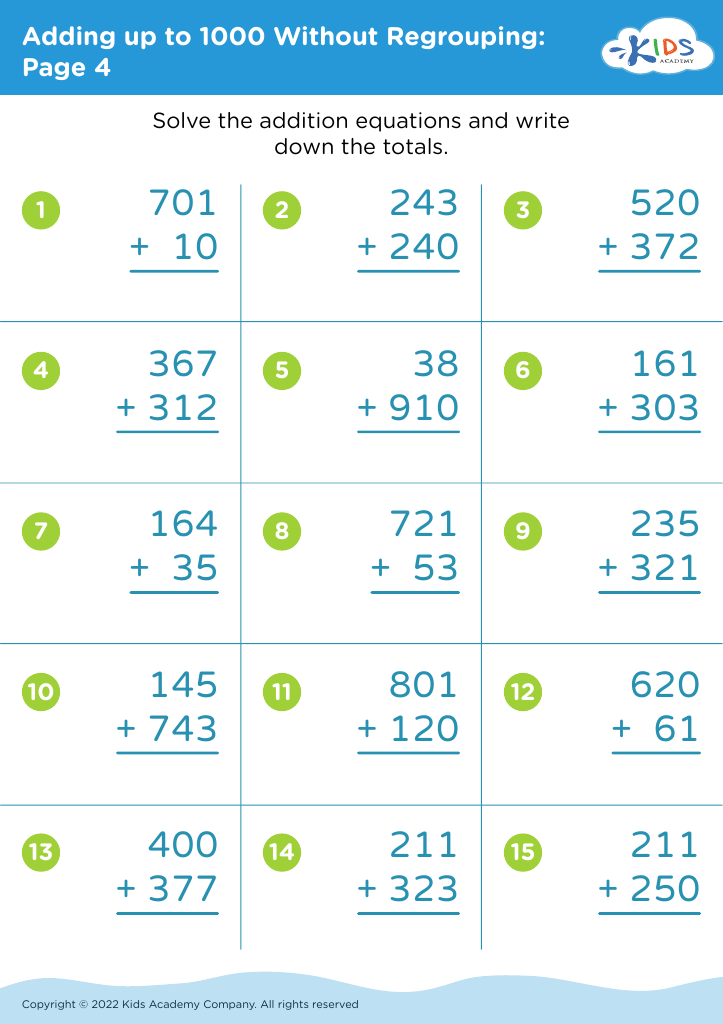


Reading comprehension is essential for young learners, especially for ages 3-8, as it lays the foundation for future academic success. When children develop strong reading comprehension skills, they are better equipped to understand and engage with texts, fostering a love for reading that lasts a lifetime. This age group is also critical for introducing foundational math concepts, like adding up to 1000 without regrouping, which supports cognitive development and logical reasoning.
Teachers and parents play a pivotal role in nurturing these skills. By prioritizing reading comprehension alongside math skills, they help children make connections between language and numerical understanding, enhancing overall cognitive development. Additionally, engaged readers are more inclined to explore mathematical problems narratively, leading to enriched problem-solving abilities.
Moreover, encouraging interactions during read-aloud sessions, such as asking questions or discussing stories, not only bolsters comprehension but also promotes numeracy through age-appropriate mathematical concepts. As young children learn in context, these shared experiences help solidify their understanding of counting, addition, and sequencing.
By fostering both reading comprehension and basic math skills in tandem, parents and teachers create a holistic learning environment conducive to critical thinking and lifelong learning. Ultimately, these foundational skills empower children to succeed in various academic pursuits and life challenges.