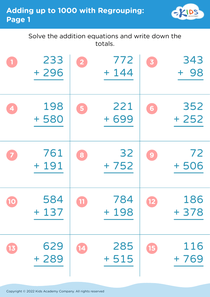
Recognizing shapes Adding up to 1000 Without Regrouping Worksheets for Ages 3-8
3 filtered results
-
From - To
Welcome to our "Recognizing Shapes Adding Up to 1000 Without Regrouping" worksheets designed for children ages 3-8! Our engaging activities blend shape recognition and basic addition skills to create a fun learning experience. These worksheets encourage young learners to identify different shapes while practicing addition with numbers up to 1000, all without regrouping, making math accessible and exciting. Ideal for teachers and parents, our resources promote foundational math skills and shape recognition in a playful way. Explore our collection to help your child develop confidence in their mathematical abilities while sparking their creativity through vibrant designs and interactive challenges!
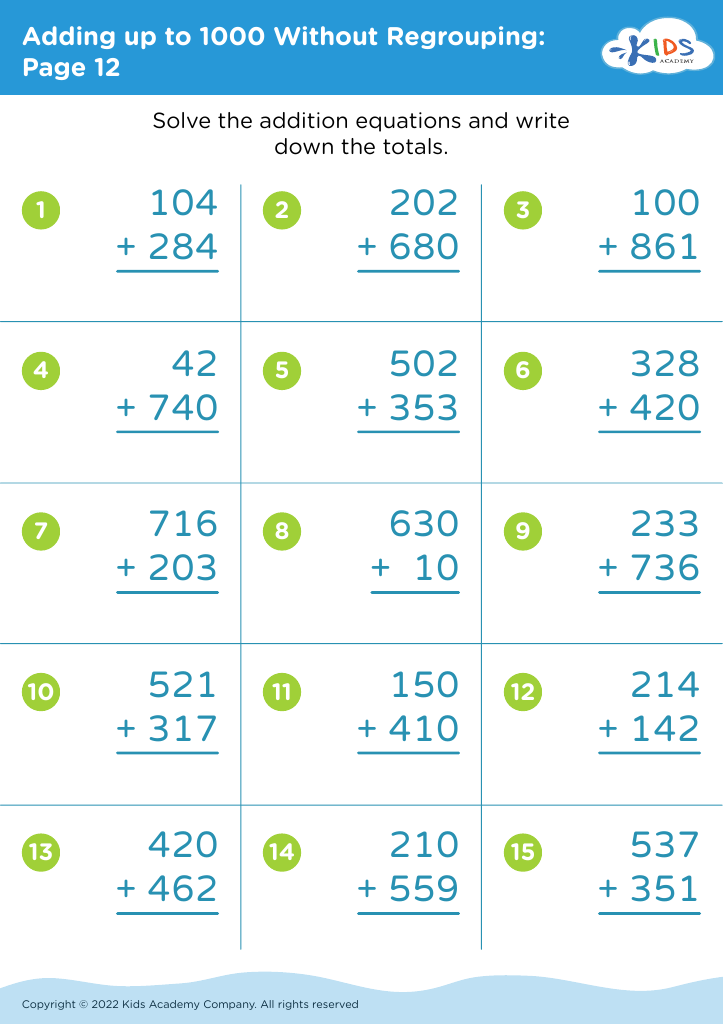
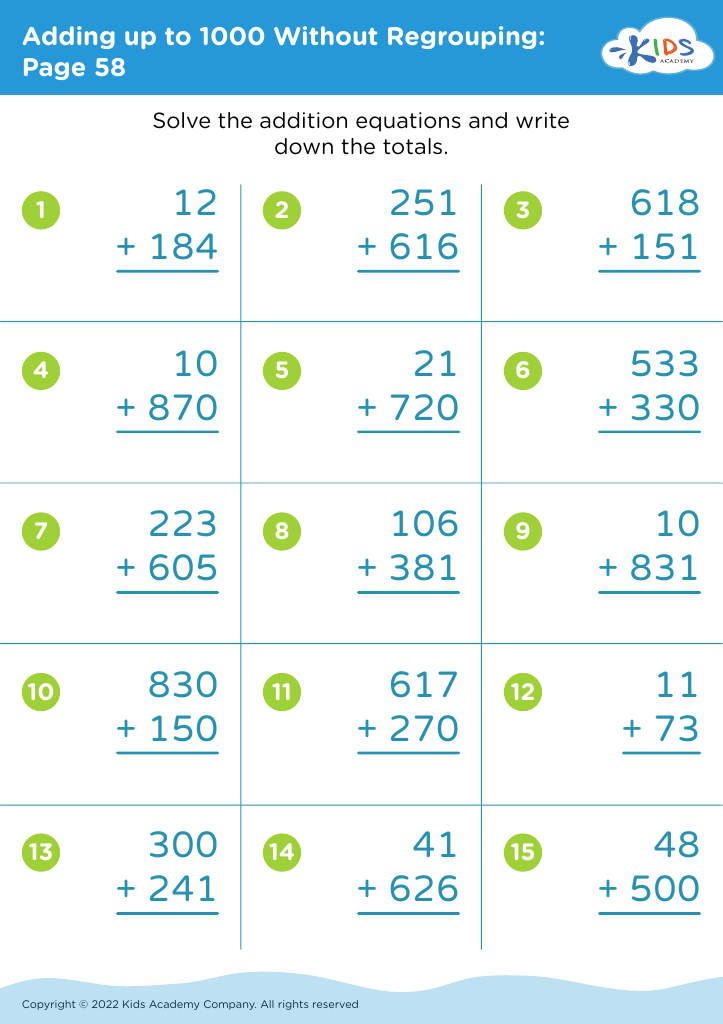
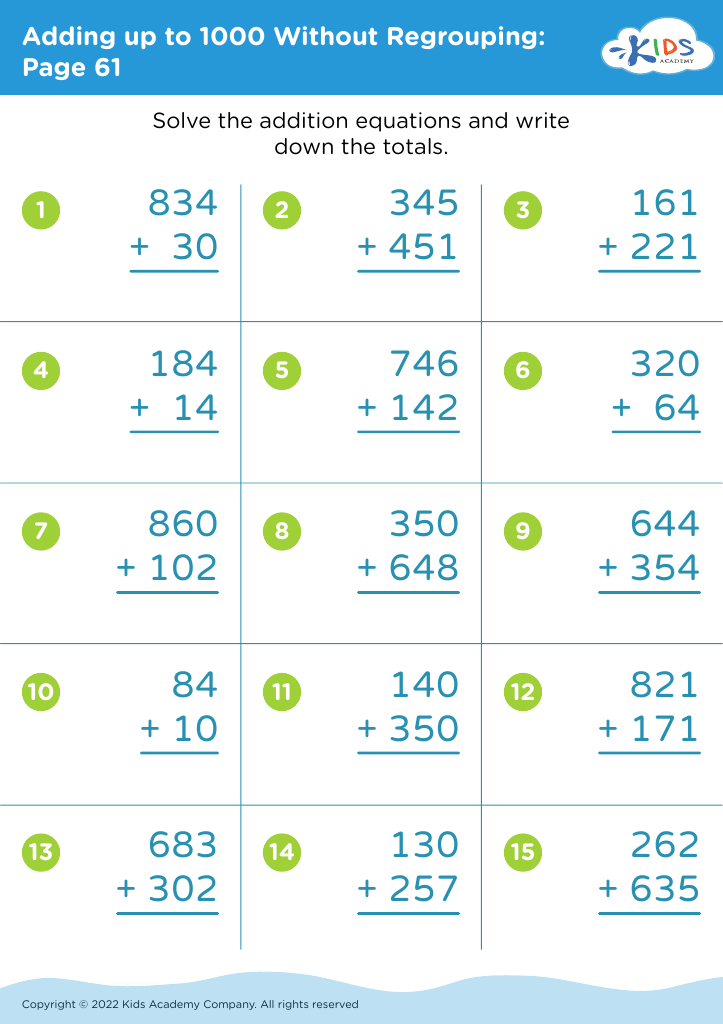


Recognizing shapes and mastering basic addition skills, such as adding up to 1000 without regrouping, are foundational competencies crucial for the development of children aged 3-8. Engaging with shapes enhances spatial awareness, essential for problem-solving and critical thinking. As children identify and classify geometric shapes, they cultivate their understanding of the world around them, which supports literacy and math skills connection through visual cues.
Simultaneously, learning to add without regrouping develops numerical fluency, helping children grasp fundamental math concepts necessary for later, more complicated arithmetic. Understanding addition fosters confidence and encourages a positive attitude toward mathematics, which can influence their overall academic success. When curricula support these skills, it sets the groundwork for future learning, enabling students to tackle problems independently.
Parents and teachers play a pivotal role in reinforcing these skills through educational activities and real-life applications. By focusing on shape recognition and additive skills, they guide children in creating essential cognitive maps, enhancing their learning experiences, and preparing them for future educational challenges. Investing in these abilities not only benefits the child's intellectual growth but also increases their enthusiasm and engagement in learning, fostering a lifelong love of knowledge.