Basic Math Skills Adding up to 1000 Worksheets for Ages 3-8
13 filtered results
-
From - To
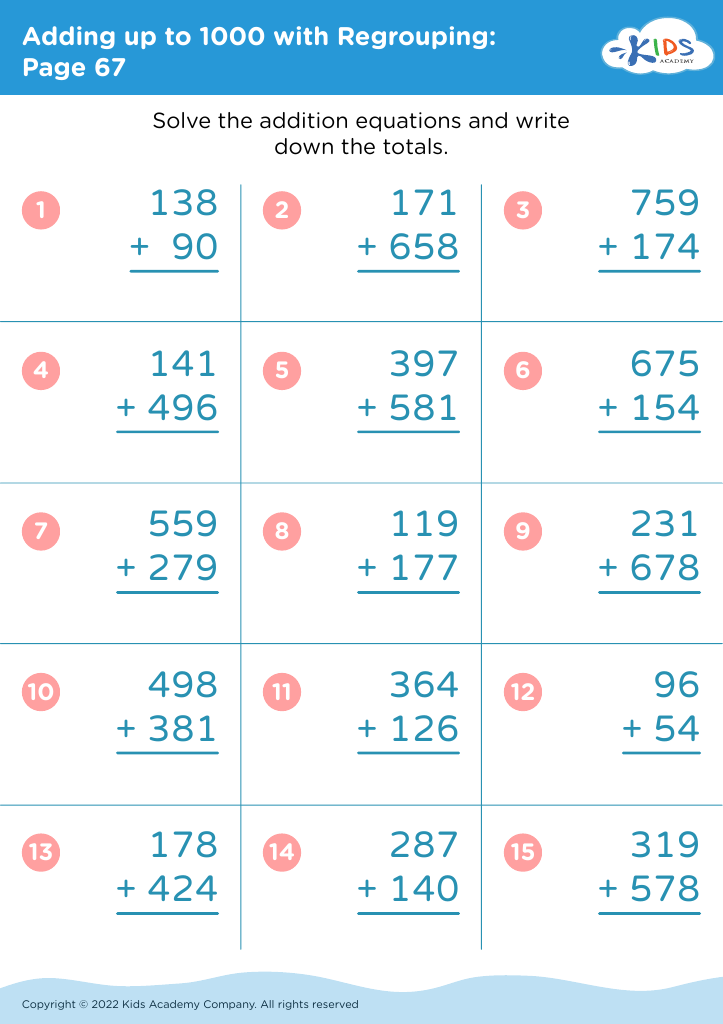
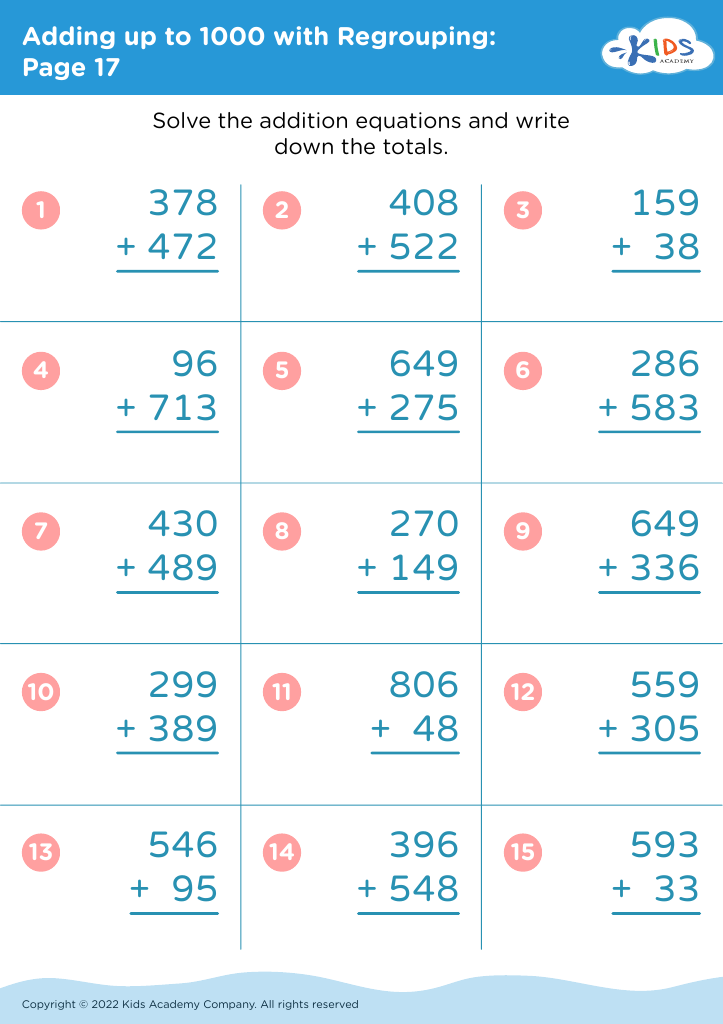
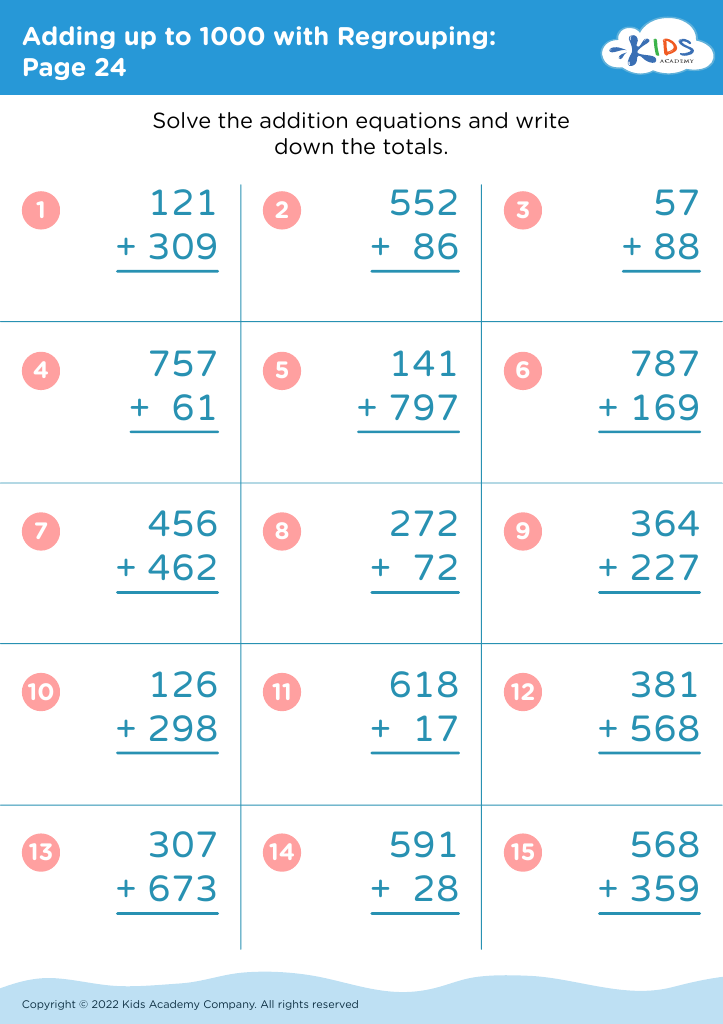
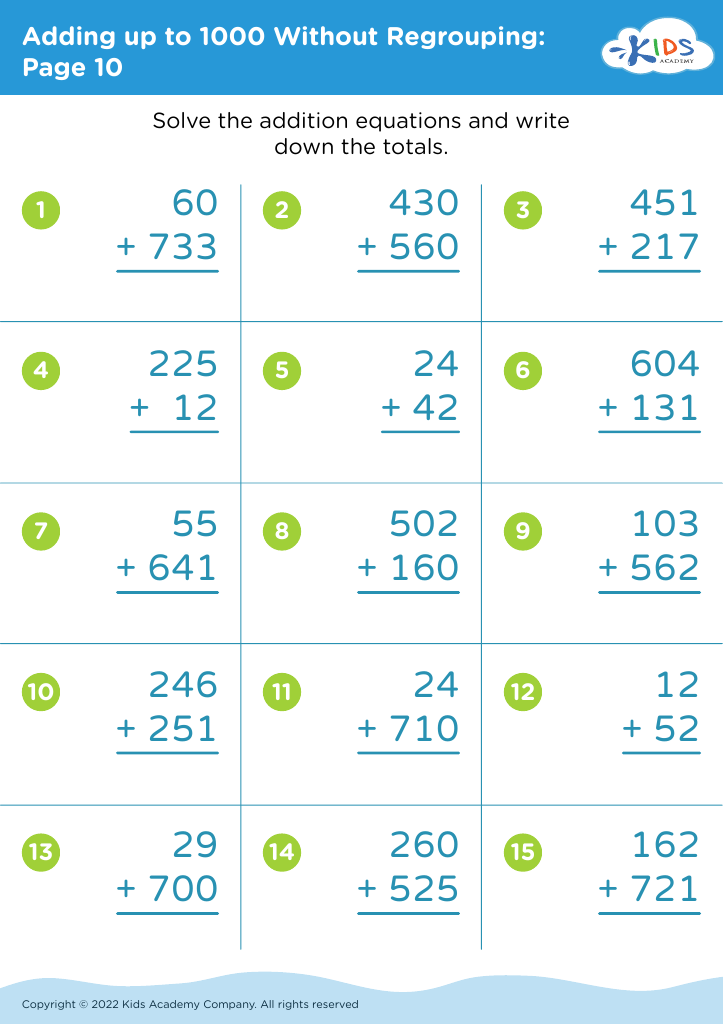
Enhance your child's mathematical abilities with our "Basic Math Skills Adding up to 1000 Worksheets for Ages 3-8". These engaging worksheets are designed to help young learners confidently master addition, reinforcing their understanding with fun and educational activities. Catering to children aged 3 to 8, the exercises progressively build on their skills, ensuring a solid arithmetic foundation. Each worksheet combines clear instructions with colorful visuals to maintain interest and encourage independent learning. Perfect for home or classroom use, these resources support early math success, helping your child to achieve their full potential in a creative and supportive environment.
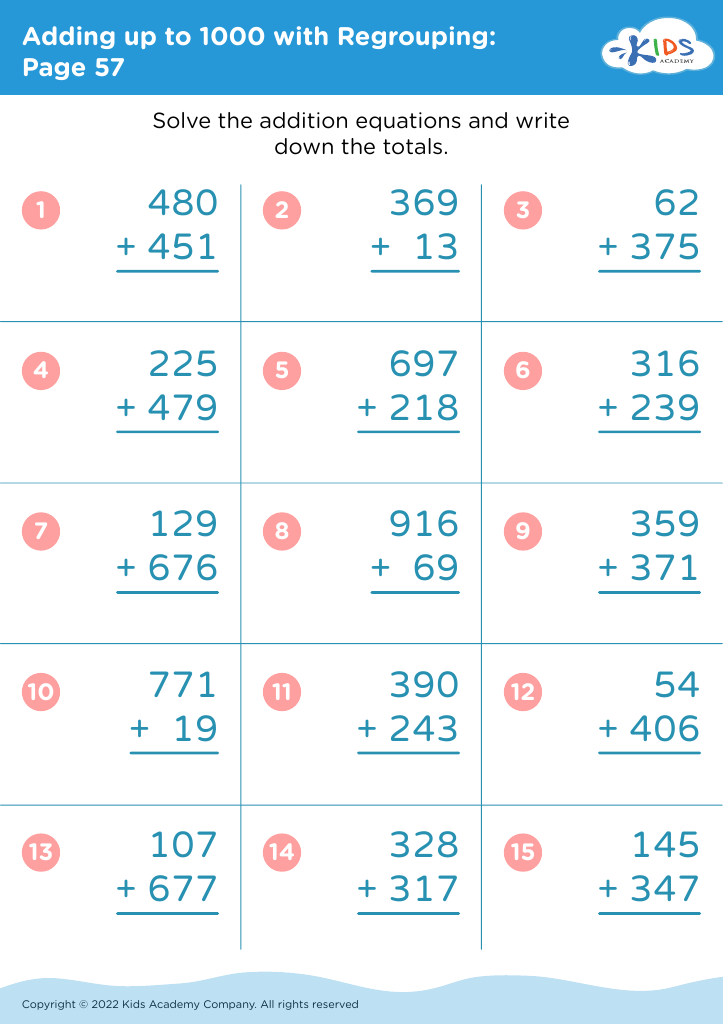
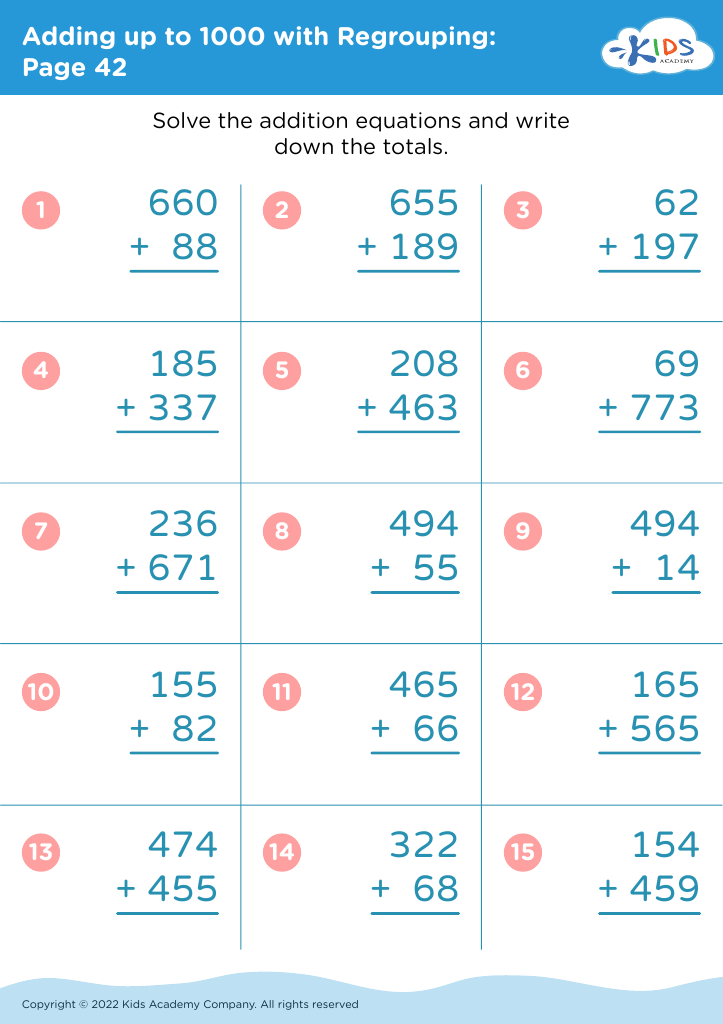
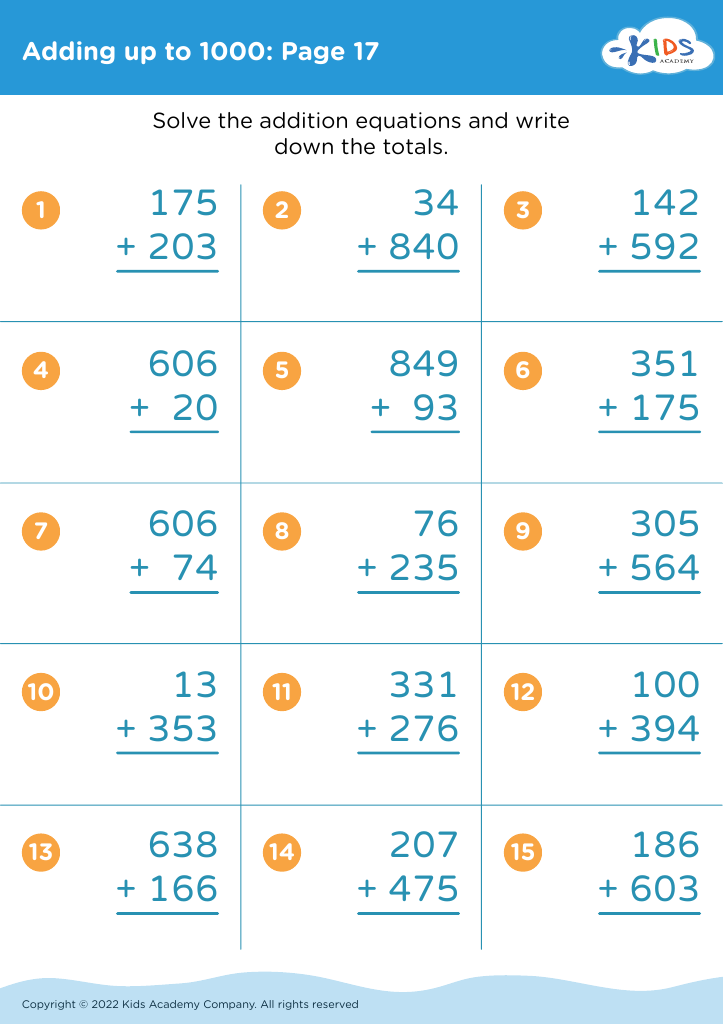
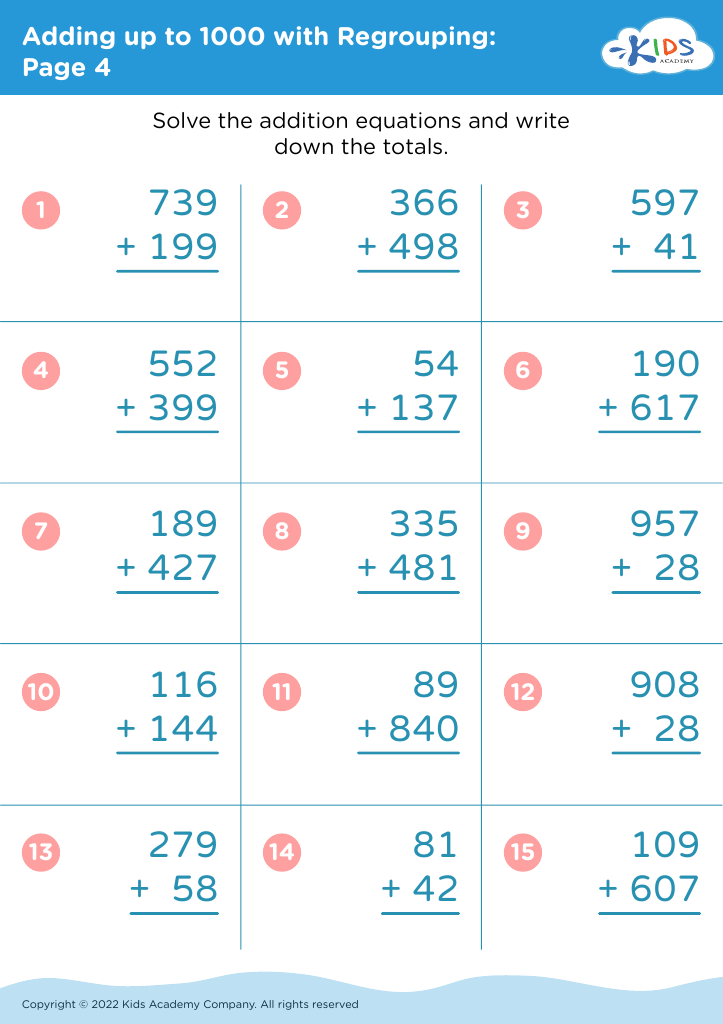
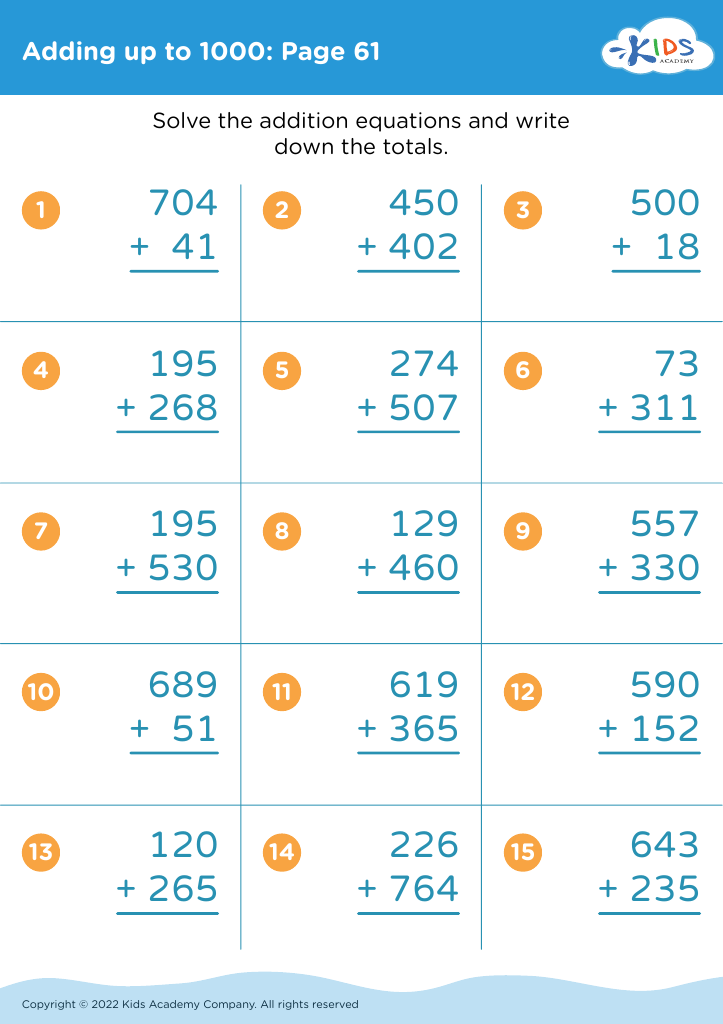
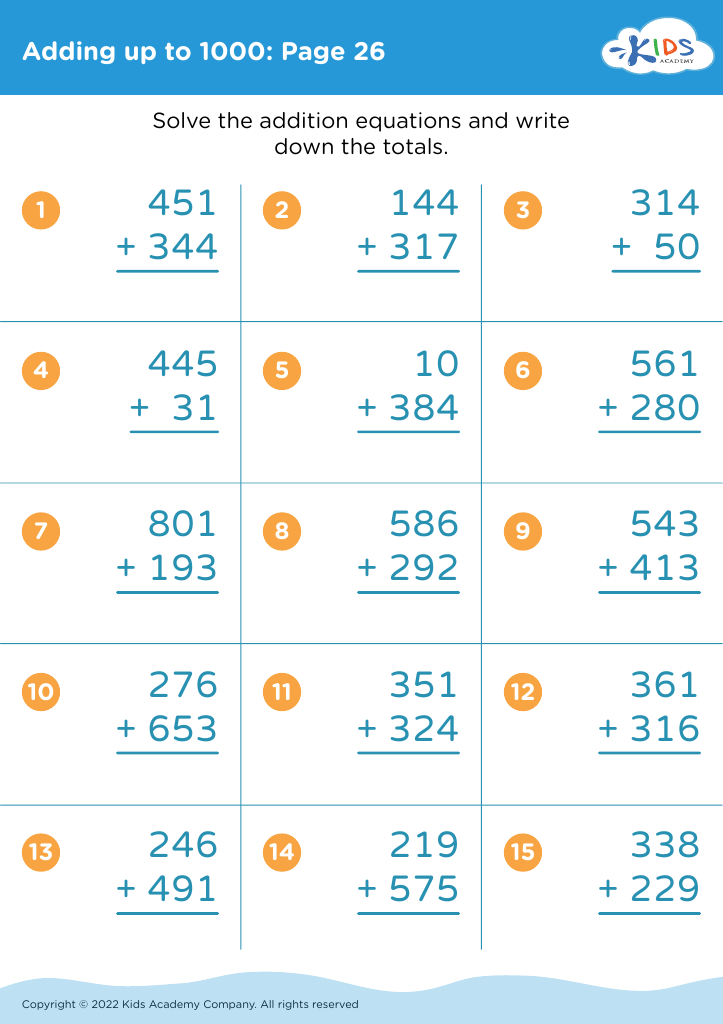
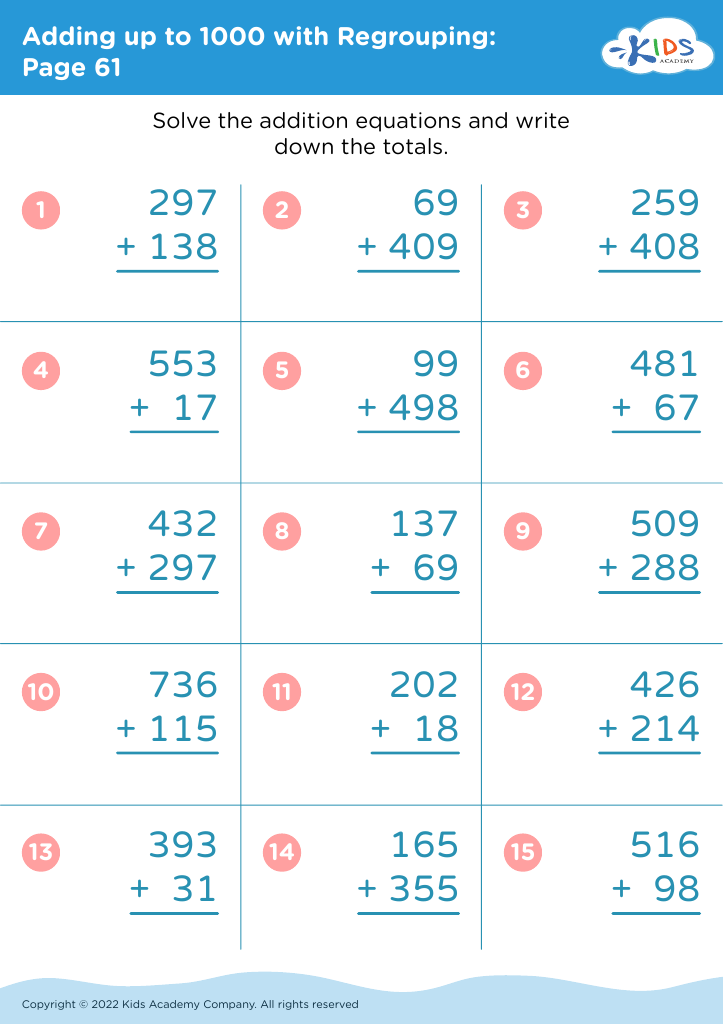
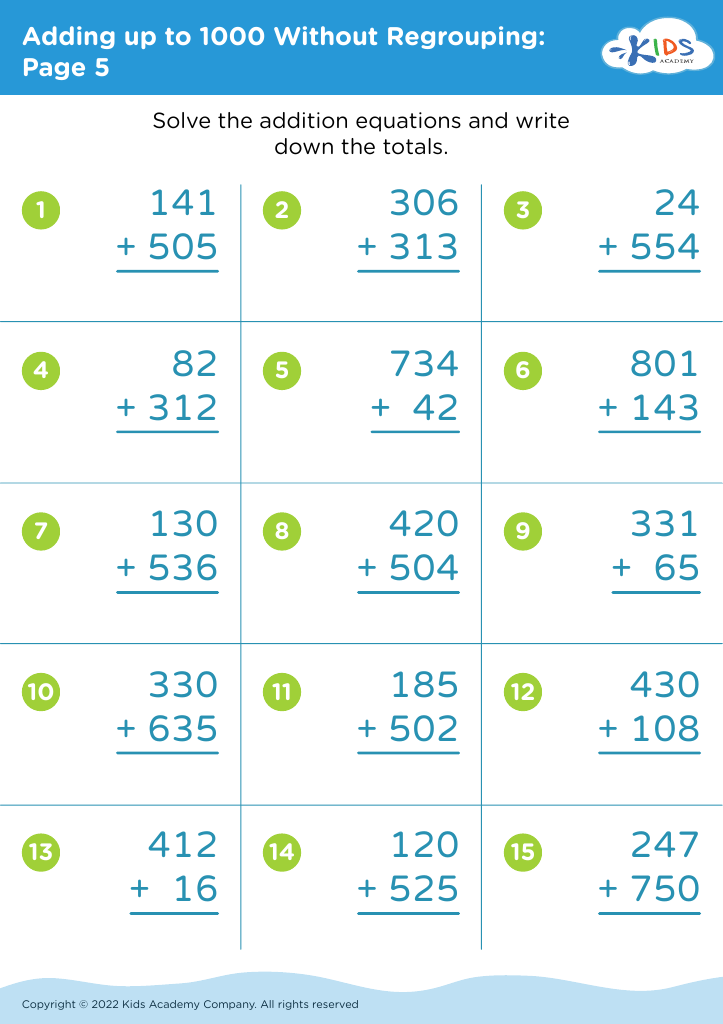
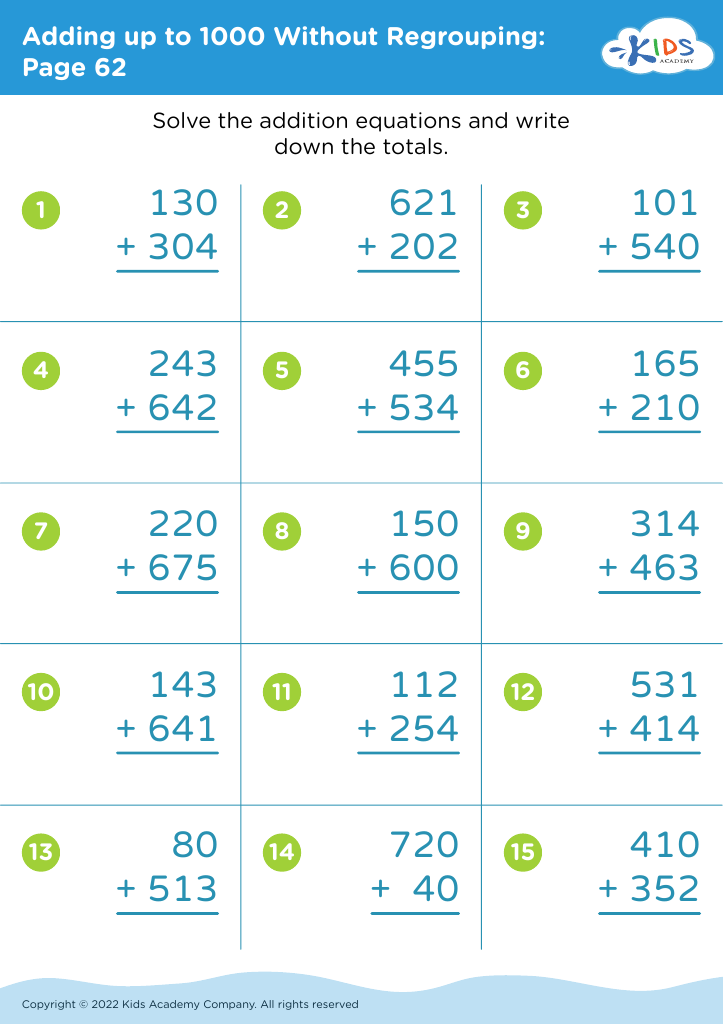



Ensuring that children ages 3-8 develop basic math skills, such as adding up to 1000, is crucial for several reasons. First and foremost, strong foundational math abilities set the stage for future academic success. Early math skills are highly predictive of later achievement not just in math, but also in reading and other subjects. By mastering concepts like addition up to 1000 early on, children build confidence and competence that will benefit them throughout their education.
Furthermore, these skills are important for everyday functionality. Simple tasks like handling money, telling time, and following a recipe require basic arithmetic. Moreover, developing cognitive abilities tied to math, such as problem-solving, logical reasoning, and critical thinking, is essential. These skills are not only needed in academic environments but also in daily life situations and future employment.
Another significant aspect is that early math practice can help identify and address learning difficulties at an early stage. Early intervention can provide targeted support, reducing the risk of long-term educational challenges.
Finally, promoting strong math skills from a young age fosters a positive attitude towards learning. It shows children that they are capable of understanding and conquering challenges, a mindset that encourages lifelong curiosity and resilience.
By prioritizing basic math skills for young children, parents and teachers provide a necessary toolkit for academic and personal development.








