Color Identification Adding up to 1000 Worksheets for Ages 3-8
6 filtered results
-
From - To
Enhance your child’s learning experience with our "Color Identification Adding up to 1000 Worksheets" designed for ages 3-8. These engaging worksheets combine math and color recognition by challenging young learners to solve addition problems up to 1000 while practicing color identification. Suitable for early grade students, this unique approach fosters both numerical and cognitive skills. Each worksheet is crafted to support the development of essential math fundamentals and color naming proficiency, making learning enjoyable and effective. Perfect for classroom and at-home use, our worksheets ensure your child builds confidence and a strong foundation in a fun, educational way.
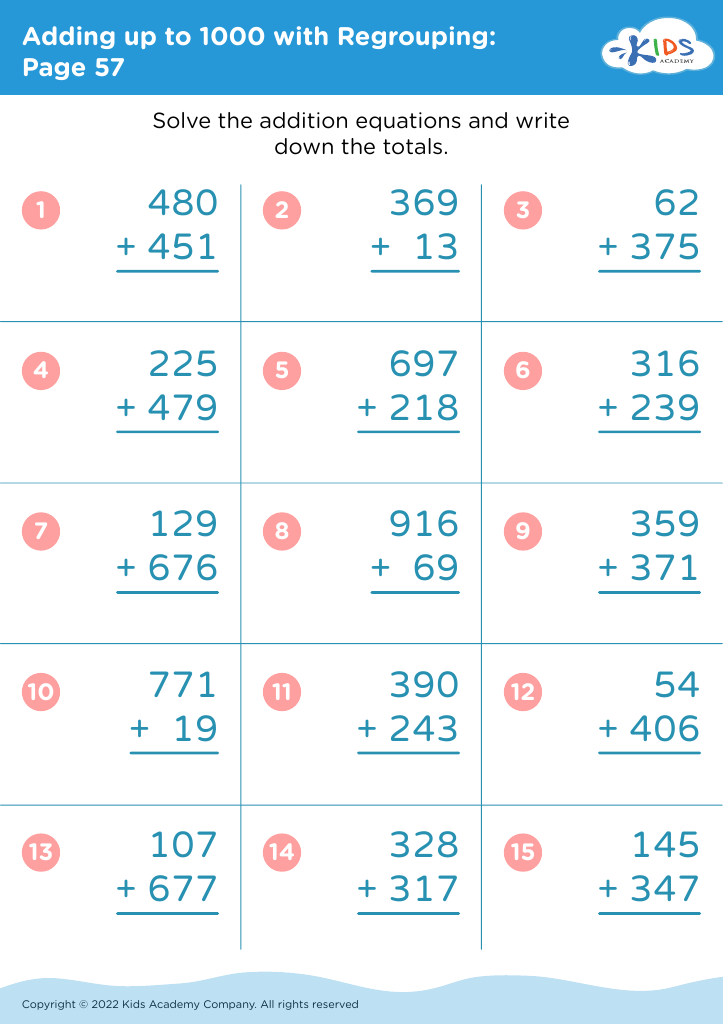
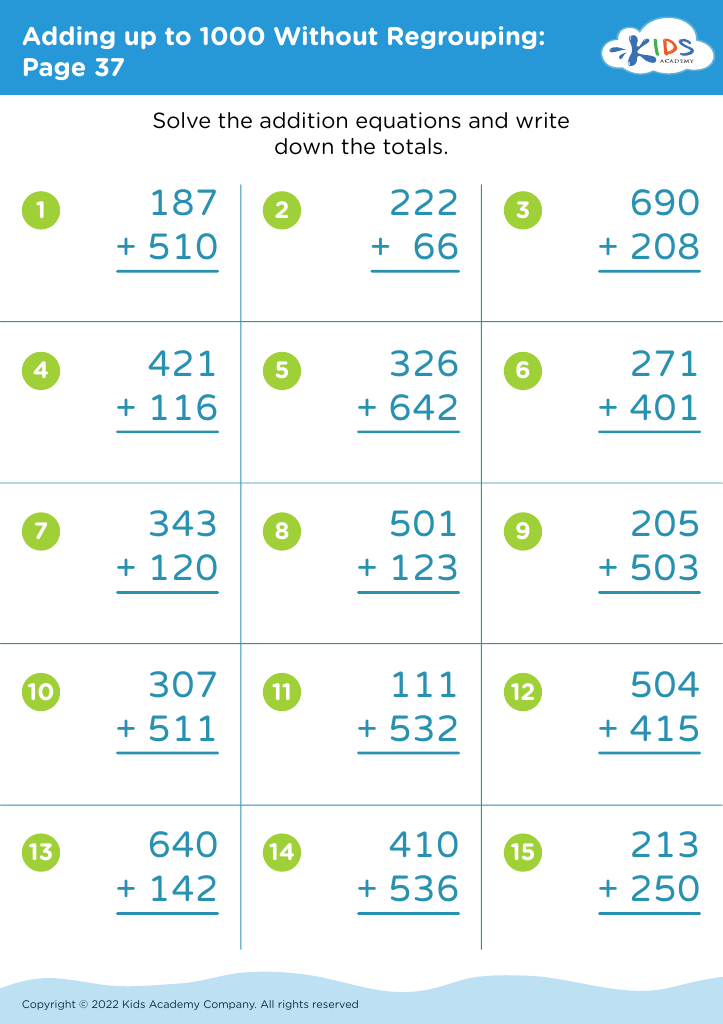
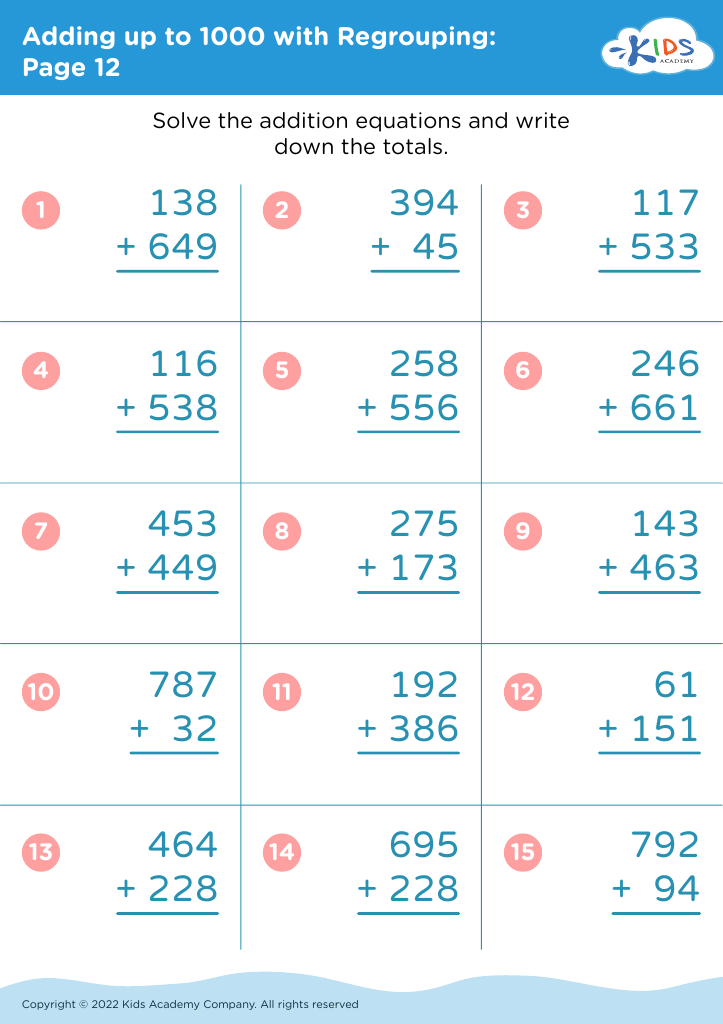
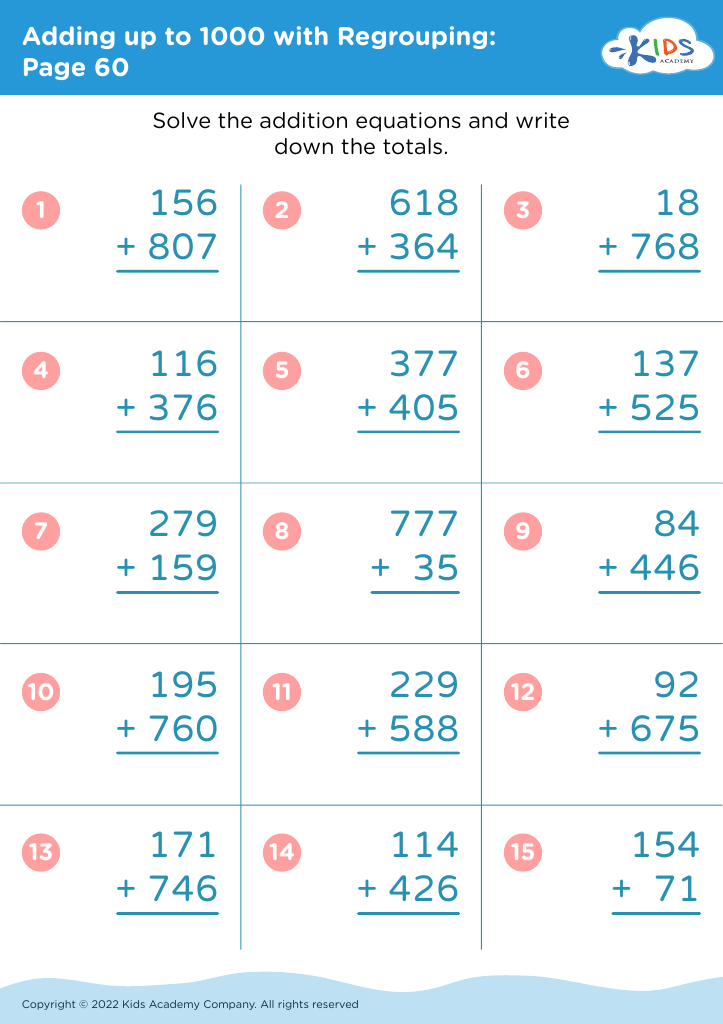
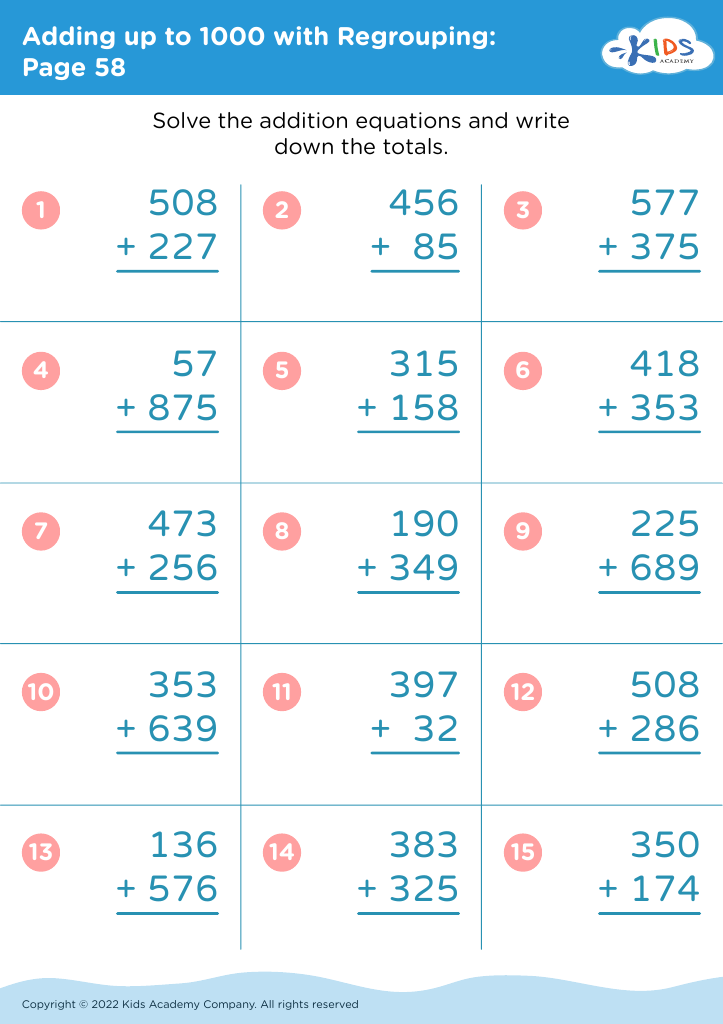
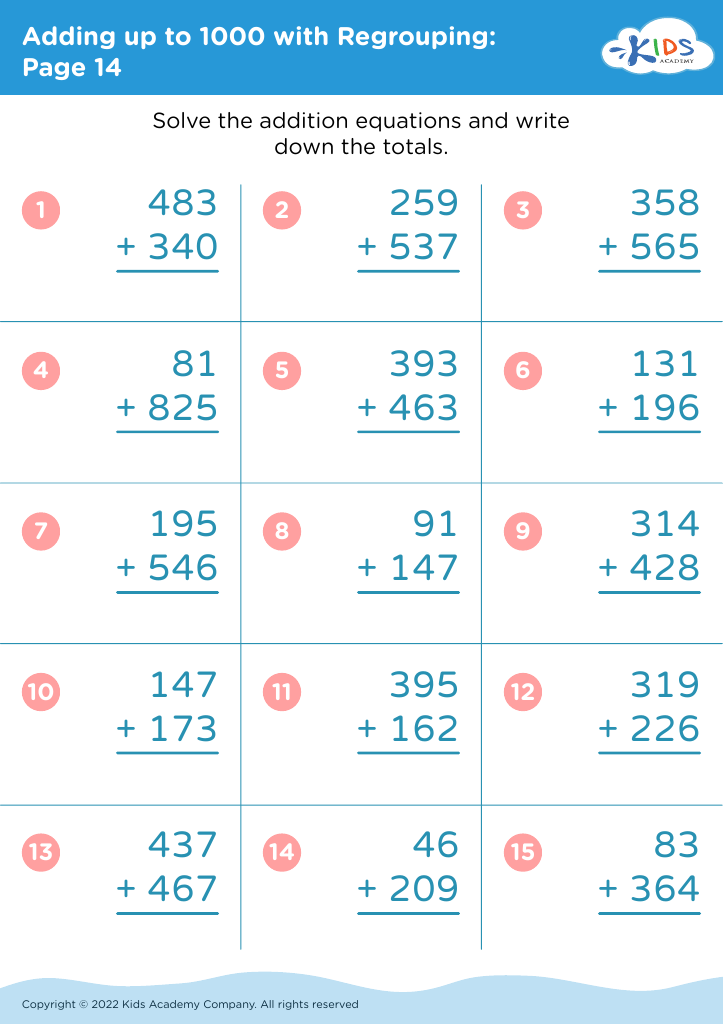



Color identification and numerical skills such as addition up to 1000 are foundational elements critical for a child's cognitive and academic development, especially between the ages of 3 and 8. At this formative stage, parents and teachers should prioritize these skills as they lay the groundwork for future learning.
Color identification helps young children differentiate and categorize the world around them. This capability is essential not only for visual learning but also for enhancing language development as they describe and understand their environment. It also boosts memory and attentiveness, as recognizing and naming colors requires the brain to engage in active recall.
On the other hand, learning to add numbers up to 1000 instills fundamental mathematical principles. Early exposure to numbers and operations builds number sense, which is crucial for later success in math. These activities engage children in logical reasoning and problem-solving, two skills indispensable in both academic and real-world contexts.
Combining color identification with numeric addition in learning activities brings a multi-sensory approach to education – it transforms abstract ideas into tangible experiences. For instance, using colored blocks to practice addition allows children to visualize concepts physically and contextually, improving comprehension and retention.
Ultimately, emphasizing these skills between ages 3 and 8 equips children with the essential tools needed for holistic development. By fostering these competencies early, parents and teachers set the stage for a lifetime of learning and curiosity.








