Filters

16 filtered results

Clear all filters
Favorites
With answer key
Interactive

16 filtered results

Difficulty Level

Grade


Unlock your child's math potential with our "Comparing Fractions Adding up to 1000" worksheets, designed for ages 3-8. These engaging, age-appropriate worksheets help young learners understand and compare fractions while working with numbers up to 1000. Each activity encourages critical thinking, enhances mathematical skills, and builds a solid foundation in fractions. Our interactive worksheets are perfect for classroom use or alternative learning environments, ensuring that kids have fun while learning. Foster a love for math in your child today and watch them thrive with our carefully crafted resources that align with early education standards!
Check out this FREE Trial Lesson on Adding up to 1000 for age 3-8!

A

Favorites
With answer key
Interactive
  • 3-8
  • Comparing Fractions
  • Adding up to 1000
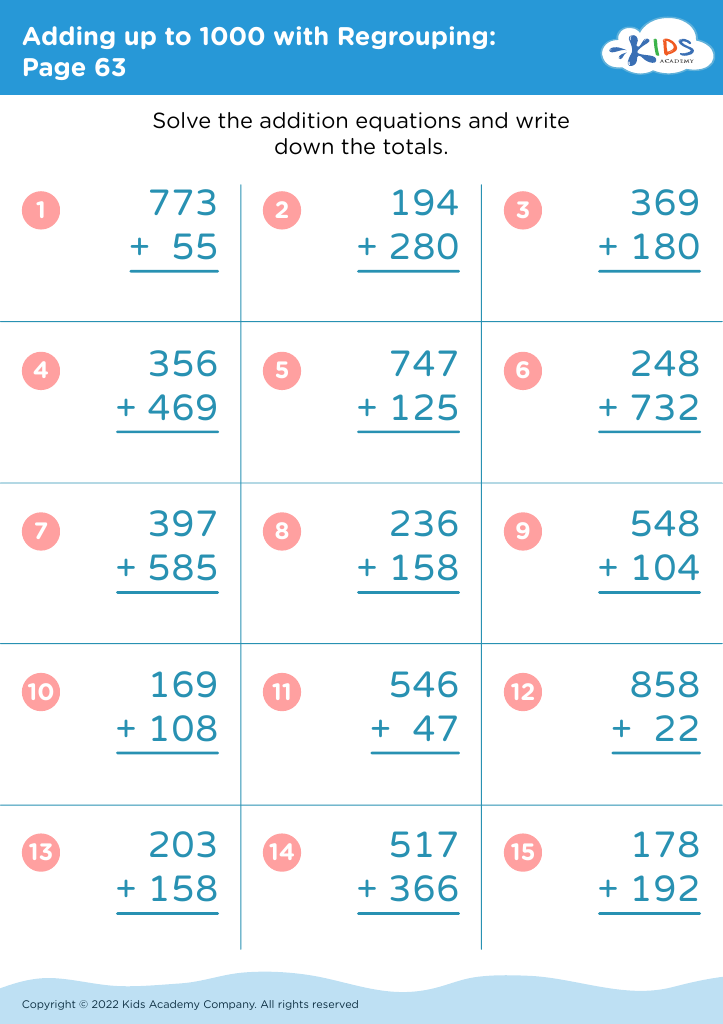
Adding up to 1000 with Regrouping: Page 63
Worksheet
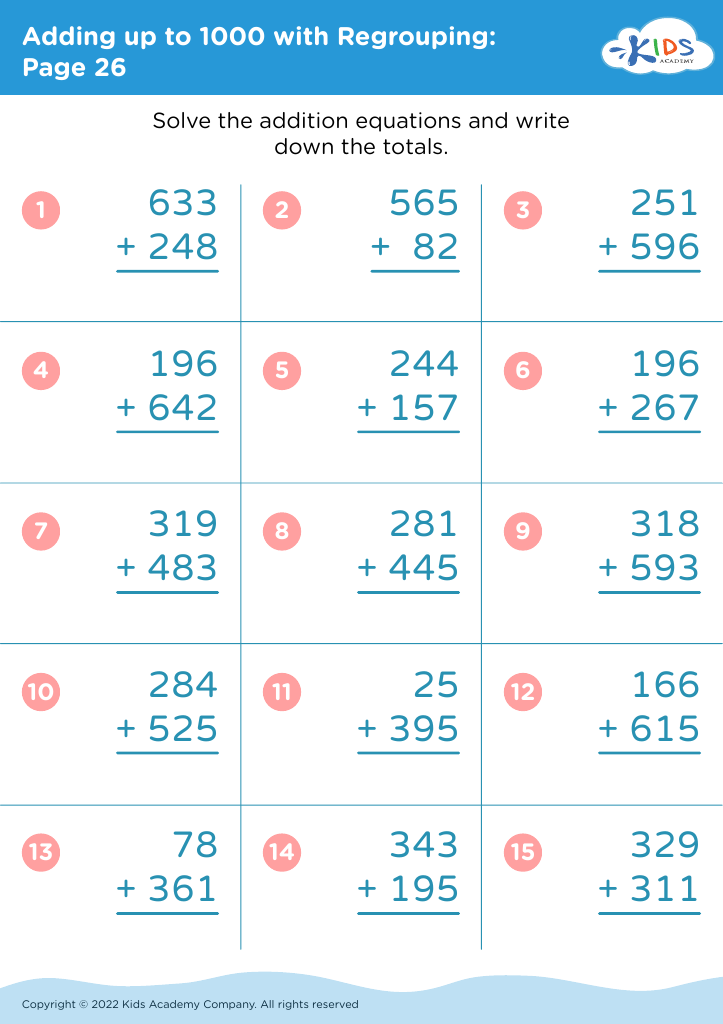
Adding up to 1000 with Regrouping: Page 26
Worksheet
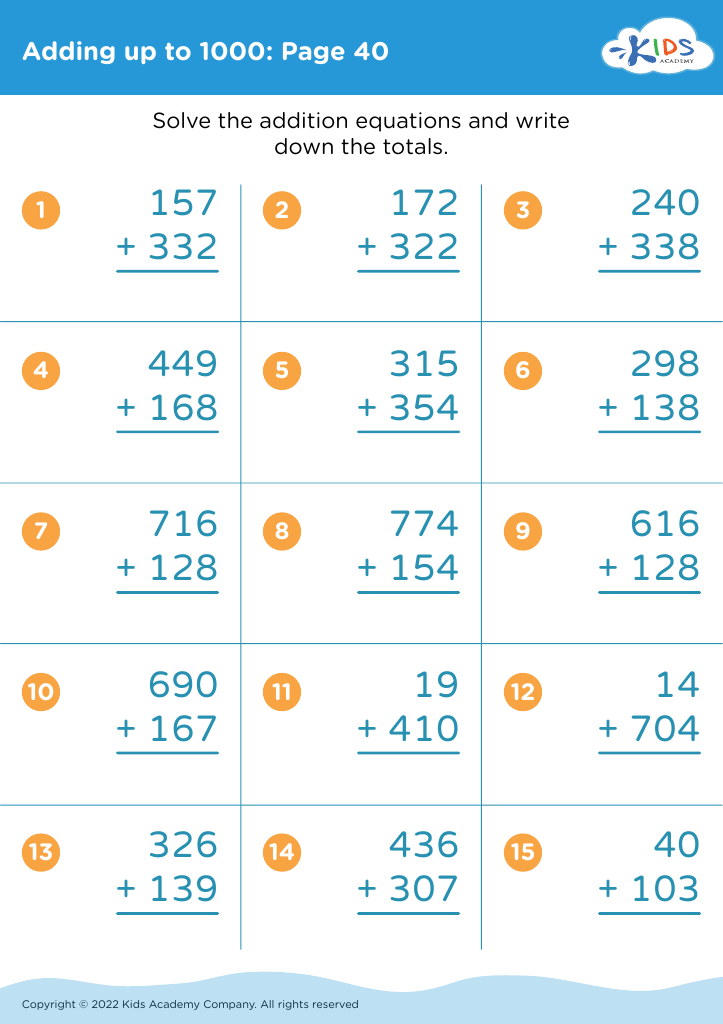
Adding up to 1000: Page 40

Adding up to 1000: Page 40

Adding up to 1000: Page 40
Worksheet
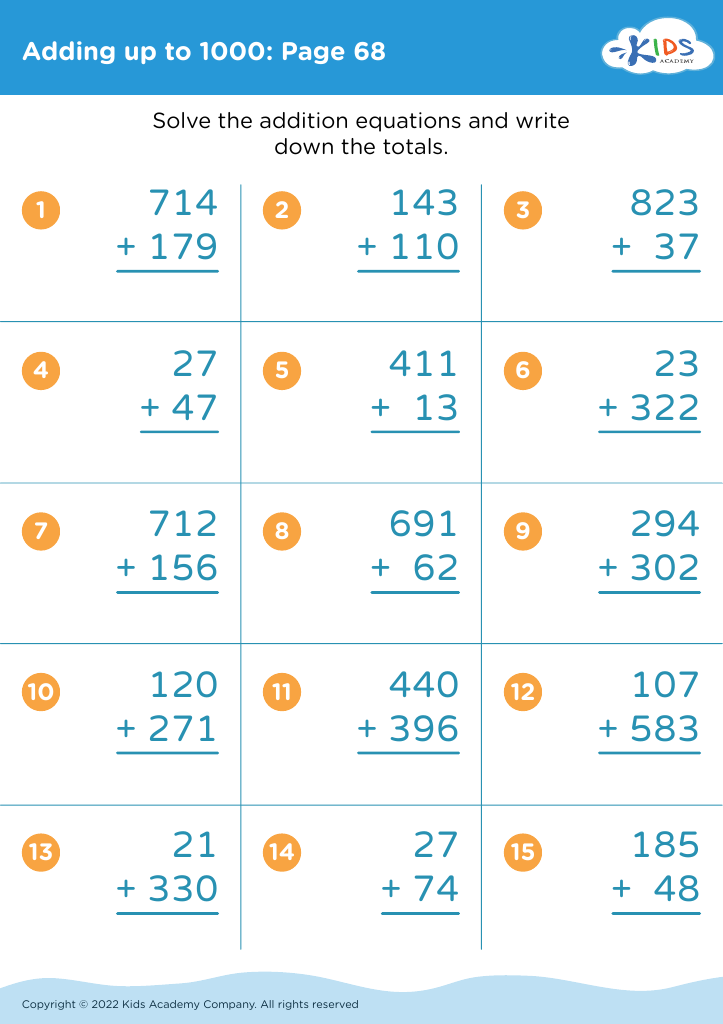
Adding up to 1000: Page 68

Adding up to 1000: Page 68

Adding up to 1000: Page 68
Worksheet
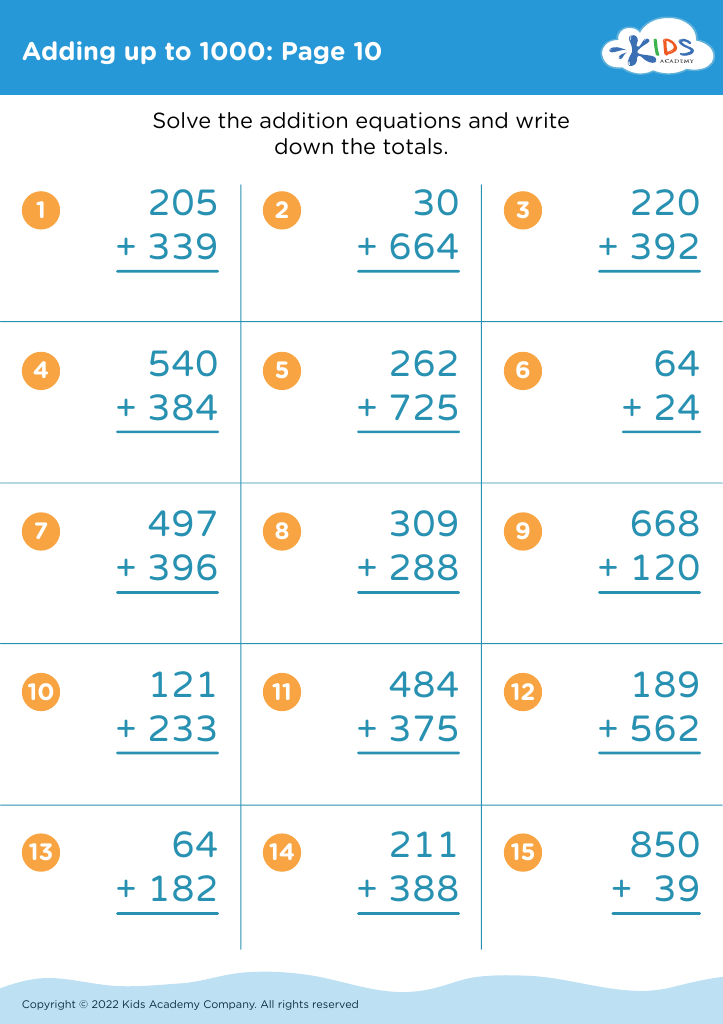
Adding up to 1000: Page 10

Adding up to 1000: Page 10

Adding up to 1000: Page 10
Worksheet
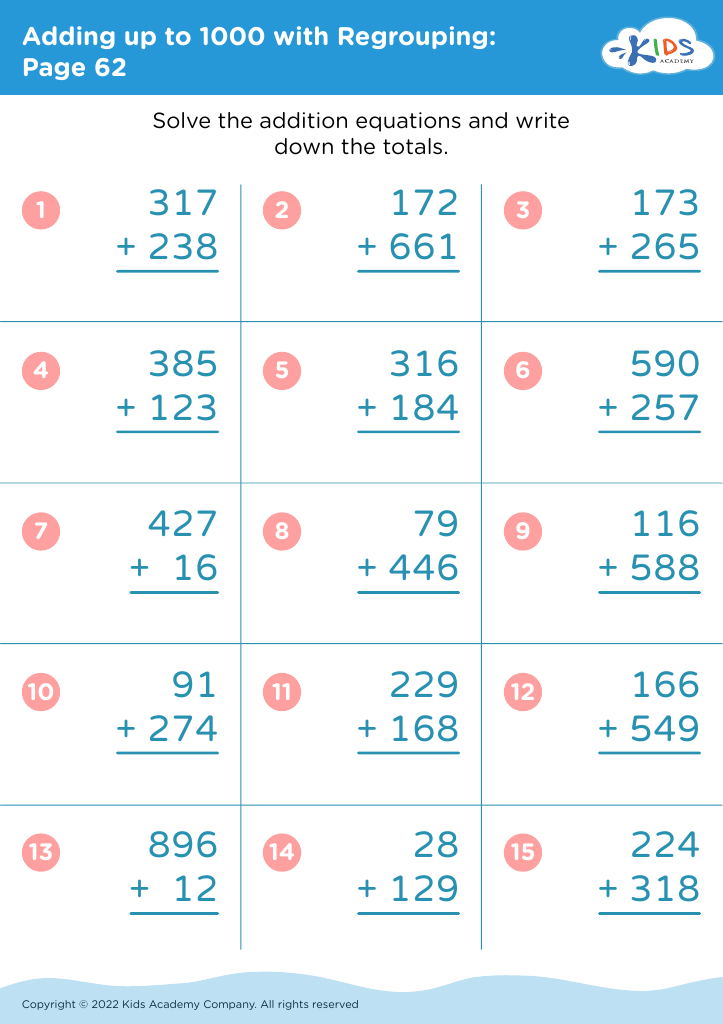
Adding up to 1000 with Regrouping: Page 62
Worksheet
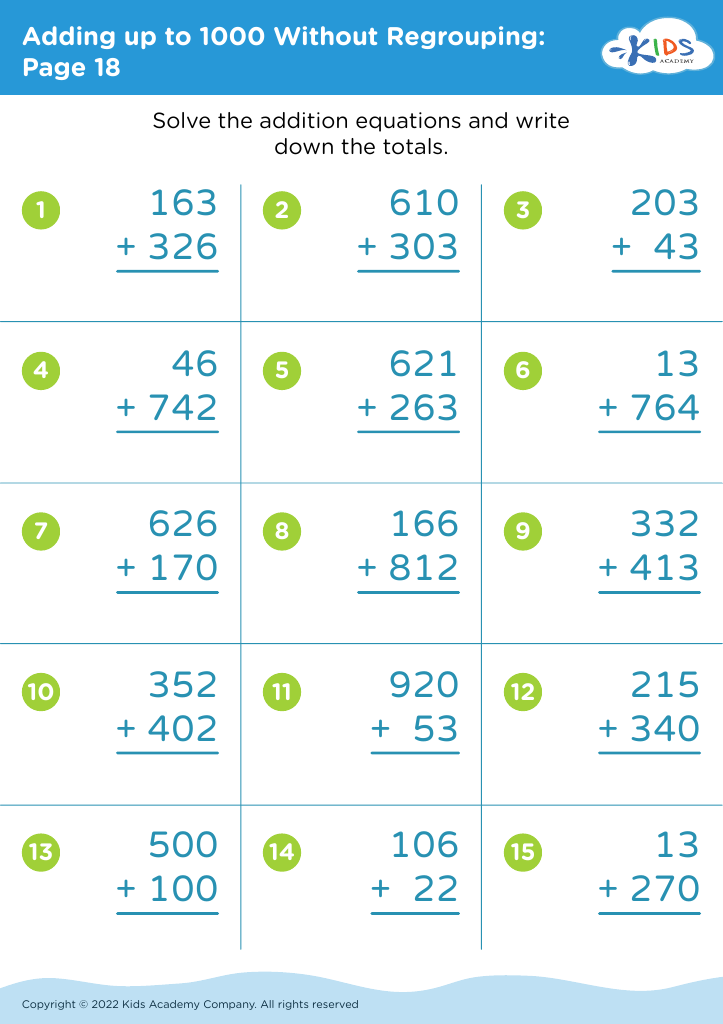
Adding up to 1000 Without Regrouping: Page 18
Worksheet
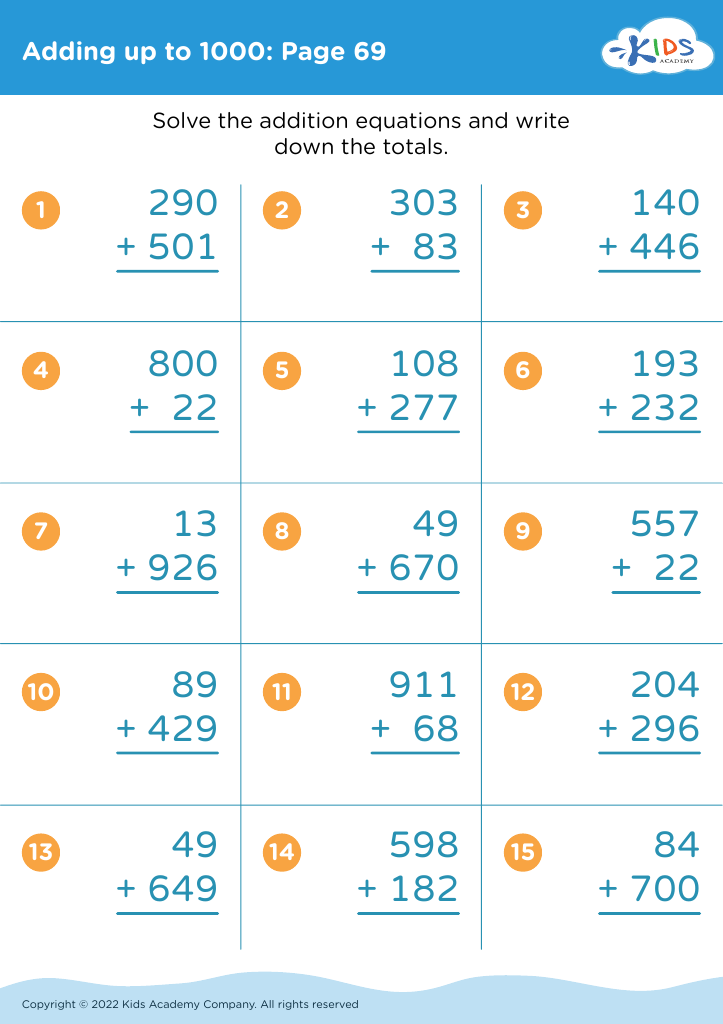
Adding up to 1000: Page 69

Adding up to 1000: Page 69

Adding up to 1000: Page 69
Worksheet
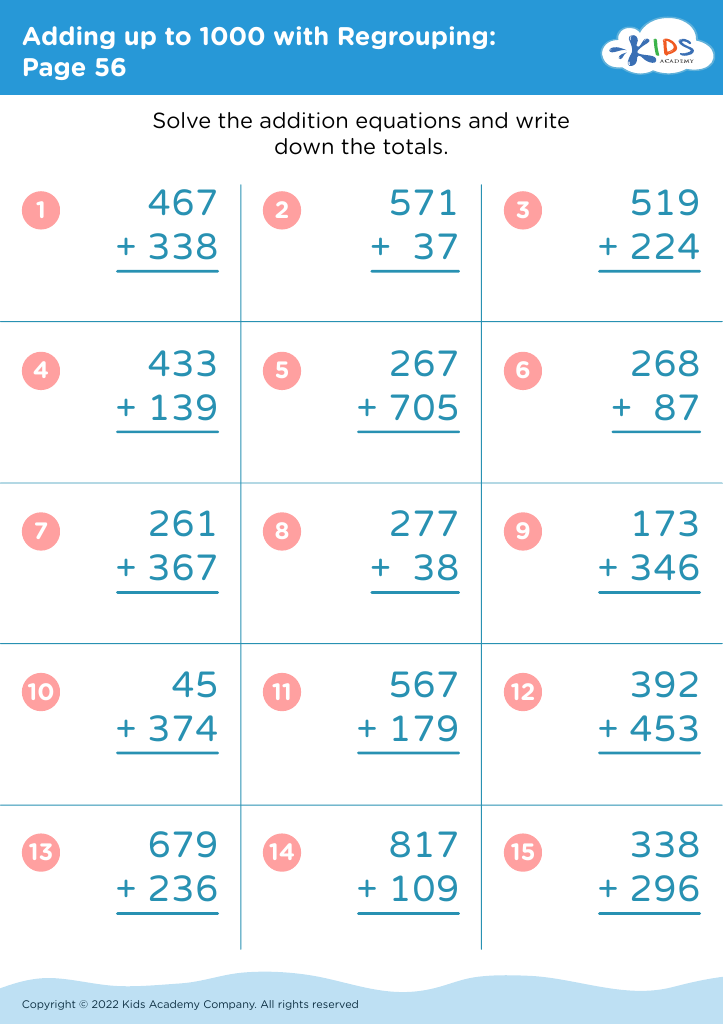
Adding up to 1000 with Regrouping: Page 56
Worksheet
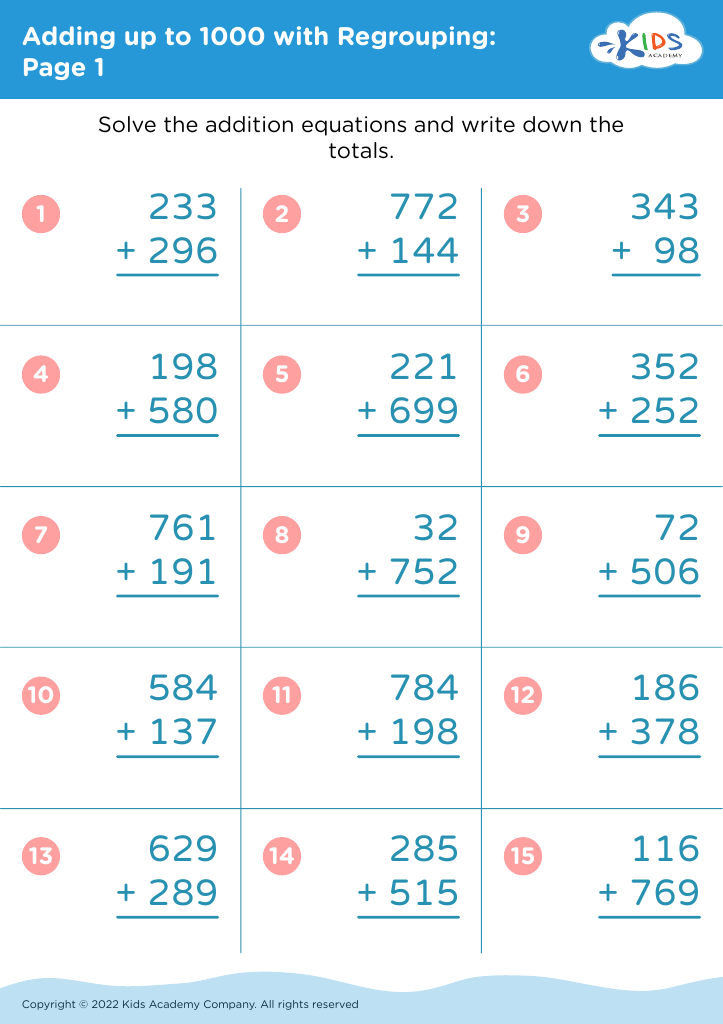
Adding up to 1000 with Regrouping: Page 1
Worksheet
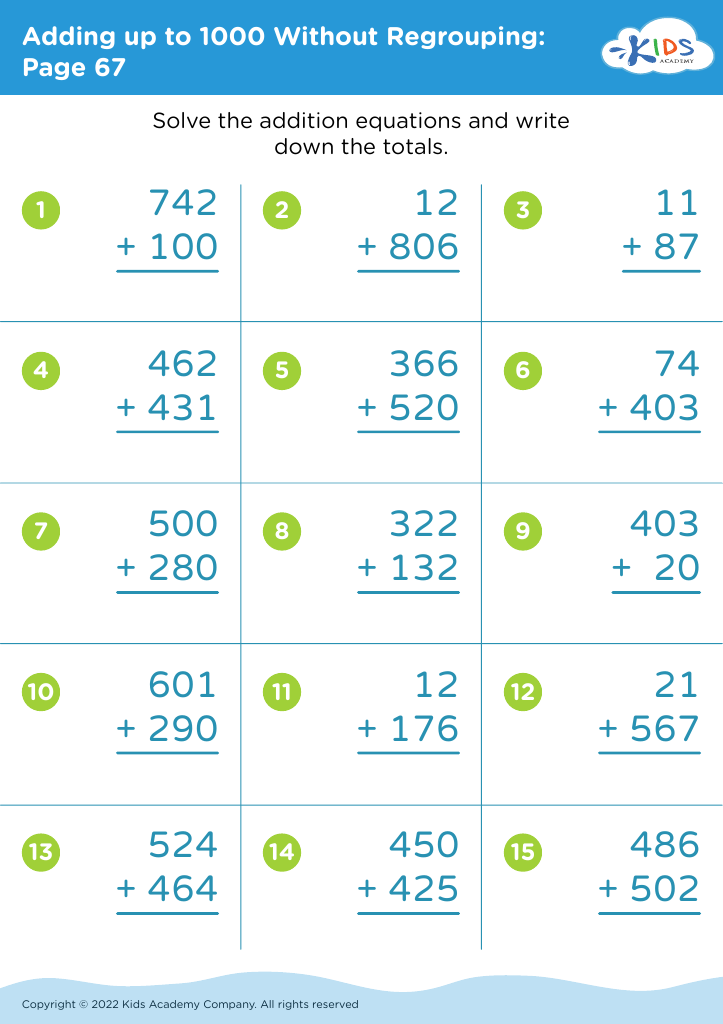
Adding up to 1000 Without Regrouping: Page 67
Worksheet
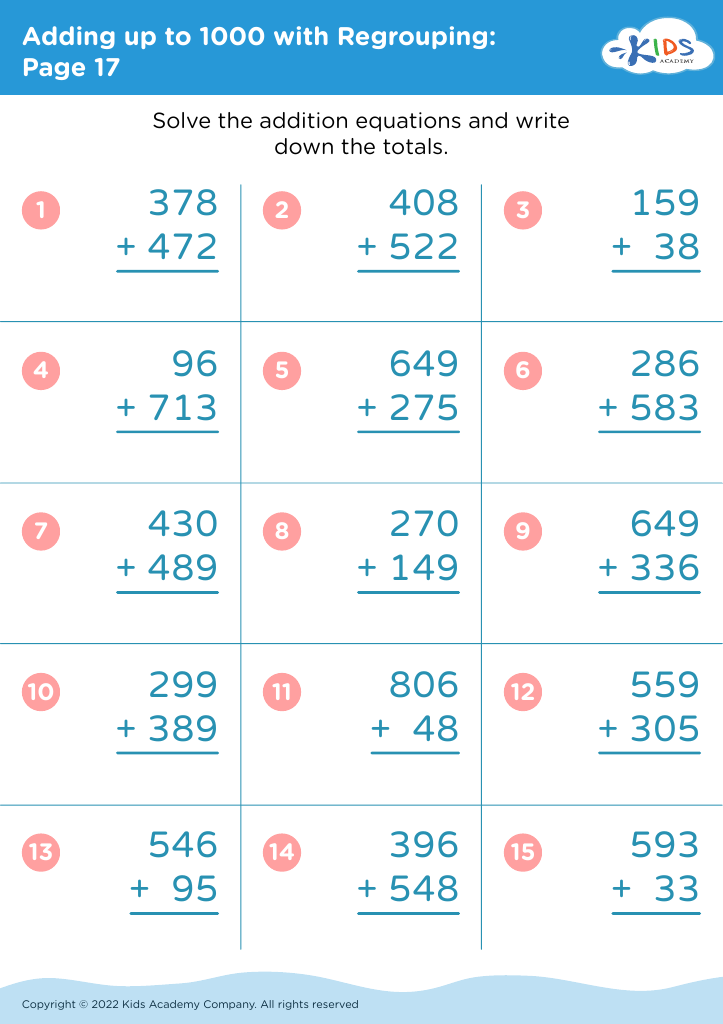
Adding up to 1000 with Regrouping: Page 17
Worksheet
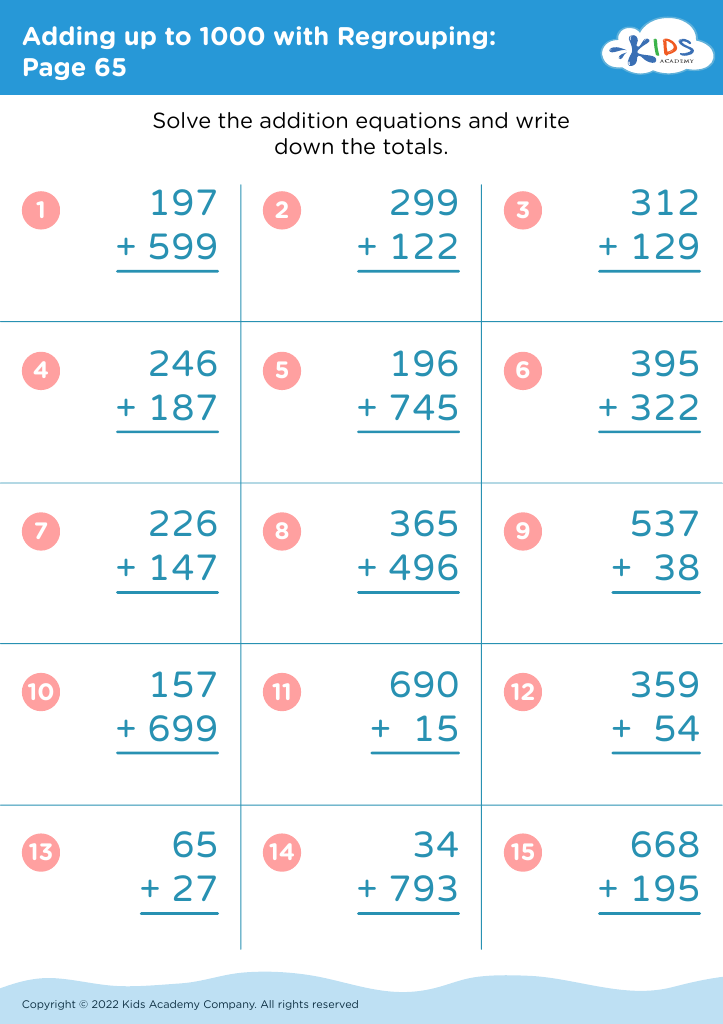
Adding up to 1000 with Regrouping: Page 65
Worksheet
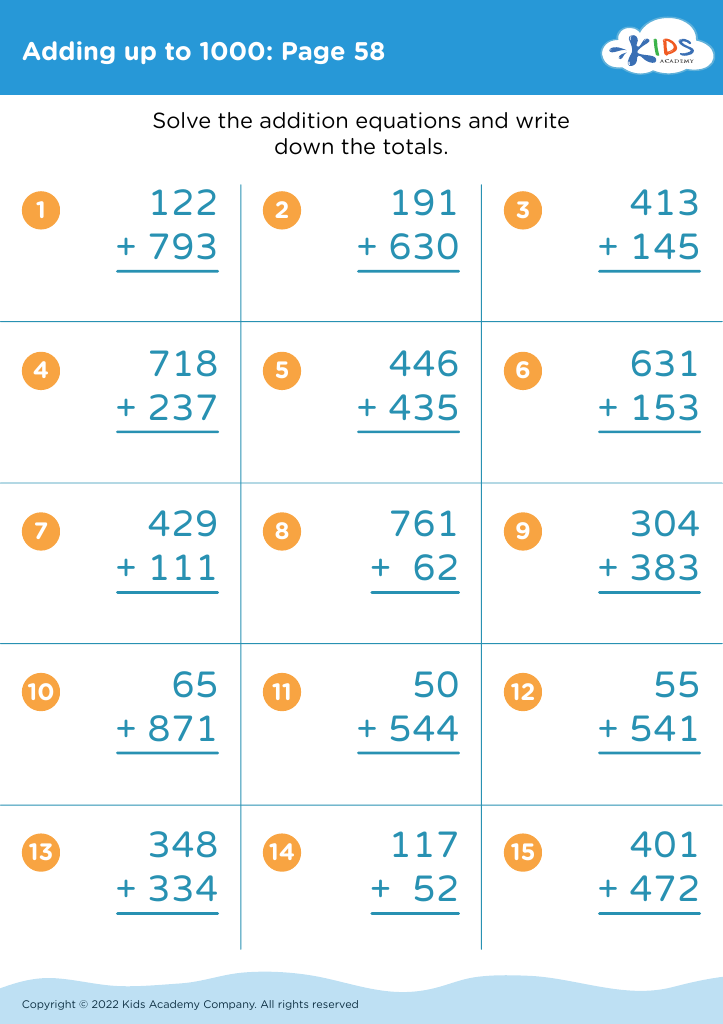
Adding up to 1000: Page 58

Adding up to 1000: Page 58

Adding up to 1000: Page 58
Worksheet
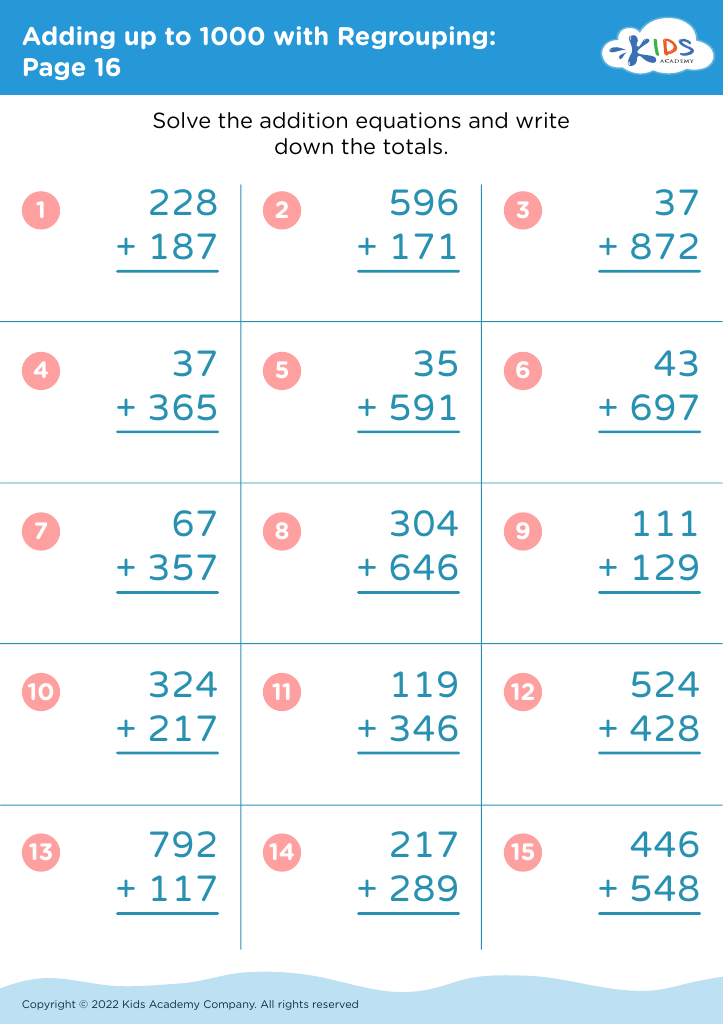
Adding up to 1000 with Regrouping: Page 16
Worksheet
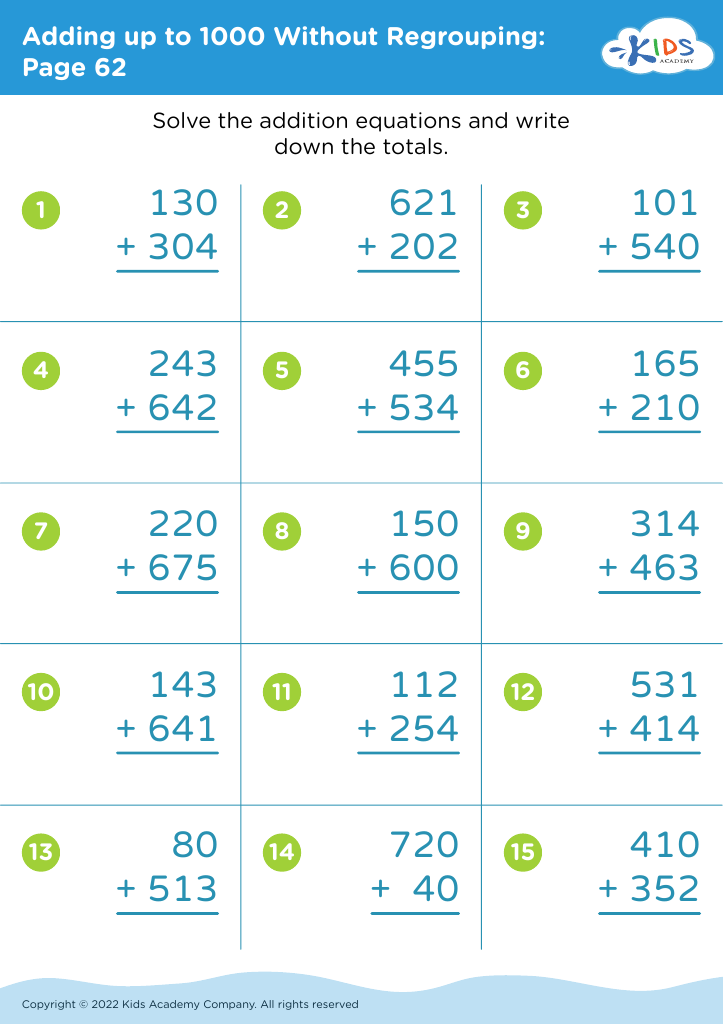
Adding up to 1000 Without Regrouping: Page 62
Worksheet


Comparing fractions is a fundamental math skill that young children need to grasp, especially when adding up to 1000. Parents and teachers should prioritize this concept because it lays the groundwork for a child's mathematical understanding and critical thinking skills. Understanding fractions helps children develop number sense and enhances their ability to solve problems, as they learn to compare quantities, identify relationships, and make informed decisions based on numerical information.

Introducing fractions in a familiar context allows young learners to visualize and manipulate them, making abstract concepts more concrete. By engaging kids with fractions that add up to 1000, educators can help them see how these numbers relate to everyday situations. This relevance fosters interest in math and encourages a positive attitude toward learning.

Additionally, mastering fractions builds a strong foundation for more advanced mathematical concepts they will encounter later in education, including ratios, percentages, and algebra. Moreover, comparing fractions encourages teamwork, discussion, and reasoning, as children articulate their thought processes and collaborate to find solutions.

In nurturing these foundational skills, parents and teachers play a crucial role in shaping a child's academic success and confidence in math, preparing them for both classroom challenges and real-world applications.