Critical Thinking Adding up to 1000 Worksheets for Ages 3-8
5 filtered results
-
From - To
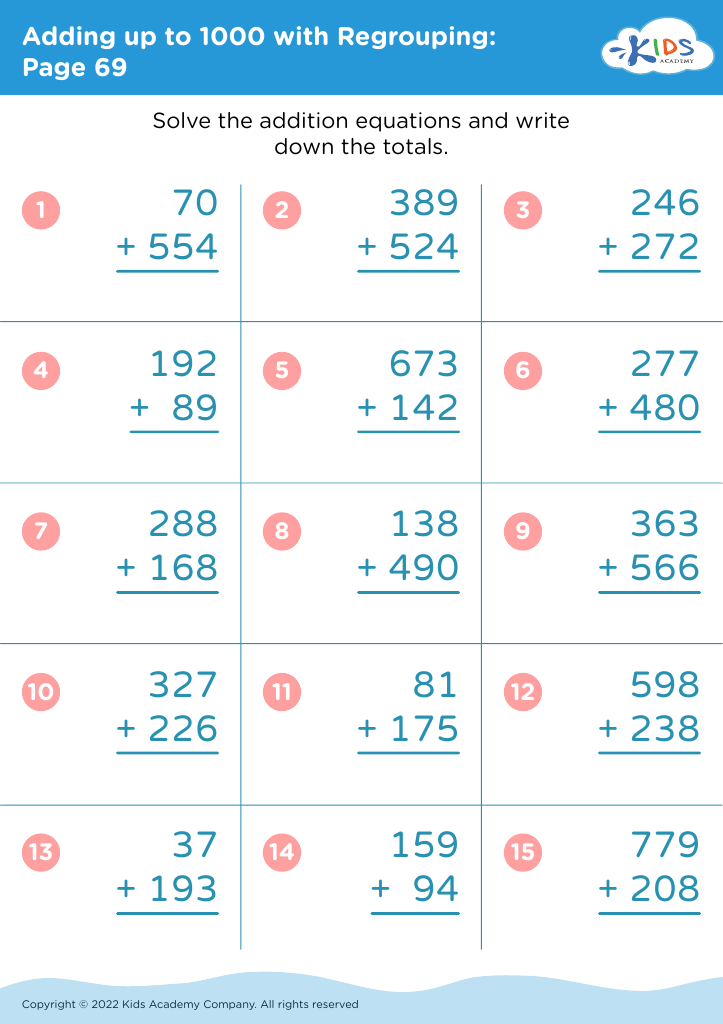
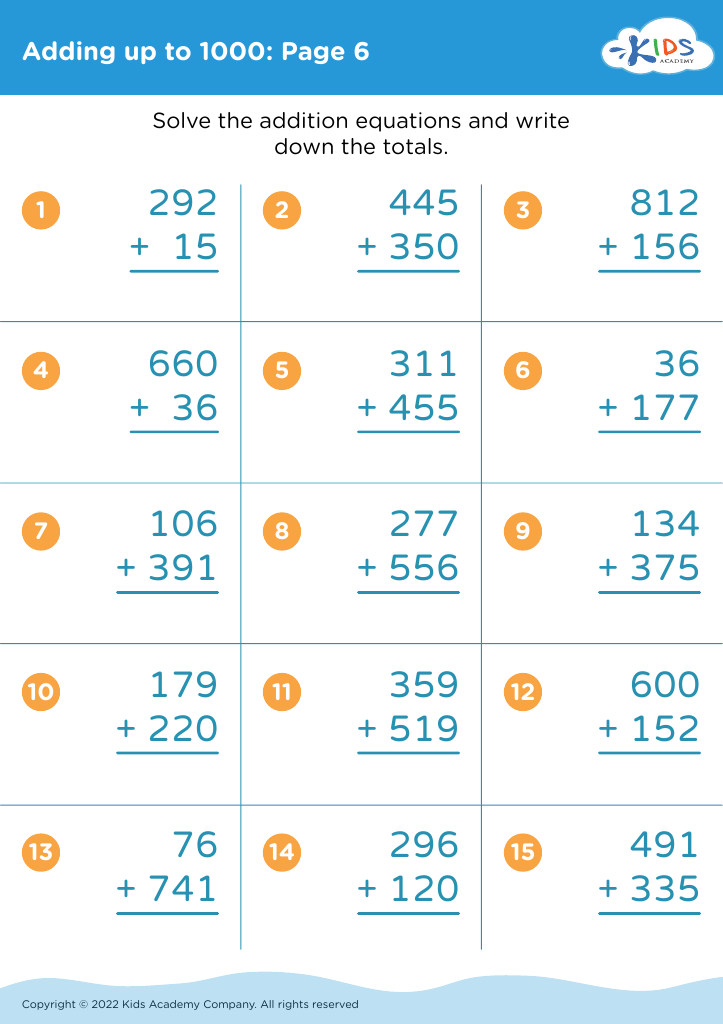
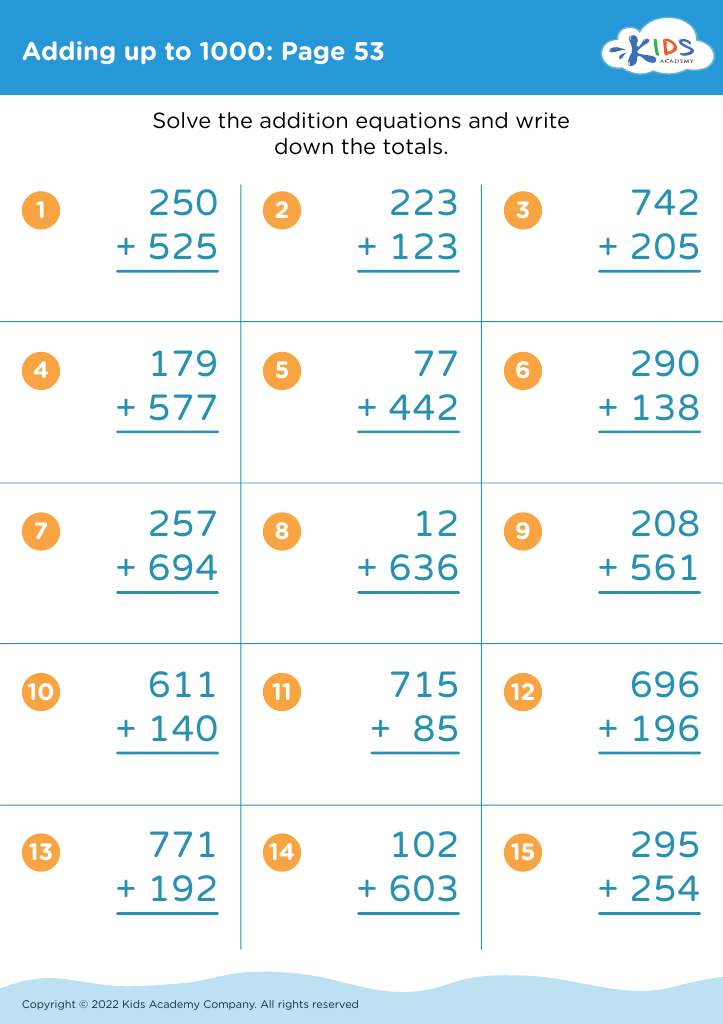
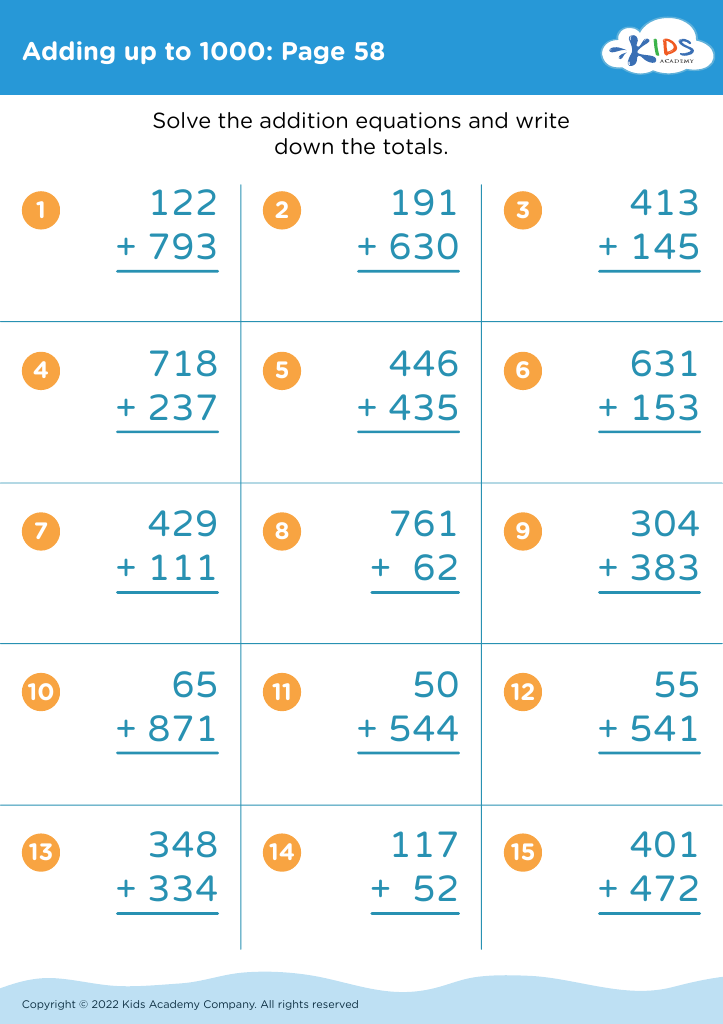
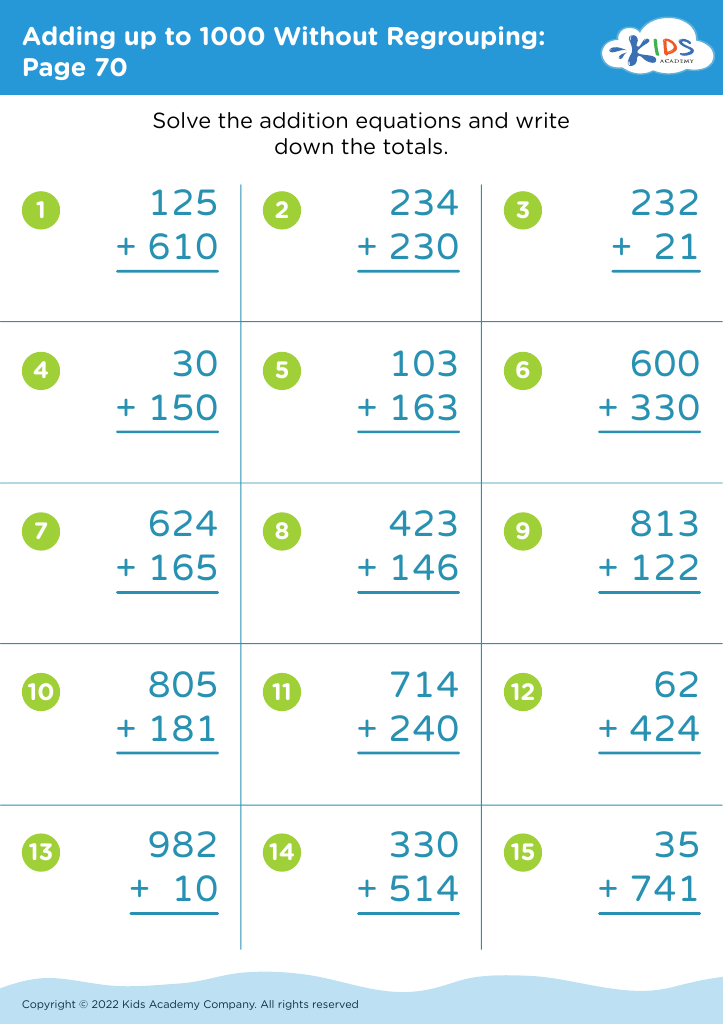
Unlock your child's potential with our "Critical Thinking Adding up to 1000 Worksheets" designed for ages 3-8. These engaging worksheets promote essential math skills while fostering critical thinking abilities. Through fun exercises, children will practice addition concepts, develop problem-solving skills, and enhance logical reasoning. Each activity is tailored to encourage exploration and independent thought, making math an enjoyable adventure! With colorful visuals and age-appropriate challenges, this resource is perfect for both classroom and home learning environments. Empower your child to think critically and confidently tackle math problems as they build a solid foundation for lifelong learning. Download now and watch them thrive!



Critical thinking is essential for children aged 3-8 as it lays the foundation for problem-solving and decision-making skills later in life. For parents and teachers, fostering critical thinking helps nurture inquisitive minds that question, analyze, and draw conclusions based on evidence rather than just accepting information at face value. Engaging children in critical thinking from an early age cultivates creativity, encourages them to think outside the box, and improves their ability to collaborate with others.
At this developmental stage, children are naturally curious. By introducing activities that promote critical thinking—like puzzles, open-ended questions, and group discussions—adults can stimulate their imaginations while enhancing cognitive abilities. Skills developed through critical thinking, such as reasoning and evaluating information, are directly linked to academic success.
Moreover, critical thinking equips children with essential life skills, such as effective communication and the confidence to express their thoughts. As they learn to think critically, children also develop resilience, as they become accustomed to overcoming obstacles and challenges. This competence not only prepares them for school but also for life's broader challenges, enabling them to grow into thoughtful, considerate adults. Thus, investing in critical thinking for young learners is crucial for their holistic development.








