Fine motor skills (writing) Adding up to 1000 Worksheets for Ages 3-8
5 filtered results
-
From - To
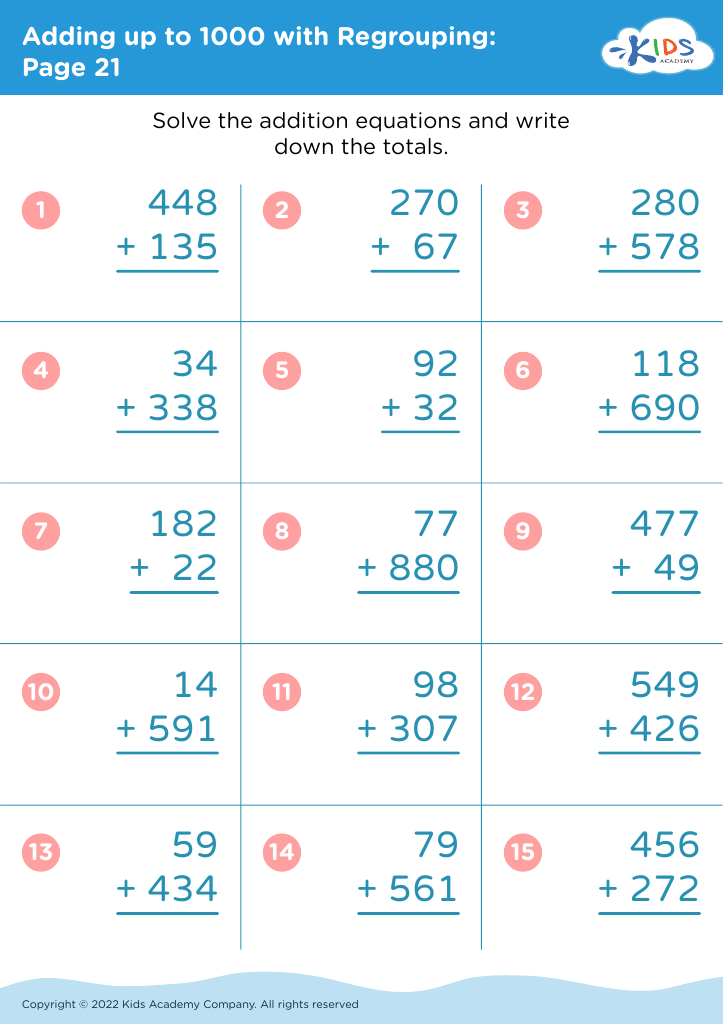
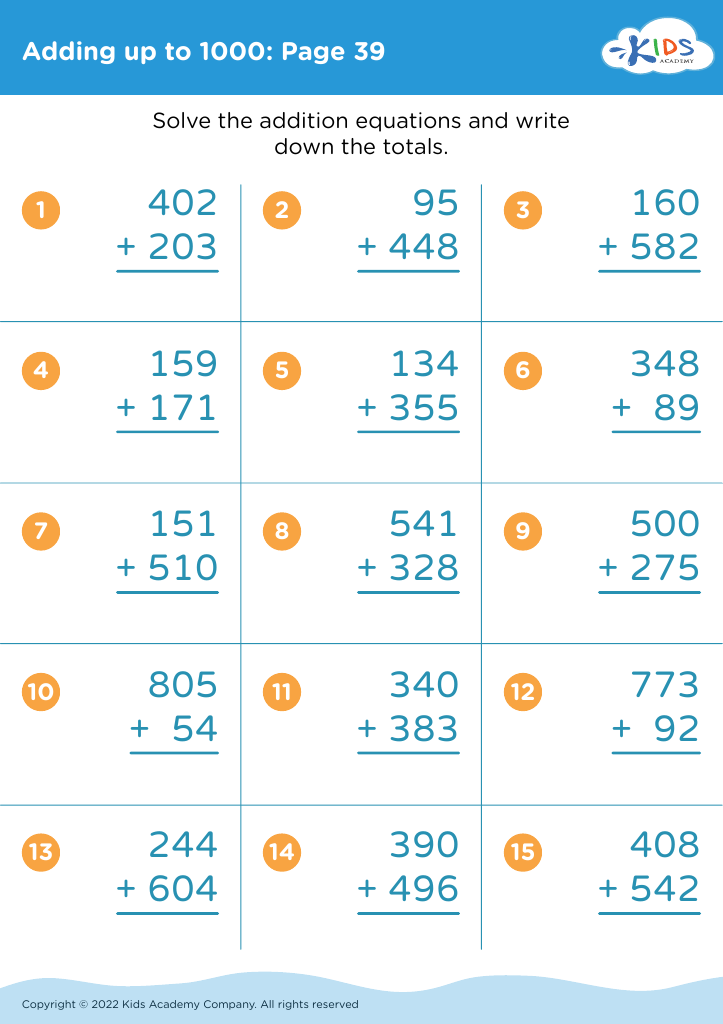
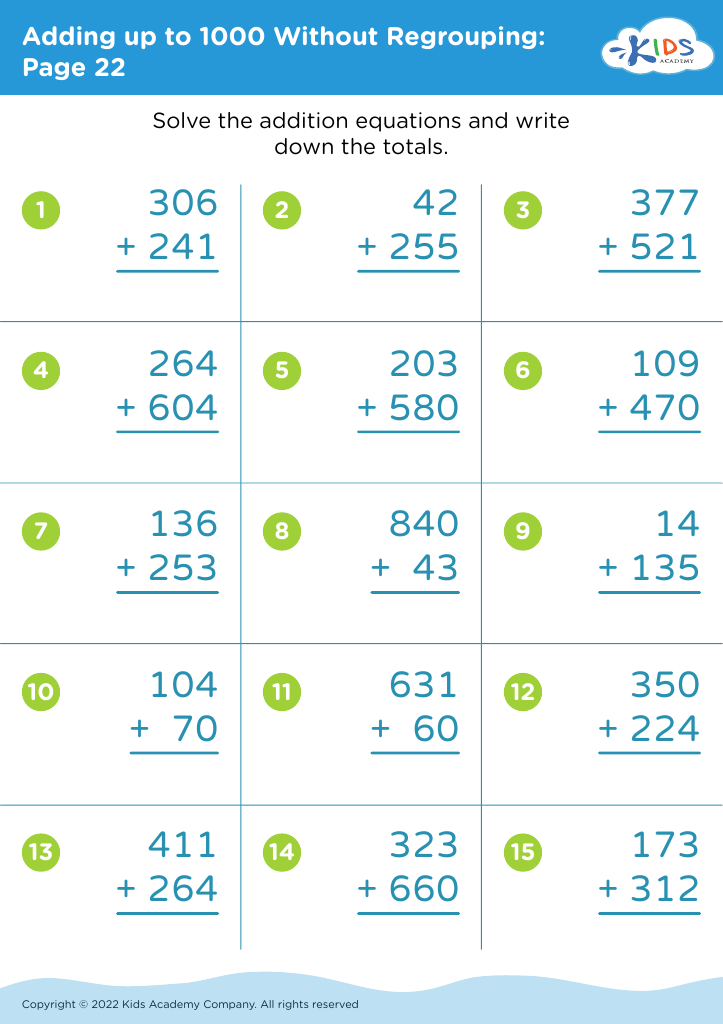
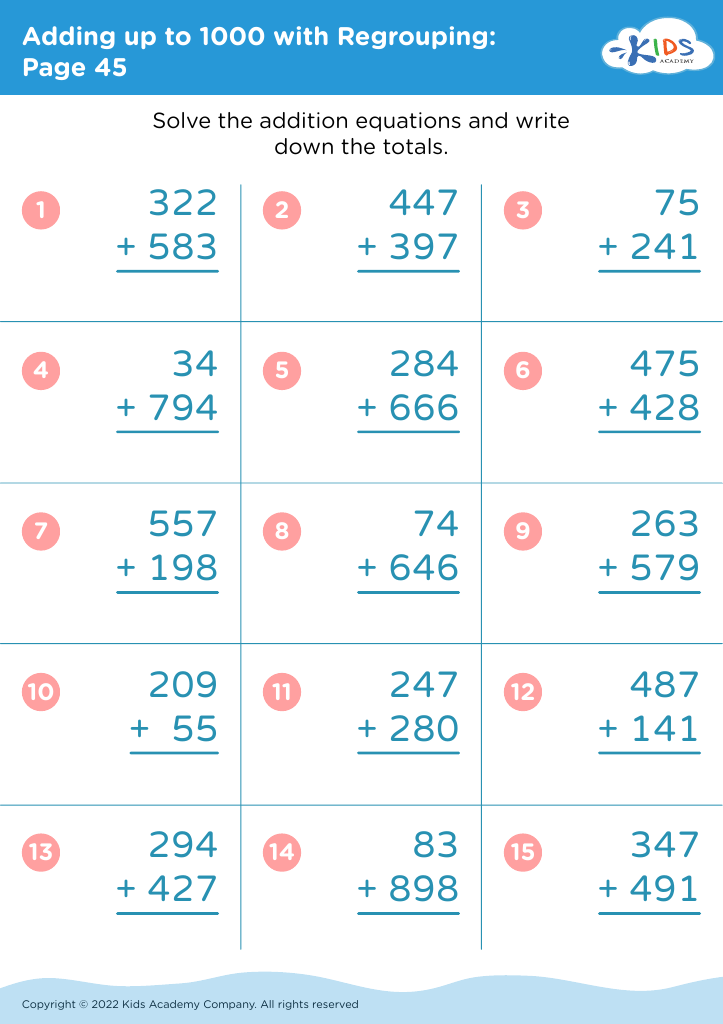
Explore our "Fine Motor Skills (Writing) Adding Up to 1000 Worksheets" designed for children aged 3-8! These engaging worksheets not only enhance mathematical skills through adding up to 1000 but also focus on developing fine motor abilities essential for writing. Each activity is tailored to improve hand-eye coordination, grip strength, and dexterity, promoting confident handwriting and creativity. Perfect for home or classroom use, these worksheets offer enjoyable ways for young learners to practice both math and writing skills simultaneously. Empower your kids to excel while having fun! Download our comprehensive collection today and watch their skills flourish!
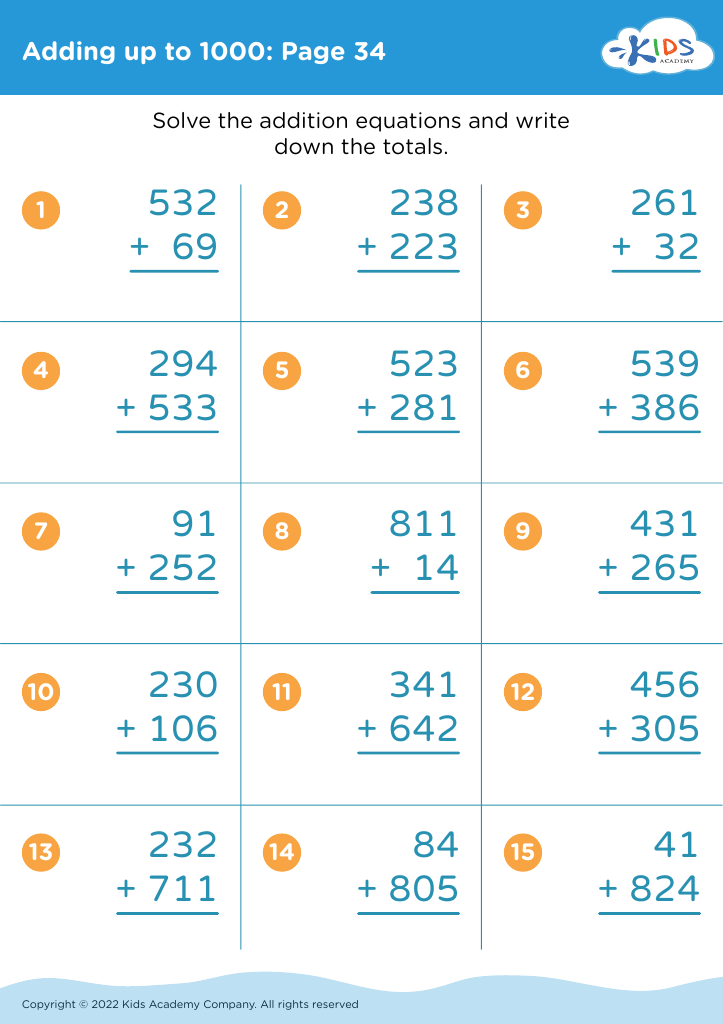



Fine motor skills, especially in writing, play a crucial role in the development of children aged 3 to 8. Parents and teachers should prioritize these skills for several reasons. First, fine motor skills are foundational for academic success. Writing is not just about putting letters on a page; it involves coordination, control, and dexterity that are essential for tasks beyond literacy, such as using scissors, buttons, and drawing.
Developing fine motor skills also enhances cognitive growth. The intricate movements involved in writing help strengthen brain connections associated with learning and problem-solving. This, in turn, boosts a child's confidence and self-esteem as they master new skills.
Moreover, fine motor skills aid in social development. Young children often engage in group activities that require sharing materials and collaborating on projects. When children can effectively manipulate tools and materials, they are more likely to participate and interact positively with their peers.
Finally, fostering fine motor development can have lasting effects. Children who struggle with these skills may face ongoing difficulties as they progress in school. By focusing on fine motor skills now, parents and teachers set the stage for a lifetime of learning, creativity, and successful communication. Investing in this area fosters happy, capable learners ready to take on future challenges.








