Following instructions Adding up to 1000 Worksheets for Ages 3-8
5 filtered results
-
From - To
Our "Adding up to 1000 Worksheets for Ages 3-8" are designed to engage young learners in a fun and educational way, building essential math skills through guided activities. These printable worksheets help children master addition up to 1000 while emphasizing the importance of following instructions. Each worksheet is crafted to suit various skill levels, ensuring that your child can progress confidently from easier to more complex problems. Ideal for classroom or home use, these activities foster numerical understanding, logical thinking, and attentiveness. Download today to provide your child with a strong math foundation and a love for learning!
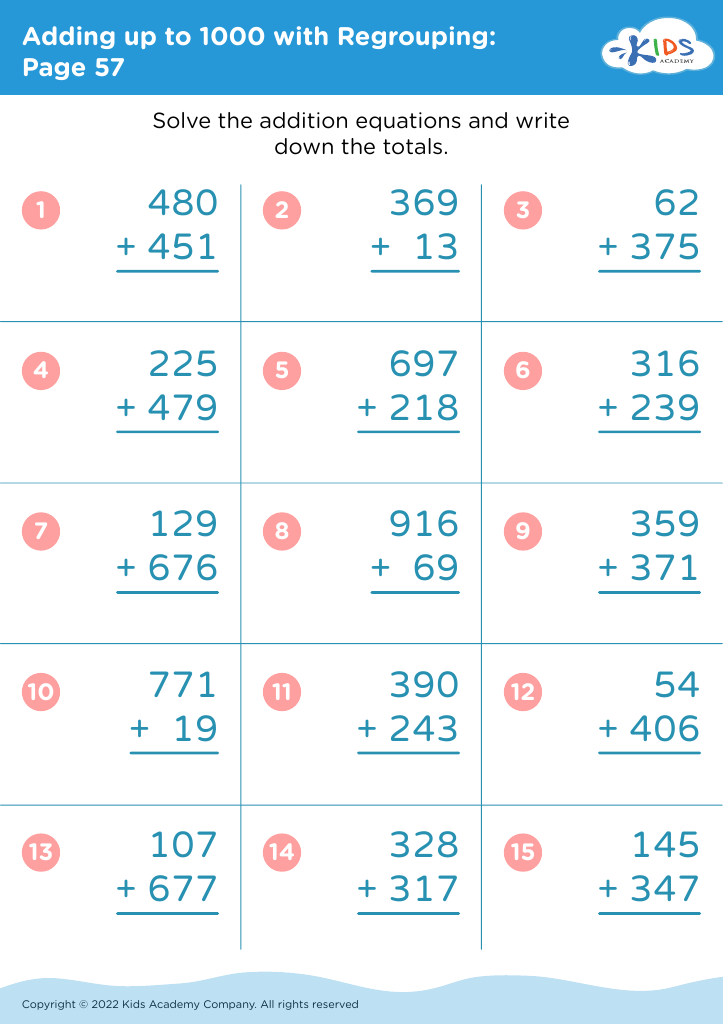
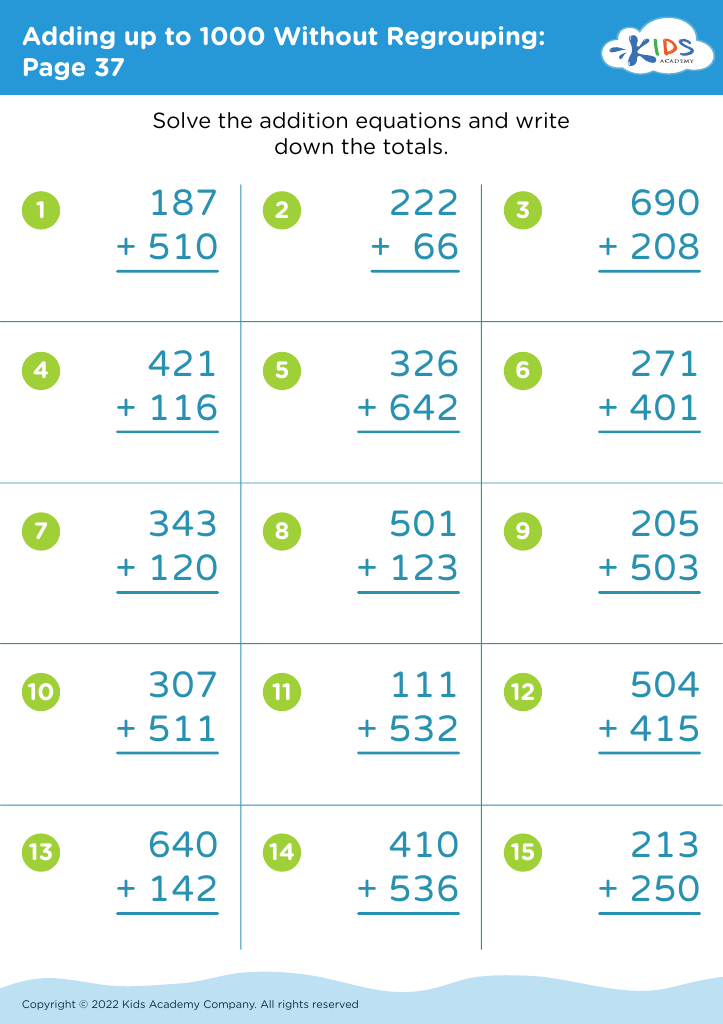
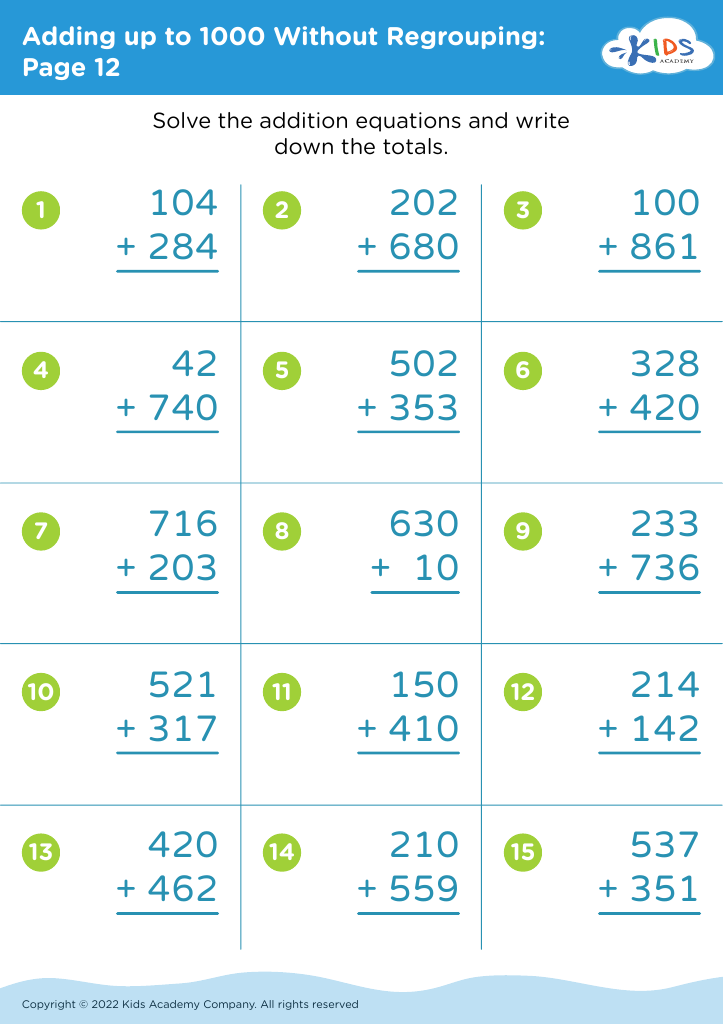
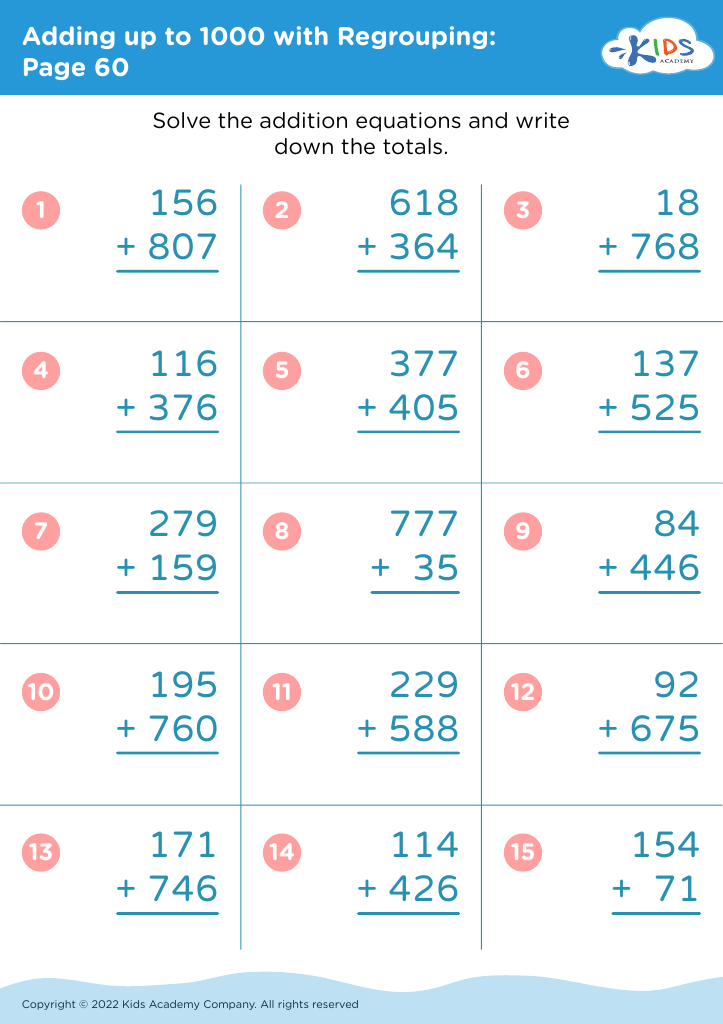
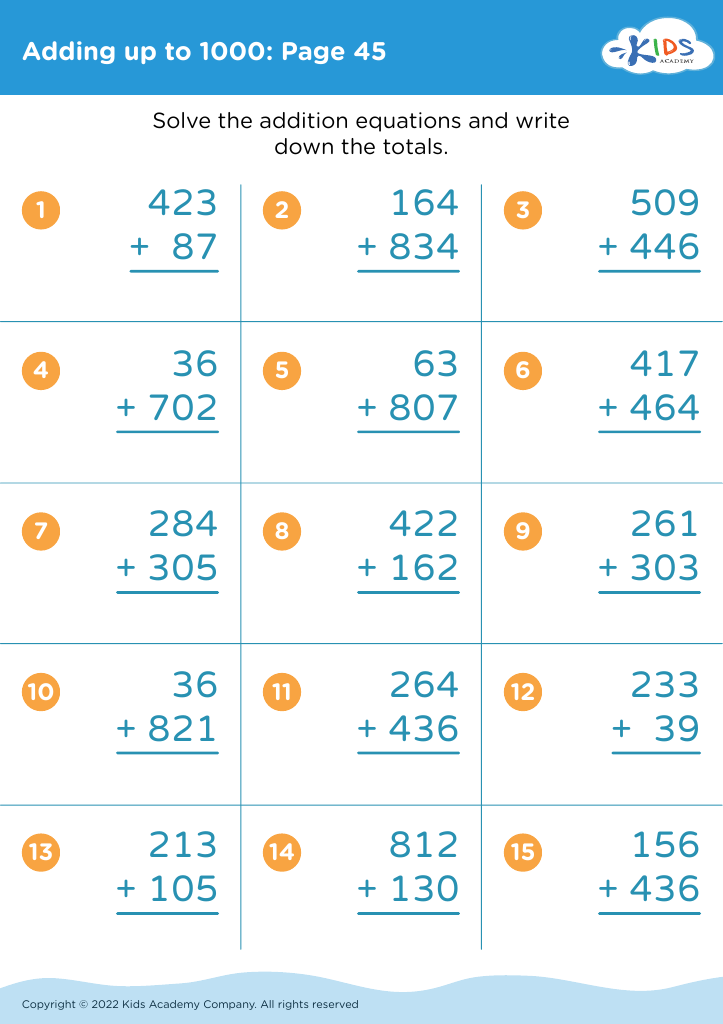



Following instructions and adding up to 1000 are critical skills for children ages 3-8 as they form the foundational blocks for cognitive and academic development. For parents and teachers, nurturing these skills can profoundly impact a child's future learning abilities.
Following instructions involves understanding and executing tasks, which enhances children's listening skills, attention span, and ability to follow sequences. These abilities are essential for classroom learning, daily routines, and social interactions. It ensures children can effectively participate in group activities, understand classroom rules, and complete their homework accurately and independently.
Learning to add up to 1000 at an early age introduces children to essential mathematical concepts such as numbers, counting, and basic arithmetic operations. It strengthens logical thinking and problem-solving skills, which are crucial for more advanced math concepts they will encounter later in their education. Early math skills are strong predictors of academic success in later years, not just in mathematics but across other subjects.
By focusing on these skills, parents and teachers can help children develop a sense of achievement, boost their confidence, and instill a lifelong love for learning. Therefore, encouraging and guiding young children to follow instructions and engage in early arithmetic is an investment in their overall academic and personal growth.








