Fraction Addition Adding up to 1000 Worksheets for Ages 3-8
5 filtered results
-
From - To
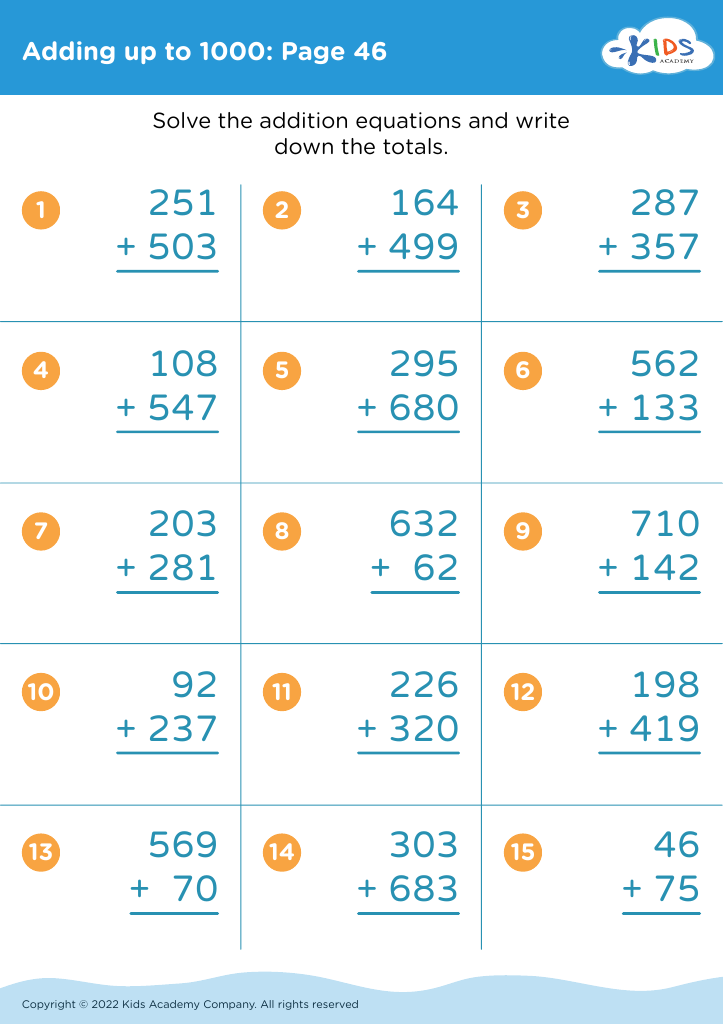
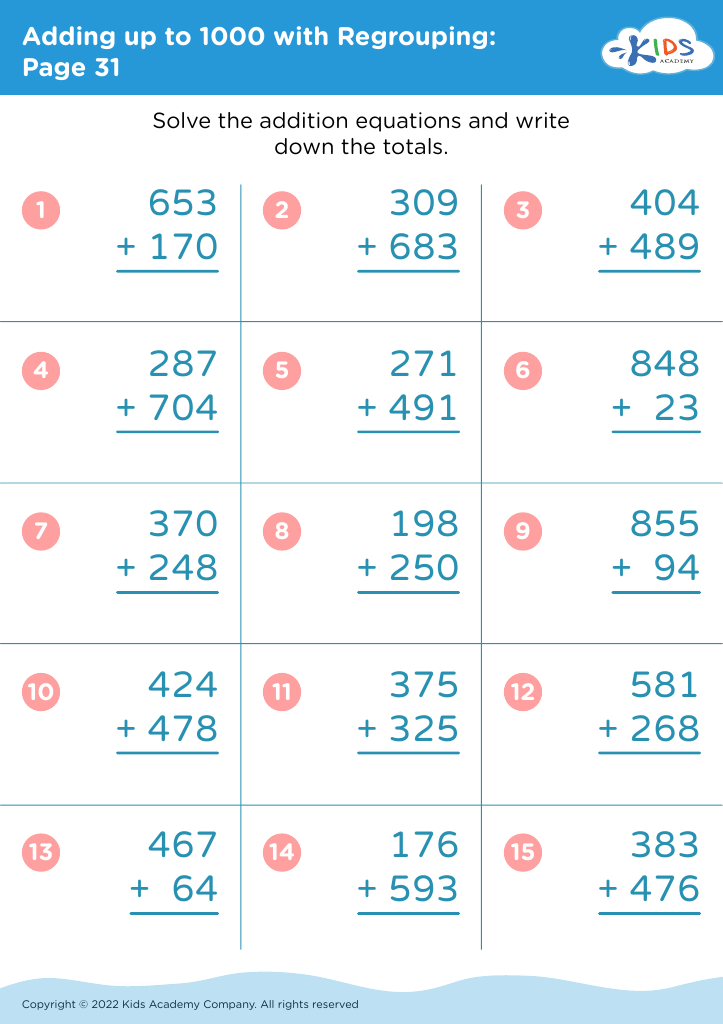
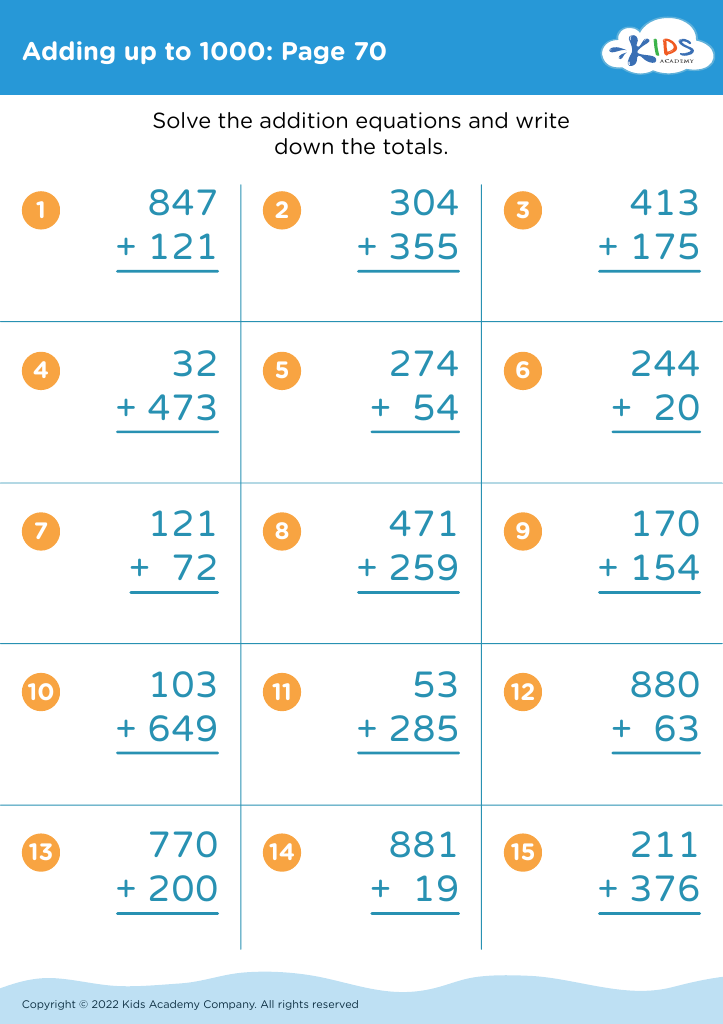
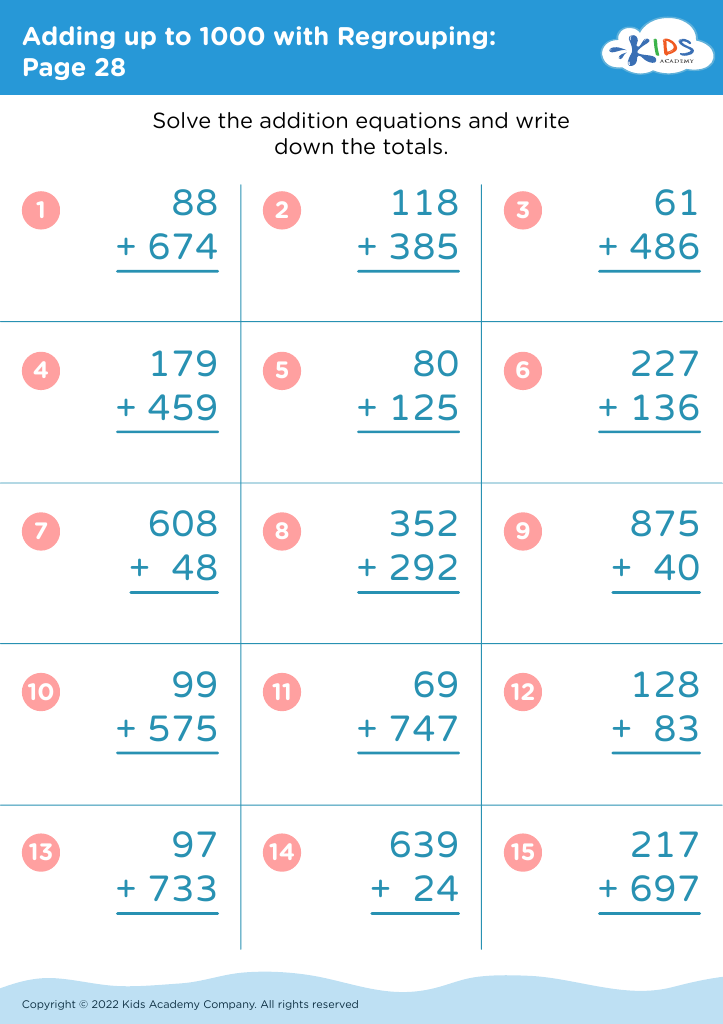
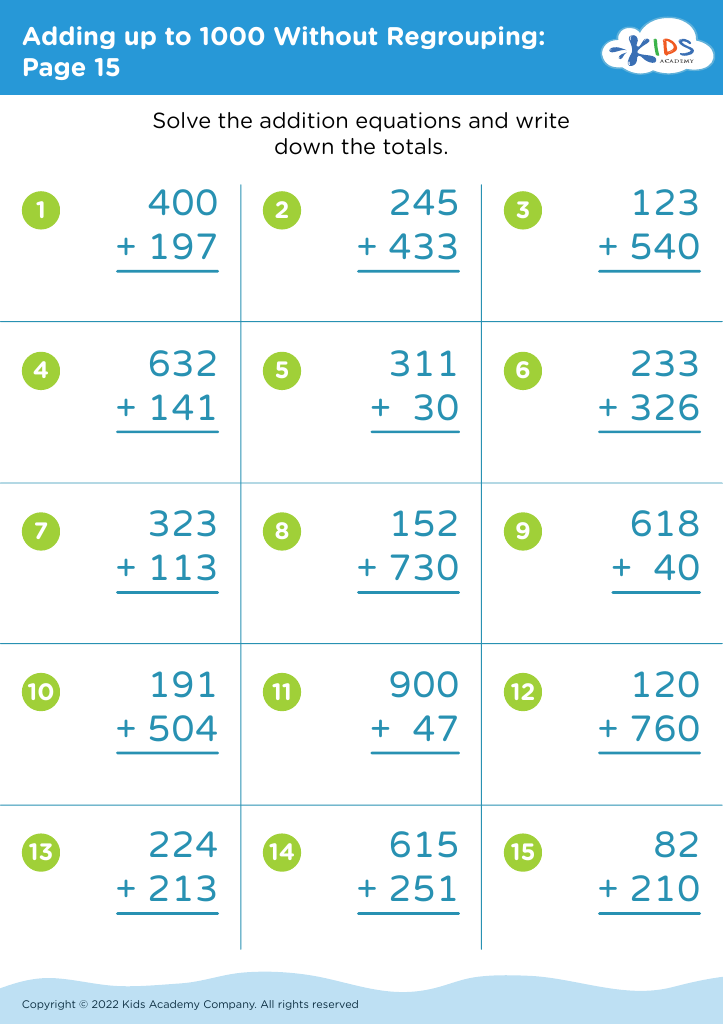
Discover our engaging Fraction Addition worksheets designed specifically for children ages 3-8! These interactive materials help young learners master the fundamentals of adding fractions while building their confidence in math. Our worksheets feature vibrant illustrations and a variety of exercises, making learning enjoyable and effective. Perfect for home or classroom use, these resources focus on adding fractions that sum up to 1000, offering crucial practice for young minds. Support your child's mathematical development with hands-on activities that encourage problem-solving and critical thinking. Get started today and watch your little ones thrive in their mathematical journey!



Understanding fraction addition, especially the skill of adding fractions to total 1, is crucial for children ages 3-8 as it forms a foundation for their future math skills. Young learners are developing their reasoning and problem-solving abilities, and grasping fractions builds essential mathematical concepts that will enhance their critical thinking.
Firstly, fractions are pervasive in everyday life, from sharing food to measuring ingredients. Teaching children how to add fractions helps them understand this context and improves their decision-making. Moreover, fraction addition fosters number sense, the ability to comprehend numbers and their relationships, which is vital for advancing in math.
In addition, learning to add fractions lays the groundwork for more complex mathematical concepts, such as ratios, proportions, and decimals. Introducing these ideas early allows children to become more confident and capable in their later academic journey.
For parents and teachers, engaging children with fraction addition and making math enjoyable can create positive attitudes toward learning. Engaging games and practical activities can enhance memory retention and stimulate interest. Overall, embracing this aspect of math empowers children, enabling them to flourish academically and develop lifelong skills in numeracy and analytical thinking.








